Ritual Magic
 81
81

Ritual Magic
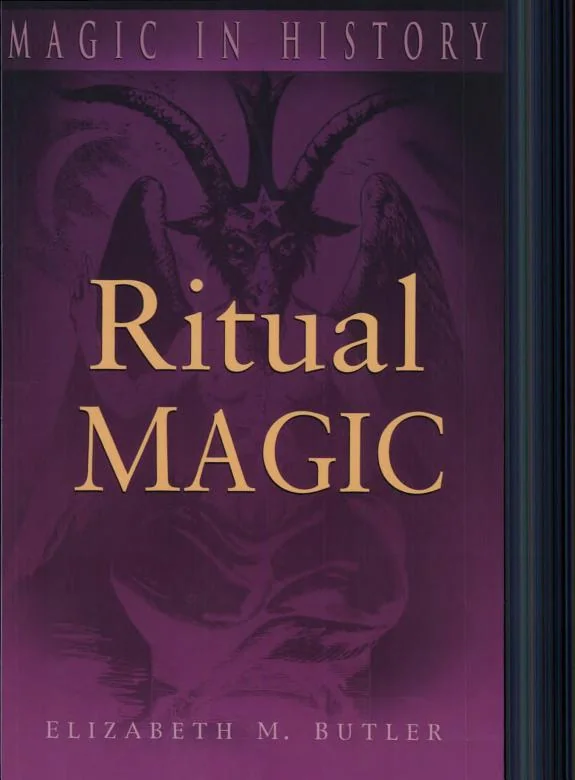
Eliza Marian Butler’s *Ritual Magic* offers a welcome antidote to the more fanciful accounts of ceremonial magic. Its strength lies in its rigorous historical approach, grounding esoteric practices within their intellectual and cultural milieus. Butler’s analysis of the homunculus, for instance, is particularly sharp, situating the concept not just as a magical feat but as a potent expression of human desire for creation and control within specific historical moments. The work’s primary limitation, however, is its academic distance; while meticulously researched, it occasionally feels detached, prioritizing historical analysis over the lived experience or the subjective resonance of the practices it describes. A passage detailing the elaborate preparations for invoking spirits, when stripped of its analytical overlay, reveals the sheer dedication and belief system required, a human element that could be more foregrounded. Butler provides an indispensable scholarly foundation for understanding ritual magic's historical trajectory.
📝 Description
81
Eliza Marian Butler's Ritual Magic, published in 1979, examines ritualistic magic as a system of belief and action.
Ritual Magic, by Eliza Marian Butler, analyzes the historical development and theoretical basis of ritualistic magical practices. Published in 1979, it moves past sensational accounts to offer a grounded look at how ritual magic functions as a system of belief and action. The book charts the evolution of magical ideas and their expression in ritual forms across different historical eras and cultures. It is written for students of Western esotericism, comparative religion, and the history of magic. The work is suited for those wanting to understand the intellectual and cultural forces that shaped magical traditions, rather than learn practical ritual techniques. Readers interested in the connections between psychology, folklore, and religious studies will find considerable material within its pages.
Butler's study appeared during a time of growing academic attention to occultism and esoteric traditions. It was published in 1979, a period when scholarship began to critically reassess the history of Western magic, shifting away from purely folkloric or sensationalist viewpoints. The book presented a structured, historically informed perspective as figures like Aleister Crowley were being re-examined and academic circles started to treat magical texts as valid subjects of study.
Butler's work emerged in the late 1970s, a period when academic interest in Western esotericism was solidifying. It responded to earlier surges of interest in occultism and spiritual movements. The book joined a growing body of scholarship that approached magical traditions with historical rigor, moving beyond mere folklore or sensationalism. It placed figures and practices previously relegated to the fringes into a serious academic discourse, treating magical texts and systems as legitimate subjects for historical and intellectual analysis.
💡 Why Read This Book?
• Gain a structured understanding of ritual magic's historical evolution, moving from the specific context of its 1979 publication to earlier influences, providing a foundation unavailable in more generalized occult texts. • Explore the academic dissection of concepts like the homunculus and golem, offering a critical perspective on their symbolic and psychological weight within historical magical frameworks. • Understand the intellectual currents that shaped the study of Western esotericism in the late 20th century, contextualizing Butler's work alongside contemporaneous scholarly approaches to magic.
⭐ Reader Reviews
Honest opinions from readers who have explored this book.
❓ Frequently Asked Questions
What historical periods does Eliza Marian Butler's Ritual Magic primarily cover?
The book examines various historical periods, tracing the evolution of magical concepts from their ancient roots through to the early modern era, with particular attention paid to the development of ceremonial magic as a distinct tradition.
Is Ritual Magic a practical guide for performing magic spells?
No, Eliza Marian Butler's work is an academic and historical study. It analyzes the theory and history of ritual magic rather than providing instructions on how to perform rituals.
What is the significance of the homunculus concept in the book?
Butler analyzes the homunculus as a potent symbol of creation and control, exploring its manifestations in alchemical and magical traditions as a representation of artificial life or a perfected being.
Who were some of Eliza Marian Butler's contemporaries in the study of esotericism?
While Butler's work stands somewhat independently, her publication in 1979 places her in a scholarly environment that was beginning to critically examine figures like Aleister Crowley and the broader history of Western occultism.
Does Ritual Magic discuss the psychological aspects of magic?
Yes, the book explores the psychological dimensions of ritual magic, examining the role of belief, intent, and altered states of consciousness in the practice and efficacy of magical systems.
What makes Butler's approach to ritual magic unique for its time?
Published in 1979, Butler's approach was notable for its scholarly rigor and its move away from sensationalism, grounding the study of ritual magic in historical context and intellectual analysis.
🔮 Key Themes & Symbolism
The Evolution of Magical Theory
Butler traces how the conceptualization of magic has transformed across centuries, from ancient animistic beliefs to the structured ceremonial systems of the Renaissance and beyond. The work details the shift from nature-based magic to the more complex, often theurgic, practices that sought to influence spiritual realms and achieve higher states of consciousness. This exploration highlights how magical theories adapt to prevailing philosophical and religious frameworks, demonstrating magic's dynamic relationship with the intellectual field of its time.
Symbolism and Ritual Efficacy
Central to Butler's analysis is the role of symbols and their power within ritual. The book examines how specific symbols, gestures, and incantations are employed to create a framework of meaning and to focus the practitioner's will. It explores the idea that the effectiveness of a ritual is intrinsically linked to the shared understanding and belief in the symbolic language used, exploring how these symbols act as conduits for intention and energy within the magical paradigm.
The Golem and Homunculus
Butler provides a detailed examination of the golem and homunculus legends, not merely as folklore, but as significant expressions of humanity's desire to replicate the act of creation. The work analyzes these constructs within alchemical and magical traditions, exploring their symbolic representation of achieving mastery over life and matter. This theme underscores the ambition inherent in certain forms of ritual magic to transcend natural limitations and achieve a form of divine power.
Ritual as World-Building
The book presents ritual magic as a method of constructing and reinforcing a particular worldview. Through detailed practices, practitioners create a coherent cosmology populated by spiritual entities and governed by specific laws. Butler illustrates how ritual acts serve to solidify this constructed reality for the participant, providing a sense of order, purpose, and agency within a universe perceived as responsive to magical intervention.
💬 Memorable Quotes
Direct passages from the work, attributed to the author.
“The magical act is a deliberate creation of a desired reality.”
— This statement captures the core idea that magic, as explored by Butler, is not passive but an active, intentional process aimed at manifesting specific outcomes through structured ritual.
“The homunculus represents a profound desire to master the creative forces of nature.”
— This highlights the symbolic weight of the homunculus, positioning it as a manifestation of human aspiration towards god-like power and control over biological processes within specific magical and alchemical contexts.
“Belief in the efficacy of ritual is a self-sustaining mechanism.”
— Butler suggests that the very act of performing rituals and experiencing perceived results reinforces the practitioner's conviction, creating a feedback loop that validates the magical system itself.
“Ritual magic operates within a symbolic universe, where meaning dictates form.”
— This interpretation emphasizes that the power of ritual magic is derived from its symbolic language and the practitioner's understanding and manipulation of these symbols to effect change.
💡 Key Ideas
Editorial paraphrase of the work's core concepts — not direct quotes.
The invocation of spirits requires a meticulously prepared mind and space.
This paraphrased concept points to the disciplined nature of ceremonial magic, emphasizing the importance of mental preparation, environmental consecration, and adherence to specific procedures for successful spirit communication.
🌙 Esoteric Significance
Tradition
Butler's work primarily engages with the Western Esoteric Tradition, particularly the lineage of ceremonial magic that developed from Renaissance Hermeticism and Kabbalah through figures like Agrippa and Dee, extending to later occult revivals. It departs from purely devotional or philosophical approaches by focusing on the practical application and historical evolution of ritual as a means of effecting change in the material and spiritual worlds. The book analyzes how these traditions synthesized various influences to create complex magical systems.
Symbolism
Key symbols explored include the homunculus and golem, representing artificial life and the human drive to create. Butler also explores the symbolism of invoked spirits, not just as entities but as personifications of psychic forces or archetypes. The ritual space itself, with its consecration and symbolic geometry, is presented as a microcosm, a sacred theatre where the practitioner interacts with these symbolic forces to achieve transformation or influence.
Modern Relevance
Contemporary practitioners and scholars of Western esotericism continue to draw on Butler's rigorous historical analysis. Her work provides a foundational understanding for modern ceremonial magicians, occult historians, and comparative religion scholars. Thinkers exploring the intersection of psychology and magic, or those re-examining the historical basis of modern magical orders, find her detailed exposition of historical concepts important for contextualizing present-day practices and beliefs.
👥 Who Should Read This Book
• Academic researchers in religious studies, history, and cultural anthropology seeking a detailed historical overview of Western ritualistic practices. • Students of esotericism and Western magical traditions looking for a scholarly, non-practitioner-focused examination of historical magical theory and practice. • Readers interested in the intellectual history of magic, the development of occult ideas, and the cultural significance of ritual across different eras.
📜 Historical Context
Eliza Marian Butler's *Ritual Magic*, published in 1979, arrived at an important moment for the academic study of Western esotericism. Following the counterculture movements of the 1960s and a surge of interest in occultism, scholarship began to move beyond purely folkloric or sensationalist accounts. Butler’s work contributed to this shift by offering a historically grounded and analytically rigorous examination of magical practices. It engaged with intellectual currents that were re-evaluating the place of magic within Western thought, moving it from the fringes towards a subject of serious historical inquiry. Contemporaries like Frances Yates, though focused on Renaissance magic, had already begun to lay groundwork for such studies. Butler’s book provided a structured perspective, contrasting with more popular, less critical works that often focused on individuals like Aleister Crowley without deep historical analysis. Its reception within academic circles marked a step towards legitimizing the study of magic as a historical and cultural phenomenon.
📔 Journal Prompts
The construction of the magical worldview: How does ritual solidify perceived reality?
Analyze the symbolic function of the homunculus in historical magical texts.
Reflect on the historical context of *Ritual Magic*'s publication in 1979.
Consider the role of belief in sustaining ritual efficacy as discussed by Butler.
Examine the concept of 'deliberate creation of a desired reality' within ritual practice.
🗂️ Glossary
Homunculus
A concept in alchemy and magic referring to a miniature, artificial human being created through alchemical or magical means, often symbolizing the desire to replicate the act of creation.
Golem
A creature from Jewish folklore, typically made from inanimate matter (like clay or mud) and brought to life through mystical means, often serving its creator but sometimes acting beyond control.
Invocation
The act of calling upon a spiritual entity or divine power, typically in ritualistic form, to appear, assist, or bestow blessings or knowledge.
Theurgy
A system of magic concerned with ritualistic invocation and worship, aiming to purify the soul and achieve union with the divine or spiritual realms.
Ceremonial Magic
A form of magic involving elaborate rituals, often with specific costumes, tools, and incantations, designed to invoke spiritual entities or achieve specific magical effects.
Alchemical Marriage
In alchemy, a symbolic union of opposites (often represented by the Sun and Moon, King and Queen) leading to the creation of the Philosopher's Stone or spiritual transformation.
Ritual Space
A designated area, consecrated or prepared for magical or religious purposes, intended to create a boundary between the mundane and the sacred or magical realms.
This book appears in 1 collection
🔮 Readers Also Liked
Browse all →





From the “Ritual Magic” Collection
View all →






More Free Magic & Ritual Books
View all →