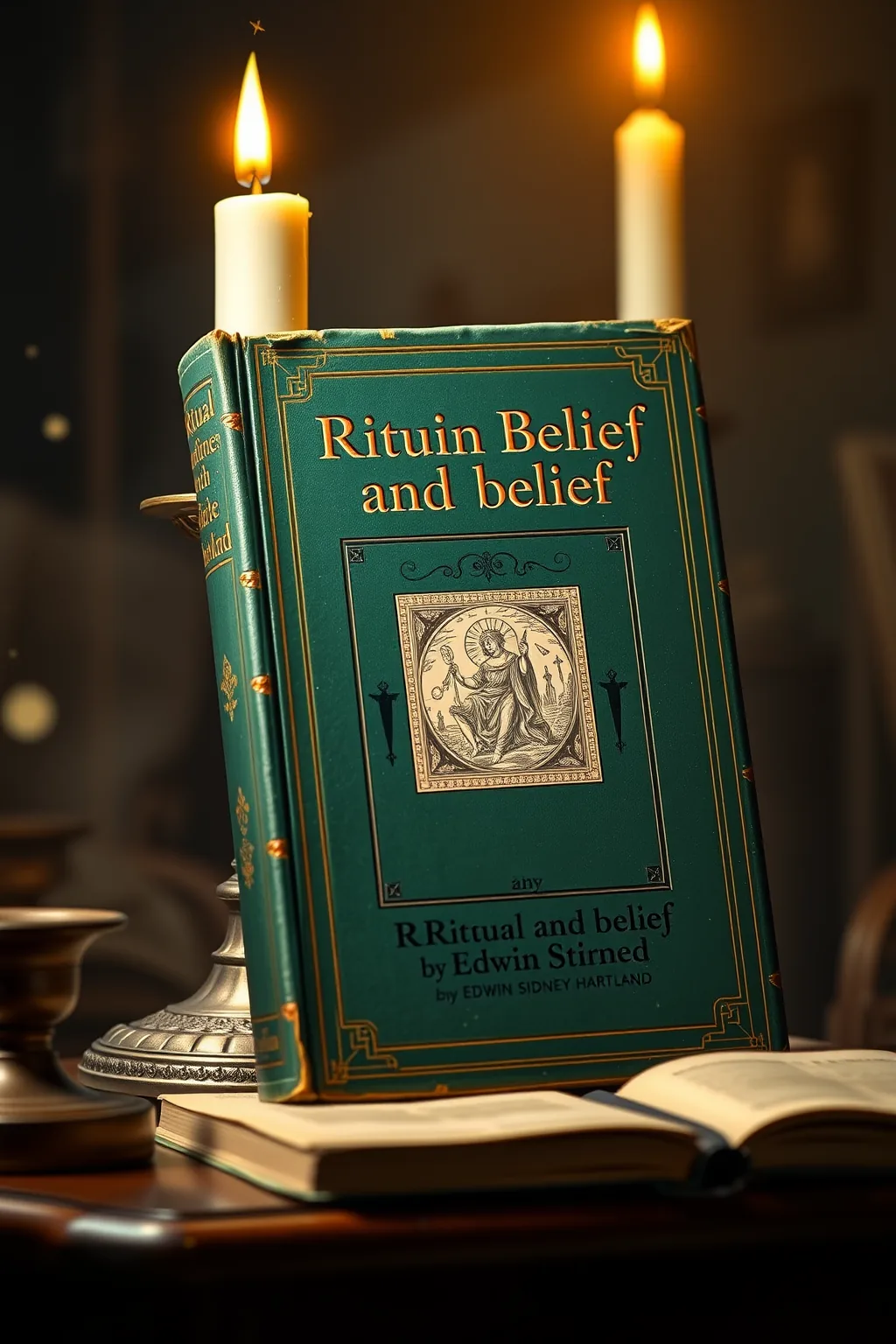
Ritual and belief
 75
75

Ritual and belief
Edwin Sidney Hartland's Ritual and Belief, from its 1914 publication, offers a formidable, if somewhat dated, survey of human ritual. Its strength lies in its sheer breadth of ethnographic examples, meticulously gathered to illustrate the pervasive nature of ritual across disparate cultures. Hartland’s detailed account of sympathetic magic, for instance, provides concrete illustrations of how perceived causal links informed early belief systems. However, the work's empirical focus occasionally overshadows nuanced interpretation, sometimes presenting correlations as direct causation without sufficient theoretical scaffolding. While groundbreaking for its time, the text's reliance on colonial-era ethnographic accounts means modern readers must approach its data with critical awareness of inherent biases. Hartland's meticulous compilation remains a valuable resource for understanding the historical development of anthropological thought on ritual.
📝 Description
75
Edwin Sidney Hartland's 1914 book examines the origins of human ritual and belief.
Published in 1914, Edwin Sidney Hartland's Ritual and Belief is an academic study of how human rituals and the beliefs that underpin them developed. Hartland, a folklorist and anthropologist, analyzed societal structures, magic, and religious thought, demonstrating their connections. The book uses extensive comparative analysis, drawing on ethnographic accounts from various global cultures to find commonalities in ritualistic actions. It offers a broad survey of phenomena rather than a single theory.
This volume is for students of folklore, anthropology, religious studies, and comparative mythology. It also suits serious practitioners of esoteric traditions interested in the historical background and worldwide expressions of ritual. Those curious about the evolution of magical thinking and its presence in different societies will find the detailed case studies useful. The text demands engagement with academic writing and a wide range of cultural examples.
Ritual and Belief emerged during a period of significant academic interest in the roots of religion and social customs. Hartland's work was situated within a broader scholarly effort to understand 'primitive' societies through folklore collection and analysis. His approach contributed to the empirical categorization and explanation of human belief and practice, engaging with contemporary anthropological ideas from figures like Frazer and Durkheim but emphasizing detailed ethnography.
💡 Why Read This Book?
• Gain insight into the anthropological perspective on ritual origins, understanding Hartland's comparative method that analyzes practices across cultures, as detailed in his extensive case studies. • Explore the historical relationship between magic and religion as presented in the early 20th century, learning how Hartland dissects concepts like taboo and sympathetic magic. • Grasp the foundational academic discussions surrounding ritualistic behavior and belief formation, providing context for later developments in religious studies and folklore from the 1914 publication era.
⭐ Reader Reviews
Honest opinions from readers who have explored this book.
❓ Frequently Asked Questions
What is the primary focus of Edwin Sidney Hartland's 'Ritual and Belief'?
The book's primary focus is the anthropological and folkloric study of human ritual practices and the belief systems that underpin them, examining their origins and evolution across various cultures.
When was 'Ritual and Belief' first published, and what was the intellectual climate like then?
First published in 1914, the book emerged during a period of intense interest in the origins of religion and society, influenced by early anthropological theories and extensive folklore collection.
Does Hartland present a single theory of ritual development in the book?
No, Hartland presents a comprehensive survey of phenomena based on comparative ethnographic data, rather than a singular, overarching theory of ritual development.
What are some key concepts discussed in 'Ritual and Belief'?
Key concepts include the relationship between magic and religion, the function of taboo, sympathetic magic, purification rituals, and the role of the scapegoat.
Who would benefit most from reading 'Ritual and Belief'?
Scholars of folklore, anthropology, religious studies, and esoteric practitioners interested in the historical roots of ritual will find this book particularly valuable.
What is a notable aspect of Hartland's methodology in this work?
Hartland's methodology relies heavily on extensive comparative analysis, drawing from a wide array of ethnographic data collected from diverse global cultures to identify common ritual patterns.
🔮 Key Themes & Symbolism
Magic and Religion Interplay
Hartland meticulously investigates the often blurred lines between magic and religion, proposing that ritualistic actions frequently predate or coexist with formalized belief structures. He examines how societies employed magical thinking to influence the natural world and human affairs, often through prescribed actions and incantations. The work illustrates how early attempts to control or appease unseen forces laid groundwork for more structured religious practices, demonstrating a continuous evolution rather than a complete break between these domains.
The Function of Taboo
A significant concept explored is the taboo, which Hartland analyzes as a fundamental mechanism for social order and the demarcation of sacredness. He details how prohibitions, often linked to spiritual beliefs or perceived dangers, shape community behavior and reinforce social hierarchies. The book presents examples of taboos related to birth, death, food, and sacred objects, illustrating their role in maintaining communal boundaries and managing societal anxieties about purity and pollution.
Sympathetic Magic and Ritual Efficacy
The principle of sympathetic magic—the belief that like affects like or that a part can represent a whole—is a recurring theme. Hartland provides numerous examples of how this principle informed ritual practices, from effigy magic to healing ceremonies. The work explores the underlying logic that drove individuals to perform rituals, believing that mimicking an outcome or using a symbolic representation could directly cause a desired effect in the physical world.
Ritualistic Expulsion and Renewal
Hartland dedicates attention to the ritualistic expulsion of negative forces, most notably through the figure of the scapegoat. This theme highlights how communities employed symbolic acts of banishment or sacrifice to cleanse themselves of misfortune, sin, or impurity. The book illustrates how these practices served as mechanisms for communal catharsis, allowing for a reset and renewal of social and spiritual well-being, often tied to agricultural cycles or significant life transitions.
💬 Memorable Quotes
Direct passages from the work, attributed to the author.
“The belief in the efficacy of likenesses is fundamental to magic.”
— This concisely captures Hartland's examination of sympathetic magic, emphasizing how the visual or symbolic representation of a person or object was seen as directly influencing the subject itself in magical practices.
“Taboo, in its essence, is a prohibition, often linked to the sacred or the dangerous.”
— This highlights Hartland's analysis of the taboo as a core social and religious concept, defining it as a form of restriction tied to notions of the holy, the unclean, or the perilous.
“Ritual acts frequently arise from a need to impose order on perceived chaos.”
— This interpretation reflects Hartland's perspective on the origins of ritual, suggesting it serves a psychological and social function in providing structure and control in the face of uncertainty.
“The distinction between magic and religion is often one of degree rather than kind.”
— This reflects Hartland's nuanced view on the relationship between these two domains, suggesting a continuum where magical practices gradually evolved into or coexisted with more formalized religious systems.
💡 Key Ideas
Editorial paraphrase of the work's core concepts — not direct quotes.
The expulsion of the scapegoat serves as a means of communal purification.
This paraphrases Hartland's discussion on the scapegoat ritual, underscoring its function as a mechanism for a community to collectively rid itself of negative elements or misfortunes.
🌙 Esoteric Significance
Tradition
While Hartland's work is primarily academic anthropology and folklore, it provides crucial historical context for understanding the roots of many esoteric practices. His detailed examination of magic, ritual efficacy, and symbolic belief systems offers a scholarly lens through which practitioners of Western Esotericism can view the lineage of their own traditions. The book's focus on the psychological and social functions of ritual aligns with esoteric attempts to understand the human psyche's engagement with the numinous and the construction of personal meaning through symbolic action.
Symbolism
Hartland’s work implicitly addresses the power of symbols in ritual. Concepts like the scapegoat are potent symbols of collective guilt and purgation, while the pervasive practice of purification rituals uses symbolic cleansing to represent spiritual or moral renewal. The belief in sympathetic magic itself highlights the symbolic connection between an image or object and its intended target, demonstrating how symbolic representation is a core mechanism in ritualistic thought and practice across cultures.
Modern Relevance
Contemporary scholars of religion and anthropology continue to draw upon Hartland's foundational work for its extensive ethnographical data, albeit with critical re-evaluation of its historical context. Modern practitioners of neo-paganism, witchcraft, and other esoteric paths often engage with the historical development of ritual, finding in Hartland's analyses an academic grounding for understanding the deep roots of practices related to sympathetic magic, taboo, and communal rite. His work informs discussions on the universality of certain ritual structures and their psychological impact.
👥 Who Should Read This Book
• Academic researchers in anthropology, sociology, and religious studies seeking to understand the historical development of theories on ritual and belief formation. • Folklore enthusiasts and students of comparative mythology interested in the cross-cultural study of human customs and their origins. • Esoteric practitioners and historians of Western Esotericism who wish to explore the academic underpinnings and historical antecedents of ritualistic practices.
📜 Historical Context
Ritual and Belief emerged in 1914, a key year marking the cusp of the First World War and a period of rapid intellectual change. The book was situated within the burgeoning fields of anthropology and folklore studies, fields heavily influenced by evolutionary theories and the collection of ethnographic data. Hartland engaged with contemporaries like Sir James Frazer, whose monumental *The Golden Bough* (first published 1890) also explored magic, ritual, and religion. Unlike some theorists focused on grand, unified theories, Hartland's approach leaned towards meticulous empirical documentation, compiling vast amounts of comparative material. The academic landscape was also shaped by figures like Émile Durkheim, who was developing sociological theories of religion. While not subject to widespread censorship, the era's colonial endeavors provided much of the raw data, which is now viewed critically for its inherent biases and the power dynamics involved in its collection.
📔 Journal Prompts
The concept of taboo, as explored by Hartland, and its influence on personal boundaries.
Hartland's analysis of sympathetic magic and its potential applications in symbolic practice.
The scapegoat ritual as a mechanism for communal catharsis; personal reflections on collective responsibility.
The relationship between perceived chaos and the creation of ritual order, referencing Hartland's observations.
Comparative analysis of purification rituals across cultures discussed in the text.
🗂️ Glossary
Sympathetic Magic
A form of magic based on the principle that like produces like or that a part can represent a whole. It assumes a connection between things that resemble each other or have been in contact.
Taboo
A social or religious custom prohibiting or restricting a particular practice or the use of a particular person, place, or thing, often associated with sacredness or danger.
Scapegoat
A person or group made to bear the blame for others or to suffer in their place, often through a ritualistic act of expulsion or sacrifice.
Purification Rituals
Ceremonies or practices designed to cleanse an individual or group from ritual impurity, sin, or negative spiritual influence, often involving water, fire, or symbolic actions.
Ethnography
The scientific description of the customs of individual peoples and cultures, based on fieldwork and direct observation.
Animism
The belief that objects, places, and creatures all possess a distinct spiritual essence, often attributed to natural phenomena like plants, rocks, and rivers.
Folklore
The traditional beliefs, customs, and stories of a community, passed through the generations by word of mouth, including legends, myths, proverbs, and rituals.
🔮 Readers Also Liked
Browse all →




More by Edwin Sidney Hartland
All books →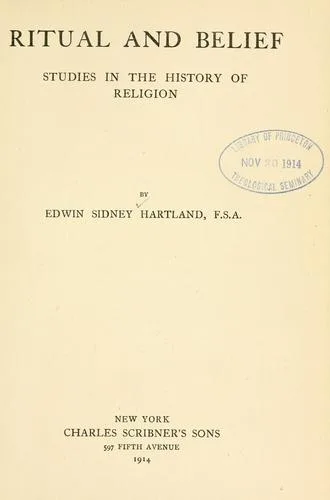
More Free Magic & Ritual Books
View all →