✍️ Author Biography
Edwin Sidney Hartland
📅 1848 – 1927
📚 2 free books
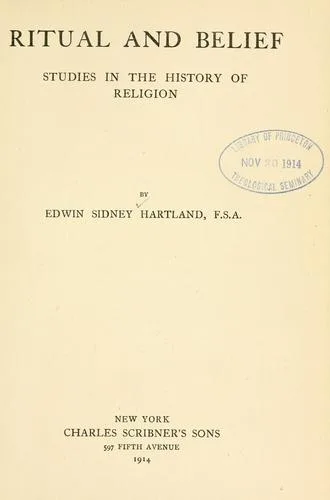
Edwin Sidney Hartland was a solicitor and folklore scholar who studied widespread tales for insights into custom and belief.
Born in 1848, Edwin Sidney Hartland pursued a career as a solicitor in Swansea, Wales. His father was a congregational minister. Hartland was actively involved in various judicial roles and public committees, both in Swansea and Gloucester, and showed a significant dedication to educational matters.
His scholarly pursuits focused on folklore, encompassing the collection of tales and the development of anthropological and mythological theories from an ethnological viewpoint. Hartland theorized that by compiling and examining enduring and globally prevalent folklore, one could gain scientific understanding of human customs and beliefs. He served as president of the Folklore Society from 1899 to 1901 and was a contributor to its publication, Folk-Lore. His academic engagement included a notable debate with Andrew Lang. Hartland passed away in 1927. His daughter, Ethel Mary Hartland, also served as a magistrate.
Folklore as a Scientific Tool
Hartland's academic work centered on the study of folklore, which he approached with a strong ethnological perspective. He was particularly interested in compiling anthologies of traditional tales and formulating theories on anthropology and mythology. His core belief was that the systematic collection and analysis of folklore elements that appeared persistently and widely across different cultures offered a scientific pathway to understanding the origins and nature of human custom and belief. This approach positioned folklore not merely as a collection of stories, but as a vital resource for uncovering deeper anthropological truths.
Academic Engagement and Leadership
A prominent figure in the field, Hartland served as the president of the Folklore Society for the years 1899 to 1901. During his tenure and beyond, he was a regular contributor to the society's journal, Folk-Lore. His scholarly contributions were significant enough to engage in intellectual discourse with other notable figures, including a documented dispute with Andrew Lang. This engagement highlights his active participation in the academic debates of his time concerning the interpretation and significance of folklore.
Key Ideas
- Folklore as a scientific insight into custom and belief.
- The study of persistent and widespread folklore provides understanding of human practices.