Xi xue gui xue yuan

 71
71

Xi xue gui xue yuan
Richelle Mead's 2010 work, 'Xi xue gui xue yuan', offers a compelling examination of social engineering and the individual's struggle within rigidly defined systems. The novel excels in its depiction of a meticulously crafted world where societal roles are predetermined, forcing characters into predicaments that highlight themes of fate versus free will. A particular strength lies in Mead's ability to imbue seemingly mundane student interactions with a palpable sense of underlying tension and consequence. However, the narrative's pacing occasionally falters, particularly in the mid-section, where the intricate world-building seems to momentarily overshadow character development. The concept of the 'strigoi' as a societal underclass, though central, feels somewhat underdeveloped thematically in relation to the broader social commentary. Ultimately, 'Xi xue gui xue yuan' is a thought-provoking narrative that, despite minor structural issues, succeeds in its exploration of societal control.
📝 Description
71
Richelle Mead's 2010 novel 'Bloodlines' (the original title for 'Xi xue gui xue yuan') examines societal structures and power dynamics.
Published in 2010, 'Bloodlines' by Richelle Mead was initially released without an explicit esoteric label. However, the novel invites analysis for its symbolic depth, focusing on themes of rigid societal structures, hidden hierarchies, and the impact of power dynamics on individual lives. The narrative itself acts as a framework for understanding these complex interactions, encouraging readers to look beyond the surface plot. This book is suited for those who appreciate fiction that prompts reflection on social control, the nature of authority, and an individual's position within ordered systems. Readers drawn to allegorical fiction, especially narratives touching on hidden knowledge or societal manipulation, will find resonance here. It also offers material for students of narrative theory interested in subtle world-building and thematic depth.
The book emerged during a period of heightened interest in dystopian and speculative fiction. Its exploration of controlled environments and assigned roles within a student body connects to a broader cultural conversation about governmental overreach and societal stratification. Mead's work provides a fictional lens for examining contemporary societal structures and their inherent tensions.
While not an explicit text of occult philosophy, 'Bloodlines' can be read through an esoteric lens by examining its allegorical representation of rigidly controlled societies. The novel depicts a world where individuals are assigned predetermined roles and destinies, mirroring concepts found in various esoteric traditions that discuss karma, destiny, or societal archetypes. The emphasis on hidden hierarchies and unseen systems controlling individual lives echoes Gnostic ideas about demiurgic forces or Kabbalistic concepts of hidden spiritual structures influencing the material world. Readers can interpret the narrative's internal social order as a metaphor for larger, often concealed, forces that shape human experience and consciousness.
💡 Why Read This Book?
• Gain insight into the psychological effects of predetermined social roles, as depicted through the characters' struggles within the rigid hierarchy established in the 2010 publication. • Understand the narrative technique of using controlled environments, such as the academy setting, to explore themes of authority and rebellion, a common element in early 21st-century speculative fiction. • Analyze the symbolic representation of hidden power structures and their impact on individual identity, drawing parallels to real-world societal dynamics.
⭐ Reader Reviews
Honest opinions from readers who have explored this book.
❓ Frequently Asked Questions
What is the primary setting for Richelle Mead's 'Xi xue gui xue yuan'?
The primary setting is a specialized academy where students are educated within a strictly controlled social and hierarchical system, shaping their future roles.
When was 'Xi xue gui xue yuan' first published?
The book was first published in 2010, placing it within a period of significant interest in dystopian and allegorical fiction.
Does the book 'Xi xue gui xue yuan' contain supernatural elements?
While not explicitly supernatural in the vein of classic fantasy, the narrative explores societal structures and roles that can be interpreted allegorically, touching on themes of hidden influence and predetermined destinies.
What are the main themes explored in 'Xi xue gui xue yuan'?
The book primarily explores themes of social stratification, the conflict between fate and free will, the impact of rigid societal structures, and the nature of hidden authority.
Is 'Xi xue gui xue yuan' part of a series?
Information regarding 'Xi xue gui xue yuan' being part of a series is not readily available based on its initial publication details from 2010.
What is the significance of the title 'Xi xue gui xue yuan'?
The title, 'Xi xue gui xue yuan', translates to concepts related to 'vampire academy' or 'blood learning,' hinting at the themes of hierarchy and potential darker undertones within its structured setting.
🔮 Key Themes & Symbolism
Social Stratification
The narrative meticulously details a society divided into distinct strata, where individuals are assigned specific roles and expectations from a young age. This stratification is not merely social but deeply ingrained, dictating education, relationships, and future prospects. The work examines how these divisions create inherent tensions and limit individual potential, forcing characters to confront the confines of their predetermined paths. The concept highlights how societal structures, when rigidly enforced, can stifle personal growth and create an undercurrent of discontent among those confined by their assigned positions.
Fate vs. Free Will
A central tension within 'Xi xue gui xue yuan' revolves around the perennial question of whether one's destiny is predetermined or can be actively shaped. Characters grapple with the implications of a system that appears to dictate their lives, exploring the psychological impact of perceived inevitability. The narrative probes whether true agency exists within such a controlled framework, questioning if rebellion is possible or if conformity is the only viable path. This theme invites readers to consider the extent to which external forces shape our lives versus our own capacity for self-determination.
Hidden Authority and Control
The book studies the mechanisms of power that operate beneath the surface of its structured world. Authority figures and unseen forces often dictate the rules and enforce conformity, shaping the lives of the populace without overt displays of force. This theme explores how control can be maintained through systemic design, social conditioning, and the manipulation of information. The narrative questions who benefits from maintaining these hidden structures and how individuals perceive and interact with power they may not fully comprehend.
Identity and Performance
Within the rigidly defined social roles, characters are often compelled to perform specific identities. The narrative examines the dichotomy between an individual's true self and the persona they must adopt to navigate their societal position. This theme explores the psychological toll of maintaining such distinctions and the search for authenticity within a system that prioritizes adherence to prescribed roles. The concept of 'masks' or hidden aspects of self becomes crucial as characters attempt to reconcile their inner lives with their external obligations.
💬 Memorable Quotes
Direct passages from the work, attributed to the author.
“The academy walls held more than just students; they held destinies.”
— This interpretation suggests that the institution serves not merely as an educational facility but as a mechanism for predetermining the future paths and societal functions of its inhabitants.
“Every rule was a chain, and some chains were invisible.”
— This highlights the pervasive nature of control within the narrative's setting, where societal regulations and expectations act as restraints, some of which are subtle and not immediately apparent.
“They learned to wear their assigned roles like a second skin.”
— This phrase points to the deep internalization of societal positions by the characters, suggesting they have adopted their predetermined roles to such an extent that they become inseparable from their identity.
“Knowledge was a currency, and its distribution was carefully managed.”
— This concept underscores the theme of information control, implying that access to knowledge is a tool of power used to maintain social hierarchy and influence within the narrative's world.
“The quietest whispers held the most dangerous truths.”
— This suggests that beneath the surface of conformity and order, subversive ideas or hidden realities exist, carrying significant potential to disrupt the established system.
🌙 Esoteric Significance
Tradition
While 'Xi xue gui xue yuan' was not explicitly written within a recognized esoteric tradition like Hermeticism or Gnosticism, its themes of hidden hierarchies, controlled destinies, and the struggle for self-awareness can be interpreted through an esoteric lens. The narrative's structured environment and the characters' imposed roles bear resemblance to concepts found in systems that emphasize predetermined paths or cosmic order. The work can be seen as a modern, secularized exploration of archetypal ideas about societal and individual destiny, prompting reflection on forces that shape existence beyond immediate perception.
Symbolism
The academy setting itself functions as a potent symbol of enforced order and the shaping of individuals according to external design. The concept of 'strigoi,' even if metaphorical, can symbolize the marginalized or those whose true nature is suppressed by societal structures. Furthermore, the idea of 'masks' or hidden identities symbolizes the conflict between one's authentic self and the societal roles one is compelled to perform, reflecting the esoteric principle of the inner versus the outer self.
Modern Relevance
Contemporary thinkers and practitioners exploring social dynamics, power structures, and individual agency can find relevance in 'Xi xue gui xue yuan.' Its examination of how systems dictate identity and limit freedom speaks to current discussions in sociology and critical theory. For those interested in narrative as a tool for social commentary, the book offers a case study in allegorical storytelling. Its themes also resonate with modern self-help and philosophical discussions that emphasize the importance of questioning imposed limitations and seeking authentic self-expression.
👥 Who Should Read This Book
• Students of comparative literature and sociology seeking fictional examples of social control and stratification in early 21st-century literature. • Readers interested in allegorical narratives that explore the tension between predetermined destiny and individual free will, particularly within structured environments. • Fans of Richelle Mead's writing who appreciate her skill in developing intricate worlds and exploring complex character dynamics within societal constraints.
📜 Historical Context
Richelle Mead's 'Xi xue gui xue yuan', published in 2010, arrived during a fertile period for young adult speculative fiction that often engaged with societal critiques. The early 21st century saw a surge in dystopian narratives, influenced by earlier works like George Orwell's 'Nineteen Eighty-Four' (1949) and continued by authors such as Suzanne Collins. This era was marked by a growing public discourse on surveillance, governmental control, and social inequalities, themes readily explored in fiction. 'Xi xue gui xue yuan' participated in this trend by presenting a meticulously structured environment that mirrored anxieties about predetermined life paths and societal stratification. While not directly engaging with a specific intellectual movement like the Frankfurt School's critical theory, its exploration of manufactured social roles and systemic control resonated with broader cultural concerns. The reception of such works often focused on their allegorical potential, with critics examining how they reflected contemporary societal anxieties and offered cautionary tales about the potential consequences of unchecked authority and rigid social engineering.
📔 Journal Prompts
The academy's rigid hierarchy and its effect on student identity.
Invisibility of certain societal chains and their impact.
Performing assigned roles versus authentic self-expression.
The management of knowledge as a tool of control.
Identifying truths hidden beneath surface conformity.
🗂️ Glossary
Strigoi
In the context of the book, 'strigoi' refers to a segment of the societal structure, often depicted as subordinate or possessing distinct characteristics that define their role and status within the larger hierarchy.
Social Stratification
The division of society into hierarchical layers or strata, where individuals are ranked according to factors such as wealth, power, and status. This often dictates access to resources and opportunities.
Predetermined Destiny
The belief or concept that an individual's future path and life events are already decided, often by external forces, societal structures, or fate, limiting the scope of personal choice.
Allegory
A literary work in which characters, events, and settings represent abstract qualities or ideas, conveying a hidden meaning, typically moral or political.
Societal Control
The mechanisms and methods employed by a society or its governing bodies to regulate the behavior and actions of its members, ensuring conformity to norms and laws.
Hidden Authority
Power or influence that operates subtly or indirectly, often unseen by those affected. It shapes decisions and outcomes without overt command or visible presence.
Authentic Self
An individual's true nature, identity, and core values, distinct from the roles, expectations, or personas imposed by society or external influences.
🔮 Readers Also Liked
Browse all →







More by Richelle Mead
All books →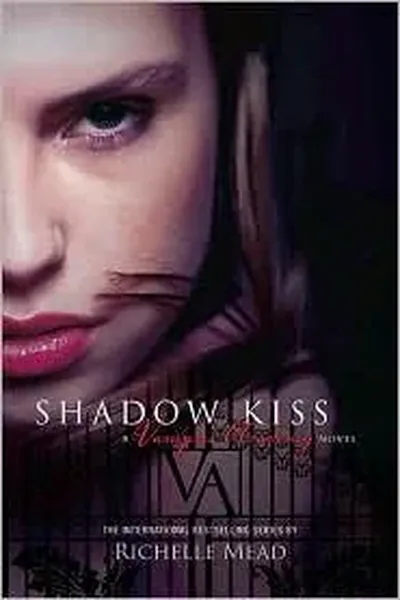




More Free Magic & Ritual Books
View all →