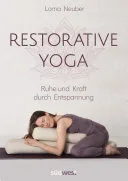
Restorative Yoga
 81
81

Restorative Yoga
Lorna Neuber’s *Restorative Yoga* offers a clear and accessible guide to a practice that has gained significant traction. The book’s strength lies in its straightforward explanation of how to utilize props—bolsters, blankets, and blocks—to achieve a state of deep relaxation. Neuber effectively communicates the core principle: holding poses without muscular effort to facilitate nervous system recalibration. A notable limitation, however, is the lack of detailed anatomical explanations for certain poses, which could benefit practitioners prone to injury. The section on *pratyahara* (withdrawal of the senses) is particularly well-articulated, demonstrating how stillness on the mat translates to inner quietude. While not a revolutionary text, it serves as a solid introduction to a valuable therapeutic modality.
📝 Description
81
Lorna Neuber's 2017 book, Restorative Yoga, details a practice focused on passive stretching and deep relaxation.
Restorative Yoga, by Lorna Neuber, describes a yoga method that prioritizes passive stretching and deep relaxation through extended pose holds. Unlike more active yoga styles, this practice uses props such as bolsters, blankets, and blocks to support the body. The primary goal is to release muscular tension and calm the nervous system without requiring physical exertion.
This approach is suitable for a wide range of people, from experienced yogis looking for balance to beginners, those in rehabilitation, and individuals dealing with stress or fatigue. It provides a space for rest and recovery, making it adaptable for various ages and fitness levels. Neuber's work details how the practice can serve as a sanctuary for rejuvenation.
The book explains that a central concept is *parasympathetic activation*. By minimizing effort and embracing stillness, the body enters a rest and digest state, counteracting chronic stress. Props are used not just for comfort but to enable a deep release of habitual tension, allowing the body's natural healing processes to function.
While not overtly mystical, Restorative Yoga draws from traditions that recognize the body's capacity for self-healing when undue stress is removed. The emphasis on stillness and passive receptivity echoes contemplative practices found in various spiritual disciplines. The use of props to facilitate deep relaxation and release tension aligns with somatic approaches that acknowledge the mind-body connection, aiming to restore equilibrium beyond just the physical.
💡 Why Read This Book?
• You will learn specific prop configurations for poses like Supported Bridge or Legs-Up-the-Wall, enabling you to cultivate deep physical release and nervous system recalibration in your own practice, as detailed in the chapter on foundational poses. • You will understand the physiological benefits of *parasympathetic activation*, gaining insight into how prolonged, passive stretching can counteract chronic stress, a concept explored throughout the book. • You will discover how to integrate Restorative Yoga as a counterbalance to more vigorous activities, providing a practical method for recovery and energy replenishment, as advocated by Neuber for athletes and active individuals.
⭐ Reader Reviews
Honest opinions from readers who have explored this book.
❓ Frequently Asked Questions
What is the primary difference between Restorative Yoga and other yoga styles like Hatha or Vinyasa?
Restorative Yoga emphasizes passive holding of poses with extensive prop support to induce deep relaxation and nervous system recalibration, unlike Hatha or Vinyasa, which typically involve more active muscular engagement and dynamic movement.
When was Restorative Yoga first published by Lorna Neuber?
Lorna Neuber's book 'Restorative Yoga' was first published on July 15, 2019, making it a relatively recent contribution to the field of yoga literature.
What types of props are essential for practicing Restorative Yoga?
Essential props include bolsters (for support), blankets (for warmth and cushioning), blocks (to bring the floor closer or provide support), and straps (though less common in pure restorative). These are crucial for achieving the passive, supported nature of the poses.
Can Restorative Yoga help with stress and anxiety?
Yes, Restorative Yoga is highly effective for stress and anxiety management. By activating the parasympathetic nervous system through prolonged, supported relaxation, it helps to calm the mind and reduce the physical symptoms of stress.
Is Restorative Yoga suitable for beginners with no prior yoga experience?
Absolutely. Restorative Yoga is exceptionally beginner-friendly as it requires no physical strength or flexibility. The focus is on yielding to gravity and support, making it accessible to individuals of all ages and fitness levels.
What is the concept of 'active relaxation' in Restorative Yoga?
'Active relaxation' in this context refers to the conscious effort to release tension and surrender to the support of props, rather than passively letting go. It involves a gentle mental engagement to allow the body to soften fully.
🔮 Key Themes & Symbolism
The Power of Stillness
This work emphasizes that true restoration comes not from exertion, but from profound stillness. It guides practitioners to find energy by consciously releasing effort, a concept often overlooked in modern, fast-paced life. The book illustrates how holding passive poses, supported by props like bolsters, allows the body to enter a state of deep rest, activating the parasympathetic nervous system and fostering natural healing processes.
Proprioception and Embodiment
Restorative Yoga uses props not just for comfort but to enhance proprioception—the body's awareness of its position in space. By fully supporting the body, practitioners can surrender more completely, allowing subtle sensations to arise and be acknowledged without judgment. This mindful engagement with bodily states encourages a deeper connection to oneself and promotes somatic release of stored tension.
Counteracting Modern Stress
The book directly addresses the physiological impact of chronic stress in contemporary society. It presents Restorative Yoga as an antidote, offering a structured method to down-regulate the fight-or-flight response. By systematically releasing muscular holding patterns and encouraging breath awareness in supported poses, practitioners can cultivate resilience and a greater sense of inner balance.
Accessibility and Inclusivity
A core tenet explored is that this practice is for everyone. Neuber highlights its suitability for diverse individuals, from athletes seeking recovery to those managing chronic pain or simply needing respite. The emphasis on minimal physical demand and maximal support ensures that the benefits of yoga are available regardless of age, fitness level, or physical condition.
💬 Memorable Quotes
Direct passages from the work, attributed to the author.
“The goal is to allow the body to release without effort.”
— This highlights the fundamental principle of Restorative Yoga: achieving relaxation and healing through passive support rather than muscular force, guiding the body into a state of natural ease.
“Props are not crutches, but tools for deeper access.”
— This suggests that the strategic use of bolsters, blankets, and blocks is essential for achieving the intended passive and supported postures, facilitating a more profound release than might be possible unaided.
“Restorative Yoga is about finding energy in stillness.”
— This paradoxical concept underscores the practice's ability to replenish vitality not through activity, but through conscious rest and the quieting of the nervous system.
“Listen to your body's signals for surrender.”
— This encourages practitioners to cultivate interoception, paying attention to subtle physical cues that indicate where tension is held and when it is safe to release into the support provided.
“This practice offers a counterbalance to the demands of daily life.”
— This frames Restorative Yoga as a vital tool for managing modern stressors, providing a sanctuary for rejuvenation that directly opposes the constant stimulation and pressure many experience.
🌙 Esoteric Significance
Tradition
While not explicitly tied to a single esoteric lineage, Restorative Yoga draws heavily on principles found in yogic philosophy, particularly the concept of *pratyahara* (withdrawal of the senses) and *dhyana* (meditation). Its emphasis on stillness and internal awareness aligns with contemplative traditions across various mystical paths, offering a practical method for cultivating inner quietude that can support deeper spiritual inquiry.
Symbolism
The primary symbols in Restorative Yoga are the props themselves: bolsters representing support and nurturing, blankets signifying comfort and security, and blocks acting as foundations or aids to reach deeper states. Collectively, they symbolize the creation of a sacred, supportive space—a microcosm of the womb or a sanctuary—where the practitioner can safely relinquish external stimuli and reconnect with their inner self.
Modern Relevance
Contemporary somatic therapists, trauma-informed practitioners, and mindfulness coaches frequently incorporate Restorative Yoga principles. Its focus on physiological regulation and gentle embodiment speaks to modern approaches to stress reduction, anxiety management, and chronic pain relief. Thinkers and practitioners in fields like embodied cognition and psychoneuroimmunology find its emphasis on the mind-body connection particularly relevant.
👥 Who Should Read This Book
• Individuals experiencing burnout or chronic stress will find practical techniques to activate their parasympathetic nervous system and foster deep physical and mental recovery. • Yoga practitioners seeking a complementary practice to balance more vigorous styles will learn how to utilize props for profound relaxation and energy replenishment. • Rehabilitation patients and those with chronic pain conditions can discover gentle, supported methods to ease discomfort and promote healing without strain.
📜 Historical Context
Published in 2019, Lorna Neuber's *Restorative Yoga* arrived during a period of increasing awareness regarding mental health and the physiological impacts of chronic stress. While yoga had long been established in the West, the 21st century saw a diversification beyond purely physical or meditative practices. Restorative Yoga, with its emphasis on passive support and nervous system regulation, gained prominence partly as a reaction to the often-intense 'power yoga' trends that emerged in the late 20th and early 21st centuries. Figures like Judith Hanson Lasater, who published 'Relax and Renew' in 1999, were key proponents of similar therapeutic approaches, establishing a lineage that Neuber tapped into. The growing acceptance of somatic therapies and mindfulness further contributed to the fertile ground for such practices, positioning Restorative Yoga as a crucial tool for holistic well-being.
📔 Journal Prompts
Supported Savasana's deep release.
The function of bolsters and blankets.
Parasympathetic activation pathways.
Effortless surrender in passive poses.
Balancing active life with restorative rest.
🗂️ Glossary
Asana
A posture or pose in yoga, typically referring to the physical practice.
Bolster
A long, cylindrical cushion used to provide support and comfort in restorative yoga poses.
Parasympathetic Nervous System
The division of the autonomic nervous system responsible for 'rest and digest' functions, counteracting the 'fight or flight' response.
Pratyahara
The fifth limb of yoga, referring to the withdrawal of the senses from external objects, leading to inner focus.
Savasana
Corpse Pose, a final resting pose in yoga, often adapted with props for deep relaxation in restorative practices.
Proprioception
The sense of the relative position of one's own parts of the body and strength of effort being employed in movement.
Embodiment
The experience of being and expressing oneself as a physical body; a conscious connection to one's physical sensations and presence.