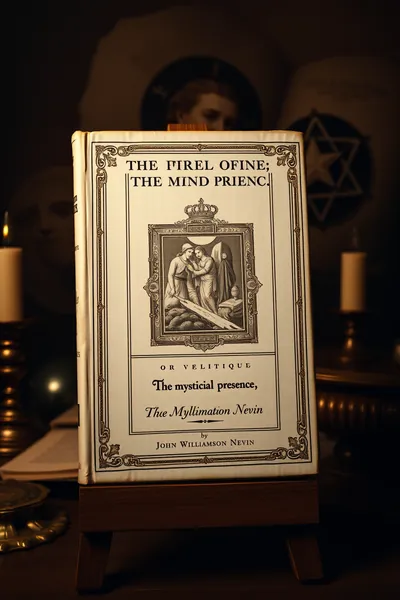
Reimagining the Bible

 71
71

Reimagining the Bible
Howard Schwartz’s "Reimagining the Bible" presents a bold, if occasionally uneven, attempt to excavate the hidden psychological and mystical currents within scripture. Schwartz, an editor at Esoteric Library, demonstrates a keen eye for symbolic resonance, particularly in his readings of figures like Lilith and concepts like the Tree of Knowledge. His interpretation of the Tower of Babel narrative, focusing on the fragmentation of consciousness rather than divine punishment, is particularly striking and aligns well with modern psychological thought. However, the book sometimes feels more like a collection of insightful essays than a cohesive argument. While the reinterpretation of Eve's expulsion from Eden as a necessary step towards individuation is compelling, the connections drawn can occasionally feel stretched, relying on a degree of interpretive freedom that may not satisfy all readers. Despite this, the work offers a valuable perspective for those seeking to engage with the Bible beyond literalist or traditional theological interpretations.
📝 Description
71
Howard Schwartz's 1997 book, Reimagining the Bible, offers a mystical and psychological lens for biblical narratives.
Howard Schwartz's "Reimagining the Bible" moves beyond standard theological or historical readings to emphasize the esoteric, mystical, and psychological dimensions of biblical stories and figures. The book does not aim to confirm or deny religious doctrines; instead, it seeks to uncover latent meanings and symbolic structures relevant to spiritual inquiry. Schwartz treats the Bible as a text that can reveal new insights when approached with unconventional methods. This work is for readers with a critical and speculative approach to sacred texts. It will appeal to those interested in comparative mythology, Jungian psychology, Kabbalistic interpretations, and esoteric studies. Individuals looking for archetypal patterns and hidden wisdom within the Bible, rather than a dogmatic explanation, will find this book valuable. It is suited for those exploring consciousness and symbolic truths.
The book discusses concepts such as the shadow self represented by biblical antagonists, the divine feminine hidden in patriarchal stories, and the recurring motif of the soul's journey. It examines how elements like the Garden of Eden function symbolically. Schwartz's approach is spiritual yet non-sectarian, emerging during a time when alternative readings of religious texts gained traction, influenced by Jungian analysis, Kabbalah, and Gnosticism. His work stands alongside contemporaries re-examining myths through psychological and symbolic frameworks, but it offers a distinctly spiritual perspective.
Published in 1997, "Reimagining the Bible" aligns with a resurgence of interest in mystical and psychological interpretations of religious texts. It engages with Kabbalistic traditions and Gnostic studies, applying a lens similar to Jungian archetypal analysis to biblical narratives. Schwartz's work positions itself within a lineage that views sacred texts not as literal historical accounts but as symbolic maps of the human psyche and spiritual reality. This approach seeks to unlock deeper, often hidden, meanings that resonate with personal transformation and consciousness exploration, offering a bridge between ancient scripture and modern psychological inquiry.
💡 Why Read This Book?
• Learn how familiar biblical figures like Lilith are recontextualized as archetypes of rebellion and individuation, offering a fresh perspective beyond traditional demonology. • Understand the concept of the "Tree of Knowledge" not as a simple prohibition, but as a symbol for the dualistic nature of consciousness and the awakening of self-awareness, as explored in Schwartz's analysis. • Gain insight into the biblical narrative as a map of psychological and spiritual development, particularly through interpretations of the Exodus and the Garden of Eden as metaphors for inner transformation.
⭐ Reader Reviews
Honest opinions from readers who have explored this book.
❓ Frequently Asked Questions
What is the primary goal of Howard Schwartz's "Reimagining the Bible"?
The book aims to uncover the esoteric, mystical, and psychological meanings embedded within biblical stories and figures, moving beyond conventional religious interpretations to reveal deeper symbolic truths.
What kind of reader would appreciate this book the most?
Readers interested in comparative mythology, Jungian psychology, Kabbalistic studies, and alternative interpretations of sacred texts will find "Reimagining the Bible" particularly engaging.
Does "Reimagining the Bible" offer a new theological doctrine?
No, the book is not intended to establish a new religious doctrine. Instead, it focuses on exploring symbolic and psychological layers of meaning within existing biblical narratives.
What historical period influenced the writing of "Reimagining the Bible"?
Published in 1997, the book emerged during a time of increased academic and popular interest in psychological approaches to myth and religion, influenced by figures like Carl Jung.
What are some key concepts explored in the book?
Key concepts include the shadow self, the divine feminine, initiation myths, and the Bible as a representation of consciousness and spiritual awakening.
Can this book be considered Kabbalistic?
While not exclusively Kabbalistic, the work draws upon and resonates with Kabbalistic traditions in its emphasis on symbolic interpretation and the hidden dimensions of scripture.
🔮 Key Themes & Symbolism
Biblical Archetypes as Psychological Maps
Schwartz treats biblical figures and events as potent archetypes reflecting universal psychological patterns. Eve's expulsion from Eden, for instance, is reinterpreted not as a fall, but as a necessary catalyst for the development of consciousness and self-awareness. This approach aligns with Jungian psychology, viewing these ancient narratives as symbolic representations of the human journey through internal landscapes, exploring themes of individuation, shadow integration, and the quest for meaning. The work suggests the Bible can serve as a guide for understanding the complexities of the human psyche.
The Divine Feminine Veiled
The book critically examines patriarchal structures within biblical narratives, seeking to uncover or reclaim the presence of the divine feminine. Figures like Lilith, often relegated to demonological lore, are re-examined as symbols of primal feminine power, independence, or even the untamed aspects of the psyche that have been suppressed. This theme challenges traditional gendered interpretations, positing that suppressed feminine energies hold crucial keys to spiritual wholeness and a more balanced understanding of the divine.
Sacred Texts as Living, Symbolic Systems
Rather than viewing the Bible as a static historical or theological document, Schwartz approaches it as a dynamic, multi-layered symbolic system. The work emphasizes that the text's power lies in its capacity to reveal new meanings through different interpretative lenses. This perspective invites readers to engage actively with the material, using esoteric and psychological tools to unlock deeper layers of wisdom. The Bible becomes a mirror reflecting the reader's own inner world and spiritual journey.
Initiation and Transformation Motifs
Many biblical stories are presented as allegories for spiritual initiation and personal transformation. The journey of Abraham, the trials of Job, and the Exodus are interpreted as symbolic representations of the soul's passage through darkness, doubt, and eventual liberation. These narratives are seen as blueprints for inner growth, demonstrating how challenges and crises can serve as crucibles for profound spiritual evolution and the attainment of higher consciousness.
💬 Memorable Quotes
Direct passages from the work, attributed to the author.
“The Tree of Knowledge is not a symbol of sin, but of the awakening of self-consciousness.”
— This concept suggests that the biblical prohibition in Eden was less about a moral transgression and more about the inevitable emergence of self-awareness, a crucial step in human development that brings both awareness and responsibility.
“Lilith represents the untamed feminine, the aspect that refuses to be subjugated.”
— This interpretation elevates Lilith from a demonic figure to an archetype of primal female power and autonomy, highlighting the societal and psychological repression of these energies.
“The Exodus is a metaphor for the soul's liberation from the bondage of the ego.”
— This frames the iconic biblical journey not as a historical event, but as an inner process of transcending limitations and achieving spiritual freedom from the constraints of the self.
“Biblical narratives function as initiation rites for the reader's own spiritual journey.”
— This view posits that engaging with these ancient stories can act as a transformative process, guiding the reader through symbolic stages of spiritual growth and self-discovery.
“Eve's expulsion was not a punishment, but a necessary step toward individuation.”
— This re-frames a key biblical moment as essential for human psychological development, marking the transition from innocence to conscious existence and personal identity.
🌙 Esoteric Significance
Tradition
This work draws heavily from the Western Esoteric Tradition, particularly its psychological and symbolic interpretations of ancient texts. It aligns with Hermeticism and Kabbalistic thought in its belief that scripture contains hidden layers of meaning accessible through symbolic analysis. While not strictly adhering to any single school, it shares with Gnosticism an emphasis on inner knowledge and liberation from conventional interpretations. The approach is less about dogma and more about excavating universal spiritual principles embedded within the biblical narrative.
Symbolism
Key symbols explored include the Tree of Knowledge, often reinterpreted as the awakening of dualistic consciousness rather than a simple forbidden fruit. Lilith functions as an archetype of the repressed feminine or primal instinct, challenging patriarchal interpretations. The Garden of Eden itself is viewed as a symbol for a state of undifferentiated consciousness, with the expulsion representing the necessary birth of the individual ego and self-awareness.
Modern Relevance
Schwartz's approach continues to be relevant for contemporary spiritual seekers and practitioners of esoteric disciplines. Thinkers and groups exploring Jungian psychology, archetypal studies, and modern paganism often find value in his re-readings of biblical figures and myths. The book's emphasis on personal transformation and the symbolic depth of scripture speaks to those seeking alternative spiritual frameworks outside of organized religion.
👥 Who Should Read This Book
• Students of Jungian psychology and archetypal symbolism seeking to apply these frameworks to religious texts. • Explorers of esoteric traditions interested in non-literal, symbolic interpretations of the Bible. • Comparative mythology enthusiasts looking for fresh perspectives on biblical narratives within a broader mythic context.
📜 Historical Context
Published in 1997, "Reimagining the Bible" arrived during a period of significant engagement with post-Jungian psychology and esoteric interpretations of religious texts. The intellectual climate was receptive to viewing ancient myths through the lens of archetype and the unconscious. While mainstream biblical scholarship often focused on historical-critical methods, works like Schwartz's tapped into a growing desire for symbolic and psychological meaning. Contemporaries such as Joseph Campbell, though more focused on comparative mythology, had paved the way for broad cross-cultural explorations of sacred stories. Schwartz's work distinguished itself by its direct engagement with the biblical text, offering a spiritual yet non-dogmatic perspective that diverged from both fundamentalist readings and purely academic analyses, finding resonance with a burgeoning interest in Western esotericism.
📔 Journal Prompts
The symbolism of the Tree of Knowledge in relation to your own self-awareness.
Reflect on the archetype of Lilith as presented in the text and its personal resonance.
Consider the biblical narrative as a map for personal transformation.
Analyze the concept of the divine feminine within a specific biblical story.
How does the interpretation of Eve's expulsion from Eden inform your understanding of consciousness?
🗂️ Glossary
Archetype
In Jungian psychology, a universal, archaic pattern and image that derives from the collective unconscious and is the psychic counterpart of an instinct. Biblical figures often serve as archetypes.
Shadow Self
In Jungian psychology, the unconscious or repressed aspects of the personality, often embodying traits that the conscious ego does not wish to acknowledge.
Individuation
The psychological process of integrating the conscious and unconscious aspects of the personality, leading to a more complete and whole self.
Divine Feminine
The concept of the sacred feminine principle, often associated with creation, intuition, and nurturing, which may be veiled or suppressed in patriarchal religious structures.
Esoteric
Intended for or likely to be understood by only a small number of people with a specialized knowledge or interest; relating to or being a subject that is secret or mysterious.
Kabbalah
A system of Jewish mysticism that explores the divine nature and the creation of the universe through symbolic interpretation of religious texts, particularly the Torah.
Gnosticism
A diverse set of religious beliefs and systems originating in the first centuries CE, emphasizing direct knowledge (gnosis) of the divine and personal spiritual liberation.
🔮 Readers Also Liked
Browse all →






More by Howard Schwartz
All books →
More Free Mysticism & Contemplation Books
View all →