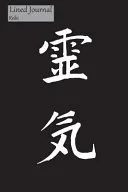
Lined Journal Reiki
 73
73

Lined Journal Reiki
The Lined Journal Reiki, published in 2018, offers a clean and functional space for personal documentation. Its 6x9 inch size is practical, fitting easily into bags, and the 130 lined pages provide ample room for extended entries without the clutter of distracting graphics. The medium ruling is well-spaced, accommodating a variety of handwriting sizes. A notable strength is its unadorned simplicity, which allows the user's content to remain the sole focus. However, its main limitation is a lack of any guiding structure or prompts, which might leave those new to journaling or specific practices like Reiki unsure of where to begin. The mention of "Reiki" in the title is the only overt connection to a specific discipline, leaving its intended esoteric application somewhat implied rather than explicit. It serves its basic function as a notebook effectively, but offers no unique editorial voice or conceptual framework beyond that.
This journal is a competent tool for those who already know precisely what they wish to write.
📝 Description
73
Published on June 29, 2018, Lined Journal Reiki is a 6x9 inch notebook with 130 pages.
This is a 6x9 inch journal with 130 pages of medium-ruled lines, published on June 29, 2018. Its design prioritizes ample writing space, free from illustrations, to accommodate personal thoughts, experiences, or spiritual practices. The journal appeals to individuals who value the physical act of writing for introspection, memory enhancement, and organizing ideas. It offers a distraction-free medium for personal reflection, aiming to support creative output and structured thinking.
The trend towards physical journaling, especially in the late 2010s, represents a move away from digital interfaces towards analog experiences. This journal fits within that resurgence of interest in tangible record-keeping methods. While not historically rooted itself, its blank pages tap into the long-standing human practice of written documentation. The title 'Reiki' specifically suggests its use for practitioners of that energy healing modality, likely for recording sessions, insights, or personal development.
The 'Reiki' in the title directly links this journal to the practice of Usui Reiki, a form of energy healing developed in Japan by Mikao Usui. Reiki practitioners often keep detailed records of their sessions, including client information, energy flow observations, and personal insights gained during or after treatments. This journal provides a dedicated space for such notations, supporting the practitioner's development and the continuity of their healing work. It aligns with the esoteric principle of mindful practice and self-awareness, encouraging practitioners to engage consciously with their energetic experiences.
💡 Why Read This Book?
• Gain a dedicated, distraction-free physical space for personal reflection, directly benefiting from the 130 writable pages, a concrete element designed to encourage sustained thought, unlike fleeting digital notes. • Enhance memory and cognitive function by engaging in the deliberate act of handwriting, a practice supported by research and emphasized in the journal's premise of returning to analog methods. • Structure your thoughts and boost creativity by utilizing the medium-ruled lines, providing a tangible framework for organizing ideas related to your personal practice or esoteric studies, as suggested by the "Reiki" designation.
⭐ Reader Reviews
Honest opinions from readers who have explored this book.
❓ Frequently Asked Questions
What is the primary purpose of the Lined Journal Reiki?
The Lined Journal Reiki is primarily a notebook for personal writing. Its unadorned pages are designed to offer ample space for journaling, reflection, or recording practices, such as those related to Reiki energy healing.
What are the physical dimensions and page count of this journal?
This journal measures 6x9 inches and contains 130 writable pages, each featuring medium-ruled lines for ease of writing.
Does the journal contain any illustrations or prompts?
No, the Lined Journal Reiki features blank, lined pages without any illustrations or pre-written prompts, offering maximum space for the user's own content.
When was the Lined Journal Reiki first published?
The Lined Journal Reiki was first published on June 29, 2018, placing it within the contemporary resurgence of interest in physical journaling.
What benefits of writing are mentioned in the journal's description?
The description highlights benefits such as boosting creativity, improving memory, and helping to structure thoughts, emphasizing the value of pen-and-paper writing.
Is this journal specifically for Reiki practitioners?
While the title suggests a connection to Reiki, the journal itself is a general-purpose lined notebook. It can be used by anyone, including Reiki practitioners for recording sessions, insights, or personal development.
🔮 Key Themes & Symbolism
The Power of Analog Writing
This journal champions the enduring value of physical writing in an increasingly digital world. It posits that the act of putting pen to paper offers distinct cognitive benefits, including enhanced memory retention and improved thought organization. By providing 130 pages free from digital distractions, it creates an environment conducive to deeper introspection and focused creative work, aligning with a contemporary appreciation for analog experiences.
Personal Practice Documentation
The title 'Reiki' suggests a primary intended use for practitioners of this energy healing modality. The journal serves as a dedicated space to record session notes, personal insights, energy readings, or spiritual reflections. This facilitates a consistent practice by offering a tangible record that can be reviewed over time, aiding in the tracking of progress and deepening of understanding within their chosen path.
Unstructured Introspection
Unlike guided journals, this notebook offers complete freedom. Its lack of illustrations or prompts places the onus entirely on the user to direct their writing. This unstructured approach is ideal for those who prefer to explore their thoughts and feelings organically, without external influence. It supports self-discovery and allows for spontaneous recording of ideas as they arise, fostering a personal and evolving narrative.
Cognitive Enhancement Through Writing
The journal's premise is rooted in the idea that writing by hand actively engages the brain differently than typing. The original blurb points to improved memory and structured thinking as direct results. This aligns with cognitive science perspectives that suggest the physical act of forming letters and sentences aids in memory consolidation and the logical sequencing of ideas, making it a tool for mental clarity.
💬 Memorable Quotes
Direct passages from the work, attributed to the author.
“Writing with pen and paper helps to boost creativity.”
— This statement emphasizes the active role of the physical writing process in stimulating imaginative thought, suggesting that the tactile and deliberate nature of handwriting fosters a different kind of creative output than digital input.
“Helps to improve your memory.”
— This highlights a direct cognitive benefit associated with journaling, implying that the act of recording information by hand aids in its retention and recall compared to passive observation or digital storage.
“Helps to structure your thoughts.”
— This suggests that the sequential and linear nature of writing on paper naturally encourages the organization and logical flow of ideas, providing a framework for coherent thinking.
“Online media offer many distractions.”
— This points to a key advantage of physical journals: their immunity to the constant interruptions and temptations inherent in digital devices, allowing for focused and uninterrupted contemplation.
“It's so easy to quickly click or”
— This incomplete sentence fragment underscores the fleeting and often superficial nature of online engagement, contrasting it implicitly with the more deliberate and lasting impact of written reflection.
🌙 Esoteric Significance
Tradition
While the journal itself is a generic tool, its title associates it with Reiki, a form of energy healing developed in Japan by Mikao Usui in the early 20th century. Reiki practice often involves meditation, energy work, and personal spiritual development. This journal aligns with traditions that emphasize self-reflection and the documentation of spiritual experiences as integral to personal growth and understanding within a specific healing modality.
Symbolism
The primary 'symbol' is the blank page itself, representing potential and the unwritten future. The medium-ruled lines can be seen as providing structure and order, mirroring the principles of balance and flow often sought in energy work. The simple, unadorned format emphasizes the user's inner landscape over external aesthetics, aligning with practices that prioritize internal awareness and energetic alignment.
Modern Relevance
In contemporary wellness and self-help circles, there's a strong emphasis on mindfulness, journaling, and personal growth practices. Practitioners of various energy healing modalities, including Reiki, continue to seek dedicated spaces for recording insights, session notes, and personal reflections. This journal serves that need, fitting into modern spiritual routines that value tangible tools for self-discovery and practice management.
👥 Who Should Read This Book
• Reiki practitioners seeking a dedicated space to document sessions, insights, and personal energy work, thereby deepening their connection to their practice. • Individuals interested in analog journaling as a method to enhance memory, structure thoughts, and boost creativity away from digital distractions. • Beginners to introspection and self-reflection who desire a simple, unguided notebook to freely explore their thoughts and experiences without prescribed prompts.
📜 Historical Context
Published in mid-2018, Lined Journal Reiki emerged during a period marked by a significant cultural counter-trend: the resurgence of analog practices. In an era saturated with digital communication and constant connectivity, a growing segment of the population began seeking out physical media for writing, note-taking, and personal reflection. This movement was partly a reaction against the perceived ephemerality and distraction of online life. While not a scholarly text engaging with specific esoteric movements, its existence taps into the broader interest in mindfulness and self-care practices that gained traction throughout the 2010s. Contemporary authors like James Clear, with his book *Atomic Habits* (first published 2018), implicitly supported this trend by emphasizing the power of small, consistent habits, which journaling facilitates. The journal’s utility is therefore framed within this contemporary desire for tangible, focused engagement, distinct from the rapid-fire information exchange characteristic of platforms like Twitter, which saw significant growth throughout the preceding decade.
📔 Journal Prompts
Reflect on the energy felt during your last Reiki session.
Record three key insights gained from reviewing your journal entries.
Describe a moment where writing helped you structure a complex thought.
Explore the connection between creativity and the act of handwriting.
Document an instance where analog writing offered clarity amidst digital noise.
🗂️ Glossary
Reiki
A Japanese form of alternative medicine called energy healing, developed by Mikao Usui in the early 20th century. Practitioners use their hands to deliver energy through points of the body, supposedly improving the flow of life energy.
Journaling
The practice of keeping a personal record of events, experiences, thoughts, and feelings. It is often used for self-reflection, emotional processing, and creative expression.
Medium Ruled
Refers to the spacing of lines on a notebook page. Medium ruled (or college ruled) lines are typically about 7/32 inches (5.6 mm) apart, offering a balance between ample writing space and efficiency.
Analog
Relating to or using signals or data represented by continuous physical variable quantities. In a broader sense, it refers to non-digital or traditional methods, such as pen and paper.
Cognitive Benefits
Positive effects on mental processes such as learning, memory, attention, problem-solving, and decision-making. Handwriting is often cited as having such benefits.
Esoteric
Intended for or likely to be understood by only a small number of people with a specialized knowledge or interest. Often relates to mystical or occult subjects.
Introspection
The examination or observation of one's own mental and emotional processes. It is a key component of self-awareness and personal development.