I Ching

 75
75

I Ching
Reifler's 1969 *I Ching* edition offers a straightforward introduction to the venerable oracle, prioritizing clarity for a Western audience unfamiliar with its deep roots in Chinese cosmology. Its strength lies in its systematic presentation of the hexagrams and their meanings, making the complex structure of the *Yijing* more digestible than some more dense scholarly translations. However, the text sometimes sacrifices the poetic nuance and layered symbolism found in older versions for directness, which may leave seasoned practitioners wanting more. A passage detailing the transformation of Hexagram 1, Qian (The Creative), into Hexagram 11, Tai (Peace), exemplifies this approach – it clearly explains the mechanics of change but perhaps undersells the subtle shifts in cosmic energy it represents. Reifler’s work provides a functional gateway into a profound system. It is a useful, if not definitive, primer for the curious.
📝 Description
75
Sam Reifler's 1969 edition of the I Ching offers Western readers a structured approach to this ancient Chinese oracle.
First published in 1969, Sam Reifler's work engages with the *I Ching*, an ancient Chinese text of divination and philosophy. This edition aims to make the oracle accessible to a Western audience, explaining the sixty-four hexagrams, their judgments, and the significance of changing lines. It provides a method for understanding the cycles of existence and the nature of transformation.
The book is suited for those interested in Chinese philosophy, divination, and Western esoteric thought. It also appeals to readers of comparative religion and the history of ideas, particularly how Eastern concepts have been absorbed into Western perspectives. Anyone curious about the connection between cosmology and personal guidance will find its organized presentation helpful.
Reifler's 1969 publication arrived during a period of heightened Western engagement with Eastern philosophies. Influenced by figures like Alan Watts and the counterculture movement, the book sought to clarify the *I Ching*'s complex system for an audience receptive to alternative worldviews. It joined a growing number of translated esoteric texts that became available beyond academic spheres, often discussed alongside Taoist and Buddhist works.
💡 Why Read This Book?
• Gain a structured understanding of the 64 hexagrams and their changing lines, a core element of the *I Ching*'s divination system, as presented in Sam Reifler's accessible 1969 edition. • Explore the philosophical underpinnings of change and transformation as depicted through the dynamic interactions of yin and yang lines within the hexagrams, offering a unique lens on cyclical processes. • Appreciate the historical context of how the *I Ching* was introduced to Western esoteric circles in the 1960s, providing insight into the reception of Eastern philosophies during that era.
⭐ Reader Reviews
Honest opinions from readers who have explored this book.
❓ Frequently Asked Questions
When was Sam Reifler's edition of the I Ching first published?
Sam Reifler's edition of the I Ching was first published in 1969, positioning it within a period of increased Western interest in Eastern spiritual and philosophical traditions.
What are the fundamental components of the I Ching discussed in Reifler's book?
The book details the 64 hexagrams, each formed by six lines (solid or broken), and the significance of changing lines within these structures, explaining their role in divination and philosophical interpretation.
Is Reifler's I Ching suitable for beginners?
Yes, Reifler's edition is generally considered suitable for beginners due to its focus on clear presentation and accessibility for Western readers new to the text.
What is the significance of the hexagrams in the I Ching?
Hexagrams are fundamental symbols representing archetypal situations and cosmic principles. They are used in the I Ching to provide counsel and insight into the dynamics of change in life.
How does Reifler's edition connect to broader esoteric traditions?
Published in 1969, Reifler's work tapped into the era's burgeoning interest in Eastern philosophies and esoteric systems, making the I Ching available to a Western audience exploring these subjects.
What does the concept of 'changing lines' represent in the I Ching?
Changing lines are specific lines within a hexagram that indicate a transition or transformation, suggesting a shift from one situation or hexagram to another.
🔮 Key Themes & Symbolism
The 64 Hexagrams
Reifler's work centers on the 64 hexagrams, the foundational symbolic language of the *I Ching*. Each hexagram is an arrangement of six lines, either solid (yang) or broken (yin), representing fundamental archetypes and situations. The text details the specific imagery and interpretations associated with each, providing a lexicon for understanding the oracle's responses. This structured system allows for nuanced readings of complex life circumstances, mapping them onto universal patterns of change and development observed in nature and human affairs.
Dynamics of Change
A core esoteric principle explored is the concept of constant flux, embodied by the changing lines within the hexagrams. These lines signify points of transition, indicating how a present situation might evolve into another. Reifler's presentation highlights the *Yijing*'s view of reality as a dynamic process, not a static state. Understanding these transformations is crucial for discerning the flow of events and making timely decisions aligned with cosmic currents, a central tenet in many divination systems.
Yin and Yang Polarity
The fundamental duality of yin (broken lines) and yang (solid lines) forms the building blocks of the hexagrams. Reifler's approach illustrates how the interplay and balance of these opposing yet complementary forces shape all phenomena. This concept, central to Taoist philosophy, provides a framework for analyzing situations by identifying dominant energies and their potential for interaction or conflict. The text uses this binary system to map a vast spectrum of possibilities and tendencies.
Divination and Guidance
The practical application of the *I Ching* as an oracle is a key theme. Reifler's edition facilitates the use of the text for seeking guidance on specific questions. By casting yarrow stalks or coins to generate hexagrams, individuals can consult the oracle for insights into challenges and opportunities. The text's interpretations of the hexagrams and their changing lines are designed to offer wisdom for navigating personal and collective circumstances.
💬 Memorable Quotes
Direct passages from the work, attributed to the author.
“The hexagrams represent fundamental situations.”
— This highlights the archetypal nature of the *I Ching*'s symbolic language. It suggests that the 64 combinations of lines are not arbitrary but capture recurring patterns and scenarios inherent in the human experience and the natural world.
“Changing lines indicate transformation.”
— This points to the dynamic aspect of the *I Ching*. It emphasizes that the oracle's message is not fixed but can evolve, offering insight into potential future developments and the process of change itself.
“The text serves as a guide for decision-making.”
— This interpretation emphasizes the practical utility of the *I Ching*. It positions the book not merely as a philosophical text but as a tool for gaining wisdom and clarity when facing choices and uncertainties.
“Understanding the sequence of hexagrams reveals cosmic patterns.”
— This suggests that the *I Ching*'s structure holds deeper cosmological meaning. The order and relationships between the hexagrams are presented as a map of universal processes and the flow of existence.
💡 Key Ideas
Editorial paraphrase of the work's core concepts — not direct quotes.
Yin and yang are complementary forces.
This paraphrased concept underscores the foundational principle of duality in the *I Ching*. It signifies that opposing forces are interdependent and essential for the creation and functioning of the cosmos, a central idea in Taoist philosophy.
🌙 Esoteric Significance
Tradition
The *I Ching*, as presented by Reifler, fits within the broader Western esoteric interest in ancient wisdom traditions that offer cosmological frameworks and divinatory practices. While rooted in Chinese Taoism, its appeal to Western esotericists lies in its symbolic language and cyclical philosophy, which can be analogized to concepts found in Hermeticism and Kabbalah regarding divine order and transformation. Reifler's edition bridges Eastern philosophy with a Western audience seeking tools for self-understanding and spiritual insight.
Symbolism
The primary symbols are the solid (yang) and broken (yin) lines, representing fundamental cosmic dualities like masculine/feminine, active/receptive, light/dark. These lines combine to form the 64 hexagrams, each a potent symbol of a universal archetype or situation, such as 'The Creative' (Qian) or 'The Receptive' (Kun). The changing lines within a hexagram further symbolize the dynamic aspect of these archetypes, indicating potential shifts and developments.
Modern Relevance
Contemporary practitioners of Jungian psychology continue to explore the *I Ching*'s archetypal patterns. Modern divination communities and those interested in comparative spirituality often reference early Western editions like Reifler's to understand the text's integration into Western esoteric thought. Its principles of change and interconnectedness also resonate with modern systems thinking and mindfulness practices, demonstrating its enduring value beyond its original cultural context.
👥 Who Should Read This Book
• Beginning students of Chinese philosophy and divination seeking a clear introduction to the *I Ching*'s structure and core concepts. • Western esoteric practitioners interested in comparative systems of divination and cosmology, looking to understand the *I Ching*'s place within a global esoteric landscape. • Individuals exploring philosophical texts from the 1960s and 70s that engaged with Eastern wisdom traditions, offering insight into their historical reception.
📜 Historical Context
Sam Reifler's 1969 edition of the *I Ching* emerged during a period of profound cultural and intellectual ferment in the West. The 1960s saw a significant surge in interest in Eastern philosophies, mysticism, and divination, partly catalyzed by figures like Aldous Huxley and the Beat Generation's embrace of Zen Buddhism. This edition was part of a broader wave of making esoteric and ancient texts accessible to a countercultural and spiritually seeking audience, often in parallel with the growing popularity of Jungian psychology, which found resonance in the *I Ching*'s archetypal symbolism. Unlike purely academic translations, Reifler's work aimed for practical engagement, distinguishing it from scholarly efforts that might have focused solely on philological accuracy or historical context. Its publication contributed to the *I Ching*'s establishment as a key text within Western esoteric circles, alongside works on Hermeticism and the Kabbalah.
📔 Journal Prompts
The structure of Hexagram 1, Qian, and its representation of pure yang energy.
How the concept of changing lines alters the interpretation of a hexagram.
The balance between yin and yang in a specific hexagram you have consulted.
Comparing the archetypes presented in the *I Ching* to those in Western traditions.
The practical application of *I Ching* counsel in a personal decision.
🗂️ Glossary
Hexagram
A figure composed of six stacked horizontal lines, each line being either solid (yang) or broken (yin). There are 64 possible hexagrams in the *I Ching*, representing fundamental archetypes and situations.
Yin
In the *I Ching* and Taoist philosophy, yin represents the passive, dark, feminine, receptive, and yielding principle, symbolized by a broken line (--).
Yang
In the *I Ching* and Taoist philosophy, yang represents the active, light, masculine, assertive, and creative principle, symbolized by a solid line (—).
Changing Lines
Specific lines within a hexagram that are identified during a divination casting. These lines indicate a transition or transformation, suggesting a movement towards another hexagram.
Judgment
The text associated with each hexagram that provides an overall meaning or counsel for the situation represented by the hexagram.
Trigram
A figure composed of three stacked horizontal lines, either solid or broken. The eight trigrams are the building blocks from which the 64 hexagrams are formed.
Oracle
In the context of the *I Ching*, the oracle refers to the text itself as a system used for divination and seeking wisdom or guidance.
🔮 Readers Also Liked
Browse all →









More by Sam Reifler
All books →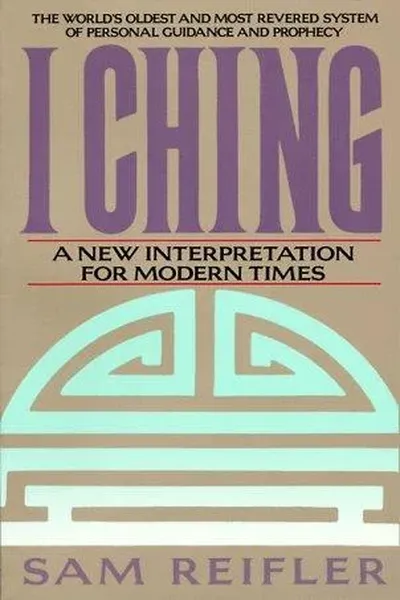
More Free Divination & Tarot Books
View all →