Red Earth and Pouring Rain
 71
71

Red Earth and Pouring Rain
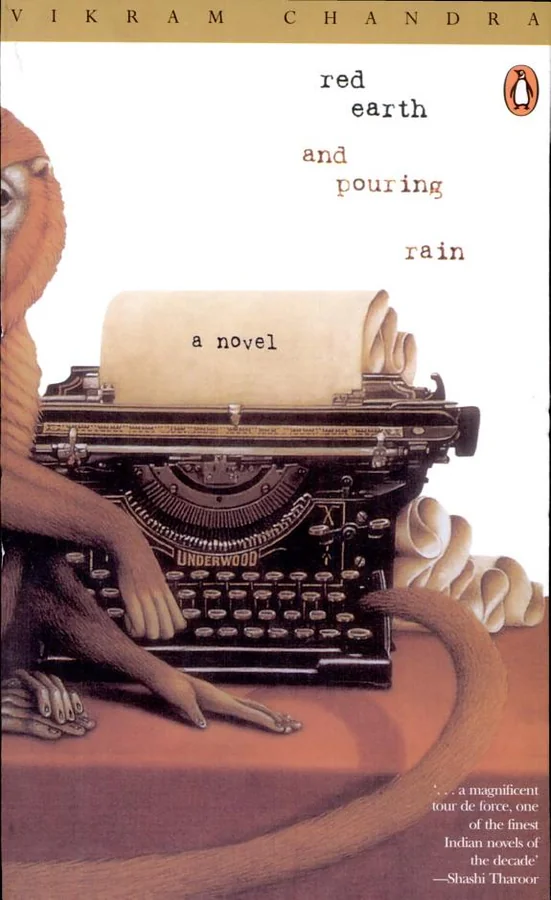
Vikram Chandra's first novel, Red Earth and Pouring Rain, attempts a feat of narrative ambition rarely seen in a debut. The framing device, featuring gods like Ganesha and Yama observing a narrative contest with a wounded monkey, is inspired. It sets a stage for a multi-layered exploration of 19th-century India, where the epic sweep of history meets personal struggle. The prose, particularly when describing the burgeoning city of Calcutta or the internal lives of poet Sanjay and warrior Sikander, is often luminous. However, the novel's very scope can become a burden. The intricate plotting and constant shifts in perspective, while intellectually stimulating, sometimes obscure the emotional core. The strength lies in its fearless engagement with myth, but its limitation is a tendency towards narrative sprawl that can test even dedicated readers. It remains a singular achievement in its audacious fusion of the cosmic and the human.
📝 Description
71
Vikram Chandra's 1997 debut novel, Red Earth and Pouring Rain, weaves myth and history into a sprawling narrative.
This 1997 novel by Vikram Chandra frames a 19th-century Indian story within a contemporary narrative that features divine beings and a wounded monkey. It examines storytelling, faith, and the nature of reality, drawing heavily on Indian mythology and epic traditions. The book's structure is complex, intertwining different timelines and perspectives. Readers who appreciate layered narratives and engagement with Indian cultural heritage will find much to consider. The prose is evocative yet demanding, blending the mythical with the mundane. Those seeking simpler genre fiction may find its density a challenge.
The novel emerged at a time of growing global interest in postcolonial narratives. Chandra's work offers a unique viewpoint on India's history, blending colonial influences with mythological frameworks. It contributed to world literature by portraying Indian identity and storytelling in a complex manner. The narrative reflects a worldview where the sacred is ever present, highlighting the power of narrative itself as a force capable of influencing life and death.
Red Earth and Pouring Rain is steeped in Hindu cosmology, drawing on figures like Hanuman, Ganesha, and Yama. It presents a worldview where divine forces are immanent, interacting directly with mortal and animal lives. The novel treats storytelling not merely as a plot device but as a metaphysical force that shapes destiny and mediates existence. This approach aligns with traditions that see narrative and myth as fundamental to understanding reality and the human condition, reflecting a belief in the sacred's pervasive influence.
💡 Why Read This Book?
• Gain insight into the philosophical underpinnings of Hindu mythology as deities like Hanuman and Ganesha actively shape human destinies within the narrative's 19th-century Indian setting. • Experience a unique narrative structure that uses a divine pact as a catalyst for storytelling, demonstrating how ancient myths can frame contemporary concerns about existence. • Understand the postcolonial literary landscape of the late 1990s through a work that consciously interrogates Indian history and identity by blending epic traditions with personal sagas.
⭐ Reader Reviews
Honest opinions from readers who have explored this book.
❓ Frequently Asked Questions
What is the primary mythological framework of Red Earth and Pouring Rain?
The novel draws heavily from Hindu mythology, featuring prominent deities such as Hanuman, Ganesha, and Yama. Their presence and interactions with the human and animal characters ground the narrative in concepts of dharma, karma, and divine intervention prevalent in Indian spiritual traditions.
What historical period does the novel primarily depict?
The core narrative of Red Earth and Pouring Rain is set in 19th-century India, exploring the social, cultural, and personal dynamics of the era. This setting is crucial for understanding the interplay between colonial influences and indigenous traditions.
Who are the main human characters in the 19th-century storyline?
The central human figures in the 19th-century narrative are Sanjay, a poet, and Sikander, a warrior. Their lives and interconnected stories form a significant part of the novel's exploration of fate, ambition, and the human condition.
What is the role of the wounded monkey in the story?
The wounded monkey acts as a catalyst for the narrative. He strikes a bargain with the gods: to live if he can entertain them with a story. This premise sets the stage for the unfolding tale of 19th-century India.
Is Red Earth and Pouring Rain considered a complex novel?
Yes, Red Earth and Pouring Rain is widely regarded as a complex and layered novel due to its intricate structure, blend of myth and history, and dense prose. It demands focused attention from the reader.
When was Vikram Chandra's Red Earth and Pouring Rain first published?
Vikram Chandra's debut novel, Red Earth and Pouring Rain, was first published in 1997, marking his significant entry into the literary world.
🔮 Key Themes & Symbolism
The Metaphysics of Storytelling
The novel posits storytelling not merely as entertainment but as a fundamental force shaping reality, capable of mediating life and death. The bargain struck with the gods hinges on the monkey's ability to combine a compelling narrative, elevating the act of creation to a sacred duty. This echoes ancient oral traditions where myths and epics were considered conduits of spiritual truth and historical memory, demonstrating how narrative can transcend the mundane and touch the divine.
Divine Immanence and Intervention
The presence of deities like Hanuman, Ganesha, and Yama is not symbolic but literal within the novel's framework. They descend to interact with the earthly realm, demonstrating a worldview where the divine is intimately involved in mortal affairs. This reflects a core tenet of many Indian spiritual traditions, where gods and goddesses are active participants in the cosmos, influencing events and individuals, and highlighting the porous boundary between the human and the divine.
Cyclical Time and Destiny
Red Earth and Pouring Rain engages with concepts of cyclical time, where past, present, and future are interconnected, and destinies are woven through ancient patterns. The narrative structure itself, with its layers of stories and divine observation, suggests a universe operating on principles beyond linear progression. This aligns with notions of cosmic cycles (yugas) and the predetermined paths (karma) that influence the lives of both humans and mythical beings within the story.
The Blurring of Myth and History
Chandra masterfully fuses mythological elements with historical settings, specifically 19th-century India. The epic battles and divine interventions are presented with the same narrative weight as the societal changes and personal struggles of the era. This approach challenges a purely secular or historical understanding of the past, suggesting that mythic forces are integral to historical unfolding and the collective consciousness of a people.
💬 Memorable Quotes
Direct passages from the work, attributed to the author.
“The gods Hanuman, Ganesha And Yama Descend On A House In An Indian City To Vie For The Soul Of A Wounded Monkey.”
— This opening premise immediately establishes the novel's combination of the divine and the mundane, setting up a cosmic wager that drives the narrative and foregrounds the power of storytelling.
“A Bargain Is Struck: The Monkey Must Tell A Story, And If He Can Keep His Audience Entertained, He Shall Live.”
— This highlights the central thematic concern: the life-giving, reality-shaping power of narrative. The monkey's survival is contingent on his ability to captivate, positioning storytelling as a vital act of existence.
“The Result Is Red Earth And Pouring Rain, A Tale Of Nineteenth Century India: Of Sanjay, A Poet, And Sikander, A Warrior.”
— This anchors the mythological premise to a specific historical and geographical context, introducing the human protagonists whose lives will unfold against this richly detailed backdrop.
“Of Hoofbeats Thundering Through The Streets Of Calcutta And The Birth Of A Luminous Child; Of Great Wars And...”
— This snippet evokes the sensory richness and epic scope of the narrative, promising a depiction of intense action, significant events, and potentially miraculous occurrences within the historical setting.
“The Gods... Vie For The Soul Of A Wounded Monkey.”
— This concise phrasing underscores the novel's audacious premise, where even divine beings are engaged in dramatic contests over the fate of a single creature, emphasizing the profound stakes of the narrative.
🌙 Esoteric Significance
Tradition
The novel is deeply rooted in the Indic traditions, particularly Hinduism, drawing heavily on its vast pantheon and cosmological concepts. It aligns with devotional (Bhakti) traditions where divine beings are accessible and actively involved in the lives of mortals, and also carries the philosophical inquiries found in Vedanta regarding reality and illusion. It departs from purely didactic or ritualistic interpretations by presenting these elements through a complex, modern narrative structure.
Symbolism
The monkey, a recurring figure in Hindu iconography (e.g., Hanuman), often symbolizes devotion, strength, and the restless mind. Its wounded state suggests vulnerability and the need for redemption or healing through narrative. The 'Red Earth' can symbolize the material world, lifeblood, and ancestral grounding, while 'Pouring Rain' evokes cleansing, fertility, divine grace, or overwhelming emotion and change, linking the earthly and celestial.
Modern Relevance
Contemporary practitioners of comparative mythology and scholars of postcolonial literature frequently engage with Chandra's work. Its intricate combining of divine narratives with historical accounts is relevant to modern spiritual seekers interested in non-Western cosmologies and the philosophical implications of storytelling. It informs discussions on how ancient myths continue to shape contemporary understanding of identity, reality, and the human condition in a globalized world.
👥 Who Should Read This Book
• Readers interested in comparative mythology and world religions, seeking to understand Hindu deities like Hanuman and Ganesha through narrative. • Students of postcolonial literature who want to explore complex representations of 19th-century Indian history and identity. • Aspiring writers and literary enthusiasts who appreciate ambitious narrative structures and the fusion of epic storytelling with personal drama.
📜 Historical Context
Published in 1997, Red Earth and Pouring Rain arrived during a vibrant period for postcolonial literature, where authors were increasingly reclaiming and reinterpreting national histories and cultural narratives. Vikram Chandra's novel offered a distinct contribution by not only situating its story in 19th-century India but by deeply embedding it within Hindu mythology. This approach stood in contrast to more secular or Western-influenced historical fiction of the time. While figures like Salman Rushdie had already explored the intersection of myth and history in Indian literature, Chandra’s direct engagement with deities and epic structures provided a unique framework. The novel was noted for its literary ambition and its complex engagement with Indian identity, reflecting a broader trend of diversifying global literary voices.
📔 Journal Prompts
The divine bargain struck by the wounded monkey: how does narrative become a form of salvation?
Sanjay, the poet, and Sikander, the warrior: explore the tension between creative expression and martial action.
The presence of Ganesha and Yama: reflect on the symbolic roles of the remover of obstacles and the god of death.
Calcutta in the 19th century: how does the city function as a character in the unfolding epic?
The concept of cyclical time in the novel: how does it challenge linear historical progression?
🗂️ Glossary
Hanuman
A central deity in Hindu mythology, often depicted as a divine monkey, known for his strength, devotion to Rama, and role in the epic Ramayana. He embodies loyalty and courage.
Ganesha
The elephant-headed Hindu god of beginnings, wisdom, and obstacle removal. He is often invoked at the start of rituals and new ventures, symbolizing good fortune and success.
Yama
In Hindu tradition, Yama is the god of death and the underworld. He judges the dead based on their karma and presides over the afterlife, representing inevitability and justice.
Dharma
A fundamental concept in Indian religions, referring to one's duty, righteousness, ethical conduct, and cosmic order. Living according to one's dharma is considered essential for spiritual progress.
Karma
The principle of cause and effect, where actions (karma) create consequences that determine one's future destiny, both in this life and in subsequent rebirths. It emphasizes personal responsibility.
Yuga
An epoch or age in Hindu cosmology, representing vast cycles of time. The current era is the Kali Yuga, considered an age of conflict and spiritual decline, following previous ages of greater virtue.
Postcolonial Literature
Literary works that engage with the legacy of colonialism, often exploring themes of identity, culture, power, and resistance in societies formerly under imperial rule.
This book appears in 1 collection
🔮 Readers Also Liked
Browse all →









From the “Reincarnation” Collection
View all →









More Free Occult Philosophy Books
View all →