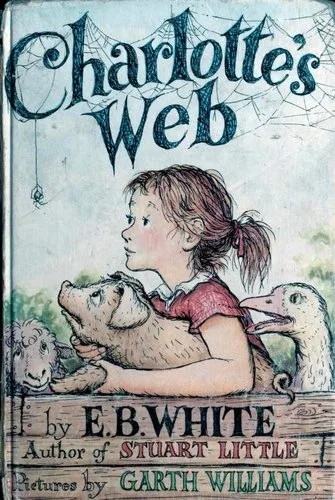
Charlotte's Web
 78
78

Charlotte's Web
E. B. White’s "Charlotte’s Web" is often lauded as a children's classic, yet its undercurrents of mortality and the quiet dignity of sacrifice offer a richer experience for adult readers. The novel’s strength lies in its unadorned prose, which allows the profound emotional truths to surface without sentimentality. White masterfully presents the inevitable end of life through Charlotte’s peaceful passing, a passage that serves as a poignant meditation on existence. A limitation, however, can be found in the inherent anthropomorphism, which, while charming, can sometimes overshadow the raw realities of the farm environment the book depicts. The scene where Charlotte crafts her final words, "Some Pig," is a remarkable demonstration of love’s power to transcend physical limitations and the boundaries of species. Ultimately, the book functions as a gentle, yet potent, exploration of life's fundamental cycles.
📝 Description
78
E. B. White published Charlotte's Web in 1952, a story about a pig and a spider.
Charlotte's Web, written by E. B. White, tells the story of Wilbur, a pig destined for slaughter, and Charlotte, a barn spider who devises a plan to save him. The narrative unfolds on a farm, focusing on the unexpected bond that forms between these two creatures.
White, known for his clear prose, crafted a fable that touches on profound themes. Wilbur's impending death prompts Charlotte to act, demonstrating a deep loyalty that transcends natural instincts. The story considers the cycle of life and death, suggesting continuity rather than absolute finality. It presents a world where even the smallest creatures can enact great deeds through devotion.
The book resonates with readers who appreciate stories about interconnectedness and the meaning found in ordinary life. It offers layers of interpretation, suitable for both children and adults seeking reflection on mortality and friendship through a unique animal perspective.
While not explicitly religious, Charlotte's Web engages with esoteric concepts through its portrayal of life's cycles and the nature of existence. Charlotte's efforts to preserve Wilbur's life, and her subsequent passing, point to a continuity of being and the enduring impact of selfless acts. The narrative suggests that life and death are transitions within a larger, interconnected whole, echoing themes found in various spiritual traditions that emphasize the persistence of essence and the significance of one's actions beyond physical existence.
💡 Why Read This Book?
• You will gain an appreciation for the profound impact of language and intention, as seen in Charlotte's efforts to save Wilbur through her web. • You will experience a nuanced exploration of mortality, understanding how E. B. White frames death not as an end but as a natural transition. • You will feel the weight of interspecies connection, recognizing how Charlotte's dedication to Wilbur exemplifies a selfless act of friendship.
⭐ Reader Reviews
Honest opinions from readers who have explored this book.
❓ Frequently Asked Questions
What is the main message of Charlotte's Web?
The central message revolves around the power of friendship, the acceptance of life's natural cycles including death, and the significance of selfless acts of love and loyalty.
When was Charlotte's Web first published?
Charlotte's Web was first published in 1952, marking its debut in the post-World War II era.
Who is the author of Charlotte's Web?
The author is E. B. White, a celebrated American writer known for his clear prose and insightful storytelling.
What is the significance of the spider in Charlotte's Web?
Charlotte the spider symbolizes wisdom, loyalty, and the capacity for profound love and sacrifice, using her unique abilities to protect her friend Wilbur.
Does Charlotte's Web deal with death?
Yes, the book addresses death directly but gently, presenting it as a natural part of life's continuum and exploring themes of legacy and remembrance.
What is the farm setting in Charlotte's Web?
The story is set on Zuckerman's farm, a typical rural setting that serves as the stage for the interactions between the animals and the human inhabitants.
🔮 Key Themes & Symbolism
Life and Mortality
The narrative confronts the inevitability of death not with fear, but with acceptance and grace, particularly through Charlotte's peaceful demise. This theme is explored through Wilbur's initial terror and eventual understanding of life's cycles. The book presents mortality as a natural transition, emphasizing the continuation of life through legacy and memory, symbolized by Charlotte's egg sac and her spider offspring.
Friendship and Sacrifice
The core of the story lies in the extraordinary bond between Wilbur the pig and Charlotte the spider. Charlotte's selfless dedication to saving Wilbur, an act that goes against natural instincts, highlights the power of genuine affection. Her efforts, from tying words into her web to her final days, are a proof of the sacrifices one makes for a cherished friend.
The Power of Words
Charlotte's ability to spin words into her web transforms Wilbur from an ordinary pig into a 'Some Pig,' garnering him fame and saving his life. This aspect underscores the potent influence of language and narrative in shaping perception and reality. The written word becomes a tool for salvation and a means of immortalizing the subject.
Cycles of Nature
The book implicitly acknowledges the cyclical nature of existence within the farm ecosystem. Birth, life, death, and renewal are presented as interconnected processes. Charlotte's death, though sad, leads to the continuation of her lineage, mirroring the seasonal changes and the enduring presence of life in nature. The farm itself is a microcosm of these larger natural rhythms.
💬 Memorable Quotes
Direct passages from the work, attributed to the author.
“"Don't count your chickens before they are hatched."”
— This proverb, used in the context of Wilbur's potential fame, serves as a reminder of the uncertainty of future outcomes and the importance of not assuming success prematurely.
“"It is not often that something so dirty and common as a spider is so clever and so well-read."”
— This observation by Charlotte highlights the theme of perception versus reality, suggesting that wisdom and value can be found in unexpected places and beings, challenging societal prejudices.
“"I’d rather be a bad farmer than a farmer who mistreats animals."”
— This sentiment, implied by the characters' actions and the narrative's focus, emphasizes the ethical responsibility towards living creatures, even within a commercial agricultural setting.
“"Charlotte said to Wilbur, 'You have been my friend. That in itself is a tremendous thing.'"”
— This statement expresses the profound value placed on genuine connection and friendship, suggesting that the act of being a true friend is inherently significant and deeply meaningful.
“Charlotte's web declaring Wilbur as "Some Pig."”
— This phrase is an interpretation of Charlotte's profound belief in Wilbur's inherent worth, demonstrating how language and specific affirmations can elevate an individual and alter their perceived destiny.
🌙 Esoteric Significance
Tradition
While not overtly adhering to a single esoteric tradition, "Charlotte's Web" can be viewed through a Hermetic lens, emphasizing the principle of correspondence: "As above, so below." The microcosm of the farm mirrors larger universal laws of life, death, and interconnectedness. Charlotte, the spider, acts as a weaver of fate and a conduit of divine knowledge, spinning not just silk but also profound truths into her web.
Symbolism
Charlotte, the spider, symbolizes the Great Mother archetype, the weaver of destiny, and the embodiment of wisdom and patience. Her webs represent the intricate patterns of existence and the manifestation of thought into reality. Wilbur, the pig, represents innocence, vulnerability, and the potential for transformation, embodying the earthly realm that is subject to the grander cosmic design.
Modern Relevance
Contemporary thinkers in eco-philosophy and animal ethics find resonance in White's portrayal of interspecies empathy and respect. The book's gentle yet unflinching look at life cycles informs modern discussions on mindfulness, compassion, and the recognition of sentience in all beings, aligning with practices that seek to bridge the perceived gap between humanity and the natural world.
👥 Who Should Read This Book
• Readers interested in allegorical literature and the philosophical exploration of life and death, seeking a narrative that offers clear insights without overt dogma. • Students of comparative mythology and archetypes, who can analyze the archetypal roles of the spider (weaver, fate) and the pig (innocence, earthly existence). • Individuals seeking to understand the ethical treatment of animals and the importance of empathy, presented through a gentle yet impactful story.
📜 Historical Context
When E. B. White's "Charlotte's Web" was published in 1952, American literature was undergoing a shift, with a growing emphasis on nuanced children's stories that could engage with complex themes. White, already a respected essayist and critic, brought a sophisticated literary sensibility to the genre. The post-war period saw a rise in realism and a move away from purely didactic tales, allowing for works like White's that explored mortality and the natural world with honesty. While "Charlotte's Web" was widely acclaimed, it also encountered some challenges in schools, reflecting a broader societal tension around discussing death with children. This reception contrasts with the often sentimentalized portrayals of animals in earlier children's literature. White's work stood apart from the more fantastical elements prevalent in some children's books of the era, grounding its profound themes in a believable farm setting.
📔 Journal Prompts
Charlotte's web as a symbol of fate and communication.
Wilbur's fear of mortality and its transformation.
The nature of true friendship as demonstrated by Charlotte and Wilbur.
The cyclical nature of life and death on Zuckerman's farm.
The impact of words and declarations, such as 'Some Pig'.
🗂️ Glossary
Zuckerman's Farm
The setting for the narrative, representing a microcosm of the natural world where the cycles of life, death, and interdependence are observed.
Charlotte
A wise and loyal barn spider who forms a deep friendship with Wilbur, embodying themes of sacrifice, wisdom, and the power of words.
Wilbur
A young pig destined for slaughter, who becomes the recipient of Charlotte's extraordinary friendship and efforts to save his life.
Egg Sac
Charlotte's final creation, symbolizing legacy, continuation, and the enduring presence of life beyond individual existence.
Some Pig
The phrase Charlotte spins into her web, transforming Wilbur's perceived destiny and highlighting the wide impact of affirmation and recognition.
The Fair
A significant event in the narrative where Wilbur's fame culminates, serving as a stage for the story's climax and resolution regarding his fate.
Templeton
A rat character who represents self-interest and pragmatism, providing a foil to Charlotte's altruism and highlighting different motivations within the farm community.
🔮 Readers Also Liked
Browse all →








More by E. B. White
All books →


More Free Occult Philosophy Books
View all →