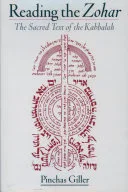
Reading the Zohar
 80
80

Reading the Zohar
Pinchas Giller’s Reading the Zohar offers a lucid and accessible entry point into a notoriously dense body of mystical literature. Rather than presenting the Zohar as a static artifact, Giller skillfully illustrates its dynamic role in the formation of classical Kabbalah. A notable strength is his ability to connect abstract theological concepts, such as the nature of *Ein Sof* (the Infinite), to the literary and historical context of the 13th century. The work effectively demystifies the Zohar for those intimidated by its reputation. However, the book occasionally feels more like a detailed summary than a critical engagement, sometimes leaving the reader wishing for a more direct confrontation with the Zohar's more challenging passages or alternative interpretations. Giller's discussion of the *sefirot* as divine attributes that structure reality is particularly well-handled. It serves as a solid, if not entirely groundbreaking, introduction to the text's historical and doctrinal significance.
📝 Description
80
Pinchas Giller's 2001 study examines the Zohar, a central text of Kabbalah.
Published in 2001, Pinchas Giller's Reading the Zohar offers a scholarly look at the Zohar, a key text in Jewish mysticism. The book follows how important Kabbalistic ideas developed, using the Zohar as its main focus. Giller goes beyond simply analyzing the text, looking into the intellectual and spiritual forces that shaped these mystical concepts.
The book is for students of Kabbalah, comparative religion, and Jewish history. It assumes some familiarity with Jewish mystical traditions. Readers will gain a better understanding of the Zohar's role in organizing esoteric thought. Those who study Kabbalah and advanced practitioners interested in how Kabbalistic concepts formed historically will find Giller's work useful. The study considers the intellectual environment of medieval Spain, a time of significant cultural and religious mixing, and how this may have affected the Zohar's symbolic language and theological ideas.
The Zohar, likely compiled in late 13th century Spain, marks a significant point in Jewish mysticism. Before its circulation, Kabbalistic ideas existed in various forms. Giller's work situates the Zohar within this evolving tradition, showing how it combined and formalized earlier mystical streams. It examines the intellectual climate of medieval Spain, a period rich with cultural and religious exchange, suggesting its influence on the Zohar's symbolic depth and theological complexity.
💡 Why Read This Book?
• Gain a concrete understanding of how central Kabbalistic doctrines, like the *sefirot*, were formalized within the Zohar, moving beyond abstract notions to historical textual development. • Appreciate the specific historical milieu of 13th-century Spain, understanding how this intellectual environment shaped the Zohar's unique mystical language and theology. • Learn about the concept of *tzimtzum* as explored in the Zohar, grasping its significance in understanding divine presence and creation within Jewish mysticism.
⭐ Reader Reviews
Honest opinions from readers who have explored this book.
❓ Frequently Asked Questions
What is the primary focus of Pinchas Giller's Reading the Zohar?
The book focuses on how the Zohar, a foundational text of Jewish mysticism, served as a crucial point for the consolidation and articulation of classical Kabbalistic doctrines up to the 13th century.
Who is Pinchas Giller and what is his expertise?
Pinchas Giller is a scholar specializing in Jewish mysticism and Kabbalah. His work is recognized for its insightful analysis of Kabbalistic texts and their historical development.
When was Reading the Zohar first published?
Reading the Zohar was first published in 2001, providing a modern scholarly perspective on ancient Kabbalistic texts.
Does the book require prior knowledge of Kabbalah?
While the book aims to be accessible, a foundational understanding of Jewish mystical traditions is beneficial for fully appreciating the nuances discussed regarding the Zohar's doctrines.
What historical period does the book primarily address concerning the Zohar?
The book primarily addresses the period leading up to and including the 13th century, focusing on how the Zohar synthesized and solidified Kabbalistic thought of that era.
What are some key Kabbalistic concepts explored in relation to the Zohar?
Key concepts include the *sefirot* (divine emanations), *tzimtzum* (divine contraction), and the mystical interpretation of the Torah, all examined as they are presented in the Zohar.
🔮 Key Themes & Symbolism
Formation of Kabbalistic Doctrine
This work meticulously details how the Zohar acted as a crucible for Jewish mystical thought. It examines the emergence of core Kabbalistic ideas, such as the ten *sefirot* and the concept of divine concealment, showing how these principles were codified and propagated through the Zohar's narratives and symbolic language. Giller illustrates the Zohar's role in transforming disparate mystical traditions into a more cohesive theological system.
The Zohar as a Textual Synthesis
Giller presents the Zohar not as a singular authorial work but as a compilation reflecting the synthesis of various strands of Jewish mysticism prevalent up to the 13th century. The book explores how the Zohar integrated earlier esoteric lore, commentaries on the Torah, and speculative theology, thereby establishing itself as a paramount authority and a lens through which to understand divine reality.
Historical and Intellectual Milieu
The book situates the Zohar within its specific historical and intellectual context, likely medieval Spain. It investigates the cultural exchanges and philosophical currents of the era that may have influenced the Zohar's development. Understanding this backdrop is crucial for deciphering the text's complex symbolism and its theological contributions to Kabbalah.
Mystical Interpretation of Torah
A central aspect of Kabbalah is its method of interpreting the Torah not just as a legal and historical document but as a mystical text containing divine secrets. Reading the Zohar explores how this hermeneutic approach is embodied within the Zohar itself, demonstrating how the text uses biblical narratives to expound upon cosmic and spiritual truths.
💬 Memorable Quotes
Direct passages from the work, attributed to the author.
“The Zohar represents the collective wisdom of various strands of Jewish mysticism up to the 13th century.”
— This statement highlights the Zohar's significance as a compendium, gathering and organizing prior Kabbalistic thought into a more coherent and authoritative form that shaped subsequent mystical traditions.
“Central doctrines of classical Kabbalah took shape around the Zohar.”
— This interpretation emphasizes the Zohar's key role in defining and solidifying key Kabbalistic concepts, acting as a foundational text upon which later interpretations and practices were built.
“The work examines how central doctrines of classical kabbalah took shape around the Zohar.”
— This points to the book's analytical approach, focusing on the process of doctrinal development and the Zohar's function as a catalyst and crystallizing agent for these esoteric ideas.
“The compilation of texts known as the Zohar is a central to Jewish mysticism.”
— This signifies the Zohar's immense importance and foundational status within the broader field of Kabbalah, underscoring its influence and enduring legacy.
“Giller traces the development of Kabbalistic ideas through the Zohar.”
— This interpretation focuses on the author's methodological approach, emphasizing the historical and developmental aspect of his study of Kabbalistic concepts as revealed in the Zohar.
🌙 Esoteric Significance
Tradition
Reading the Zohar is intrinsically linked to the Kabbalistic tradition, a major branch of Jewish mysticism. It analyzes the development and codification of core Kabbalistic concepts, demonstrating how the Zohar became the authoritative text for this lineage. The work explores how the Zohar both drew upon earlier esoteric Jewish thought and established a framework that would define Kabbalah for centuries, departing from purely philosophical or legalistic interpretations of Judaism.
Symbolism
The Zohar is rich with symbolism, and Giller's work highlights key motifs. The *sefirot*, often depicted as ten divine emanations or attributes, are central, representing the structure of divine manifestation and the path of creation. Another significant symbol is the concept of *tzimtzum*, the divine self-contraction, which explains how a transcendent God can create an immanent world. The text also employs symbolic readings of biblical narratives to reveal hidden cosmic truths.
Modern Relevance
Contemporary Kabbalistic studies and various New Age spiritual movements often draw upon the Zohar's teachings, frequently mediated through scholarly works like Giller's. Thinkers and practitioners interested in the psychological and cosmological dimensions of spirituality find the Zohar's exploration of consciousness, divine presence, and the interconnectedness of all things relevant. The concepts of the *sefirot* and *Ein Sof* continue to inform modern esoteric philosophies and contemplative practices.
👥 Who Should Read This Book
• Students of Jewish mysticism: Those seeking a structured understanding of the Zohar's historical significance and its role in shaping Kabbalistic doctrine will find this book invaluable. • Comparative religion scholars: Readers interested in the development of esoteric traditions and the interplay between mystical texts and their historical contexts will benefit from Giller's analysis. • Advanced practitioners of Kabbalah: Individuals already familiar with Kabbalistic concepts can use this book to deepen their understanding of the Zohar's foundational role and the historical formation of their tradition.
📜 Historical Context
The Zohar emerged in the late 13th century, a period marked by significant intellectual and spiritual ferment within Jewish communities, particularly in medieval Spain. This era witnessed the flourishing of philosophical inquiry, often in dialogue with Islamic and Christian thought, alongside a powerful resurgence of mystical traditions. Before the Zohar, Kabbalistic ideas circulated through various esoteric circles and less codified texts. Giller's work places the Zohar within this dynamic milieu, arguing that it synthesized and canonized earlier mystical streams, solidifying concepts like the *sefirot* and divine immanence. This was happening concurrently with the rise of rationalist Jewish philosophy, exemplified by figures like Maimonides, offering a distinct alternative to the Zohar's esoteric worldview. The Zohar’s reception was initially complex, with debates over its authorship and authenticity, but it ultimately became the central text of Kabbalah, profoundly influencing later thinkers like Isaac Luria and Shabbetai Tzvi.
📔 Journal Prompts
The formation of *sefirot* doctrines around the Zohar.
The synthesis of mystical strands into the Zohar's compilation.
Giller's interpretation of *tzimtzum* within the Zohar.
The Zohar's role in medieval Spain's intellectual currents.
Reflections on the Zohar as a central to Jewish mysticism.
🗂️ Glossary
Zohar
A foundational work of Kabbalah, believed to have been compiled in 13th-century Spain. It is a mystical commentary on the Torah, rich in symbolism and theological speculation.
Kabbalah
The esoteric tradition of Jewish mysticism, focused on understanding the nature of God and the creation of the universe through mystical interpretations of the Torah.
Sefirot
The ten divine emanations or attributes through which God, the Infinite (*Ein Sof*), is said to have created the universe and continues to sustain it. They form a central concept in Kabbalistic cosmology.
Tzimtzum
A Kabbalistic concept, notably articulated by Isaac Luria, referring to God's self-contraction or withdrawal to make space for creation. It explains the paradox of divine transcendence and immanence.
Ein Sof
Literally 'Without End' or 'Infinite.' The term refers to God in God's absolute, unknowable essence, prior to any self-manifestation or creation.
Jewish Mysticism
The broad category encompassing various esoteric and contemplative traditions within Judaism, seeking direct experience of the divine and understanding of hidden spiritual realities.
Torah
The first five books of the Hebrew Bible. In Kabbalah, it is viewed not only as law but as a mystical text containing profound secrets about the divine and the cosmos.