Nostradamus
 72
72

Nostradamus
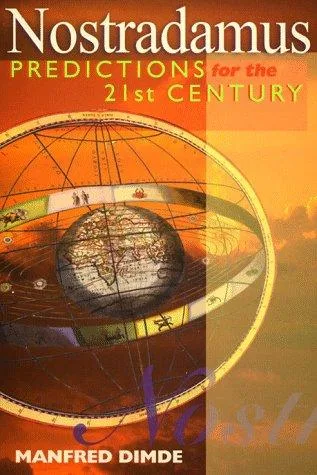
Dimde’s "Nostradamus" provides a much-needed scholarly perspective on the oft-misunderstood seer. Rather than rehashing sensationalist claims, Dimde anchors his exploration in the historical context of 16th-century France, carefully dissecting the quatrains' composition and the astrological underpinnings. A significant strength lies in his methodical breakdown of specific quatrains, such as those pertaining to the French monarchy, illustrating how contemporary events likely shaped their content. However, the work occasionally falters in its prose, which can lean towards dryness, making certain sections a demanding read for those uninitiated in astrological or historical minutiae. The exploration of Nostradamus's personal life, while present, feels secondary to the textual analysis. Dimde’s "Nostradamus" is a valuable resource for rigorous study, offering a grounded counterpoint to more speculative interpretations.
📝 Description
72
Manfred Dimde's 2018 book examines the life and prophetic quatrains of Michel de Nostredame.
Manfred Dimde's "Nostradamus" investigates the life of Michel de Nostredame, the 16th-century apothecary renowned for his quatrains. First published in 1555, Nostradamus's "Propheties" have prompted centuries of interpretation, a trajectory Dimde traces from contemporary analyses to modern esoteric studies. The work considers how writings from a turbulent European era continue to generate speculation. This book is aimed at serious students of esoteric history and prophecy who seek to move past sensationalism. It encourages engagement with the original texts and scholarly examination, appealing to those interested in Renaissance esotericism and the history of divination. Dimde analyzes the quatrains using astrological influences, historical parallels, and linguistic elements that contribute to varied readings. His method establishes a framework for understanding the prophetic mechanics, rather than merely listing predictions.
This book sits within the tradition of historical and biographical studies of figures central to esoteric thought. It examines Nostradamus not just as a historical figure, but as a practitioner whose methods, particularly astrology and divination, were integral to Renaissance intellectual life. The work addresses the lineage of interpretation that has kept his quatrains relevant within esoteric circles, connecting early modern practices to later developments in prophecy and occult studies. It acknowledges the ongoing scholarly and popular fascination with predictive arts.
💡 Why Read This Book?
• Gain a grounded understanding of Nostradamus's "Propheties" by examining their composition within the specific historical milieu of 16th-century Provence, moving beyond mere prediction. • Learn how to critically analyze prophetic texts by exploring Dimde's method of deconstructing quatrains, as demonstrated in his discussions of astrological influences. • Appreciate the evolution of prophetic interpretation since the initial 1555 publication, understanding how later eras have projected their own concerns onto Nostradamus's work.
⭐ Reader Reviews
Honest opinions from readers who have explored this book.
❓ Frequently Asked Questions
When was Nostradamus's "Propheties" first published?
Nostradamus's seminal work, "Les Propheties," was first published in 1555. This initial edition laid the groundwork for centuries of interpretation and fascination with his quatrains.
What was Nostradamus's profession?
Michel de Nostredame was trained as a physician and worked as an apothecary. His medical knowledge, particularly in herbal remedies and disease treatment, informed his worldview.
Did Nostradamus use astrology in his predictions?
Yes, astrology was a significant component of Nostradamus's predictive method. He frequently incorporated astrological charts and calculations into his understanding and formulation of the quatrains.
How many quatrains did Nostradamus write?
Nostradamus is known for composing approximately 942 quatrains, organized into 'Centuries' (groups of 100). These quatrains form the bulk of his prophetic writings.
What historical events are often linked to Nostradamus's prophecies?
Many historical events have been retrospectively linked to Nostradamus's quatrains, including the French Revolution, the rise of Napoleon, and both World Wars, though such connections are often debated.
What is the significance of the year 1555 in relation to Nostradamus?
The year 1555 is significant as it marks the first publication of Nostradamus's "Propheties." This event initiated the widespread dissemination of his cryptic verses.
🔮 Key Themes & Symbolism
The Quatrain Structure
The book meticulously examines the four-line verse structure, or quatrain, that forms the basis of Nostradamus's "Propheties." Dimde explores how this concise format, often employing allegorical language and obscure references, contributes to the enduring ambiguity and multiple interpretations of the predictions. The work highlights how the deliberate vagueness, coupled with astrological notation, was central to Nostradamus's method, allowing for a broad application across different historical periods and events since their initial publication in 1555.
Astrological Determinants
Dimde addresses the crucial role of astrology in Nostradamus's predictive framework. The book details how Michel de Nostredame integrated astronomical observations and astrological calculations into his understanding of future events. This section illuminates the Renaissance worldview, where celestial movements were seen as direct influences on terrestrial affairs. Understanding these astrological underpinnings is presented as key to deciphering the intended meanings behind the cryptic verses, moving beyond simplistic fortune-telling.
Historical Context and Influence
The work situates Nostradamus's writings within the turbulent socio-political field of 16th-century France. Dimde explores how contemporary events, political anxieties, and religious shifts likely shaped the content and reception of the "Propheties." The book also traces the historical trajectory of the prophecies' interpretation, showing how they have been invoked during periods of crisis and change, from the French Revolution to modern global conflicts, demonstrating their persistent cultural resonance.
Ambiguity and Interpretation
A central theme is the inherent ambiguity within Nostradamus's quatrains and the subsequent proliferation of interpretive strategies. Dimde discusses how the linguistic choices, the blending of various languages, and the use of symbolic imagery contribute to the texts' malleability. The book critically evaluates different approaches to interpretation, distinguishing between scholarly analysis and more speculative or self-serving readings that have emerged over centuries.
💬 Memorable Quotes
Direct passages from the work, attributed to the author.
“The astrological framework is integral to deciphering Nostradamus's intent.”
— This concept underscores that understanding the celestial charts and astrological principles Nostradamus employed is not merely supplementary but essential for grasping the core meaning and context of his prophecies.
“The ambiguity of the verses invites diverse readings across different eras.”
— This highlights how the deliberately vague language and symbolic nature of the prophecies allow subsequent generations to find relevance and connections to their own historical circumstances.
“Michel de Nostredame's background as a physician influenced his perspective.”
— This points to the idea that Nostradamus's medical training and practice provided him with a unique lens through which he viewed the world, potentially impacting his understanding of cycles, health, and societal well-being.
“The initial publication in 1555 marked a key moment for prophetic literature.”
— This emphasizes the historical importance of the 1555 edition of 'Les Propheties,' signifying the formal introduction of Nostradamus's unique style of prediction into the public and intellectual sphere.
💡 Key Ideas
Editorial paraphrase of the work's core concepts — not direct quotes.
Quatrains often reflect the immediate political and social anxieties of 16th-century France.
This paraphrased idea suggests that Nostradamus's predictions were not necessarily abstract future visions but were frequently rooted in and responsive to the specific pressures and events occurring during his lifetime.
🌙 Esoteric Significance
Tradition
Nostradamus's work is deeply embedded within the Western Esoteric Tradition, drawing heavily from Renaissance Neoplatonism, Hermeticism, and crucially, judicial astrology. While not strictly Kabbalistic or Gnostic, his methods share the Hermetic principle of correspondence ('as above, so below') and a belief in hidden divine knowledge accessible through study and celestial observation. His approach departs from purely mystical contemplation, grounding esoteric insight in empirical observation (astronomy, medicine) and detailed textual analysis of classical and contemporary sources.
Symbolism
The quatrains are rich with symbolic language, often drawing from classical mythology, biblical allegory, and astrological iconography. Motifs like "the great King of Terror" (often interpreted as a harbinger of war or disaster) and animal symbolism (e.g., lions representing royalty or power) are frequently employed. The use of anagrams and cryptic place names adds layers of encoded meaning, requiring a deep familiarity with Renaissance symbolism and language to fully unpack.
Modern Relevance
Contemporary esoteric circles, particularly those focused on prophecy, historical cycles, and divination, continue to reference Nostradamus. Thinkers and practitioners within modern occultism and even fringe historical analysis often revisit his quatrains for insights into current events or to bolster theories about hidden historical patterns. The enduring appeal lies in the perceived universality of his pronouncements and their adaptability to various contemporary crises, making him a recurring figure in discussions of foresight and destiny.
👥 Who Should Read This Book
• Serious students of historical prophecy and esoteric traditions seeking a scholarly approach to Nostradamus's "Propheties," moving beyond sensationalized claims. • Researchers of Renaissance esotericism and the history of divination interested in the astrological and cultural context of 16th-century predictive arts. • Skeptical readers who wish to understand the methodology and historical reception of Nostradamus's work from a critical, analytical perspective.
📜 Historical Context
Manfred Dimde's "Nostradamus" emerges from a field saturated with sensationalism, seeking a more scholarly engagement with the seer's work. Published in 2001, it follows decades of popular fascination amplified by figures like Erika Cheetham and the ongoing debate surrounding the prophecies' accuracy. The book is situated within the broader context of Renaissance esotericism, a period marked by intense interest in astrology, alchemy, and Hermetic philosophy, often pursued alongside orthodox religious or scientific practices. Key contemporaries like John Dee in England were similarly engaged with occult sciences and divination. The reception of Nostradamus's "Propheties," first printed in 1555, was immediate, garnering attention from royalty like Catherine de' Medici, but also faced skepticism and accusations of heresy, common for esoteric pursuits during that era. Dimde's work aims to provide a balanced view against competing schools of thought that either dismiss Nostradamus entirely or embrace uncritical interpretations.
📔 Journal Prompts
The astrological underpinnings of the quatrains: How might celestial alignments influence perceived future events?
Ambiguity in Nostradamus's language: Reflect on a modern news event and how it could be cryptically described.
The historical context of 1555: What societal fears or hopes might have shaped the "Propheties"?
Comparing interpretations: Analyze two different modern interpretations of the same quatrain.
The physician's perspective: How might Nostradamus's medical background inform his view of societal cycles or crises?
🗂️ Glossary
Quatrain
A stanza or verse consisting of four lines. In Nostradamus's "Propheties," these are the primary unit of prophetic verse, typically rhyming and metered.
Les Propheties
The title of Nostradamus's main collection of prophecies, first published in 1555. It is comprised of 'Centuries,' groups of 100 quatrains.
Century (Nostradamus)
A division within "Les Propheties" containing approximately 100 quatrains. Nostradamus organized his work into multiple Centuries.
Astrology
The study of the movements and relative positions of celestial bodies interpreted as having an influence on human affairs and the natural world.
Apothecary
A historical term for a person who prepared and sold medicines and drugs. Nostradamus was trained and worked as an apothecary.
Hermeticism
A philosophical and religious tradition based on writings attributed to Hermes Trismegistus, emphasizing divine knowledge, spiritual ascent, and correspondence between the macrocosm and microcosm.
Renaissance Esotericism
The mystical, magical, and alchemical traditions and practices prevalent in Europe during the Renaissance period (c. 14th-17th centuries).
🔮 Readers Also Liked
Browse all →









More by Manfred Dimde
All books →

More Free Occult Philosophy Books
View all →