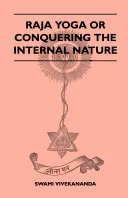
Raja Yoga or Conquering the Internal Nature
 71
71

Raja Yoga or Conquering the Internal Nature
Vivekananda’s "Raja Yoga" is less a gentle invitation and more a rigorous blueprint for internal conquest. The strength of this work lies in its unflinching clarity; Vivekananda doesn't shy away from the demanding nature of the yogic path. He meticulously unpacks Patanjali’s Yoga Sutras, rendering complex philosophical ideas into actionable steps. A particularly striking passage details the control of 'Prana' (life force) through breath, illustrating the intricate connection between physical control and mental discipline. However, the very rigor that makes it powerful can also be its limitation. The philosophical depth, while profound, demands significant intellectual engagement, potentially alienating readers seeking a purely experiential approach. The dense exposition of the 'Siddhis' (powers) might also distract from the ultimate goal of spiritual liberation for those not carefully guided. Ultimately, "Raja Yoga" is an essential, albeit challenging, manual for the serious student of mind and spirit.
📝 Description
71
Swami Vivekananda's Raja Yoga, published in 1896, explains Patanjali's Yoga Sutras for Western audiences.
Swami Vivekananda's Raja Yoga, first published in 1896, systematically interprets the Yoga Sutras of Patanjali. It details the eight limbs of yoga, moving beyond physical postures to focus on the mental and spiritual disciplines necessary for self-mastery. The book guides practitioners through ethical observances, breath control, concentration, and meditative states, with the ultimate aim of liberation from suffering and the realization of one's true nature.
This work is for those seriously studying yoga and Eastern philosophy who want a thorough intellectual grasp of the yogic path. It will interest readers curious about the philosophical basis of meditation, the study of consciousness, and spiritual enlightenment achieved through disciplined mental training. Those seeking a direct, clear guide to controlling the mind and achieving self-realization, as described in ancient Indian traditions, will find this book particularly useful. It requires engagement with complex philosophical ideas and a commitment to rigorous self-discipline.
Published in the late 19th century, Raja Yoga appeared when the West was increasingly drawn to Eastern spirituality. Vivekananda, a key figure who introduced Vedanta and Yoga at the 1893 Parliament of Religions, presented Patanjali's system in a coherent and understandable way. This contrasted with more superficial understandings of Indian thought, offering a structured approach to spiritual development rooted in classical yogic philosophy.
💡 Why Read This Book?
• Understand the eight limbs of yoga, from ethical discipline (Yamas and Niyamas) to profound meditation (Samadhi), as detailed in Patanjali's Yoga Sutras, providing a structured path unavailable in generalized wellness guides. • Grasp the concept of 'Chitta' and its modifications, learning practical techniques like 'Abhyasa' and 'Vairagya' for controlling the mind's fluctuations, a core teaching not extensively covered in introductory mindfulness texts. • Explore the philosophical underpinnings of the yogic path as presented by Swami Vivekananda at the 1893 Parliament of Religions, offering historical and intellectual context beyond contemporary interpretations of yoga.
⭐ Reader Reviews
Honest opinions from readers who have explored this book.
❓ Frequently Asked Questions
What is Raja Yoga according to Swami Vivekananda?
Raja Yoga, as explained by Swami Vivekananda, is the path of mental discipline and control, focused on conquering the internal nature of the mind. It involves systematically training consciousness through ethical practices, concentration, and meditation to achieve spiritual realization.
How does Vivekananda's Raja Yoga differ from Hatha Yoga?
While Hatha Yoga often emphasizes physical postures (asanas) and breath control (pranayama) for purifying the body, Raja Yoga, as presented by Vivekananda, focuses primarily on the direct control of the mind and consciousness, using these physical preparations as a foundation for deeper mental and spiritual work.
What are the eight limbs of Raja Yoga?
The eight limbs are Yama (ethical restraints), Niyama (observances), Asana (posture), Pranayama (breath control), Pratyahara (withdrawal of senses), Dharana (concentration), Dhyana (meditation), and Samadhi (absorption).
Is this book suitable for absolute beginners in yoga?
The book is a deep dive into the philosophy and practice of Raja Yoga, based on Patanjali's Sutras. While accessible, it requires dedicated study and contemplation, making it more suitable for those with some background or a serious commitment to understanding the deeper aspects of yoga.
Where can I find Swami Vivekananda's original lectures or writings?
Swami Vivekananda's complete works are widely available. 'Raja Yoga or Conquering the Internal Nature' itself is derived from his lectures given in New York in 1895-1896 and is considered a foundational text in his oeuvre.
What is the concept of 'Chitta' in Raja Yoga?
'Chitta' refers to the mind-stuff or the subconscious mind. Vivekananda explains that the goal of Raja Yoga is to gain control over the modifications ('vrittis') of Chitta, thereby achieving mental stillness and clarity.
🔮 Key Themes & Symbolism
Mind Control and Consciousness
The central theme is the systematic subjugation of the mind's inherent fluctuations and distractions. Vivekananda elaborates on 'Chitta' (mind-stuff) and its 'vrittis' (modifications), presenting techniques like 'Abhyasa' (persistent practice) and 'Vairagya' (non-attachment) as essential tools. The aim is not suppression but mastery, leading to a state of clear, focused consciousness capable of perceiving ultimate reality.
The Eight Limbs of Yoga
This work provides a detailed exposition of Ashtanga Yoga, Patanjali's eight-limbed path. It frames these limbs—Yama, Niyama, Asana, Pranayama, Pratyahara, Dharana, Dhyana, Samadhi—as progressive stages of development, each building upon the last. The emphasis is on the integrated nature of these practices, moving from external ethical conduct to internal states of profound concentration and enlightenment.
Spiritual Liberation (Moksha)
The ultimate objective presented is 'Moksha', liberation from the cycle of suffering and rebirth. Vivekananda frames Raja Yoga as the most direct path to achieving this state, which involves transcending the ego and realizing the true, divine Self. This realization is attained through disciplined practice and the dissolution of ignorance, leading to union with the Absolute.
The Nature of Reality
Beyond practical techniques, the book examines the Vedantic understanding of reality. It distinguishes between the phenomenal world and the ultimate, unchanging reality (Brahman). By mastering the mind, the yogi is enabled to pierce the veil of illusion ('Maya') and directly experience the unity of all existence, understanding the Self as identical with the divine.
💬 Memorable Quotes
Direct passages from the work, attributed to the author.
“The mind is but a dust of dust.”
— This statement emphasizes the transient and ultimately insubstantial nature of the individual mind when compared to the eternal, all-pervading reality. It suggests that attachment to the mind's thoughts and feelings is misplaced.
“Each man must make his own path.”
— This highlights the personal and individual nature of spiritual pursuit. While Vivekananda provides a map, the actual journey and the effort required to traverse it are solely the responsibility of the aspirant.
“We are what our thoughts have made us.”
— This underscores the power of thought in shaping one's reality and character. It implies that by consciously directing and purifying thoughts, individuals can actively transform themselves and their circumstances.
“The goal is to know that I and my Father are one.”
— This is a direct expression of the Advaita Vedanta concept of non-duality, where the individual soul ('Atman') is identified with the Universal Spirit ('Brahman'). It points to the ultimate realization of unity with the divine.
“Control the mind, and you control the universe.”
— This powerful assertion positions the mind as the primary locus of power. By mastering internal states, one gains mastery over their perception and experience of the external world, effectively conquering their perceived limitations.
🌙 Esoteric Significance
Tradition
Vivekananda's work is deeply rooted in the Advaita Vedanta and classical Yoga traditions of India. While presented in a Western context, it remains a quintessential exposition of Hindu philosophical and yogic systems. It bridges the gap between Eastern mysticism and Western philosophical inquiry, offering a non-dualistic perspective that aligns with certain Hermetic and Gnostic ideals of inner gnosis and divine realization, though its lineage is distinctly Indic.
Symbolism
The text frequently employs the symbolism of the 'lotus' to represent the unfolding of consciousness, particularly the Sahasrara chakra at the crown of the head. The concept of 'Prana' (life force) acts as a subtle energetic symbol, connecting the physical body, breath, and mind. Furthermore, the 'rope' or 'chain' metaphor is used to describe the bondage of the mind to sensory experience and ignorance, which the yogi seeks to break.
Modern Relevance
Contemporary thinkers and practitioners in fields ranging from transpersonal psychology to mindfulness-based stress reduction draw heavily on Vivekananda's interpretations of yogic philosophy. His emphasis on mental discipline, consciousness studies, and the potential for spiritual realization through systematic practice continues to influence modern meditation techniques, yoga philosophy courses, and spiritual retreats worldwide.
👥 Who Should Read This Book
• Students of comparative religion and philosophy seeking primary source material on classical Indian thought, particularly the integration of Vedanta and Yoga principles. • Dedicated yoga practitioners aiming for a deeper intellectual and philosophical understanding of the yogic path beyond asana-focused practices. • Individuals interested in the history of spirituality in the West, specifically the impact of figures like Swami Vivekananda in introducing Eastern traditions in the late 19th century.
📜 Historical Context
Swami Vivekananda's "Raja Yoga or Conquering the Internal Nature," first published in 1896, emerged from his influential lectures in New York City following his key appearance at the 1893 Parliament of Religions in Chicago. This era was characterized by a burgeoning Western fascination with Eastern philosophies, often filtered through organizations like the Theosophical Society. Vivekananda's work offered a direct, authoritative presentation of classical Yoga, specifically interpreting Patanjali's Yoga Sutras, distinct from more esoteric or syncretic spiritual movements. It provided a rigorous, systematic approach that contrasted with the often romanticized or superficial understandings of Indian spirituality prevalent at the time. His clear articulation of Vedanta and Raja Yoga principles resonated widely, establishing a significant intellectual current in the comparative study of religions and the nascent field of psychology.
📔 Journal Prompts
The nature of 'Chitta' and its modifications.
Abhyasa and Vairagya as tools for mental discipline.
The ethical foundation: Yamas and Niyamas.
Understanding the stages of Dharana, Dhyana, and Samadhi.
The significance of Pratyahara in withdrawing the senses.
🗂️ Glossary
Chitta
The mind-stuff, encompassing the conscious, subconscious, and unconscious aspects of the mind. It is considered the field in which thoughts and experiences arise.
Vrittis
The modifications or fluctuations of the 'Chitta'. These are the various thoughts, emotions, and perceptions that constantly arise and pass through the mind.
Abhyasa
Persistent practice or diligent effort towards a specific goal, particularly in the context of spiritual discipline and controlling the mind.
Vairagya
Dispassion, non-attachment, or detachment from worldly objects and experiences. It is cultivated alongside Abhyasa to achieve mental equilibrium.
Yamas
Ethical restraints or moral disciplines that form the first limb of Ashtanga Yoga. They include non-violence, truthfulness, non-stealing, continence, and non-possessiveness.
Niyamas
Observances or disciplines that form the second limb of Ashtanga Yoga. They include purity, contentment, austerity, self-study, and devotion to the Divine.
Samadhi
A state of profound meditative absorption or union, the culmination of the yogic path. It signifies a state of consciousness where the individual self merges with the object of meditation or the Universal Consciousness.