Extrasensory Perception
 82
82

Extrasensory Perception
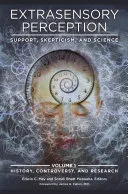
Edwin C. May and Sonali Bhatt Marwaha's "Extrasensory Perception" presents a comprehensive overview of a field often relegated to the fringes of scientific discourse. The strength of this two-volume set lies in its breadth, bringing together diverse perspectives from researchers actively engaged in parapsychology. It meticulously details the history of anomalous cognition studies, from early investigations to contemporary research methodologies. One particularly illuminating section details the statistical analyses employed in Geller effect experiments, highlighting the rigorous, though often contested, methods used to substantiate claims. However, the work sometimes struggles to bridge the chasm between the internal logic of parapsychological research and the external skepticism it faces. While it presents counterarguments, the sheer volume of data and theory can feel overwhelming without a strong grounding in the foundational critiques. It serves as an essential, albeit dense, reference for understanding the scientific arguments within parapsychology itself.
📝 Description
82
Published in June 2015, this two-volume set compiles scholarly research on anomalous cognition.
This compilation gathers academic research into extrasensory perception, also known as anomalous cognition. It traces the history of parapsychology and examines the continuing discussions around its phenomena, covering both ESP and psychokinesis. The work is suited for academics, researchers, and dedicated students of parapsychology who are interested in the scientific study of consciousness outside normal sensory channels. It also serves those seeking to grasp the arguments from both supporters and detractors of ESP. The book acknowledges the persistent skepticism from mainstream science, which has often questioned the empirical rigor and methodological soundness of such research.
The research presented here addresses concepts like telepathy, clairvoyance, precognition, and psychokinesis. Contributors discuss experimental designs, statistical methods, and theoretical frameworks used to understand these claimed abilities. The collection also considers the broader philosophical questions that anomalous cognition raises about the nature of mind and reality.
This work situates itself within the tradition of parapsychological inquiry, a field that emerged in the late 19th and early 20th centuries. Figures like J.B. Rhine at Duke University were instrumental in attempting to establish a scientific foundation for phenomena beyond conventional understanding. The book engages with the historical trajectory of these investigations, acknowledging the long-standing debate and skepticism from established scientific communities regarding empirical validation and methodological rigor in the study of consciousness and purported psychic abilities.
💡 Why Read This Book?
• Gain a comprehensive historical overview of parapsychology, understanding its development from the early 20th century investigations by figures like J.B. Rhine. • Explore the specific methodologies and statistical analyses used in anomalous cognition research, such as those discussed in relation to psychokinesis experiments. • Understand the core arguments and counterarguments surrounding ESP, including the scientific theories and philosophical implications presented by leading researchers in the field.
⭐ Reader Reviews
Honest opinions from readers who have explored this book.
❓ Frequently Asked Questions
What is the primary focus of the book "Extrasensory Perception"?
The book's primary focus is extrasensory perception (ESP), also known as anomalous cognition. It explores its history, research, scientific theories, and the arguments of its supporters and skeptics.
Who are the main contributors to the "Extrasensory Perception" compilation?
The compilation features contributions from various scholars and leading research scientists within the field of parapsychology and related areas.
What specific phenomena, besides ESP, does the book cover?
Beyond ESP (anomalous cognition), the book also addresses psychokinesis, the alleged ability to influence physical objects or systems with the mind.
When was "Extrasensory Perception" first published?
The book "Extrasensory Perception" was first published on June 23, 2015.
What is the historical significance of the research presented in this book?
The book contextualizes research within the history of parapsychology, a field that emerged with scientific aspirations in the late 19th and early 20th centuries.
Does the book present arguments from both sides of the ESP debate?
Yes, the compilation aims to present a balanced view by including explanations of the phenomena alongside discussions and arguments from skeptics.
🔮 Key Themes & Symbolism
History of Parapsychology
This collection meticulously charts the evolution of parapsychology, tracing its roots from early spiritualist investigations to the more structured, albeit controversial, scientific inquiries of the 20th century. It highlights key figures and institutions that sought to legitimize the study of anomalous cognition, such as the work conducted at Duke University under J.B. Rhine. The narrative acknowledges the societal and scientific milieu in which these investigations took place, often against a backdrop of skepticism and resistance from mainstream academia.
Anomalous Cognition Research
The core of the work explores the empirical research surrounding ESP and psychokinesis. It examines various experimental paradigms, including remote viewing, precognition tests, and attempts to measure mind-matter interaction. Contributors discuss the statistical methodologies employed to detect subtle effects and address potential sources of error or fraud. The focus is on presenting the scientific data and the interpretations derived from it by researchers within the field.
Skepticism and Support
A significant aspect of this compilation is its engagement with the ongoing debate between proponents and skeptics of parapsychological phenomena. It presents the arguments put forth by those who believe in the existence of ESP and psychokinesis, alongside the critiques and counter-explanations offered by skeptics. This includes discussions on methodological rigor, the interpretation of statistical results, and the philosophical challenges posed by anomalous cognition.
Theoretical Frameworks
The book explores various theoretical models attempting to explain the mechanisms behind ESP and psychokinesis. These range from extensions of quantum physics to information theory and consciousness studies. It highlights how different researchers and schools of thought conceptualize anomalous cognition and its potential place within a broader understanding of the universe and human consciousness.
💬 Memorable Quotes
Direct passages from the work, attributed to the author.
“The history of parapsychology is marked by a persistent effort to establish empirical validation for phenomena beyond conventional sensory perception.”
— This statement captures the ongoing struggle within parapsychology to gain scientific acceptance. It points to the continuous development of research methods and theoretical frameworks aimed at providing verifiable evidence for ESP and psychokinesis.
“Skepticism often arises from methodological concerns and the perceived lack of replicable results in parapsychological studies.”
— This highlights a central tension in the field: the challenge of meeting stringent scientific standards for repeatability and the common critiques from those who question the validity of the evidence presented.
“Anomalous cognition encompasses a range of purported abilities, including telepathy, clairvoyance, and precognition.”
— This defines the scope of ESP as discussed in the book, categorizing the different forms of extrasensory perception that researchers have sought to investigate and understand.
“Psychokinesis challenges our understanding of the mind-body relationship by suggesting direct mental influence on the physical world.”
— This interpretation focuses on the wide implications of psychokinesis, indicating how its potential existence would necessitate a re-evaluation of the boundaries between consciousness and material reality.
“The interpretation of statistical significance is crucial in parapsychological research, often becoming a point of contention.”
— This emphasizes the technical and interpretative challenges inherent in parapsychology, where the analysis of data and the significance of findings are frequently debated by researchers and critics.
🌙 Esoteric Significance
Tradition
While not strictly adhering to a single esoteric lineage, "Extrasensory Perception" engages with themes that resonate across various mystical and occult traditions, particularly those concerned with the nature of consciousness and hidden forces. It touches upon concepts explored in Hermeticism and Neoplatonism regarding the interconnectedness of mind and matter, and the potential for consciousness to transcend physical limitations. The work's scientific approach, however, distinguishes it from purely mystical accounts, seeking empirical evidence for phenomena often described in esoteric texts.
Symbolism
Within the context of parapsychology, the 'symbols' are less traditional motifs and more the conceptual frameworks and experimental designs used to probe the unknown. Concepts like 'telepathy' or 'precognition' function as symbolic representations of consciousness's potential to operate beyond space-time constraints. The act of 'remote viewing' itself can be seen as a symbolic exploration of the mind's capacity to perceive reality through non-physical means, echoing ancient ideas of clairvoyance.
Modern Relevance
Contemporary interest in consciousness studies, quantum mysticism, and the exploration of altered states of awareness can be seen as drawing indirectly from the groundwork laid by parapsychology. Thinkers and practitioners exploring lucid dreaming, biofeedback, or even certain interpretations of quantum entanglement in relation to consciousness often find resonance with the questions and research paradigms presented in works like this. The ongoing debate about the limits of empirical science also keeps these discussions relevant.
👥 Who Should Read This Book
• Researchers and academics in psychology, neuroscience, and physics seeking to understand the historical and empirical field of parapsychological research. • Students of consciousness studies interested in the scientific investigation of phenomena that challenge conventional models of mind and reality. • Critical thinkers and skeptics interested in evaluating the evidence and arguments presented within the field of anomalous cognition.
📜 Historical Context
The study of parapsychology, which "Extrasensory Perception" engages with, gained significant momentum in the mid-20th century, building upon earlier efforts from the late 19th century. Figures like J.B. Rhine at Duke University were instrumental in attempting to establish a scientific methodology for investigating psychic phenomena, particularly ESP, beginning in the 1930s. This era saw a surge of interest in consciousness and the limits of human perception, partly fueled by the aftermath of World War I and the widespread interest in spiritualism. However, parapsychology consistently faced criticism from mainstream scientific circles, which often viewed its research as lacking rigor, prone to bias, or based on flawed statistical interpretations. Competing schools of thought, such as behaviorism and later cognitive psychology, focused on observable behavior and internal mental processes accessible through standard scientific methods, largely eschewing or actively debunking claims of anomalous cognition.
📔 Journal Prompts
The concept of anomalous cognition and its historical research trajectory.
The statistical methodologies employed in Geller effect experiments.
Psychokinesis and its challenge to the mind-body dualism.
The arguments presented by skeptics against parapsychological findings.
The philosophical implications of precognition for free will.
🗂️ Glossary
Extrasensory Perception (ESP)
The purported ability to acquire information or perceive events through means not involving the recognized senses. It encompasses phenomena like telepathy, clairvoyance, and precognition.
Anomalous Cognition
A term often used interchangeably with ESP, referring to cognitive processes that appear to operate outside the known laws of physics and biology, suggesting non-sensory channels of information.
Parapsychology
The branch of psychology that studies alleged psychic phenomena and other paranormal claims, including ESP and psychokinesis, attempting to apply scientific methods to their investigation.
Psychokinesis (PK)
The alleged ability of the mind to influence physical systems or matter directly, without the use of physical force. Also known as telekinesis.
Telepathy
A form of ESP involving the purported direct transmission of thoughts or feelings from one person to another without the use of conventional sensory channels.
Clairvoyance
A form of ESP involving the purported ability to perceive objects, events, or information beyond the normal range of sensory perception, such as seeing distant places.
Precognition
A form of ESP involving the purported ability to perceive or predict future events, which cannot be deduced from current knowledge or by logical inference.