Geomancy
 81
81

Geomancy
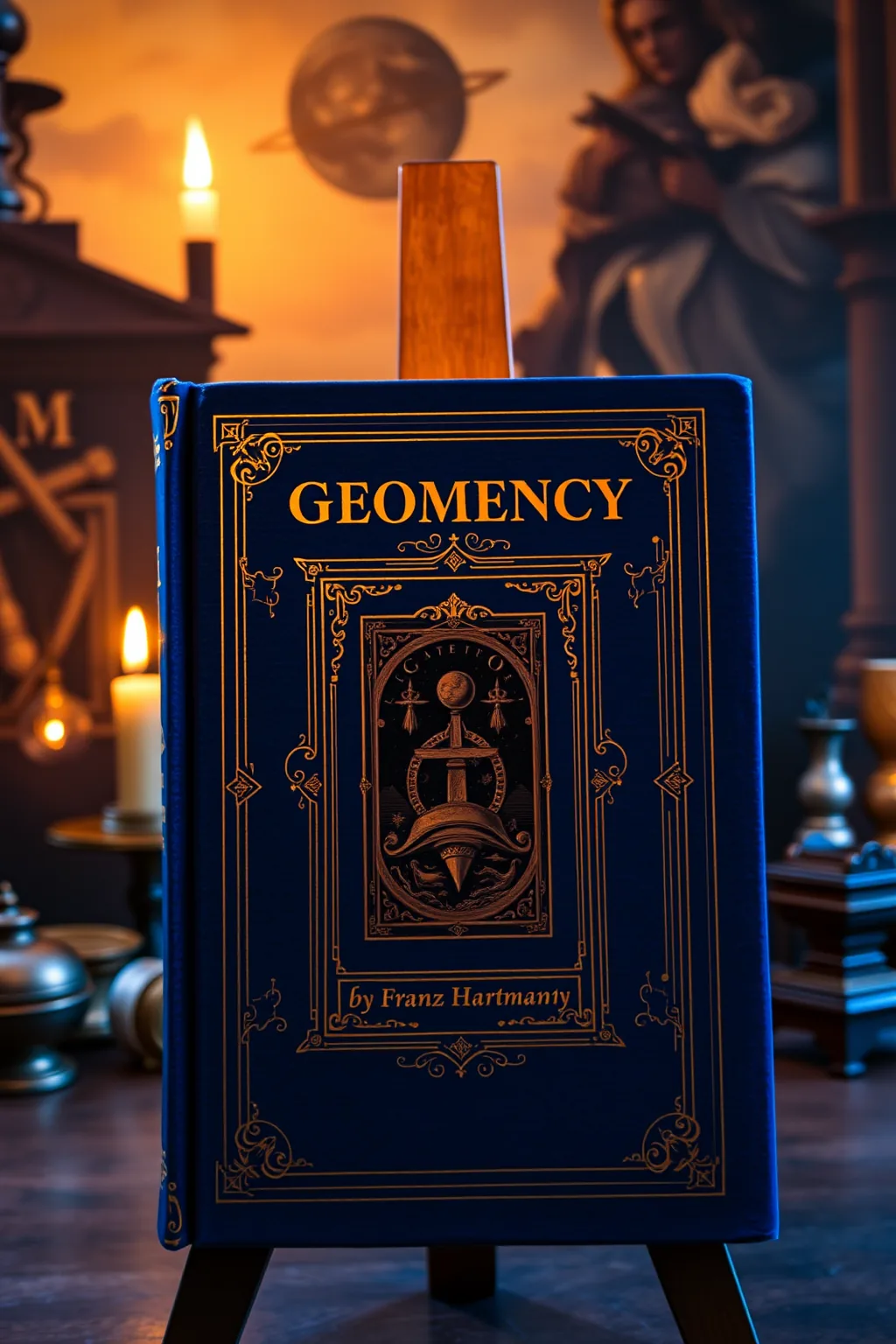
Franz Hartmann's treatise on Geomancy offers a remarkably lucid exposition of a practice often shrouded in arcane complexity. The strength of this work lies in its clear, step-by-step methodology, demystifying the generation of geomantic figures from mere random marks on paper to meaningful astrological correspondences. Hartmann’s emphasis on the connection between internal states and external divination, stemming from the core idea that "our movement is influenced by the energies in circulation within and around us," is particularly resonant. However, the book’s primary limitation is its brevity; while it excels at explaining the 'how,' it could benefit from more extensive examples illustrating the 'why' in diverse real-world scenarios. The section detailing the 16 figures and their planetary rulerships is especially well-handled, providing a solid foundation for beginners. Ultimately, Hartmann provides an accessible gateway into a potent divinatory art.
📝 Description
81
Franz Hartmann's 1894 work updates the ancient practice of earth divination for modern use.
Geomancy, or "earth divination," historically involved drawing patterns in the soil. This method is based on the idea that ambient energy fields influence human affairs. Franz Hartmann's book offers a refined approach, enabling practitioners to gain insight using simple tools like paper and writing implements. The system is built upon 16 fundamental geomantic figures. Each figure corresponds to specific planetary energies and influences, creating a structured method for divination.
This text is for those interested in divination methods beyond common astrology or tarot. It suits individuals seeking a systematic, symbolic framework that links terrestrial actions with cosmic forces. Students of Hermeticism, Western esotericism, and historical occultism will find its organized presentation valuable. It will also appeal to anyone curious about the connection between human awareness and subtle energy flows.
Geomancy traces its roots to Arabian and North African traditions, gaining prominence in medieval Europe. Its systematic codification, notably in Agrippa's *Three Books of Occult Philosophy*, secured its place in Western esotericism by the 16th century. Hartmann's work aligns with Hermetic principles, viewing the human as a reflection of the universe and using divination as a means to comprehend these connections.
💡 Why Read This Book?
• Learn a practical divinatory system: Understand how to cast and interpret geomantic figures using simple tools, as detailed in the book's explanation of the 16 geomantic symbols, allowing for tangible results. • Connect with planetary energies: Discover the specific correspondences between geomantic figures and planetary influences, enabling a deeper appreciation of astrological mechanics beyond traditional charts. • Explore Hermetic principles: Grasp the underlying esoteric philosophy that divination is an extension of universal energetic circulation, a concept explored in the historical context of geomancy's medieval European prevalence.
⭐ Reader Reviews
Honest opinions from readers who have explored this book.
❓ Frequently Asked Questions
What is the origin of the word 'geomancy'?
The term 'geomancy' originates from the Greek words 'geo' (earth) and 'manteia' (divination), literally meaning 'earth divination'. It refers to practices that divine through marks made on the ground or by casting earth or stones.
How many geomantic figures are there and what do they represent?
There are 16 primary geomantic figures. Each figure is a unique combination of four rows of one or two marks, representing binary patterns and associated with planetary energies, elements, and specific symbolic meanings.
Can geomancy be performed without a divining stick?
Yes, Franz Hartmann's approach modernizes the practice. While historically it involved marks in dirt, his method utilizes a pen or pencil and paper, making it accessible anywhere without needing earth or a stick.
What is the relationship between geomancy and astrology?
Geomancy is closely linked to astrology. The 16 geomantic figures are assigned rulers from the seven planets and correspond to the astrological houses, allowing for interpretations that integrate astrological principles.
Is Franz Hartmann's Geomancy suitable for beginners?
Yes, the book is structured to guide beginners through the process. It explains the foundational concepts and the method of generating figures clearly, making it an accessible entry point into geomancy.
When was Franz Hartmann's Geomancy first published?
Franz Hartmann's work on Geomancy was first published in 2005, making it a relatively modern presentation of an ancient divinatory art.
🔮 Key Themes & Symbolism
The 16 Geomantic Figures
The core of Hartmann's geomancy lies in its 16 distinct figures, such as Puella, Fortunatus Major, and Acquisitio. These are not arbitrary patterns but systematic derivations from binary choices (odd/even marks), reflecting fundamental cosmic principles. Each figure possesses unique characteristics, planetary rulers, and elemental associations, serving as symbolic intermediaries between the querent, the earth, and the celestial spheres. Understanding their formation and inherent qualities is crucial for accurate divination.
Planetary Correspondences
Hartmann's geomancy deeply integrates astrological principles. Each of the 16 figures is assigned a ruling planet (Mars, Jupiter, Venus, etc.), mirroring the celestial influences that govern earthly events. This connection allows practitioners to interpret the outcome of a geomantic reading not just as a simple 'yes' or 'no,' but as a complex interplay of planetary forces. This symbolic language offers a method to map subtle energetic currents onto tangible outcomes.
Earth as a Medium
The practice's name, 'earth divination,' highlights its foundational principle: the Earth itself acts as a receptive medium for cosmic energies. Hartmann explains that our movements and consciousness are influenced by these pervasive energies. By making marks, whether historically in dirt or now on paper, one is interacting with these subtle fields, and the resulting patterns reveal hidden truths or future potentials, reflecting a Hermetic view of universal sympathy.
Modernized Divination
Hartmann bridges the gap between ancient practices and contemporary accessibility. He outlines a method for performing geomancy using only a writing tool and paper, moving beyond the need for soil and sticks. This modernization makes the profound divinatory art available to anyone, anywhere, emphasizing the universal nature of the energetic influences that geomancy seeks to interpret and understand.
💬 Memorable Quotes
Direct passages from the work, attributed to the author.
“our movement is influenced by the energies in circulation within and around us”
— This statement expresses the core philosophical underpinning of geomancy as presented by Hartmann. It suggests that external divination methods are effective because they tap into the same subtle energetic flows that influence our physical and mental states.
“The 16 geomantic symbols correspond to planetary energies”
— This highlights the astrological framework of geomancy. It means each symbol is not just a random pattern but carries specific qualities, strengths, and weaknesses tied to the planets that rule them, allowing for nuanced interpretation.
“Geomancy, or 'divining by means of the earth'”
— This defines the practice's etymology and fundamental mechanism. It emphasizes the connection to the terrestrial realm as the primary means through which cosmic or hidden information is accessed and revealed.
“originally carried out by making marks in the dirt with a divining stick”
— This points to the historical origins of geomancy, contrasting it with modern adaptations. It acknowledges the traditional physical methods while paving the way for the book's focus on more accessible, contemporary techniques.
“obtain incredibly in-depth information”
— This asserts the power and utility of geomancy when properly understood and applied. It promises that the system, despite its apparent simplicity, can yield complex and meaningful insights into various questions or situations.
🌙 Esoteric Significance
Tradition
Hartmann's Geomancy fits squarely within the Western Hermetic tradition, which posits a correspondence between the microcosm (human) and the macrocosm (universe). It aligns with systems like astrology and alchemy in viewing symbolic languages as keys to understanding divine order. The practice is a form of sympathetic magic, suggesting that by manipulating earthly signs (the marks), one can gain insight into or influence celestial or hidden forces, a core tenet of many esoteric schools.
Symbolism
The 16 geomantic figures are the primary symbols. Figures like *Fortunatus Major* (Great Fortune) and *Acquisitio* (Acquisition) represent positive outcomes and material gain, often linked to Jupiter or the Sun. Conversely, figures like *Pessimus* (Worst) signify ill fortune, associated with Saturn. These symbols function as archetypal representations of cosmic influences, acting as intermediaries that translate abstract planetary energies into specific, interpretable meanings for divinatory purposes.
Modern Relevance
Contemporary practitioners of Western esotericism, including students of Hermeticism, astrology, and ceremonial magic, continue to utilize geomancy. Its systematic nature makes it an accessible entry point compared to more complex systems. Modern occultists may draw on Hartmann's updated methods for personal insight, decision-making, or as a complementary tool alongside other divinatory practices like tarot or astrology, appreciating its blend of historical depth and practical application.
👥 Who Should Read This Book
• Students of Western Esotericism: Individuals seeking to understand foundational divinatory systems within Hermeticism and occult traditions will benefit from its clear exposition of geomantic principles. • Aspiring Diviners: Those interested in learning a structured, symbolic method of divination beyond cartomancy or astrology will find this book provides practical techniques and theoretical underpinnings. • Comparative Religion/Occult Researchers: Scholars examining historical and contemporary practices of divination and their links to astrology and Hermetic philosophy will find value in its systematic approach.
📜 Historical Context
Franz Hartmann's work on Geomancy, first published in 2005, enters a field with deep roots in Western esotericism. Geomancy flourished in medieval Europe, particularly from the 12th century onwards, heavily influenced by Arabic sources and codified in works like Heinrich Cornelius Agrippa's *Three Books of Occult Philosophy* (published 1531-1533). Agrippa integrated geomancy into a broader Hermetic framework, linking it to astrology, elements, and the Kabbalah. Hartmann's presentation, while modernizing the method, draws from this lineage. During the Renaissance, geomancy was a respected, albeit sometimes controversial, divinatory art practiced by scholars and occultists, often alongside astrology and alchemy. Its systematic nature appealed to an era fascinated by order and cosmic correspondence. The work implicitly engages with the broader Hermetic revival that sought to understand the universe as a divinely ordered system, accessible through symbolic languages.
📔 Journal Prompts
The formation of the 16 geomantic figures: Reflect on the binary logic underpinning their creation.
Planetary correspondences: How do the assigned planetary energies of figures like *Fortunatus Major* and *Pessimus* influence your understanding of outcomes?
The concept of 'energies in circulation': Consider how subtle energies might manifest in your daily life.
Modern versus traditional geomancy: Evaluate the advantages of using paper and pen for divination.
Interpreting a geomantic chart: Practice casting a chart for a simple question and analyze the resulting figures.
🗂️ Glossary
Geomancy
A method of divination based on interpreting patterns derived from the earth or marks made upon it, historically involving casting soil or drawing figures.
Geomantic Figures
The 16 primary symbolic patterns used in geomancy, formed by combinations of one or two marks in four rows, each representing unique meanings and planetary associations.
Planetary Energies
The astrological influences attributed to the seven classical planets (Sun, Moon, Mercury, Venus, Mars, Jupiter, Saturn), which are mapped onto geomantic figures and astrological houses.
Divining Stick
A tool historically used in geomancy to make marks in the earth, from which the geomantic symbols were derived. Hartmann's method replaces this with a pen or pencil.
Houses (Astrological)
The twelve divisions of the celestial sphere, used in astrology and geomancy, each representing different areas of life or experience, from which the geomantic figures derive their positional meaning.
Hermeticism
A philosophical and religious tradition based on writings attributed to Hermes Trismegistus, emphasizing the interconnectedness of the universe and the possibility of attaining divine knowledge.
Microcosm/Macrocosm
The Hermetic principle that the human being (microcosm) is a reflection of the universe (macrocosm), and vice versa, suggesting universal sympathy and correspondence.