Quiromancia

 71
71

Quiromancia
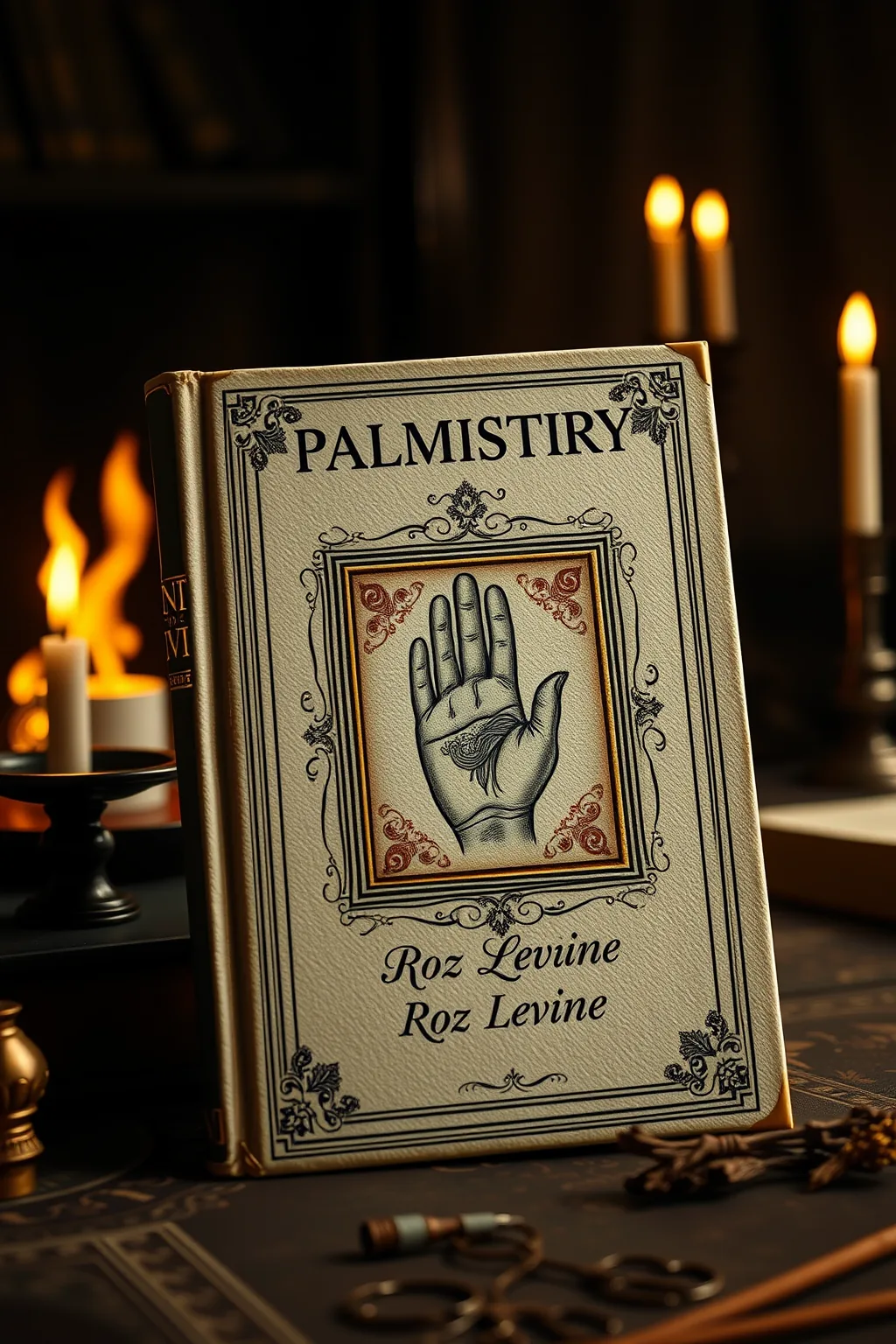
Roz Levine’s Quiromancia offers a competent, if somewhat dry, compendium of palmistry. The book’s strength lies in its systematic approach, meticulously detailing the various lines, mounts, and hand shapes. Levine’s insistence on viewing chiromancy as a tool for psychological self-discovery, rather than solely predictive fortune-telling, is a welcome perspective, particularly in the chapter discussing the "Mount of Apollo." However, the prose occasionally lacks the vibrancy one might expect from a text on such an inherently symbolic art. The lack of original illustrations, relying instead on textual descriptions, can make it challenging to visualize complex formations. Despite this, Quiromancia provides a solid foundation for understanding the mechanics of palm reading. It is a functional manual for the dedicated student.
📝 Description
71
Roz Levine's Quiromancia (2016) details the structured approach to palmistry, moving beyond superficial interpretations.
Quiromancia offers a detailed look at palmistry, the practice of reading hands to understand character, predict events, and gain self-knowledge. Roz Levine structures the book to go beyond basic interpretations, focusing on the lines, mounts, and shapes found on the palm. It functions as a practical manual for those learning palmistry and a philosophical examination of the hand's symbolic language.
This book is for anyone interested in divination and esoteric psychology, especially those seeking self-understanding through symbolic systems. Students of occult traditions and practitioners of other divination methods looking to broaden their skills will find it useful. It suits beginners who are ready for detailed instruction and those with existing knowledge wishing to improve their interpretive abilities.
Palmistry, or chiromancy, has a history from ancient India and Greece, with figures like Aristotle and Ptolemy writing on it. It saw popularity in the Renaissance but also faced suppression. Often linked to folk magic and philosophical systems, it has endured periods of skepticism. Levine's 2016 book places this ancient practice within modern esoteric thought, examining it through a contemporary lens.
💡 Why Read This Book?
• Gain a structured understanding of palmistry's core elements, including the specific significance of the "Mount of Venus" and its relation to emotional expression, a detail often glossed over in simpler guides. • Learn to interpret the interplay between the "Life Line" and "Fate Line," uncovering how these specific markings can indicate periods of significant personal change or external influence. • Discover palmistry as a tool for psychological insight, moving beyond simple prognostication to understand how hand features, such as the "Head Line"’s slope, reflect cognitive styles and decision-making processes.
⭐ Reader Reviews
Honest opinions from readers who have explored this book.
❓ Frequently Asked Questions
What is the origin of palmistry as explored in Quiromancia?
The book traces palmistry's roots to ancient India and Greece, with mentions of figures like Aristotle. It highlights its resurgence during the Renaissance as a significant esoteric practice before facing later skepticism.
Does Quiromancia focus on predicting the future or understanding character?
Levine's approach in Quiromancia emphasizes understanding character and psychological tendencies over strict future prediction. While it touches on potential life paths, the focus is on self-knowledge and inherent potentials.
What are the key features of the hand discussed in the book?
Quiromancia meticulously details the major and minor lines (e.g., Life Line, Heart Line), the fleshy mounts at the base of fingers (e.g., Mount of Jupiter, Mount of Luna), and the overall shape, texture, and flexibility of the hand.
Is Quiromancia suitable for complete beginners to palmistry?
Yes, the book is structured to guide beginners through the fundamentals of palmistry. It provides systematic instruction, making it accessible for those with no prior experience while also offering depth for more advanced students.
When was Quiromancia by Roz Levine first published?
Quiromancia by Roz Levine was first published in 2016, positioning it as a contemporary contribution to the study of chiromancy.
What is the "Mount of Apollo" in palmistry according to this book?
In Quiromancia, the Mount of Apollo, located below the ring finger, is associated with artistic talent, success, and charisma. Its development can indicate a person's capacity for fame and creative expression.
🔮 Key Themes & Symbolism
The Hand as a Microcosm
Quiromancia posits the hand as a living map of the individual's psyche and destiny. Each line, mound, and fissure is presented not as an immutable fate, but as a symbolic representation of energies, potentials, and tendencies. The book encourages viewing these markings as a language through which one can better understand their own inner landscape and life trajectory, particularly exploring how the "Life Line" reflects vitality and experiences.
Chiromancy and Psychological Insight
Moving beyond simple fortune-telling, Levine frames palmistry as a profound tool for self-awareness and psychological exploration. The text argues that the configuration of the palm, such as the distinct patterns of the "Head Line," offers insights into cognitive styles, communication methods, and emotional intelligence. This perspective encourages readers to use chiromancy for personal growth and understanding, rather than solely for predictive purposes.
The Structure of Divination
The book systematically dissects the art of chiromancy, breaking down its complex elements into digestible components. It details the significance of primary and secondary lines, the influence of mounts like the "Mount of Luna," and the impact of finger lengths and shapes. This structured approach provides a clear framework for interpreting the hand, explaining the practice and making it accessible to serious students of esoteric arts.
Symbolic Language of the Palm
Quiromancia treats the palm as a rich symbolic text. It explains how abstract concepts are translated into tangible markings, such as the "Heart Line" representing emotional capacity and relationships. By deciphering this symbolic language, the reader is invited to engage with a form of esoteric knowledge that connects the physical body to deeper spiritual and psychological truths, offering a unique lens on human experience.
💬 Memorable Quotes
Direct passages from the work, attributed to the author.
“The hand is a living document, its lines shifting with the tides of experience.”
— This statement highlights the dynamic nature of chiromancy as presented in the book, suggesting that the palm is not static but reflects an individual's ongoing journey and evolving consciousness.
“Understanding the "Mount of Jupiter" offers insight into ambition and leadership qualities.”
— This interpretation connects a specific palm feature, the Mount of Jupiter, to concrete personality traits, emphasizing the book's focus on linking physical hand characteristics to psychological profiles.
“The clarity of the "Head Line" speaks volumes about mental focus and decision-making.”
— This highlights the book's detailed analysis of specific lines, using the "Head Line" as an example to illustrate how its condition directly correlates with cognitive abilities and intellectual approach.
“The "Fate Line" indicates not predestination, but pathways shaped by external forces and choices.”
— This concept emphasizes that the "Fate Line" is presented as an indicator of influences and potential directions, rather than a fixed destiny, aligning with a more nuanced view of chiromancy.
💡 Key Ideas
Editorial paraphrase of the work's core concepts — not direct quotes.
Chiromancy provides a mirror to the soul, reflecting inner potentials.
This paraphrase suggests that palmistry, as explored in Quiromancia, serves as a reflective tool for introspection, revealing inherent capacities and the deeper self.
🌙 Esoteric Significance
Tradition
Quiromancia operates within the broader Hermetic and Renaissance magical traditions that sought correspondences between the macrocosm and the microcosm. The hand, in this view, is a physical manifestation reflecting celestial influences and the individual's soul blueprint. While not strictly Kabbalistic, it shares the Hermetic principle of "As Above, So Below," interpreting the lines and mounts as symbolic representations of universal forces and personal destiny as imprinted on the physical form.
Symbolism
Key symbols in Quiromancia include the major lines like the "Life Line," representing vitality and physical well-being, and the "Heart Line," symbolizing emotional capacity and relationships. The mounts, such as the "Mount of Venus" (beneath the thumb), are interpreted as indicators of passion, love, and sensuality. These elements function as a symbolic lexicon, translating abstract human experiences and potentials into legible patterns on the palm.
Modern Relevance
Levine's work finds resonance with contemporary practitioners of Western Esotericism and psychological astrology, who often integrate symbolic systems for self-understanding. Modern occultists and psychotherapists exploring somatic or symbolic approaches to healing may draw upon its detailed interpretations. The book's emphasis on chiromancy as a tool for self-awareness aligns with current trends in personal development and mindfulness practices seeking embodied wisdom.
👥 Who Should Read This Book
• Aspiring palmists seeking a systematic and detailed guide to interpreting hand markings, particularly those interested in the specific meanings of the "Fate Line" and "Mercury Line." • Individuals exploring esoteric psychology who wish to understand how symbolic systems like chiromancy can offer insights into character and personal potential. • Students of divination and occult history interested in a modern, grounded perspective on palmistry that moves beyond purely predictive applications, focusing on the "Head Line" as a cognitive indicator.
📜 Historical Context
Roz Levine's Quiromancia, published in 2016, emerges within a contemporary resurgence of interest in esoteric practices, including chiromancy. While the art of palm reading has ancient roots, extending from Vedic traditions to Hellenistic Greece, its modern iterations often draw from 19th-century occult revival movements. During the Victorian era, figures like William John Warner (Cheiro) popularized palmistry, often blending it with physiognomy. By the early 20th century, it was a common feature in popular occultism, though often dismissed by academic circles. Levine's work builds upon this history, offering a structured, psychological interpretation that contrasts with earlier, more purely predictive or mystical approaches. Unlike the Theosophical movement's broader cosmological focus, or the Kabbalistic emphasis on Hebrew symbolism, Quiromancia centers specifically on the palm as a divinatory and diagnostic tool.
📔 Journal Prompts
The subtle variations in your "Life Line"'s texture and breaks: what personal narrative do they suggest?
Reflect on the relationship between the "Mount of Jupiter"'s prominence and your own experiences with leadership or ambition.
Consider the symbolic weight of your dominant hand's "Heart Line" in relation to your significant relationships.
How does the clarity or fragmentation of your "Head Line" manifest in your daily decision-making processes?
Explore the concept of the hand as a 'living document' in relation to recent life events.
🗂️ Glossary
Chiromancy
The practice of divination and character analysis through the study of the palm, including lines, mounts, shape, and texture of the hand. Also known as palmistry.
Life Line
A major line on the palm, typically curving around the base of the thumb. It is traditionally associated with vitality, physical health, and significant life events.
Head Line
Another primary line running horizontally across the palm. It is interpreted as representing mental abilities, cognitive style, intellect, and communication patterns.
Heart Line
A horizontal line across the upper palm, below the fingers. It is commonly associated with emotional capacity, romantic relationships, and heart health.
Mounts
The fleshy, raised areas on the palm at the base of the fingers and palm edges. Each mount (e.g., Mount of Venus, Mount of Jupiter) is associated with specific traits and energies.
Fate Line
A vertical line, often running up the center of the palm towards the middle finger. It is interpreted as relating to career, life path, and external influences or destiny.
Mount of Luna
The fleshy area on the lower palm opposite the Mount of Venus, towards the wrist. It is associated with imagination, intuition, creativity, and the subconscious.
🔮 Readers Also Liked
Browse all →







More by Roz Levine
All books →



More Free Occult Philosophy Books
View all →