I Ching
 76
76

I Ching
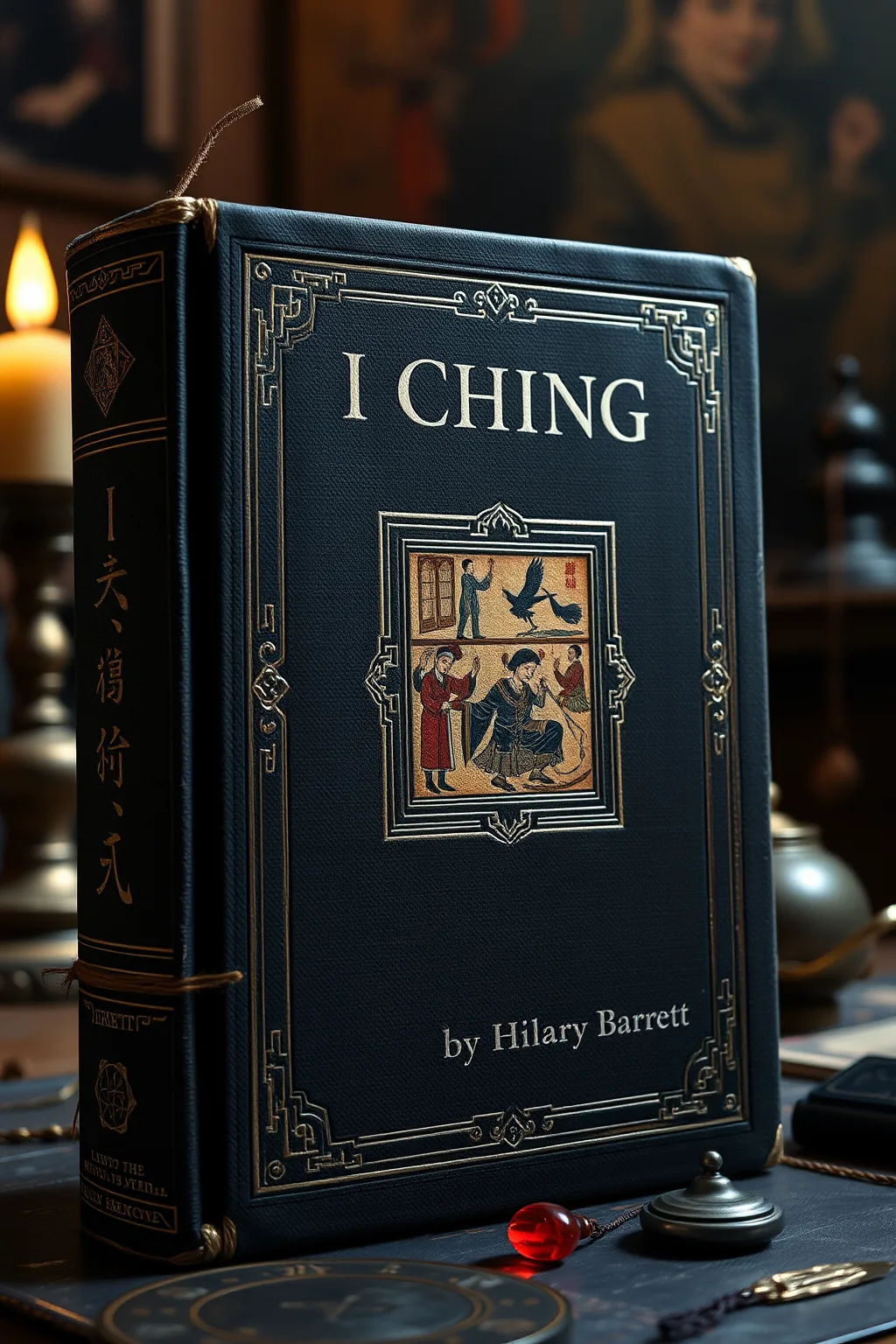
Hilary Barrett's rendition of the I Ching offers a refreshingly grounded perspective on this venerable text. Unlike many interpretations that lean heavily into New Age mysticism, Barrett’s approach prioritizes the practical wisdom embedded within the hexagrams. Her translation and commentary, first published in 2016, provide a clear pathway through the dense symbolism. A particular strength is the focus on the hexagrams as representations of dynamic processes, rather than static pronouncements. The text avoids the common pitfall of presenting the I Ching as a simple fortune-telling device, instead emphasizing its role as a mirror for self-awareness. However, the sheer depth of the I Ching means that any single translation will inevitably simplify certain nuances. For readers unfamiliar with the philosophical underpinnings of ancient Chinese thought, the initial engagement might still prove challenging. The section on the Trigrams, for instance, requires careful study to fully grasp its relationship to the hexagrams. Barrett's work stands as a solid, scholarly contribution for those seeking to understand the I Ching as a system of wisdom rather than mere divination.
📝 Description
76
Hilary Barrett's edition of the I Ching, published in 2017, presents this ancient Chinese text for serious students.
The I Ching, or Book of Changes, is an ancient Chinese text with origins in the Western Zhou dynasty, around 1046–771 BCE. It uses 64 hexagrams, each composed of six solid (yang) or broken (yin) lines. These hexagrams serve as a framework for understanding and responding to specific situations, aligning actions with the natural course of events.
This edition by Hilary Barrett is designed for individuals committed to esoteric studies, philosophy, and those seeking a structured method for self-reflection and decision-making. It will appeal to readers interested in East Asian thought, especially those who value scholarly but clear translations and commentaries. The book is for those who approach texts as instruments for personal development and insight, rather than simply as sources of information.
The I Ching's development over millennia saw it evolve from early divination practices into a complex philosophical system that influenced Confucianism and Taoism. Its earliest parts are over 3,000 years old. Over time, scholars like Confucius added commentaries, integrating its ideas into ethical and political thought. Its continuing study and adaptation across Chinese dynasties demonstrate its lasting impact on understanding cosmology and human affairs.
The I Ching is a cornerstone of Chinese esoteric traditions, functioning as both a system of divination and a philosophical guide. Its 64 hexagrams are seen as representations of archetypal situations, generated through a methodical process that reflects the interplay of fundamental forces. This text has been a tool for understanding cosmic patterns and human action for thousands of years, influencing practices in Taoism and beyond. Its systematic approach to change and balance makes it a significant work for those interested in divination as a means of personal guidance and spiritual insight.
💡 Why Read This Book?
• Gain a structured method for introspection by learning the hexagram generation process, a practice refined over millennia. • Understand the dynamic interplay of yin and yang forces as visualized through the 64 hexagrams, offering a unique framework for analyzing situations. • Explore the philosophical underpinnings of ancient Chinese thought as presented in the commentaries, providing context beyond simple prognostication.
⭐ Reader Reviews
Honest opinions from readers who have explored this book.
❓ Frequently Asked Questions
When was the I Ching first published in English?
While the I Ching's origins are ancient, Hilary Barrett's specific translation was first published in 2016. Earlier influential translations, like Richard Wilhelm's German version, were made available in English much later, with the first English edition appearing in 1950.
What is a hexagram in the I Ching?
A hexagram is a symbol composed of six stacked lines, each either solid (yang) or broken (yin). There are 64 unique hexagrams, representing archetypal situations and offering guidance on how to act in accordance with natural principles.
Is the I Ching a form of fortune-telling?
While it can be used for divination, the I Ching is primarily a philosophical text and a tool for self-reflection. Its hexagrams offer insights into the patterns of change and advise on aligning one's actions with cosmic flow.
Who was Hilary Barrett?
Hilary Barrett was a scholar and translator known for her work on the I Ching. Her edition, first published in 2016, is recognized for its clarity and accessibility to modern readers interested in esoteric and philosophical traditions.
What are the primary philosophical influences on the I Ching?
The I Ching is deeply intertwined with Taoist and Confucian philosophies. Its concepts of balance, change, and harmonious action reflect core tenets of these influential East Asian intellectual currents.
How are hexagrams generated in the I Ching?
Traditionally, hexagrams are generated using either yarrow stalks or coins. The method involves a ritualistic process of counting and dividing, which results in the selection of specific lines (yin or yang) to form the six-line structure.
🔮 Key Themes & Symbolism
The Dynamics of Change
The I Ching fundamentally concerns itself with the ceaseless nature of transformation. It presents 64 hexagrams not as static pronouncements but as archetypal patterns of movement and change. Each hexagram illustrates a specific phase or condition, offering counsel on how to act in harmony with unfolding circumstances. Understanding these patterns encourages adaptability and foresight, moving beyond a deterministic view of fate towards an active engagement with life's flux. The text emphasizes that all situations are transient, urging readers to cultivate wisdom that can navigate these shifts.
Yin and Yang Equilibrium
Central to the I Ching's cosmology is the concept of yin (broken lines) and yang (solid lines), representing complementary and opposing forces. The interplay between these forces drives all phenomena. The hexagrams themselves are built from combinations of these lines, symbolizing the balance or imbalance of energies in any given situation. The text provides guidance on recognizing these dynamics and acting to restore equilibrium, promoting a harmonious existence by understanding the natural ebb and flow of these fundamental energies.
Divination as Self-Reflection
While often employed for divination, the I Ching's true value lies in its capacity to foster self-awareness and provide ethical guidance. The process of casting hexagrams is presented as an opportunity for introspection, prompting the user to examine their situation from multiple perspectives. The judgments and images associated with each hexagram serve as mirrors, reflecting the user's inner state and offering wisdom on appropriate conduct. This approach reframes divination not as prediction but as a contemplative practice aiding in decision-making.
The Sage's Approach
The concept of the 'sage' or 'superior person' is a recurring ideal within the I Ching. This figure represents someone who understands the principles of change, maintains inner balance, and acts with wisdom and integrity. The text often frames its advice in relation to how such a person would conduct themselves. By studying the hexagrams and their interpretations, readers are encouraged to cultivate these sage-like qualities—patience, discernment, and alignment with the natural order of things—in their own lives.
💬 Memorable Quotes
Direct passages from the work, attributed to the author.
“The hexagrams are images of the conditions of the time.”
— This interpretation highlights the I Ching's function as a descriptive tool for understanding the essence of a situation. It suggests that each symbolic configuration represents a specific context or moment, offering a framework for analysis.
“The superior person acts with clarity and resolve.”
— This interpretation points to the ethical dimension of the I Ching, emphasizing the importance of decisive and principled action. It suggests that understanding the patterns of change empowers one to act with confidence.
“Change is the only constant; wisdom lies in adapting.”
— This concept captures the essence of the I Ching's philosophy, stressing the impermanence of all things and the necessity of flexibility and understanding to navigate life effectively.
“The interplay of yin and yang shapes all events.”
— This interpretation directly addresses the foundational principle of dualistic forces in Chinese thought, explaining how their dynamic relationship is the engine of all phenomena described within the text.
💡 Key Ideas
Editorial paraphrase of the work's core concepts — not direct quotes.
Through the I Ching, we can learn to act in accordance with the Tao.
This paraphrased concept underscores the text's ultimate aim: to guide the practitioner toward alignment with the natural cosmic order, known as the Tao. It emphasizes conscious action guided by universal principles.
🌙 Esoteric Significance
Tradition
The I Ching belongs to the broad tradition of East Asian esoteric thought, deeply intertwined with Taoism and Confucianism, but also finding resonance within Western Hermeticism and Jungian psychology. It departs from purely dogmatic systems by offering a dynamic, process-oriented framework for understanding reality. Its emphasis on natural cycles, balance, and alignment with cosmic principles aligns with perennial philosophies that seek universal truths across cultures. The work is less about adherence to a specific deity or creed and more about cultivating wisdom through observing and harmonizing with universal laws.
Symbolism
The core symbolism lies in the binary system of yin (broken line, receptive, feminine) and yang (solid line, active, masculine). These combine into 64 hexagrams, each a symbolic representation of archetypal situations, from the creative (Ch'ien) to the receptive (K'un). Another key motif is the trigram, a three-line combination that forms the building blocks of the hexagrams, each representing fundamental elements like Heaven, Earth, Thunder, and Water, and their associated qualities.
Modern Relevance
Contemporary practitioners of Western esotericism, particularly those interested in comparative philosophy and psychological archetypes, frequently engage with the I Ching. Carl Jung's work on synchronicity and archetypes drew heavily from his study of the I Ching, viewing its hexagrams as reflections of the collective unconscious. Modern therapists and coaches sometimes utilize its principles for decision-making frameworks and self-exploration. Its enduring appeal lies in its ability to offer a sophisticated, non-dogmatic system for understanding change and seeking guidance in a complex world.
👥 Who Should Read This Book
• Students of comparative religion and philosophy seeking to understand foundational East Asian texts and their cross-cultural influence. • Individuals engaged in self-reflection and personal development who wish to explore a structured system for gaining perspective on life's challenges. • Practitioners of esoteric traditions, including Hermeticism and Jungian psychology, looking for ancient wisdom that explores universal patterns of change and balance.
📜 Historical Context
The I Ching's journey from ancient oracle to philosophical cornerstone spans over three millennia of Chinese history. Its earliest divination practices likely emerged during the Western Zhou dynasty (c. 1046–771 BCE). Over centuries, it absorbed and influenced major intellectual currents, notably Confucianism and Taoism. By the Han dynasty (206 BCE–220 CE), scholars like Dong Zhongshu integrated its principles into state ideology. The text's commentaries, particularly the 'Ten Wings' attributed to Confucius and his school, transformed it from a divinatory manual into a complex system of ethics and cosmology. While its influence in East Asia is profound, its Western reception gained momentum in the 20th century. Richard Wilhelm's German translation, published in 1924, and its subsequent English version in 1950, introduced the I Ching to a global audience, including thinkers like Carl Jung who explored its psychological dimensions, contrasting with the more purely philosophical approaches prevalent in its homeland.
📔 Journal Prompts
The hexagrams as images of the time: describe a current situation using this concept.
Reflecting on the interplay of yin and yang in your daily interactions.
How the principle of 'change is the only constant' applies to a recent personal challenge.
The role of the 'superior person' in navigating complex decisions.
Interpreting a specific hexagram's judgment for personal guidance.
🗂️ Glossary
Hexagram
A symbol composed of six stacked lines, each either solid (yang) or broken (yin). There are 64 unique hexagrams in the I Ching, representing archetypal situations and offering guidance.
Yin
In the I Ching, represented by a broken line (--) and symbolizing passive, dark, feminine, or receptive qualities. It is one of the two fundamental forces.
Yang
In the I Ching, represented by a solid line (—) and symbolizing active, light, masculine, or creative qualities. It is the counterpart to yin.
Trigram
A combination of three yin or yang lines. The eight trigrams form the building blocks of the 64 hexagrams and represent fundamental natural elements.
Tao
The fundamental principle of the universe in Chinese philosophy, often translated as 'the Way.' It represents the natural order and flow of existence.
Judgment
A short text associated with each hexagram, offering counsel or commentary on the situation represented by the hexagram.
The Ten Wings
A collection of commentaries traditionally attributed to Confucius and his followers, which greatly expanded the philosophical and ethical interpretations of the I Ching.
🔮 Readers Also Liked
Browse all →








More by Hilary Barrett
All books →

More Free Occult Philosophy Books
View all →