Tantra
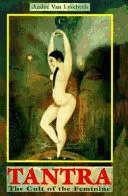
 77
77

Tantra
André van Lysebeth's *Tantra* is a valuable corrective to the Western sensationalism that has often obscured the depth of this ancient tradition. The author’s strength lies in his clear, academic yet accessible prose, effectively dismantling the reductionist view of Tantra as solely a sexual practice. He succeeds in presenting it as a sophisticated worldview that seeks harmony between the material and spiritual realms. A particular strength is his detailed explanation of the concept of Shakti, moving beyond simplistic notions of feminine power to its role as the fundamental creative energy of the cosmos. However, the book occasionally feels dense, requiring patient engagement from the reader, especially in its more philosophical sections. The absence of extensive practical exercises, while intentional to avoid dogma, might leave some readers wanting more direct application. Van Lysebeth's scholarly approach provides a solid foundation for understanding, but the experiential dimension remains largely implied rather than explicitly detailed.
Ultimately, *Tantra* by André van Lysebeth offers a crucial, grounded perspective for serious students of esoteric thought.
📝 Description
77
André van Lysebeth's Tantra, published in 1995, corrects Western misinterpretations of the tradition.
André van Lysebeth's 1995 book *Tantra* addresses the tradition beyond its common association with sexuality. Van Lysebeth presents Tantra as a complete system for understanding reality, blending religious and scientific viewpoints. He aimed to clarify its main ideas without strict dogma.
The book is for people who want a deeper grasp of Tantra, moving beyond simple Western views. It will interest those studying comparative religion, esoteric subjects, and philosophies about consciousness and the cosmos. Readers who prefer a scholarly yet clear look at older traditions will find it useful.
Van Lysebeth's work emerged as Western interest in Eastern spirituality grew in the late 20th century, often leading to misunderstandings. He sought to set the record straight with a more genuine and thorough depiction of Tantra. His method aimed to connect spiritual practice with intellectual thought, a goal shared by others studying religious experience.
Published in 1995, Van Lysebeth's *Tantra* entered a period of increased Western engagement with Eastern philosophies. This era often saw simplified or distorted views of practices like Tantra. Van Lysebeth worked to provide a more accurate account, positioning Tantra not merely as a spiritual path but as a comprehensive worldview. His approach sought to bridge the gap between esoteric practice and academic study, offering a structured understanding of concepts often reduced to sensationalism.
💡 Why Read This Book?
• Gain a nuanced understanding of Tantra as a holistic philosophy, moving beyond its popular association with sexual practices, as detailed in Van Lysebeth's exploration of its origins and core principles. • Appreciate the concept of Shakti not merely as feminine energy but as the fundamental, animating force of the universe, a key distinction made in the book's philosophical sections. • Learn how Tantra views the material world as a divine manifestation to be embraced rather than an illusion to be escaped, a perspective crucial for integrating spiritual understanding with everyday life as presented in the text.
⭐ Reader Reviews
Honest opinions from readers who have explored this book.
❓ Frequently Asked Questions
What is the original publication year of André van Lysebeth's Tantra?
André van Lysebeth's *Tantra* was first published in 1995, offering a modern examination of ancient Tantric teachings.
Does André van Lysebeth's Tantra focus only on sexual practices?
No, the book explicitly aims to correct this misconception, presenting Tantra as a wide-reaching ideology and a search for reality that encompasses more than just sexual aspects.
What is Shakti in the context of Tantra as explained by Van Lysebeth?
Van Lysebeth explains Shakti as the divine feminine energy, the universal animating force and creative power of the cosmos, integral to the Tantric worldview.
Is Tantra by Van Lysebeth dogmatic?
The book espouses no dogma, presenting Tantra as an open search for reality that seeks to reconcile science and religion.
Who is André van Lysebeth in the field of Tantric studies?
He is recognized as one of Europe's foremost authors and teachers of Tantra, providing a balanced and informed perspective in his works.
How does this book relate science and religion?
Van Lysebeth's *Tantra* suggests that the philosophy does not contradict science or religion, but rather offers a framework where they can be seen as complementary paths to understanding reality.
🔮 Key Themes & Symbolism
The Universal Nature of Tantra
Van Lysebeth's work vigorously challenges the Western perception of Tantra as a solely sexual discipline. He argues that ancient Tantric ideology is a universal and far-reaching system of thought, concerned with the fundamental nature of existence and consciousness. The book explores how this ideology, often overlooked in the West, offers a framework for understanding reality that integrates rather than opposes scientific and religious inquiry, positioning it as a path of self-discovery.
Shakti: The Divine Feminine Force
A central concept elucidated in *Tantra* is Shakti, understood not merely as feminine power but as the primordial, creative energy that animates the entire cosmos. Van Lysebeth details how this divine feminine principle is seen as the dynamic force behind all manifestation, the active aspect of the Absolute. Understanding Shakti is presented as key to grasping the Tantric view of a universe alive with divine consciousness and potent energy.
Embracing the Material World
Contrary to ascetic traditions that view the material world as an illusion or something to be renounced, Tantra, as presented by Van Lysebeth, posits that the phenomenal universe is a sacred manifestation of the divine. The work explains that true spiritual realization involves fully engaging with and experiencing the richness of material existence, seeing the divine within all things. This perspective encourages a holistic approach to life, integrating spiritual awareness into everyday activities.
Tantra as a Path to Reality
Van Lysebeth frames Tantra as a non-dogmatic search for truth and reality. It is presented as a system that encourages direct experience and personal insight, rather than blind faith. The book emphasizes that this quest is compatible with both scientific understanding and religious devotion, suggesting that Tantra offers a method for perceiving the underlying unity and sacredness of existence, accessible through disciplined practice and contemplation.
💬 Memorable Quotes
Direct passages from the work, attributed to the author.
“Ancient Tantric ideology is a universal and wide-reaching ideology virtually ignored in the West.”
— This statement highlights the core argument of the book: that Tantra's significance is vastly underestimated in Western discourse, often reduced to a narrow, sensationalized aspect.
“Tantra involves a search for reality that contradicts neither science nor religion.”
— This interpretation underscores Van Lysebeth's aim to present Tantra as a philosophical system that can coexist with and even complement modern scientific understanding and traditional religious beliefs.
“For Tantra, all of the myr...”
— Although the quote is incomplete, it points towards a fundamental Tantric principle: the inherent divinity or sacredness present within all aspects of existence, including the material world.
“one of Europe's foremost Tantric authors and teachers”
— This description positions André van Lysebeth as a credible and authoritative voice, lending weight to his explanations and interpretations of complex Tantric concepts.
💡 Key Ideas
Editorial paraphrase of the work's core concepts — not direct quotes.
a balanced, well-informed, modern examination of the secret teachings and symbolism of Tantra.
This phrase summarizes the book's objective: to provide a comprehensive, scholarly, and contemporary perspective on Tantric traditions, clarifying its often esoteric and misunderstood elements.
🌙 Esoteric Significance
Tradition
While Tantra is a vast and diverse tradition with roots in ancient India, Van Lysebeth's approach aligns with a more philosophical and less sectarian interpretation, often associated with broader Hindu and Buddhist esoteric lineages. His work emphasizes universal principles rather than adherence to specific deities or rituals, making it accessible to those exploring various esoteric paths seeking a unified understanding of consciousness and reality.
Symbolism
Key symbols explored include Shakti, representing the dynamic, creative feminine principle that is the source of all manifestation. The concept of the union of Shiva and Shakti is also central, symbolizing the integration of consciousness (Shiva) and energy (Shakti) as the fundamental basis of existence. Van Lysebeth likely touches upon the symbolism of the body as a microcosm of the universe, a common motif in Tantric thought, representing the divine within the human form.
Modern Relevance
Van Lysebeth's work continues to inform contemporary discussions on holistic spirituality and consciousness studies. Thinkers and practitioners interested in integrating mind-body practices, exploring the role of feminine energy in spiritual development, and seeking a non-dualistic worldview often reference his foundational texts. His emphasis on Tantra as a system compatible with science and rational inquiry appeals to modern seekers looking for grounded, yet profound, spiritual frameworks.
👥 Who Should Read This Book
• Students of comparative religion and philosophy seeking to understand the historical and ideological breadth of Tantra beyond its Western popularization. • Esoteric practitioners interested in the philosophical underpinnings of traditions that view the material world as sacred and divine manifestation. • Individuals questioning the dichotomy between science and spirituality who are looking for a framework that bridges these domains through a holistic worldview.
📜 Historical Context
André van Lysebeth's *Tantra*, first published in 1995, emerged during a period of intense Western fascination with Eastern spirituality, often accompanied by significant cultural appropriation and misunderstanding. The latter half of the 20th century saw a proliferation of books and movements presenting simplified or distorted versions of yogic and meditative practices. Van Lysebeth's work was a deliberate effort to offer a more authentic, scholarly, and philosophically grounded account of Tantra, moving beyond the sensationalism that had become prevalent. It sought to position Tantra not just as a set of practices but as a comprehensive worldview. In an era where Eastern philosophies were often viewed through a lens of New Age exoticism, Van Lysebeth, alongside scholars like Georg Feuerstein, aimed to provide a more rigorous and nuanced understanding, distinguishing genuine traditions from popular dilutions. The book's reception contributed to a broader academic and serious popular engagement with the subject matter.
📔 Journal Prompts
The concept of Shakti as the animating force of the cosmos: how does this differ from common Western interpretations of feminine power?
Van Lysebeth's assertion that Tantra contradicts neither science nor religion: explore potential areas of convergence or synthesis.
Reflect on the Tantric view of the material world as a divine manifestation: what implications does this have for daily life and perception?
Consider the idea of Tantra as a 'search for reality': what methods or attitudes does this imply for personal inquiry?
Analyze the contrast between ascetic renunciation and the Tantric embrace of existence as presented in the text.
🗂️ Glossary
Tantra
A complex spiritual tradition originating in India, encompassing a wide range of philosophies, practices, and rituals aimed at achieving liberation and understanding the nature of reality.
Shakti
The primordial cosmic energy, often personified as the Divine Feminine, considered the active, dynamic force that creates, sustains, and transforms the universe.
Shiva
In Tantra, often represents pure consciousness, the static, unchanging aspect of the Absolute, which is activated and made manifest by Shakti.
Ideology
A system of ideas and ideals, especially one which forms the basis of economic or political theory and policy; in this context, a comprehensive worldview or philosophy.
Dogma
A principle or set of principles laid down by an authority as incontrovertibly true; Van Lysebeth emphasizes Tantra's lack of rigid, imposed beliefs.
Esoteric
Intended for or likely to be understood by only a small number of people with a specialized knowledge or interest; relating to the occult.
Manifestation
The act of showing or demonstrating something; in a spiritual context, the appearance or embodiment of a divine or energetic principle in the material world.