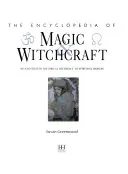
NATURE OF MAGIC: AN ANTHROPOLOGY OF CONSCIOUSNESS

 78
78

NATURE OF MAGIC: AN ANTHROPOLOGY OF CONSCIOUSNESS
Susan Greenwood's NATURE OF MAGIC approaches its subject with an anthropological lens, dissecting magical phenomena through the prism of altered states of consciousness. Rather than treating magic as a set of arcane techniques, Greenwood situates it within the broader landscape of human perception and belief formation. The strength of this work lies in its refusal to pathologize or dismiss magical practices, instead seeking to understand their internal logic and cultural significance. A particular passage that stands out is her exploration of how shamanic journeys facilitate a different mode of knowing, distinct from ordinary waking consciousness. However, the book’s academic density might present a challenge for readers unfamiliar with anthropological theory, occasionally making its core arguments less accessible than they might be. Greenwood's meticulous research is undeniable, but the narrative could benefit from more direct engagement with the lived experiences of practitioners. Nevertheless, it offers a valuable, sober analysis of a perennially fascinating human endeavor.
📝 Description
78
Susan Greenwood's 2005 book, Nature of Magic, examines magic as a fundamental aspect of human perception.
Published in 2005, Susan Greenwood's Nature of Magic: An Anthropology of Consciousness looks at the connection between human awareness and magical practices across different cultures. The book moves beyond simple ideas of magic, tracing its origins in altered states of mind, rituals, and belief systems. Greenwood presents magic not as supernatural power, but as a basic part of how humans perceive and interact with their environment. The work is for readers interested in the anthropological basis of belief and ritual, especially those who study how consciousness develops and shows itself in magical traditions. It is useful for academics in comparative religion, psychology, and anthropology, and for practitioners seeking a deeper grasp of magic's cultural and psychological roots. Anyone curious about unusual human experiences will find its analytical method insightful.
Greenwood's study emerged in the early 2000s, a time of growing academic interest in the anthropology of religion and consciousness studies. This period saw a critical look at Western scientific views and a turn toward non-Western and indigenous worldviews for different perspectives. The book was part of a larger conversation that aimed to understand magical beliefs and practices from an insider's viewpoint, contrasting with earlier, ethnocentric interpretations.
This book fits within the anthropological study of esoteric traditions, viewing magic not as superstition but as a system of knowledge and practice tied to human consciousness. It emerged from a scholarly period that questioned purely materialistic or rationalistic explanations for human belief, seeking to understand magical phenomena within their cultural and psychological contexts. Greenwood's work contributes to a broader understanding of consciousness as a force that can interact with the world through ritual and belief, drawing parallels between indigenous cosmologies and the development of esoteric thought.
💡 Why Read This Book?
• Gain a nuanced understanding of magic as a cultural and psychological phenomenon, moving beyond supernatural interpretations, as explored through Greenwood's analysis of altered states of consciousness. • Discover how ritual practices, as detailed in the book, are understood to actively shape perception and consciousness, offering practical insights into the mechanics of belief. • Appreciate the historical context of anthropological studies of magic, understanding how Greenwood's work in the early 2000s challenged earlier paradigms of ethnographic research.
⭐ Reader Reviews
Honest opinions from readers who have explored this book.
❓ Frequently Asked Questions
What distinguishes Susan Greenwood's approach to magic in NATURE OF MAGIC from older anthropological studies?
Greenwood's 2005 work distinguishes itself by focusing on altered states of consciousness as the primary mechanism for magical perception, moving beyond earlier studies that often viewed magic through a lens of superstition or primitive psychology.
Does NATURE OF MAGIC discuss specific magical traditions or focus on general principles?
The book explores general principles by drawing examples from diverse traditions, examining how altered states and ritual function across various cultures to facilitate magical experience, rather than detailing specific spellcraft.
What is the role of 'consciousness' in Greenwood's anthropological study of magic?
In NATURE OF MAGIC, consciousness is presented as the fundamental arena where magic operates. Greenwood investigates how specific states of awareness, induced by ritual or other means, allow for perceptions and interactions understood as magical.
Is this book suitable for someone new to the anthropology of magic?
While academically rigorous, the book's clear focus on consciousness and its anthropological grounding makes it accessible to newcomers interested in understanding the cultural basis of magical beliefs, provided they are prepared for an analytical approach.
What does the book suggest about the 'reality' of magic?
Greenwood frames magic not as necessarily involving supernatural entities, but as a real, culturally mediated aspect of human experience and consciousness, contingent on belief and altered states of perception.
When was NATURE OF MAGIC first published, and why is that relevant?
First published in 2005, the book reflects a contemporary anthropological perspective that emerged after significant shifts in the study of religion and consciousness, moving away from earlier colonial or purely rationalist viewpoints.
🔮 Key Themes & Symbolism
Consciousness and Perception
Greenwood posits that magical experiences are fundamentally rooted in altered states of consciousness, which shift ordinary perception to allow for different ways of knowing and interacting with the world. This work examines how specific practices, such as ritual or trance, serve as technologies for accessing these states. The book analyzes how these altered perceptions are not seen as delusion by practitioners but as valid forms of understanding reality within their cultural frameworks, thus placing consciousness at the center of magical efficacy.
Ritual as a Cognitive Technology
The book explores ritual not merely as symbolic performance but as a practical method for inducing specific psychological and physiological changes. Greenwood investigates how the structured actions, sounds, and environments of ritual can facilitate altered states, enhance focus, and foster communal belief. This perspective frames ritual as a deliberate technology aimed at manipulating consciousness to achieve desired outcomes, whether personal transformation or influence over external events, highlighting its functional role in magical systems.
Cultural Construction of Magic
NATURE OF MAGIC emphasizes that what constitutes 'magic' is deeply embedded within specific cultural contexts. Greenwood analyzes how societies define, interpret, and validate magical beliefs and practices. The work demonstrates that magical efficacy is often contingent on shared understanding and belief systems within a community, suggesting that magic is a social and cultural phenomenon as much as an individual psychological one, shaped by collective narratives and shared realities.
Anthropology of the Esoteric
This book contributes to an anthropological understanding of esoteric traditions by applying rigorous analytical methods to subjects often relegated to pseudoscience or folklore. Greenwood seeks to understand the internal logic and human experience behind magical practices, treating them as valid subjects of scholarly inquiry. By examining the psychological and cultural dimensions, the work bridges the gap between academic study and the lived realities of those who engage with magical systems, offering a grounded perspective.
💬 Memorable Quotes
Direct passages from the work, attributed to the author.
“Magic is often perceived as the manipulation of forces beyond our ordinary understanding, yet it can be analyzed as a function of consciousness itself.”
— This statement highlights Greenwood's core thesis: that magic's efficacy stems not from external supernatural powers, but from the internal capacities and altered perceptions of the human mind, particularly in non-ordinary states of awareness.
“Rituals provide a framework for experiencing and interpreting reality in ways that differ from everyday life.”
— This interpretation emphasizes the functional role of ritual in shifting consciousness. It suggests that rituals are structured activities designed to facilitate a transformation in perception, allowing individuals or groups to engage with a different mode of reality or understanding.
“The belief of the practitioner and the community validates the experience of magic.”
— This concept underscores the social and psychological dimension of magic. It posits that for magical acts to be considered effective, they rely heavily on the shared conviction and acceptance of both the individual performing the act and the group observing or participating.
“Altered states of consciousness are not mere anomalies but crucial pathways to understanding alternative cosmologies.”
— This interpretation frames altered states not as pathological deviations but as integral to how certain magical and spiritual worldviews are accessed and understood. It suggests these states are essential for grasping perspectives outside of conventional rational thought.
“The anthropological study of magic requires examining its meaning within the cultural context of its users.”
— This interpretation stresses the importance of ethnography and cultural relativism in studying magic. It argues against imposing external judgments and instead advocates for understanding magical practices from the perspective of the people who engage in them, within their specific social and historical settings.
🌙 Esoteric Significance
Tradition
While not strictly adhering to a single esoteric lineage, Greenwood's work draws heavily from anthropological approaches that bridge the gap between Western esoteric traditions and broader humanistic studies. It engages with concepts relevant to shamanism, animism, and psychological interpretations of ritual common in modern occultism, but frames them within a secular, academic context. Her approach deconstructs magical practices into elements of consciousness and belief, making it relevant to those seeking a more grounded, psychological understanding of traditions like Hermeticism or Wicca.
Symbolism
The book frequently touches upon the symbolic nature of ritual objects and actions, though it focuses more on the *process* of symbolic engagement than specific symbols. For instance, the act of creating a sacred space or the use of repetitive chants in ritual can be seen as symbolic technologies for altering consciousness. The 'symbol' here is less a fixed signifier and more an element within a process designed to induce a state of awareness conducive to magical experience, aligning with how symbols function in many esoteric practices to focus intent.
Modern Relevance
Contemporary thinkers in areas like ecopsychology, consciousness research, and modern shamanism often cite or echo Greenwood's foundational ideas. Her emphasis on altered states and the cultural grounding of belief systems provides a framework for understanding contemporary magical revivals and neopagan practices. Practitioners and scholars seeking to understand the psychological underpinnings of their own traditions, or the broader human impulse towards ritual and altered perception, find her work a valuable resource for analytical depth.
👥 Who Should Read This Book
• Students of anthropology and comparative religion: Those studying belief systems will find Greenwood's analytical framework for understanding magic within cultural contexts exceptionally useful. • Researchers of consciousness studies: Individuals exploring altered states of awareness and their impact on perception will benefit from her examination of ritual's role. • Practitioners of esoteric traditions: Those seeking a deeper theoretical understanding of the psychological and cultural foundations of magical practices will find valuable insights.
📜 Historical Context
Published in 2005, Susan Greenwood's NATURE OF MAGIC emerged during a period of significant academic re-evaluation in the anthropology of religion and consciousness studies. The early 21st century saw scholars moving beyond earlier ethnocentric interpretations of magic, influenced by figures like Edward Tylor or James Frazer, which often characterized such beliefs as primitive. Greenwood's work contributed to a growing field that sought to understand magical practices from an emic perspective, focusing on the subjective experience and cognitive frameworks of practitioners. This coincided with advancements in neuroscience and psychology that began to explore altered states of consciousness more rigorously. While not directly engaging with specific contemporaries in public debate, her work resonated with scholars exploring shamanism, altered states, and the anthropology of the body, challenging purely rationalist explanations and validating the study of esoteric beliefs within mainstream academia.
📔 Journal Prompts
The role of altered states in accessing non-ordinary realities.
Ritual's function in shaping collective and individual consciousness.
How cultural frameworks define and validate magical practices.
The relationship between belief and the perceived efficacy of magic.
Personal experiences with consciousness shifts and their interpretation.
🗂️ Glossary
Altered States of Consciousness (ASC)
Refers to any mental state significantly different from ordinary waking consciousness, often characterized by changes in perception, cognition, emotion, and sense of self, frequently induced by ritual or meditative practices.
Emic Perspective
In anthropology, this refers to understanding a culture or belief system from the viewpoint of its members, as opposed to an outsider's interpretation (etic perspective).
Ritual
A set of actions, often symbolic and performed in a prescribed order, typically used in religious or magical ceremonies to achieve a specific outcome or facilitate a particular state of mind.
Cosmology
A system of beliefs that deals with the fundamental nature of the universe and humanity's place within it, often encompassing creation myths, spiritual hierarchies, and the perceived order of reality.
Efficacy
The ability to produce a desired or intended result. In the context of magic, it refers to the perceived power or effectiveness of magical acts or beliefs.
Shamanism
A practice characterized by the belief that a practitioner can communicate with the spirit world, often through trance states, to heal, divine, or influence events.
Cultural Relativism
The principle that an individual person's beliefs and activities should be understood by others in terms of that individual's own culture.
🔮 Readers Also Liked
Browse all →








More by SUSAN GREENWOOD
All books →



More Free Occult Philosophy Books
View all →