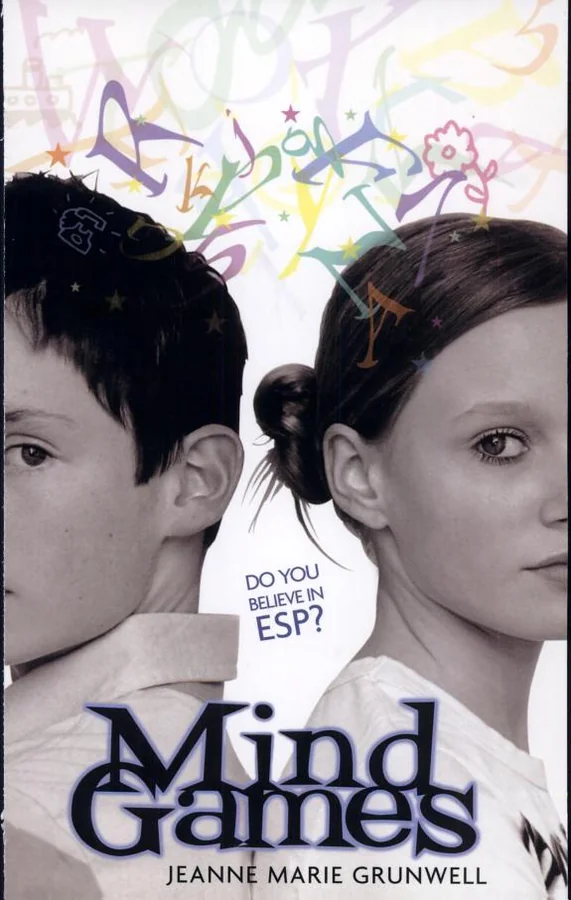
Mind Games
 84
84

Mind Games
Jeanne Marie Grunwell’s "Mind Games" offers a curious premise: a science club’s ESP experiment yielding a lottery win. The strength lies in its peculiar, almost allegorical, exploration of focused intent and collective consciousness. The individual reports from the Mad Science Club members provide varied perspectives, hinting at the subjective nature of such phenomena. However, the narrative’s resolution, while impactful, feels somewhat abrupt, leaving the reader yearning for a deeper examination of the mechanics or ethical implications of their success. A passage detailing the collective visualization for the lottery numbers stands out as a particularly vivid illustration of their focused intent. "Mind Games" is an imaginative thought experiment on the edge of the paranormal.
📝 Description
84
In 2006, Jeanne Marie Grunwell published Mind Games, a story about a science club's lottery win.
Mind Games details the experiences of six members of the 'Mad Science Club' as they work on a science fair project. Their project, which investigates Extra-Sensory Perception (ESP), unexpectedly leads them to win the Maryland lottery. The book presents their individual reports on the process, detailing the subsequent, remarkable outcome. This narrative is suited for readers interested in parapsychology, speculative fiction, and the nature of consciousness. Those fascinated by how scientific inquiry and chance phenomena can converge will find the book engaging. It also appeals to readers who enjoy stories about group dynamics and the unintended results of focused intent.
The book emerged during a period where interest in consciousness studies and fringe science continued to be a subject of popular discussion. The early 2000s saw various explorations into parapsychology, building on decades of research. Mind Games situates itself within this ongoing dialogue, offering a fictionalized account of ESP's potential practical, albeit unconventional, applications. The central concepts revolve around the nature of ESP, the power of collective intention, and the unexpected ways focused mental effort can manifest in the physical world. The narrative questions the boundaries between scientific method and phenomena that defy conventional explanation, particularly concerning probability and chance.
Published in 2006, Mind Games engages with the ongoing interest in parapsychology and consciousness studies prevalent in the early 2000s. It fictionalizes the potential practical applications of ESP, a concept explored in various esoteric traditions for centuries. The book situates these ideas within a narrative framework that examines the convergence of focused mental effort, group dynamics, and outcomes that defy conventional scientific understanding, particularly concerning chance and probability.
💡 Why Read This Book?
• Understand the concept of collective visualization as explored in the "Mad Science Club's" lottery win, providing a practical example of focused group intention. • Examine the narrative's portrayal of ESP research within a science fair project context, offering a unique perspective on parapsychological investigation as depicted in the book. • Discover how the book connects the seemingly random event of winning the Maryland lottery to the focused efforts of the characters, illustrating a potential link between consciousness and probability.
⭐ Reader Reviews
Honest opinions from readers who have explored this book.
❓ Frequently Asked Questions
What is the core premise of Jeanne Marie Grunwell's "Mind Games"?
The book follows six members of the "Mad Science Club" whose science fair project investigating ESP leads them to win the Maryland lottery, detailing their experiences and reports.
When was "Mind Games" originally published?
The book was first published in May 2006, placing it within the early 21st-century landscape of interest in consciousness studies.
What esoteric subjects are explored in "Mind Games"?
It delves into the nature of Extra-Sensory Perception (ESP), collective consciousness, and the manifestation of intention, particularly in relation to probability and chance.
Who are the main characters or groups in the book?
The central figures are the six members of the "Mad Science Club," each presenting their individual reports on the ESP project and its outcomes.
Does the book offer practical advice on developing ESP?
While it explores the *concept* of ESP and its potential effects, "Mind Games" is primarily a narrative account rather than a how-to guide for developing psychic abilities.
What is the significance of the Maryland lottery win in the story?
The lottery win serves as the dramatic culmination of the club's ESP investigation, acting as a powerful, albeit fictional, demonstration of their findings and focused intent.
🔮 Key Themes & Symbolism
The Power of Collective Intention
The narrative centers on how the focused, unified intention of the Mad Science Club members, directed towards their ESP project, yields extraordinary results. This theme explores the potential for synchronized mental energy to influence external events, moving beyond individual psychic phenomena to a group dynamic. The book posits that shared focus can amplify psychic potential, leading to tangible outcomes like winning the Maryland lottery, challenging conventional notions of causality and chance.
ESP as Scientific Inquiry
Grunwell frames the exploration of ESP within the context of a science fair project, juxtaposing the rigorous methodology of science with the elusive nature of psychic abilities. The book examines how the club members attempt to apply scientific principles to investigate phenomena like telepathy and precognition. This approach questions the perceived boundaries between established science and parapsychology, suggesting that even unconventional subjects can be approached with a spirit of empirical investigation, albeit with unexpected conclusions.
Manifestation and Probability
A core element of "Mind Games" is the dramatic manifestation of the characters' intentions through winning the lottery. This theme explores the idea that focused mental energy can alter probabilities or directly influence outcomes in the material world. The book invites contemplation on how the characters' shared belief and directed psychic energy might have interacted with the statistical improbability of winning, offering a speculative look at the mechanics of manifestation.
💬 Memorable Quotes
Direct passages from the work, attributed to the author.
“Each member of the Mad Science Club presented their findings on ESP.”
— This signifies the structured, report-based approach the characters took to their investigation, highlighting the blend of scientific reporting with paranormal subject matter.
“Individual reports detailed personal experiences with psychic phenomena.”
— This points to the subjective and personal nature of the characters' explorations into ESP, suggesting that the experience and perception of psychic events vary among individuals.
“The science fair project aimed to investigate the potential of Extra-Sensory Perception.”
— This clearly states the objective of the Mad Science Club's endeavor, setting the stage for their exploration into the field of the paranormal through a structured inquiry.
“Winning the Maryland lottery was a direct result of their psychic experiment.”
— This assertion directly links the extraordinary event of winning the lottery to the specific actions and focus of the characters' ESP project, forming the book's core speculative premise.
💡 Key Ideas
Editorial paraphrase of the work's core concepts — not direct quotes.
The project's focus on ESP unexpectedly led to a lottery win.
This summarizes the central, surprising outcome of the narrative, emphasizing the dramatic and improbable consequence of the characters' focused intentions and experiments.
🌙 Esoteric Significance
Tradition
While not explicitly aligned with a single named esoteric tradition like Kabbalah or Hermeticism, "Mind Games" engages with themes common to speculative occultism and New Age thought. It touches upon concepts of directed consciousness, collective manifestation, and the potential for psychic abilities to impact material reality, which are recurrent motifs in broader esoteric discourse. The work departs from rigid traditional structures, offering a more accessible, almost accidental, exploration of these ideas through a contemporary narrative lens.
Symbolism
The "Mad Science Club" itself can be seen as a symbol of organized, yet unconventional, inquiry into the unknown. The science fair project represents the attempt to bring the esoteric into a framework of empirical observation. The Maryland lottery win functions as a potent symbol of improbable manifestation, representing the materialization of collective psychic energy and intent in a highly unexpected and tangible form.
Modern Relevance
Contemporary interest in the law of attraction, quantum mysticism, and collective consciousness practices finds echoes in "Mind Games." Thinkers and practitioners exploring the power of focused intention, visualization techniques, and the potential for group dynamics to influence outcomes can draw parallels to the book's narrative. It speaks to modern fascination with the mind's capacity to shape reality, offering a fictionalized case study in applied psychic phenomena.
👥 Who Should Read This Book
• Aspiring writers of speculative fiction interested in blending parapsychology with everyday scenarios. • Enthusiasts of consciousness studies seeking fictional explorations of ESP and manifestation beyond academic texts. • Readers intrigued by narratives of unlikely success and the potential power of collective intent.
📜 Historical Context
Published in 2006, "Mind Games" emerged in an era where interest in consciousness and parapsychology was sustained, though often relegated to popular culture rather than mainstream academia. The early 2000s saw continued exploration of fringe science and the mind's potential, influenced by earlier movements like the New Age and the persistent research efforts of institutions such as the Rhine Research Center, which had been investigating ESP since the 1930s. While "Mind Games" is fictional, it taps into a cultural undercurrent that questions the limits of the materialist worldview. It arrived long after the peak of spiritualism in the late 19th century but echoed some of its themes of unseen forces influencing reality. Unlike, say, the more structured occultism explored by Aleister Crowley in the early 20th century, Grunwell’s narrative focuses on a more contemporary, almost accidental, manifestation of psychic power through a group of young individuals.
📔 Journal Prompts
The Mad Science Club's approach to ESP investigation.
The specific reports detailing individual experiences with psychic phenomena.
The connection between focused intention and the Maryland lottery win.
The ethical considerations of using ESP for personal gain.
The role of collective consciousness in achieving extraordinary outcomes.
🗂️ Glossary
Extra-Sensory Perception (ESP)
The purported ability to acquire information by psychic means, such as telepathy, clairvoyance, or precognition, independent of the known sensory channels.
Mad Science Club
The group of six students whose science fair project on ESP leads to an unexpected lottery win, serving as the central characters of the narrative.
Collective Intention
The unified mental focus and shared purpose of a group directed towards a common goal, explored in the book as a means to influence external events.
Manifestation
The process by which thoughts, beliefs, or intentions are believed to become a tangible reality in the physical world, as depicted through the lottery win.
Probability
The measure of the likelihood that an event will occur, a concept challenged by the seemingly improbable lottery win achieved through psychic means.
Parapsychology
The branch of psychology that studies alleged psychic phenomena, such as ESP and psychokinesis, which is the subject of the Mad Science Club's investigation.
Science Fair Project
The structured, empirical undertaking by the Mad Science Club to investigate ESP, providing a narrative framework for exploring psychic phenomena.
This book appears in 1 collection
🔮 Readers Also Liked
Browse all →








From the “Extrasensory Perception” Collection
View all →







More Free Occult Philosophy Books
View all →