Psychic Awareness
 72
72

Psychic Awareness
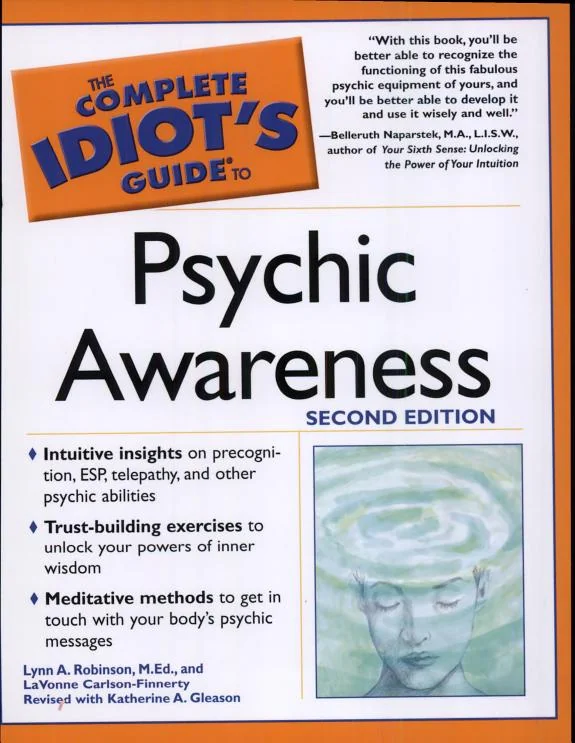
Robinson, Carlson-Finnerty, and Gleason’s *Psychic Awareness* offers a refreshingly direct approach to a subject often shrouded in vagueness. Rather than simply cataloging psychic phenomena, the book prioritizes actionable guidance, a strength that sets it apart. The inclusion of trust-building exercises, specifically those aimed at recognizing the body's psychic signals, provides a tangible entry point for skeptics and novices alike. However, the book's primary limitation lies in its broad strokes; while it introduces concepts like telepathy, it often lacks the granular detail that seasoned practitioners might seek. A particularly effective passage details simple visualization techniques for strengthening intuitive recall, demonstrating the authors’ commitment to practical application. Ultimately, *Psychic Awareness* serves as a solid, accessible primer for those beginning their journey into extrasensory perception.
📝 Description
72
First published in 2004, Psychic Awareness is a guide to developing inherent psychic abilities.
Psychic Awareness, by Lynn A. Robinson, LaVonne Carlson-Finnerty, and Katherine A. Gleason, offers practical techniques for understanding and developing one's innate psychic abilities. It moves past theory to provide actionable methods for individuals aiming to engage their intuitive faculties. The book works to demystify concepts often considered fringe, presenting them as attainable aspects of human potential. The authors encourage a grounded approach, guiding readers to cultivate a personal connection with their inner knowing.
This book suits a wide audience interested in psychic capabilities, from those new to precognition or telepathy to experienced individuals seeking to deepen their understanding. It helps readers build trust in their intuitive insights and foster a stronger connection with their inner wisdom. The exercises are designed for personal growth, suitable for independent study or group work.
The early 2000s saw sustained public interest in parapsychology and New Age philosophies. Books on psychic abilities often drew from traditions like Theosophy and Western esotericism. While academia remained largely skeptical, popular culture and self-help embraced these topics. Robinson, Carlson-Finnerty, and Gleason contributed to a trend of accessible guides aiming to structure psychic development practices, making them less purely experiential. The rise of the internet facilitated wider access to esoteric information and online communities during this period.
Psychic Awareness emerged in the early 2000s, a period of continued popular interest in parapsychology and New Age thought. This book fits within a tradition of accessible guides that draw from Western esoteric practices and philosophies like Theosophy. It seeks to codify and teach psychic development techniques, aiming to provide a more structured approach than purely experiential methods. The work contributed to a wave of literature that made concepts of psychic ability more approachable for a general audience, especially as the internet began to expand access to such information.
💡 Why Read This Book?
• Learn specific meditative methods to interpret your body's intuitive signals, moving beyond abstract notions of psychic messages to concrete self-awareness techniques as presented in the book's exercises. • Develop trust in your precognitive abilities through guided practices, allowing you to recognize and value the intuitive insights that arise from your inner wisdom. • Understand the foundational concepts of ESP and telepathy, gaining practical approaches to identifying and potentially honing these abilities based on the 2004 publication's framework.
⭐ Reader Reviews
Honest opinions from readers who have explored this book.
❓ Frequently Asked Questions
What specific psychic abilities does 'Psychic Awareness' cover?
The book covers several key psychic abilities, including precognition (foreknowledge of future events), ESP (extrasensory perception), and telepathy (mind-to-mind communication). It aims to provide practical methods for understanding and developing these inherent human potentials.
Are there exercises in 'Psychic Awareness' for beginners?
Yes, the book is designed with beginners in mind, offering trust-building exercises and meditative methods. These are intended to help readers unlock their powers of inner wisdom and get in touch with their body's psychic messages.
When was 'Psychic Awareness' first published?
The original publication date for 'Psychic Awareness' by Lynn A. Robinson, LaVonne Carlson-Finnerty, and Katherine A. Gleason was 2004. This places it within a period of significant interest in personal development and esoteric studies.
Does the book explain how to trust intuitive insights?
Absolutely. A core focus of 'Psychic Awareness' is on building confidence and trust in one's own intuitive insights. It provides techniques and exercises specifically designed to help readers validate and rely on their inner wisdom.
What is the main goal of the meditative methods in the book?
The meditative methods detailed in 'Psychic Awareness' are primarily aimed at helping readers connect with and interpret their body's subtle psychic messages. The goal is to enhance self-awareness and develop a stronger connection to one's intuitive faculties.
Who are the authors of 'Psychic Awareness'?
The authors are Lynn A. Robinson, LaVonne Carlson-Finnerty, and Katherine A. Gleason. They collaborated to bring their expertise to the subject of psychic development, with the book first appearing in 2004.
🔮 Key Themes & Symbolism
Developing Intuitive Insights
This theme centers on the practical cultivation of intuition as a reliable source of knowledge. The book moves beyond abstract concepts to provide concrete trust-building exercises designed to help readers recognize and validate their own inner wisdom. It suggests that by engaging with specific practices, individuals can learn to discern genuine intuitive flashes from ordinary thought processes, thereby strengthening their connection to their innate psychic abilities and making informed decisions based on this heightened awareness.
Understanding Psychic Phenomena
The work seeks to explain phenomena such as precognition, ESP, and telepathy, presenting them as natural extensions of human consciousness rather than purely mystical or supernatural occurrences. It offers explanations and frameworks for understanding how these abilities might function, encouraging a rational yet open-minded approach. By dissecting these concepts, the book aims to empower readers with knowledge, making the exploration of psychic awareness accessible and less intimidating for those new to the subject.
Body's Psychic Messages
A significant aspect of the book is the emphasis on the body as a conduit for psychic information. It explores how physical sensations, emotions, and subtle bodily cues can carry important intuitive messages. Readers are guided through meditative methods to become more attuned to these somatic signals, learning to interpret them as a form of inner communication. This approach grounds psychic awareness in the physical self, fostering a holistic understanding of intuition and its tangible manifestations.
Self-Trust and Inner Wisdom
Central to the book's philosophy is the cultivation of self-trust. The authors argue that individuals possess a deep well of inner wisdom that can be accessed through conscious effort. The exercises and techniques provided are designed not only to awaken psychic abilities but also to build the confidence required to rely on them. This theme encourages a shift from external validation to internal authority, empowering readers to become more self-assured in their perceptions and judgments.
💬 Memorable Quotes
Direct passages from the work, attributed to the author.
“Trust-building exercises to unlock your powers of inner wisdom.”
— This phrase highlights the book's practical, skill-building approach. It suggests that accessing one's innate wisdom isn't passive but requires active engagement through structured exercises, positioning intuition as a developable power.
“Meditative methods to get in touch with your body's psychic messages.”
— This points to the somatic aspect of psychic awareness, emphasizing that intuition communicates through physical sensations. The focus on meditative techniques offers a direct pathway to interpreting these subtle bodily signals.
“Intuitive insights on precognition, ESP, telepathy and other psychic abilities.”
— This directly names the core subjects explored, indicating the book's scope. It promises to offer guidance on a range of extrasensory phenomena, positioning them as areas where one can gain specific insights.
“The work explores how to enhance one's natural capacity for psychic perception.”
— This interpretation suggests the book views psychic abilities as inherent potentials rather than acquired gifts. The emphasis is on enhancement and development, implying that everyone possesses these capacities to some degree.
💡 Key Ideas
Editorial paraphrase of the work's core concepts — not direct quotes.
Readers are guided to recognize the body's subtle communication channels.
This paraphrased concept underscores the book's focus on embodied intuition. It suggests a methodology where physical awareness is key to unlocking psychic understanding and messages.
🌙 Esoteric Significance
Tradition
This work aligns with modern Western esoteric traditions that emphasize personal development and the exploration of consciousness, drawing implicitly from currents within Theosophy and New Thought movements. It departs from more rigidly structured magical systems by focusing on innate abilities and accessible psychological techniques. While not strictly adhering to Hermeticism or Gnosticism, it shares their interest in unlocking hidden potentials within the individual and understanding consciousness beyond the material plane.
Symbolism
While the book is more focused on practical techniques than dense symbolism, the concept of 'inner wisdom' itself functions symbolically, representing the divine spark or higher self within the individual, a common motif in many esoteric traditions. The 'body's psychic messages' can be seen as a symbol for the subtle energy bodies or etheric plane, which esoteric teachings often describe as a vehicle for intuition and psychic perception, linking the physical to the non-physical.
Modern Relevance
The principles outlined in *Psychic Awareness* continue to resonate with contemporary mindfulness practices, intuition coaching, and energy healing modalities. Thinkers and practitioners in fields like intuitive development, coaching psychology, and even some branches of transpersonal psychology echo the book's emphasis on trusting internal guidance and developing subtle perception. Its practical, exercise-driven approach makes it relevant to modern self-help seekers and those exploring complementary and alternative approaches to well-being and personal insight.
👥 Who Should Read This Book
• Individuals new to exploring psychic phenomena like ESP and telepathy, seeking a practical, non-intimidating introduction. • Those interested in developing their intuition and learning to trust their inner wisdom through guided exercises and meditative practices. • Practitioners of mindfulness or self-awareness techniques looking to expand their understanding of consciousness and subtle perception.
📜 Historical Context
Published in 2004, *Psychic Awareness* emerged during a period where interest in personal growth, New Age philosophies, and parapsychology continued to flourish, building on the groundwork laid in previous decades. The late 20th and early 21st centuries saw a democratization of esoteric knowledge, partly fueled by the nascent internet, making texts like this more accessible. While academic skepticism towards psychic phenomena remained a dominant force, exemplified by critiques from figures like James Randi and organizations like the Committee for Skeptical Inquiry, popular culture and self-help movements embraced these explorations. Authors like Shirley MacLaine had already popularized concepts of psychic experience for a mass audience. Robinson, Carlson-Finnerty, and Gleason’s work contributed to this trend by offering structured, practical guidance, aiming to bridge the gap between esoteric theory and personal practice in an era eager for self-discovery.
📔 Journal Prompts
The body's psychic messages as felt sensations.
Recognizing patterns in your intuitive insights.
Trust-building exercises for validating inner wisdom.
Experiences with precognition or ESP.
The process of developing telepathic sensitivity.
🗂️ Glossary
Precognition
The ability to gain knowledge of future events through extrasensory means, beyond the scope of normal sensory perception or logical inference.
ESP (Extrasensory Perception)
A general term for perception that occurs independently of known sensory channels. It encompasses phenomena like telepathy, clairvoyance, and precognition.
Telepathy
The purported direct communication of thoughts or feelings from one person's mind to another's without the use of the usual senses.
Inner Wisdom
The innate knowledge, intuition, and guidance residing within an individual, often accessed through introspection, meditation, or heightened awareness.
Psychic Messages
Subtle impressions, feelings, images, or thoughts perceived through intuition or extrasensory means, often originating from one's subconscious or higher consciousness.
Meditative Methods
Specific techniques involving focused attention and relaxation, used to calm the mind, enhance self-awareness, and facilitate access to intuitive or psychic information.
Trust-Building Exercises
Practical activities designed to help individuals develop confidence in their intuitive perceptions and psychic abilities, often by validating past experiences or practicing new skills.
This book appears in 1 collection
🔮 Readers Also Liked
Browse all →








From the “Extrasensory Perception” Collection
View all →







![An English translation of the Hermetic Arcanum of Penes Nos Unda Tagi [pseud.] 1623](/img/thumb/an-english-translation-of-the-hermetic-arcanum-of-penes-nos-unda-tagi-pseud-1623-jean-d-espagnet.webp)

More Free Occult Philosophy Books
View all →