Tao
 79
79

Tao
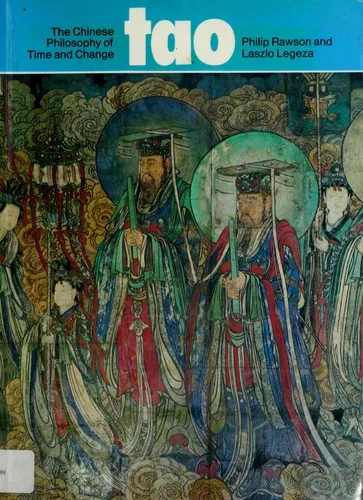
Rawson and Legeza’s “Tao” stands as a solid, if somewhat reserved, entry into the literature on the subject. Its strength lies in its methodical presentation of core Taoist concepts, particularly its detailed unpacking of the interplay between Yin and Yang, which avoids the usual hagiographic tone often found in popular introductions. The authors manage to convey the philosophical weight of principles like *Wu Wei* without resorting to overly simplistic platitudes. However, the book's 1984 publication date is evident; the prose, while accurate, lacks a certain dynamism that might fully engage a contemporary reader. A passage discussing the I Ching’s role in divination, for instance, is informative but feels detached. Ultimately, “Tao” offers a reliable, scholarly foundation for understanding this profound philosophy.
📝 Description
79
Published in 1984, Tao by Rawson and Legeza explains the philosophical and spiritual principles of Taoism.
Philip S. Rawson and Ireneus László Legeza's "Tao" is a 1984 examination of the philosophical and spiritual underpinnings of Taoism. It goes beyond a simple academic overview to convey the living spirit of a tradition central to East Asian thought for centuries. The authors address core Taoist concepts and texts, making them understandable for readers new to these doctrines.
The book is for anyone wanting to grasp non-Western philosophies, especially the practical and metaphysical aspects of Taoism. Students of comparative religion, philosophy, and those who practice Eastern spiritual disciplines will find it valuable. Readers who appreciate scholarly work presented clearly, with a genuine aim to clarify complex ideas, will benefit from this volume.
This work appeared during a period of increased Western interest in Eastern philosophies in the late 20th century. As global connections grew, so did access to translated texts and academic studies on traditions like Taoism. Rawson and Legeza added to a body of work aiming to bridge cultural understanding by introducing ancient thought to a modern audience. Their contribution mirrors the intellectual trends of its time, showing greater academic and public engagement with non-Abrahamic spiritual paths.
This book situates Taoism within the broader landscape of Eastern spiritual traditions, focusing on its philosophical depth and practical application. It connects the concepts of the Tao, Wu Wei, and Yin and Yang to a worldview that emphasizes living in accordance with natural principles. The authors engage with the tradition's historical development and its influence on East Asian thought, presenting it as a vital spiritual path.
💡 Why Read This Book?
• Gain a nuanced understanding of *Wu Wei*, the principle of effortless action, as presented in its original philosophical context, moving beyond superficial interpretations. • Explore the intricate balance of Yin and Yang, not just as abstract concepts but as fundamental forces described in the book’s analysis of natural phenomena. • Appreciate the historical development of Taoist thought, examining how figures like Lao Tzu and their writings, as discussed in the text, laid the groundwork for subsequent philosophical traditions.
⭐ Reader Reviews
Honest opinions from readers who have explored this book.
❓ Frequently Asked Questions
When was Philip S. Rawson and Ireneus László Legeza's "Tao" first published?
The foundational edition of "Tao" by Philip S. Rawson and Ireneus László Legeza was first published in 1984, making it a significant scholarly contribution during a period of increasing Western interest in Eastern philosophies.
What are the primary philosophical concepts discussed in "Tao"?
The book primarily explores the concept of the Tao, *Wu Wei* (non-action), Yin and Yang, and the principles of living in harmony with nature, all central tenets of Taoist philosophy.
Is "Tao" suitable for beginners to Eastern philosophy?
Yes, the work is structured to be accessible to those unfamiliar with Taoism, aiming to illuminate complex doctrines with clarity and scholarly rigor, making it suitable for introductory study.
Who are the authors of "Tao"?
The book is authored by Philip S. Rawson and Ireneus László Legeza, with Philip Rawson also credited as a co-author on the original 1984 publication.
Does the book discuss the I Ching?
Yes, "Tao" examines various facets of Taoist thought, including the role and significance of texts like the I Ching within its philosophical and divinatory traditions.
What makes this book different from other introductions to Taoism?
Its strength lies in its detailed, scholarly approach to core concepts like *Wu Wei* and Yin and Yang, aiming for philosophical depth rather than merely providing a surface-level overview.
🔮 Key Themes & Symbolism
The Ineffable Tao
The central theme is the Tao, understood not as a deity but as the fundamental, ineffable principle that governs the cosmos. Rawson and Legeza elucidate how this concept, often described as the 'way' or 'path,' is the source of all existence yet remains beyond human comprehension. The work explores the paradoxes inherent in defining the Tao, emphasizing its elusive nature and its role as the ultimate reality from which all phenomena arise, guiding the understanding of its adherents towards a non-conceptual apprehension.
Wu Wei: The Art of Non-Action
A critical concept examined is *Wu Wei*, often translated as 'non-action' or 'effortless action.' This is not passivity but a state of acting in accordance with the natural flow of the Tao, without forcing or striving. The book details how *Wu Wei* applies to personal conduct, governance, and the cultivation of inner peace, advocating for a mode of being that is spontaneous and attuned to the underlying rhythms of existence. It represents a sophisticated approach to efficacy grounded in alignment rather than exertion.
Yin and Yang Dynamics
The dynamic interplay of Yin and Yang, the primordial complementary forces, is a central to the exploration. Rawson and Legeza illustrate how these seemingly opposite principles – darkness and light, passivity and activity, femininity and masculinity – are interdependent and essential for cosmic balance and transformation. The text analyzes their manifestation in nature, human relationships, and spiritual development, presenting them as a framework for understanding the universe's constant flux and renewal.
Harmony with Nature
A pervasive theme is the Taoist imperative to live in harmony with the natural world. The book posits that by observing and aligning with the cycles and patterns of nature, individuals can achieve balance and longevity. This involves cultivating simplicity, humility, and an intuitive understanding of the Tao's operations. The authors connect this principle to practices aimed at fostering well-being and spiritual growth, highlighting nature as the ultimate teacher and exemplar of the Taoist way.
💬 Memorable Quotes
Direct passages from the work, attributed to the author.
“The Tao that can be told is not the eternal Tao.”
— This foundational statement highlights the ineffable nature of the ultimate reality. It suggests that any attempt to define or articulate the Tao through language or concepts will inevitably fall short of its true, boundless essence.
“Nature does not hurry, yet everything is accomplished.”
— This observation underscores the principle of *Wu Wei*. It illustrates that true efficacy comes not from frantic effort but from acting in accordance with natural timing and processes, achieving results through effortless alignment.
“The sage avoids extremes, excess, and complacency.”
— This highlights the Taoist ideal of moderation and balance. It suggests that wisdom lies in navigating life's path by eschewing all forms of imbalance, seeking a centered approach that honors the middle way.
“When you know others, you are wise. When you know yourself, you are enlightened.”
— This aphorism points to the profound importance of self-knowledge in the pursuit of spiritual understanding. While awareness of the external world is valuable, true enlightenment is achieved through deep introspection and self-awareness.
💡 Key Ideas
Editorial paraphrase of the work's core concepts — not direct quotes.
To the mind that is stilled, the whole universe surrenders.
This paraphrased concept emphasizes the power of mental tranquility. It suggests that by achieving inner stillness and detachment, one can align with the natural order, allowing events to unfold harmoniously without forceful intervention.
🌙 Esoteric Significance
Tradition
This work fits within the broader lineage of comparative philosophy and religion, specifically focusing on the esoteric and philosophical dimensions of Taoism. While not strictly aligning with Western esoteric traditions like Hermeticism or Kabbalah, it engages with universal metaphysical principles concerning the nature of reality, consciousness, and the cosmos. Its significance lies in presenting Taoist cosmology and ethics as a coherent philosophical system that offers alternative perspectives on existence, influencing those interested in non-dualistic thought and the relationship between the manifest and unmanifest.
Symbolism
Key symbols explored include the Yin and Yang, representing the fundamental duality and interdependence of all forces in the universe; they are not merely opposites but essential components of a unified whole. The concept of the *Qi* (or Chi), the vital life force or energy that animates all things, is also implicitly present, representing the dynamic flow within the Tao. The *Ba Gua* (Eight Trigrams), often associated with the I Ching, symbolizes the fundamental patterns of change and the structure of reality as perceived through Taoist divination.
Modern Relevance
Contemporary thinkers and practitioners in fields like mindfulness, transpersonal psychology, and even certain branches of systems theory draw upon Taoist principles. The emphasis on *Wu Wei*, natural flow, and interconnectedness offers a counterpoint to Western paradigms focused on control and individual agency. Practices inspired by Taoist philosophy continue to inform approaches to health, leadership, and environmental ethics, resonating with modern quests for balance, sustainability, and a deeper connection to the natural world.
👥 Who Should Read This Book
• Students of comparative philosophy and religion seeking a structured introduction to the core tenets of Taoism, moving beyond superficial interpretations. • Individuals interested in Eastern spiritual practices and philosophies who wish to understand the metaphysical underpinnings of traditions like Tai Chi or Qigong. • Researchers and scholars of East Asian thought requiring a foundational text that carefully outlines the philosophical concepts and historical context of Taoism as presented in the late 20th century.
📜 Historical Context
Published in 1984, "Tao" by Rawson and Legeza emerged during a fertile period for cross-cultural philosophical exchange. The late 20th century witnessed a significant increase in Western scholarly and public engagement with Eastern traditions, moving beyond earlier Orientalist perspectives. This era saw scholars actively translating and interpreting foundational texts like the *Tao Te Ching* and *Zhuangzi* for a global audience. The work contributed to a growing body of literature that sought to present the nuances of Taoist thought, distinguishing it from more generalized 'Eastern mysticism' popularizations. It arrived at a time when analytical philosophy was dominant in the West, making its focus on a metaphysical and spiritual tradition a deliberate counterpoint. While specific reception events like major reviews or controversies are not widely documented for this particular title, its publication itself reflects a broader academic and cultural trend toward understanding diverse philosophical systems, influenced by thinkers like Joseph Needham whose comprehensive works on Chinese science and civilization had already paved the way for deeper study.
📔 Journal Prompts
Reflect on the concept of *Wu Wei* as presented in the text; how might this principle be applied to a current challenge you face?
Consider the dynamic interplay of Yin and Yang described; identify a situation in your life where these forces are in tension or balance.
Analyze the Taoist emphasis on harmony with nature; what specific natural processes mentioned in the book offer a model for personal conduct?
How does the book's discussion of the ineffable Tao challenge conventional Western notions of defining and understanding reality?
Explore the significance of simplicity and humility in Taoist practice as outlined by Rawson and Legeza.
🗂️ Glossary
Tao (Dao)
The fundamental, ineffable principle underlying all existence in Taoist philosophy; often translated as 'The Way' or 'The Path,' it represents the ultimate reality and the natural order of the universe.
Wu Wei
A central Taoist concept meaning 'non-action' or 'effortless action.' It signifies acting in accordance with the natural flow of the Tao, without forcing or striving, achieving efficacy through alignment.
Yin
The feminine, passive, dark, and receptive principle in Taoist cosmology, representing one half of the fundamental duality that constitutes the universe.
Yang
The masculine, active, light, and assertive principle in Taoist cosmology, representing the complementary force to Yin and the other half of the universal duality.
Qi (Chi)
The vital life force or energy that flows through all things in the universe. It is the dynamic manifestation of the Tao, influencing health, vitality, and the natural world.
I Ching
The ancient Chinese 'Book of Changes,' a foundational text that uses hexagrams to represent fundamental principles of change and provide guidance for understanding situations and making decisions.
Lao Tzu
The semi-legendary ancient Chinese philosopher traditionally credited as the author of the *Tao Te Ching* and the founder of Taoism.
🔮 Readers Also Liked
Browse all →








More by Philip S. Rawson, Ireneus László Legeza, Philip Rawson and Laszlo Legeza
All books →
More Free Occult Philosophy Books
View all →