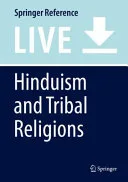
Hinduism and Tribal Religions
 74
74

Hinduism and Tribal Religions
Pankaj Jain, Rita DasGupta Sherma, and Madhu Khanna's "Hinduism and Tribal Religions" offers a valuable, albeit uneven, survey of religious interactions. Its strength lies in its ambitious scope, attempting to map the intricate connections between Hinduism and its neighbors, both within India and abroad. The section discussing the influence of Islam and Christianity on Hindu thought, for instance, provides a necessary corrective to insular studies. However, the book occasionally falters in its depth, particularly when addressing tribal religions, where the analysis can feel more descriptive than critically engaged. A particularly illuminating passage discusses the concept of *dharma* as it manifests differently in Brahmanical and indigenous contexts. While commendable for its breadth, the work could benefit from a more consistent critical voice throughout its exploration of these complex traditions.
📝 Description
74
Pankaj Jain, Rita DasGupta Sherma, and Madhu Khanna examine Hinduism's connections to tribal religions.
This volume challenges the view of Hinduism as a self-contained religious system. Instead, it considers Hinduism's continuous engagement with its surroundings. The authors trace how Hinduism has interacted not only with other traditions originating in India but also with faiths that, though not Indian in origin, have left their mark on the subcontinent's spiritual life, such as Islam and Christianity.
The book further illustrates the varied forms of Hindu practice and thought found throughout India and in its global communities. It moves past simple definitions to reflect the complex character of Hindu beliefs and rituals as they meet and shape societies worldwide. To grasp Hinduism, one must also understand its historical setting. The work investigates the intricate connections between Hindu traditions and other religions present in India, noting times of both blending and division. It also acknowledges the impact of religions like Zoroastrianism and Judaism.
Rather than concentrating only on scriptural aspects of Hinduism, the authors look at how people actually live their faith. This includes a study of indigenous and tribal religions, showing the deep links and differences between these older spiritual systems and the wider Hindu tradition.
This work situates Hindu traditions within a broader spectrum of religious expression, moving beyond the confines of textual exegesis to consider lived religious experiences. It acknowledges the significance of indigenous and tribal spiritual systems, recognizing their distinctiveness while also exploring their potential connections and influences on established traditions. By examining these less commonly studied streams of belief alongside mainstream Hinduism, the book opens up a more complex understanding of religious history and practice, particularly relevant for those interested in the less orthodox or 'gnostic' dimensions of faith.
💡 Why Read This Book?
• Gain an understanding of Hinduism's historical engagement with Islam and Christianity, as explored in the text, to see how external religious influences shaped internal Hindu philosophical developments. • Learn about the concept of *dharma* as it is interpreted and practiced within indigenous tribal religions, offering a unique perspective distinct from Brahmanical traditions. • Discover the complexities of Hinduism's relationship with other Indic religions, such as Buddhism and Jainism, as detailed in the historical context sections, revealing shared origins and divergences.
⭐ Reader Reviews
Honest opinions from readers who have explored this book.
❓ Frequently Asked Questions
What is the primary focus of "Hinduism and Tribal Religions"?
The book focuses on Hinduism's dynamic interactions with other religions in India and the diaspora, including Indic traditions and faiths like Islam and Christianity, rather than treating it in isolation.
Does the book cover Hinduism in the diaspora?
Yes, "Hinduism and Tribal Religions" provides an overview of Hinduism as it is practiced in the Indian diaspora, examining its evolution and interactions in new cultural contexts.
What other religions are discussed in relation to Hinduism?
The volume discusses Hinduism's relationship with Islam, Christianity, Zoroastrianism, and Judaism, as well as other religions that originated in India.
Does the book only discuss scriptural Hinduism?
No, it also covers indigenous and tribal religions, exploring their connections and distinctions with the broader Hindu tradition and its philosophical underpinnings.
Who are the authors of "Hinduism and Tribal Religions"?
The authors are Pankaj Jain, Rita DasGupta Sherma, and Madhu Khanna, who bring diverse scholarly perspectives to the study of religious interactions.
What is the key approach taken in this volume?
The approach is to study Hinduism in dynamic interaction with its religious environment, rather than in isolation, highlighting its multifaceted engagement with various belief systems.
🔮 Key Themes & Symbolism
Interfaith Dynamics
This theme scrutinizes the historical and ongoing dialogues between Hinduism and other religious traditions. It moves beyond simple comparison to analyze how encounters with Islam, Christianity, and indigenous belief systems have influenced Hindu theology, practice, and social structures, particularly in the Indian subcontinent and its diaspora. The work highlights instances of syncretism, polemics, and mutual transformation, offering a nuanced view of religious coexistence and conflict.
Hinduism in Diaspora
The volume addresses the adaptation and evolution of Hindu traditions as they are practiced by communities outside India. It examines how cultural contexts in the diaspora shape religious expression, leading to new interpretations and formations of Hindu identity. This section explores the challenges and opportunities faced by Hindu communities in maintaining their traditions while engaging with diverse global societies.
Indigenous and Tribal Spiritualities
A significant focus is placed on the relationship between Hinduism and the diverse indigenous and tribal religions of India. This theme explores the shared cosmologies, ritual practices, and socio-spiritual structures that connect or distinguish these traditions. It emphasizes the importance of understanding these often-overlooked spiritual systems as integral parts of India's religious landscape, not merely as peripheral phenomena.
Religious Pluralism in India
This theme examines the complex religious pluralism inherent to India's history and society. It details how Hinduism has coexisted, competed, and collaborated with a multitude of other faiths, including those originating outside India like Zoroastrianism and Judaism. The work illustrates the intricate interplay of religious influences that have shaped the subcontinent's unique spiritual character over centuries.
💬 Memorable Quotes
Direct passages from the work, attributed to the author.
“Hinduism in dynamic interaction, rather than in isolation.”
— This core concept frames the book's analytical approach, asserting that understanding Hinduism requires examining its relationships and exchanges with other belief systems, both internal and external to India.
“Relation of Hinduism with other religions of Indian origin.”
— This highlights the book's focus on the internal Indic religious ecosystem, exploring how traditions like Buddhism, Jainism, and Sikhism have historically influenced and been influenced by Hinduism.
“Religions which did not originate in India but have been a major feature of its religious landscape.”
— This points to the significant impact of external faiths, such as Islam and Christianity, on India's religious history and the development of Hindu thought and practice.
“Hinduism’s close as...”
— Though the blurb is cut off, this likely refers to Hinduism's close association with indigenous and tribal religions, a key area of exploration within the volume.
“Exploration of Hinduism in India and the diaspora.”
— This expresses the dual focus of the book: examining Hindu traditions within their homeland and tracing their transformations and adaptations in global diasporic communities.
🌙 Esoteric Significance
Tradition
While not strictly within a single Western esoteric lineage like Hermeticism or Kabbalah, this work appeals to the Theosophical and Anthroposophical movements' interest in comparative religion and the interconnectedness of global spiritual traditions. It aligns with their goal of uncovering universal spiritual truths through the study of diverse cultures and religions, particularly in understanding the ancient roots of human spirituality.
Symbolism
The book implicitly explores symbols related to tribal animism and indigenous cosmologies, contrasting them with established Hindu iconography. It might touch upon the symbolism of nature spirits, ancestral veneration found in tribal faiths, and their potential parallels or divergences with Hindu deities and concepts like *Brahman* or *Atman*, revealing a spectrum of symbolic expression for the sacred.
Modern Relevance
Contemporary scholars and practitioners interested in indigenous epistemologies, post-colonial religious studies, and the evolving nature of global Hinduism draw heavily on works like this. It informs discussions on religious syncretism, the ethics of interfaith dialogue, and the preservation of minority spiritual traditions in an increasingly homogenized world.
👥 Who Should Read This Book
• Students of comparative religion and religious studies seeking to understand the intricate relationships between Hinduism and other faiths in South Asia and beyond. • Anthropologists and sociologists interested in the impact of cultural exchange on religious practices and beliefs in both India and its diasporic communities. • Individuals exploring indigenous spiritual traditions and their connections to major world religions, looking for scholarly analysis that respects the nuances of diverse belief systems.
📜 Historical Context
Published during a period of increasing globalization and academic interest in comparative religion, "Hinduism and Tribal Religions" emerged when scholars were moving beyond purely textual or doctrinal analyses of major world religions. The late 20th and early 21st centuries saw a growing recognition of the importance of indigenous spiritualities and the lived experiences of religious communities. This work engages with scholarship that sought to decenter Western perspectives on religion and acknowledge the complex, often syncretic, realities of faith in diverse cultural settings. It implicitly counters the monolithic views of Hinduism prevalent in earlier scholarship, aligning with the post-colonial turn in humanities research that emphasized subaltern voices and intercultural dynamics. The intellectual currents of the time, influenced by figures like Marshall Sahlins and Arjun Appadurai in anthropology, encouraged studies of cultural contact and transformation, which this book reflects in its examination of Hinduism's interactions.
📔 Journal Prompts
Consider the concept of *dharma* as it appears in relation to both Brahmanical and tribal religious frameworks.
Reflect on the challenges and opportunities faced by Hindu communities in the diaspora, as discussed in the text.
Analyze the historical interactions between Hinduism and Islam or Christianity, noting specific points of contact or divergence.
Explore the significance of indigenous cosmologies in relation to the broader religious field of India.
How does the book's focus on 'dynamic interaction' alter your perception of religious traditions?
🗂️ Glossary
Diaspora
The dispersion or spread of people from their original homeland, in this context referring to Hindu communities living outside India.
Indic Religions
Religious traditions that originated in the Indian subcontinent, primarily Hinduism, Buddhism, Jainism, and Sikhism.
Brahmanical
Relating to the Brahmanical tradition, typically referring to the orthodox Vedic and Puranic traditions within Hinduism, often associated with the priestly class.
Cosmology
A system of belief that deals with the origin and structure of the universe, often encompassing mythological or religious elements.
Syncretism
The blending of two or more religious belief systems, often resulting in new or hybrid religious forms and practices.
Indigenous Religions
Spiritual beliefs and practices of the original inhabitants of a particular region, often closely tied to land and ancestral traditions.
Orthodox
Adhering to established, traditional beliefs and practices, often in contrast to newer or more liberal interpretations.