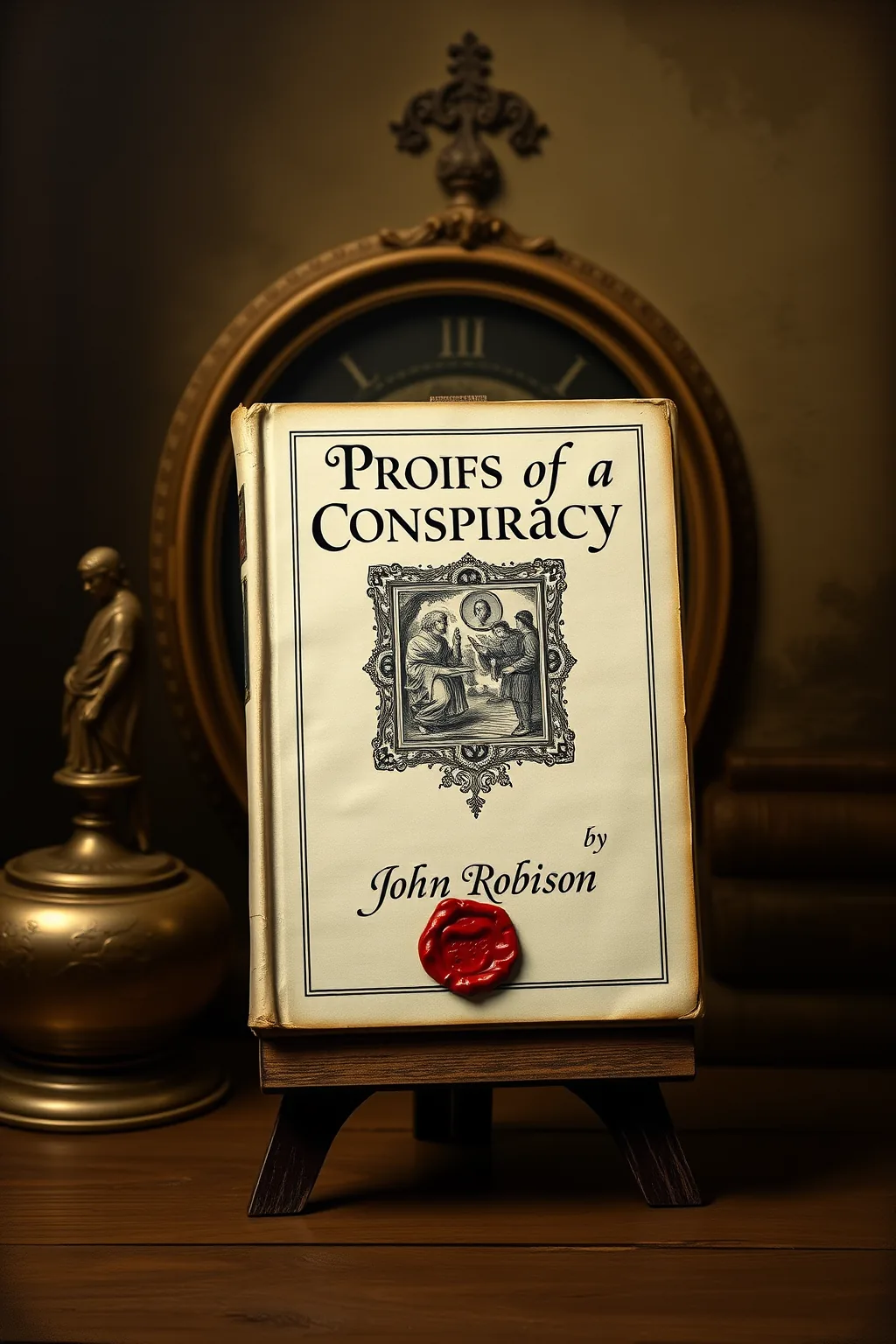
Proofs of a Conspiracy
 81
81

Proofs of a Conspiracy


Aurelia Blackwood (Occult Philosophy Critic) — John Robison's 'Proofs of a Conspiracy' remains a cornerstone for understanding historical anxieties surrounding secret societies. Robison, a scientist by trade, brings an uncommon rigor to his investigation of the Bavarian Illuminati and Freemasonry. His work masterfully dissects their alleged doctrines, revealing a fascinating blend of Enlightenment rationalism and potentially subversive mystical aims. For practitioners and scholars alike, this book offers critical insights into the historical evolution of esoteric thought and its perceived societal impact. It’s an essential read for anyone seeking to grasp the origins of modern conspiracy theories and the enduring power of hidden organizational structures.
📝 Description
81
John Robison published 'Proofs of a Conspiracy' in 1797, detailing alleged secret society influence.
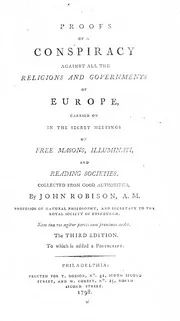
In 1797, John Robison, a Scottish natural philosopher and inventor, published 'Proofs of a Conspiracy Against All the Religions and Monarchies of Europe.' He stated his aim was to show that the French Revolution and other unrest were not spontaneous but the result of coordinated efforts by secret societies. Robison, known for his scientific work, focused his attention on groups like the Illuminati and Freemasons, claiming they pursued a hidden agenda to overthrow established governments and religions.
He argued these societies used clandestine philosophies and subtle manipulation to achieve their goals. Robison based his claims on documents he said he obtained, though the veracity and interpretation of these sources have been debated by historians. The book was widely read and contributed to a climate of suspicion and fear regarding secret organizations in Europe and America during that period. It remains a significant text for understanding fears of conspiracy in the late 18th century.
Published at the end of the 18th century, 'Proofs of a Conspiracy' emerged during a period of intense upheaval and suspicion across Europe. It tapped into existing anxieties about hidden powers manipulating societal events, particularly following the French Revolution. While Robison framed his arguments through the lens of Enlightenment reason and empirical inquiry, his focus on secret societies and their alleged subversion of established order placed the work within a broader discourse on hidden knowledge and clandestine influence that would continue to resonate in various esoteric and political traditions.
💡 Why Read This Book?
Uncover the historical roots of modern conspiracy thinking. Explore the intricate alleged connections between Freemasonry, the Illuminati, and revolutionary movements. Gain insight into the mind of a contemporary observer grappling with hidden knowledge and secret agendas. This book is essential for seekers of historical truth, occult scholars, and those fascinated by the clandestine forces that shape our world.
⭐ Reader Reviews
Honest opinions from readers who have explored this book.
❓ Frequently Asked Questions
Who was John Robison?
John Robison (1739-1805) was a distinguished Scottish scientist, inventor, and professor of philosophy at the University of Edinburgh, known for his contributions to physics and his collaboration with James Watt.
What is the primary focus of 'Proofs of a Conspiracy'?
The book primarily investigates the alleged doctrines and activities of the Bavarian Illuminati and its connections to Freemasonry, exploring their purported influence on political and social upheavals.
Is this book about magic or spells?
While the book discusses esoteric philosophies and secret societies, its focus is on their alleged political and social influence rather than magical practices or spellcasting.
What makes this book relevant today?
It offers a historical perspective on the origins of conspiracy theories and the enduring fascination with secret organizations, providing context for contemporary discussions about hidden power structures.
Can beginners understand this book?
The language and historical context may require some effort, but the book's clear, logical structure and Robison's scientific background make it accessible to dedicated readers interested in the subject.
🔮 Key Themes & Symbolism
The Labyrinth of Secrecy
This theme explores the intricate world of clandestine organizations, examining how secrecy itself becomes a powerful tool. Robison meticulously details the veiled structures, coded languages, and symbolic rituals employed by groups like the Illuminati and Freemasons, suggesting that their true power lies not only in their numbers or wealth but in their mastery of hidden knowledge and their ability to operate beyond public scrutiny, fostering an atmosphere of mystery and influence.
Enlightenment's Shadow
Robison's work critically scrutinizes the intersection of Enlightenment ideals with the burgeoning secret societies of his era. He posits that while the Enlightenment championed reason and liberty, its embrace of novel philosophies also created fertile ground for radical ideologies and potentially subversive agendas. This theme explores the paradox of reason giving rise to hidden doctrines and the ways in which intellectual movements can cast long, often unseen, shadows upon societal progress.
The Architecture of Influence
This theme focuses on how secret societies allegedly exerted influence on the grand stage of history. Robison presents arguments for how these organizations, through their networks, doctrines, and the cultivation of influential members, aimed to shape political events, philosophical discourse, and societal norms. It’s an exploration of the subtle yet potent mechanisms by which unseen forces might architect the flow of power and the direction of human affairs.
💬 Memorable Quotes
Direct passages from the work, attributed to the author.
“The human mind is a field where seeds are sown.”
— This metaphor highlights the belief in the power of ideas and indoctrination, suggesting that secret societies meticulously cultivate specific philosophies within their members.
“The most dangerous innovations are those which are introduced by degrees.”
— This speaks to the insidious nature of gradual change, implying that secret societies work subtly over time to alter established norms and institutions without immediate detection.
“The principles of morality are not of our invention.”
— This implies a belief in universal moral laws, and perhaps a critique of secret societies attempting to redefine or manipulate these fundamental ethical truths for their own ends.
💡 Key Ideas
Editorial paraphrase of the work's core concepts — not direct quotes.
We are to be governed by the wisdom of the world, and by the laws of nature.
This quote captures the perceived ambition of secret societies to replace established order with their own philosophical tenets, suggesting a desire for a 'natural' or enlightened governance.
We are not to be surprised at the progress which has been made.
Reflecting a sense of alarm and inevitability, this quote suggests that the author believes the secret societies' plans have progressed significantly and perhaps beyond intervention.
🌙 Esoteric Significance
Tradition
This work is deeply situated within the Western esoteric tradition, particularly concerning the historical investigation of secret societies that blended Enlightenment rationalism with occult philosophies. It engages with the perceived lineage of Gnosticism, Hermeticism, and Rosicrucianism, examining how these streams of thought might have been channeled and amplified through organized groups like Freemasonry and the Illuminati, influencing their esoteric doctrines.
Symbolism
Robison's analysis implicitly engages with the symbolism of secret societies, though his focus is on their alleged operational meaning rather than purely mystical interpretation. He discusses symbols associated with Freemasonry and Illuminism as tools of recognition, initiation, and the conveyance of hidden philosophical or political messages, suggesting that these visual and ritualistic elements are integral to the structure and purpose of these clandestine orders.
Modern Relevance
The enduring fascination with 'Proofs of a Conspiracy' speaks to its foundational role in the modern discourse surrounding conspiracy theories and secret organizations. Robison's meticulous, albeit biased, approach to documenting alleged hidden agendas continues to inform discussions about power, influence, and the role of secret knowledge in shaping global events, making it a touchstone for understanding contemporary anxieties.
👥 Who Should Read This Book
This useful text is a vital read for several audiences. For the **occult scholar**, it provides an indispensable historical document offering a critical perspective on the interplay between Enlightenment thought and esoteric organizations. **Seekers of hidden knowledge** will find it a compelling exploration of alleged clandestine networks and their philosophical underpinnings. **Practitioners** interested in the historical evolution of secret societies and their doctrines will appreciate Robison's detailed accounts. Even **beginners** curious about the origins of conspiracy theories and the mystique surrounding groups like the Illuminati will find it an accessible, though challenging, gateway into a complex historical debate.
📜 Historical Context
Written in the late 18th century, 'Proofs of a Conspiracy' emerged during a period of profound societal upheaval, marked by the French Revolution and the preceding Enlightenment. This era was characterized by a potent mix of intellectual ferment, burgeoning secularism, and widespread fascination with secret societies like the Freemasons and the newly exposed Bavarian Illuminati. The anxieties surrounding the perceived subversion of traditional authority, the spread of radical ideas, and the potential for hidden cabals to influence political events were palpable. Robison, a respected man of science, sought to apply empirical rigor to these fears, grounding his critique in documented evidence and logical deduction, making his work a significant text in the history of conspiracy theories and the discourse on hidden power.
📔 Journal Prompts
Reflect on the distinction between overt influence and covert manipulation in historical events.
Consider the role of symbolism in conveying complex ideas within both public and private spheres.
How might the principles of rationalism and esoteric belief coexist or conflict within intellectual movements?
Analyze the psychological appeal of secret societies and the allure of hidden knowledge.
Explore the enduring legacy of conspiracy theories and their impact on contemporary society.
🗂️ Glossary
Bavarian Illuminati
A secret society founded in Bavaria in 1776 by Adam Weishaupt, aiming to spread Enlightenment ideals and influence society through clandestine means, often associated with radical political and philosophical agendas.
Freemasonry
A fraternal organization that traces its origins to the guilds of stonemasons, characterized by its use of symbolic rituals and teachings rooted in moral and philosophical principles, often drawing on esoteric traditions.
Enlightenment
An 18th-century intellectual and cultural movement emphasizing reason, individualism, skepticism, and the application of scientific methods to understand the world and improve society.
Cabal
A secret political clique or faction; a conspiracy. In this context, it refers to a group of people secretly plotting or working together.
Esoteric
Intended for or likely to be understood by only a small number of people with a specialized knowledge or interest; relating to or belonging to the inner circle of an organization or group.
This book appears in 2 collections
🔮 Readers Also Liked
Browse all →









From the “Secret Societies” Collection
View all →







More Free Freemasonry & Secret Societies Books
View all →