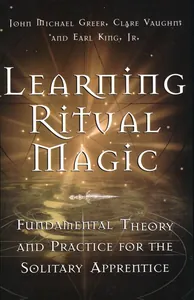
Priests, Tongues, and Rites

 76
76

Priests, Tongues, and Rites
Jacco Dieleman's *Priests, Tongues, and Rites* is a meticulously researched monograph that moves beyond the surface glamour of Egyptian temples to expose the intricate machinery of their operation. Rather than focusing on grand mythology, Dieleman dissects the actual performance and language of the priesthood, providing a granular view of religious practice. His analysis of the specific linguistic competencies required of priests, detailing how recitation and knowledge formed the bedrock of their authority, is particularly illuminating. One notable strength is the deep dive into specific ritual texts, like the "Ritual of the Good Being" (the 'Book of the Dead' for the living), demonstrating how religious acts were codified. A potential limitation for some readers might be the sheer density of scholarly apparatus; the book assumes a significant background in Egyptology. However, for those equipped to engage with its detail, the work offers a compelling argument for understanding ancient Egyptian religion as a highly professionalized and linguistically driven enterprise. It solidifies the priesthood's role as crucial intermediaries, not just in worship, but in the very functioning of the state.
📝 Description
76
Jacco Dieleman's 2005 book examines the linguistic and ritualistic basis of ancient Egyptian priestly roles.
Published in 2005, Jacco Dieleman's *Priests, Tongues, and Rites* examines ancient Egyptian religious practices by focusing on language and ritual. The book reconstructs how temples functioned as centers of religious and administrative power, detailing the specific verbal repertoires and actions required of priests. Dieleman uses temple inscriptions, papyri, and ritual texts to illustrate a complex and regulated priestly system. It moves beyond simply listing beliefs to show how religious authority was wielded through performance and specific language.
This work is for serious students and scholars of Egyptology, religious studies, and ancient history. Readers interested in the practical operations of ancient religious institutions will find ample material. It is especially useful for those who work with primary texts and want a deeper understanding of Egyptian ritual language. Those researching the phenomenology of religion or the sociology of ancient priestly classes will also benefit from its rigorous method. This is not an introduction for casual readers but a resource for those with existing knowledge of the subject.
While not strictly an esoteric text in the modern sense, *Priests, Tongues, and Rites* situates itself within the study of ancient religious systems where ritual and specific language were seen as holding potent, operative power. The book analyzes the performative aspects of Egyptian religion, where correct recitation and action were believed to maintain cosmic order and divine favor. It engages with the idea of religion as a functional system, where the efficacy of rites and the knowledge of priests were central to the operation of the cult and the state. This approach resonates with certain esoteric traditions that emphasize the power of sacred language and ritual action.
💡 Why Read This Book?
• Gain a concrete understanding of the priestly profession in ancient Egypt, moving beyond idealized imagery to the practical requirements of their roles as detailed in temple inscriptions. • Learn about the specific linguistic skills and ritualistic knowledge, the 'tongues and rites,' deemed essential for maintaining cosmic order (Ma'at) during the New Kingdom period. • Explore the operational framework of temples as administrative and religious centers, as reconstructed from primary sources like the Pyramid Texts, offering insights into the mechanics of pharaonic power.
⭐ Reader Reviews
Honest opinions from readers who have explored this book.
❓ Frequently Asked Questions
What specific types of ancient Egyptian religious texts does Jacco Dieleman analyze in *Priests, Tongues, and Rites*?
The book analyzes a range of primary Egyptian sources, including temple inscriptions, mortuary papyri (such as those related to the Book of the Dead), and ritual texts detailing priestly duties, to reconstruct religious practices during the New Kingdom.
How does *Priests, Tongues, and Rites* differentiate between various priestly roles?
Dieleman's work distinguishes priestly roles by focusing on the specialized linguistic knowledge and ritualistic performances each position required, thereby illustrating a professionalized hierarchy within the temple system.
What is the significance of the 'tongues' mentioned in the book's title?
The 'tongues' refer to the specific linguistic repertoires—recitations, spells, hymns, and administrative language—that priests were required to master and perform correctly to ensure the efficacy of rituals and maintain divine favor.
Does the book discuss the economic functions of ancient Egyptian temples?
Yes, the work touches upon the economic aspects by framing temples as functioning institutions and centers of administration, highlighting how priestly duties extended beyond purely religious ceremonies to include management and record-keeping.
What historical period in ancient Egypt does *Priests, Tongues, and Rites* primarily cover?
The book primarily focuses on the New Kingdom period (c. 1550–1070 BCE), a time of significant temple development and consolidation of priestly power in Egypt.
How does Dieleman's work contribute to the understanding of Ma'at?
Dieleman's research illuminates how priestly actions and correct ritual performance were understood as essential for upholding Ma'at, the principle of cosmic order, truth, and justice, thereby reinforcing the pharaoh's legitimacy.
🔮 Key Themes & Symbolism
Priesthood as Professional Practice
Dieleman meticulously reconstructs the Egyptian priesthood not as a monolithic spiritual caste, but as a body of professionals with specific, codified duties. The 'tongues'—the linguistic repertoire of hymns, incantations, and administrative texts—were the tools of their trade. Mastery of these languages was essential for performing rites that maintained cosmic order and ensured the favor of the gods. This perspective emphasizes the operational and functional aspects of religion, moving beyond abstract theological concepts to the tangible requirements of priestly service in temples during the New Kingdom.
Ritual Efficacy and Linguistic Performance
Central to the book is the understanding that ritual efficacy in ancient Egypt was intrinsically linked to precise linguistic performance. The 'rites' were not merely symbolic gestures but carefully executed actions accompanied by specific verbal formulas. Dieleman examines how the correct recitation of spells, prayers, and administrative pronouncements by priests was believed to have tangible effects on the divine and earthly realms. This focus highlights the performative nature of ancient Egyptian religion and the critical role of specialized knowledge in its execution.
The Temple as an Institution
The work presents ancient Egyptian temples as complex institutions, functioning as centers of religious devotion, economic activity, and administrative power. Dieleman analyzes how the structure of the priesthood, with its varied roles and specialized knowledge, contributed to the temple's overall operational capacity. Understanding the temple in this institutional context, through the lens of priestly 'tongues' and 'rites,' offers a more nuanced view of its significance within the broader framework of the pharaonic state, particularly during periods of imperial expansion.
Ma'at and Priestly Duty
The concept of Ma'at—cosmic order, truth, and justice—is implicitly woven throughout Dieleman's exploration of priestly duties. The meticulous performance of rituals and the correct use of language by priests were seen as essential contributions to upholding Ma'at, thereby ensuring the stability and prosperity of Egypt. The book illustrates how the priesthood acted as guardians of this order, their specialized knowledge and actions directly contributing to the maintenance of the divine and human realms in accordance with established principles.
💬 Memorable Quotes
Direct passages from the work, attributed to the author.
“The priest's power derived from his precise knowledge of the divine language and ritual actions.”
— This interpretation highlights the core argument that authority within the ancient Egyptian priesthood was not based on inherent spiritual status alone, but on the mastery of specific linguistic and ritualistic competencies required for temple functions.
“Ritual efficacy was directly tied to the correct utterance of sacred texts.”
— This interpretation emphasizes the performative aspect of ancient Egyptian religion, suggesting that the power of rituals was believed to stem from the precise and accurate recitation of specific verbal formulas by trained priests.
“Temples functioned as sophisticated institutions requiring specialized personnel.”
— This interpretation reflects the book's focus on the temple as a complex organization. It posits that the effective operation of these sacred spaces depended on individuals possessing distinct skills and knowledge, moving beyond a purely devotional understanding.
💡 Key Ideas
Editorial paraphrase of the work's core concepts — not direct quotes.
Temple inscriptions reveal the codified nature of priestly responsibilities.
This paraphrased concept points to the book's reliance on inscriptional evidence to demonstrate that the duties and performances of priests were formally recorded and standardized, underscoring the institutional and professional aspects of their roles.
The 'tongues' of the priesthood were essential for mediating between the human and divine.
This paraphrased concept underscores the linguistic bridge that priests provided. Their specialized language, whether in hymns, spells, or administrative decrees, was the means by which divine will was accessed and earthly order maintained.
🌙 Esoteric Significance
Tradition
While rooted in philological and historical Egyptology, *Priests, Tongues, and Rites* offers insights relevant to esoteric traditions that draw upon ancient Egyptian cosmology. It speaks to the Hermetic and Gnostic traditions which often viewed Egyptian priesthood as custodians of hidden knowledge. The work's detailed examination of ritual language and practice can be seen as a scholarly grounding for understanding the symbolic power inherent in sacred utterances, a concept vital in many magical and mystical systems.
Symbolism
The 'tongues' themselves symbolize the power of the spoken word and divine names, a concept central to many magical traditions where correct pronunciation and invocation are key to efficacy. The 'rites' represent the structured performance of cosmic principles, illustrating how divine order (Ma'at) was enacted through human action. The temple, as an institutional symbol, signifies a nexus of earthly and divine power, a microcosm of the cosmos governed by specialized knowledge.
Modern Relevance
Contemporary practitioners of Western esotericism, particularly those involved in Kemetic reconstructionism or ceremonial magic, find value in Dieleman's work. It provides a scholarly, evidence-based perspective on the mechanics of ancient Egyptian religious practice, informing modern interpretations of ritual efficacy and the role of the priest as an intermediary. Thinkers and groups focused on the phenomenology of ritual and the socio-linguistic aspects of religious authority can also draw upon its rigorous analysis.
👥 Who Should Read This Book
• Academic researchers in Egyptology and ancient Near Eastern studies seeking a deep dive into the practical aspects of temple religion during the New Kingdom. • Students of comparative religion interested in the professionalization of priesthood and the role of linguistic knowledge in ancient religious systems. • Practitioners of esoteric traditions seeking scholarly context for ancient Egyptian ritual practices and the power of sacred language.
📜 Historical Context
Published in 2005, Jacco Dieleman's *Priests, Tongues, and Rites* entered a scholarly landscape increasingly interested in the lived realities of ancient religion, moving beyond purely theological interpretations. The late 20th and early 21st centuries saw prominent Egyptologists like Jan Assmann emphasizing the 'cultural memory' and conceptual world of ancient Egypt. Dieleman’s work aligns with this trend by focusing on the practical application of religious knowledge, particularly the linguistic and performative aspects of priestly duties during the New Kingdom. This era of Egyptological study was also marked by a growing appreciation for the administrative and economic functions of temples, viewing them as integral components of the pharaonic state rather than solely sacred enclaves. While not engaging directly with a specific, named controversy, the book contributed to the ongoing academic discourse on the professionalization of religion and the mechanisms by which religious authority was maintained and exercised within the complex social structure of pharaonic Egypt.
📔 Journal Prompts
The concept of 'tongues' as specialized knowledge within the Egyptian priesthood.
The relationship between precise ritual performance and perceived efficacy.
The temple as an administrative and religious institution.
The role of priests in maintaining Ma'at through their duties.
How linguistic mastery functioned as a source of authority for ancient Egyptian priests.
🗂️ Glossary
Ma'at
The ancient Egyptian concept of cosmic order, truth, justice, and balance. Priests played an important role in upholding Ma'at through their rituals and actions.
New Kingdom
A period in ancient Egyptian history spanning roughly from 1550 to 1070 BCE, known for its imperial power and extensive temple construction.
Ritual texts
Written documents detailing the procedures, incantations, and actions required for religious ceremonies and cultic practices in ancient Egypt.
Temple inscriptions
Writings and reliefs carved onto the walls and structures of ancient Egyptian temples, often recording religious doctrines, rituals, and historical events.
Sacerdotal
Relating to priests or the priesthood; concerning the performance of religious rites and duties.
Phenomenology of religion
The study of religious experiences and phenomena from the perspective of those who have them, focusing on their meaning and structure.
Philological
Relating to the study of language in oral and written historical sources; concerned with the history and structure of language.
🔮 Readers Also Liked
Browse all →








More by Jacco Dieleman
All books →
More Free Magic & Ritual Books
View all →