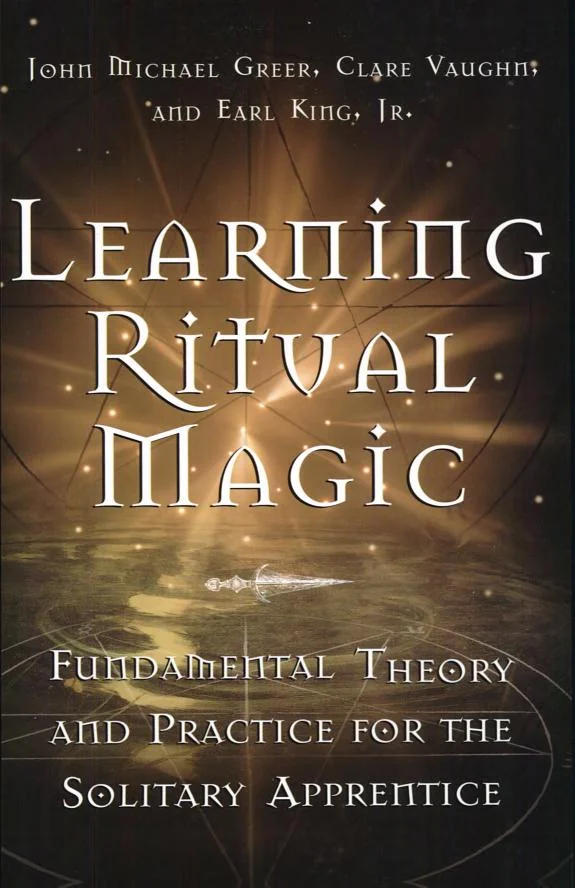
Learning Ritual Magic
 81
81

Learning Ritual Magic
John Michael Greer, Earl King Jr., and Clare Vaughn’s Learning Ritual Magic offers a no-nonsense guide for the aspiring ritualist. Its primary strength lies in its structured, almost academic approach to what can often be a nebulous subject. The authors’ insistence on diligent practice, viewing magic as a skill to be honed through dedicated effort, is refreshingly direct. One particularly salient point is the emphasis on building a personal magical system rather than simply mimicking external rituals. However, the book’s reliance on established Western Mystery Tradition frameworks might feel somewhat insular to those exploring more eclectic or non-Western magical paths. The passage discussing the “essential ingredient” of time in magical training, comparing it to athletic or musical practice, effectively sets the tone for the book’s demanding yet rewarding methodology. It’s a solid manual for dedicated practitioners seeking systematic development.
📝 Description
81
Published in 2004, Learning Ritual Magic offers a structured approach to Western esoteric practice.
Learning Ritual Magic functions as a training manual for individuals advancing their practice within Western Mystery Traditions. It stresses that effective magic depends on invested effort and time. The book presents a structured method for developing magical skill, using core elements like the Qabalah, astrology, and tarot. Ritual magic is shown not as a passive hobby, but as an active discipline needing regular application and study.
This text targets serious students of magic who have moved past introductory ideas and want a systematic way to improve. It is good for those wanting to combine esoteric disciplines, such as ceremonial magic, divination, and astrological correspondences, into one practice. The authors assume readers know basic Western esoteric concepts, guiding them toward practical use and deeper understanding. The book details the importance of creating a personal magical system, which means understanding and applying key esoteric principles. It emphasizes developing willpower, visualization, and symbolic literacy.
Published in 2004, Learning Ritual Magic appeared during a time of renewed interest in practical occultism and Western esotericism, partly due to online groups and accessible books. It follows in the tradition of practical magical instruction from figures like Aleister Crowley and Dion Fortune, but with its own teaching method. Its release predated the widespread growth of online courses, serving as a physical guide for self-study when such structured manuals were highly valued.
💡 Why Read This Book?
• Gain a structured curriculum for developing ritual magic skills, moving beyond superficial understanding by engaging with the book's methodical approach to Qabalah and astrology as practical tools. • Understand the foundational principles of creating a personal magical system, as detailed in the chapters on ritual construction and symbolic language, enabling unique magical expression. • Cultivate disciplined magical practice through the authors' emphasis on consistent effort, mirroring the dedication required in disciplines like music or athletics, as discussed early in the text.
⭐ Reader Reviews
Honest opinions from readers who have explored this book.
❓ Frequently Asked Questions
What is the core philosophy behind Learning Ritual Magic?
The book’s core philosophy is that magical proficiency is achieved through disciplined, dedicated practice and study. It views magic as a skill that requires time, effort, and a systematic approach, integrating elements from Western Mystery Traditions like the Qabalah and astrology.
Is this book suitable for complete beginners in magic?
While it provides foundational concepts, the book is best suited for those who have already engaged with basic esoteric literature and are serious about developing a structured magical practice. It assumes some familiarity with terms and concepts.
What Western Mystery Traditions are covered?
The book covers key aspects of Western esotericism, including Qabalah, astrology, tarot, and ceremonial ritual magic, presenting them as interconnected components of a magical system.
What distinguishes this manual from other books on ritual magic?
Its distinction lies in its methodical, training-manual format. It emphasizes building a personal magical framework and stresses that progress in magic is directly tied to the practitioner's investment of time and effort.
What is the significance of 'time' in magical training according to the authors?
The authors highlight time as the essential ingredient for successful magical training. They argue that consistent practice and study, much like in athletic or musical endeavors, are crucial for developing genuine magical skill and efficacy.
Can readers expect to learn specific spells or rituals?
The book focuses more on the principles and structure behind ritual magic and system-building rather than providing a catalog of spells. It aims to equip readers with the knowledge to create and perform their own effective rituals.
🔮 Key Themes & Symbolism
Systematic Magical Training
The work frames magical development as a rigorous discipline, akin to mastering a complex art or science. It advocates for a structured approach, emphasizing that consistent practice and study are paramount. This contrasts with more intuitive or haphazard methods, proposing that a well-defined system, integrating various esoteric disciplines, is key to effective magical work. The authors stress that results in magic are directly measurable by the practitioner's commitment of time and focused intention.
Integration of Esoteric Disciplines
Learning Ritual Magic highlights the synergistic potential of combining different branches of the Western Mystery Traditions. It details how Qabalah, astrology, and tarot can serve not just as divinatory tools but as foundational elements for constructing magical rituals and personal systems. This integration allows for a more nuanced understanding and application of magical energies, moving beyond isolated practices to a cohesive, multi-layered approach to occultism.
Personal Magical System Development
A central tenet of the book is the creation of a personalized magical framework. Rather than solely relying on external traditions or established rituals, readers are encouraged to build their own system that aligns with their understanding and capabilities. This involves understanding the underlying principles of magic and applying them to construct unique rituals, symbols, and practices that resonate with the individual practitioner.
The Role of Time and Effort
The authors unequivocally state that significant magical attainment requires substantial investment of time and dedicated effort. This principle is presented as non-negotiable, drawing parallels to the rigorous training required in fields like music or athletics. The book's structure itself is designed to guide this investment, offering a clear path for practitioners willing to commit to the demanding nature of serious magical work.
💬 Memorable Quotes
Direct passages from the work, attributed to the author.
“Interpretation: The book emphasizes the integration of various esoteric tools like the Qabalah and astrology into ritual practice.”
— This highlights the book's approach to building a cohesive magical system. It suggests that these traditionally separate disciplines can be powerfully combined to inform and enhance the efficacy and structure of ritual magic.
“Interpretation: The authors present ritual magic as a practice demanding serious commitment and systematic learning.”
— This conveys the book's tone and target audience: those willing to engage deeply with the subject. It positions magic not as a casual hobby but as a serious field of study and practice requiring dedicated application.
“Interpretation: The book functions as a practical training manual for improving magical skills.”
— This statement reflects the book's direct, instructional purpose. It indicates that the content is designed for active learning and skill development, providing readers with concrete methods and guidance for their magical work.
💡 Key Ideas
Editorial paraphrase of the work's core concepts — not direct quotes.
"What you get out of [magic] can be measured precisely by what you are willing to put into it- and time is the essential ingredient in successful magical training."
This quote expresses the book's pragmatic and disciplined approach to magic. It directly challenges the notion of quick fixes or effortless attainment, emphasizing that consistent, dedicated practice is the true measure of progress and success in magical development.
Interpretation: The book suggests that magical practice is akin to athletic or musical training, requiring consistent effort and time.
This paraphrased concept highlights the authors' view of magic as a skill-based discipline. It underscores the necessity of diligent practice, repetition, and focused study, much like an athlete training for a competition or a musician practicing scales, to achieve proficiency.
🌙 Esoteric Significance
Tradition
This work is firmly rooted in the Western Esoteric Tradition, particularly drawing from Hermeticism, Qabalah, and ceremonial magic. It aims to synthesize these disparate elements into a coherent, practical framework for ritual practitioners. While respecting historical lineages, the book offers a modern, systematic pedagogy that seeks to make complex esoteric principles accessible for dedicated personal practice, updating older teachings for a contemporary audience seeking tangible results.
Symbolism
Key symbols integrated into the book include the Qabalistic Tree of Life, which serves as a map for spiritual ascent and magical operations, and astrological archetypes, used for timing and understanding cosmic influences. Tarot symbolism is also crucial, providing archetypal imagery for meditation and ritual construction. These symbols are presented not merely as abstract concepts but as active forces and tools to be understood and manipulated within a ritual context.
Modern Relevance
The principles outlined in Learning Ritual Magic continue to be relevant for contemporary practitioners of Western esotericism and ceremonial magic. Modern occultists and magical theorists often reference the importance of systematic training and personal system-building, concepts central to this book. Its emphasis on disciplined practice and the integration of core esoteric disciplines provides a solid foundation for individuals engaging with modern magical movements and eclectic spiritual paths.
👥 Who Should Read This Book
• Students of Western Esotericism seeking a structured approach to ritual magic, who want to move beyond introductory texts and develop a disciplined practice. • Practitioners interested in integrating Qabalah, astrology, and tarot into a cohesive magical system, looking for guidance on practical application rather than just theory. • Aspiring ceremonial magicians who require a foundational manual that emphasizes consistent effort and systematic learning for skill development in occult arts.
📜 Historical Context
Learning Ritual Magic was published in 2004, a time when the internet had begun to democratize access to esoteric knowledge, yet structured, comprehensive manuals remained highly valued. This work emerged within the broader revival of Western Esotericism, engaging with traditions like Hermeticism and ceremonial magic that had seen significant development in the late 19th and early 20th centuries through figures like Aleister Crowley and the Hermetic Order of the Golden Dawn. Unlike more academic or purely theoretical explorations of occultism, Greer, King, and Vaughn’s book offered a practical, step-by-step training methodology. It implicitly responded to a demand for accessible, systematic instruction that could guide practitioners in building their own magical systems, differentiating itself from the more specialized or fragmented teachings often found in older grimoires or contemporary online forums. Its approach can be seen as a modern iteration of the pedagogical methods found in earlier Western magical textbooks.
📔 Journal Prompts
The concept of time as an essential ingredient in magical training.
Personal Qabalistic correspondences for a chosen ritual element.
Developing a unique symbol for a specific magical intention.
The relationship between astrological influences and ritual timing.
Reflecting on the construction of a personal magical tool.
🗂️ Glossary
Qabalah
A complex esoteric system of Jewish mysticism that has been adopted and adapted by Western occult traditions, often represented by the Tree of Life, used for understanding cosmology, spirituality, and magical correspondences.
Astrology
The study of the movements and relative positions of celestial bodies interpreted as having an influence on human affairs and the natural world, used in magic for timing and understanding influences.
Tarot
A deck of cards featuring symbolic imagery, used for divination, meditation, and as a tool for understanding archetypal patterns and correspondences within esoteric systems.
Ritual Magic
A formalized practice involving symbolic actions, words, and visualization, intended to effect change in consciousness or the external world, often drawing upon specific traditions and correspondences.
Western Mystery Traditions
A broad category encompassing various esoteric and occult traditions originating in the West, including Hermeticism, Gnosticism, Kabbalah, alchemy, and ceremonial magic.
Personal Magical System
An individual's unique framework of magical beliefs, practices, symbols, and correspondences, developed through study and personal experience.
Correspondences
The systematic mapping of relationships between different elements within an esoteric system, such as planets, colors, herbs, and deities, used to understand interconnectedness and facilitate magical workings.
This book appears in 1 collection
🔮 Readers Also Liked
Browse all →







From the “Ritual Magic” Collection
View all →








More Free Magic & Ritual Books
View all →