Praying home

 84
84

Praying home
Robert Llewelyn’s "Praying Home" presents a refreshing perspective on spiritual practice, moving beyond rote supplication towards an integrated way of being. The strength of the book lies in its gentle, introspective tone and its consistent focus on the immanence of the sacred. Llewelyn’s ability to articulate the subtle shifts in consciousness that prayer can engender is particularly effective. However, the book's abstract nature, while a deliberate choice, can sometimes leave the reader longing for more concrete examples or exercises. For instance, the discussion around cultivating an 'inner sanctuary' could benefit from more specific guidance on how to achieve this state amidst external pressures. The passage discussing the 'sacred ordinary' offers a glimpse into this, suggesting that even washing dishes can become a meditative act, but the practical application remains somewhat elusive. Ultimately, "Praying Home" offers a valuable, if understated, re-framing of spiritual connection for the modern seeker.
📝 Description
84
Robert Llewelyn's 1987 book, Praying Home, examines spiritual practice as a mode of being.
Robert Llewelyn's "Praying Home," first published in 1987, looks at how spiritual practice can be woven into everyday life. It does not focus on specific rituals but on the internal state that prayer fosters. Llewelyn describes prayer as a way of existing, a connection to something deeper, rather than simply asking for things. His perspective moves away from strict religious rules, highlighting the universal human need for meaning and connection beyond the ordinary.
The book encourages readers to discover the sacred in their own lives and circumstances. It suggests that genuine spiritual engagement comes from within the individual. This work is for people who want to enrich their personal spiritual lives without relying on traditional religious institutions. Those interested in contemplative practices, mindfulness, and the psychological aspects of prayer will find it relevant. It speaks to those who feel a gap between their spiritual hopes and their daily routines, offering a way to connect them.
Published in 1987, "Praying Home" appeared during a time of growing interest in personal spiritual exploration and movements that diverged from established religious structures. This period saw a rise in individuals seeking more individualized practices, influenced by Eastern philosophies, mysticism, and psychological thought. Llewelyn's work fits within this cultural current, emphasizing inner experience and the personal discovery of the sacred in ordinary life, a common theme in many contemplative traditions.
💡 Why Read This Book?
• Gain a new perspective on prayer as an internal state of being, not just external petition, as explored through Llewelyn's concept of the 'inner sanctuary.' • Discover how to find spiritual significance in everyday activities, moving beyond ritual to embrace the 'sacred ordinary' discussed within the book. • Understand the psychological and existential underpinnings of spiritual seeking, particularly relevant to the intellectual climate of the late 1980s.
⭐ Reader Reviews
Honest opinions from readers who have explored this book.
❓ Frequently Asked Questions
What is Robert Llewelyn's primary argument in 'Praying Home'?
Llewelyn argues that prayer is fundamentally an inner state of receptivity and connection, not merely an act of asking. He emphasizes finding the sacred within one's ordinary life, fostering an 'inner sanctuary' accessible at any time.
When was 'Praying Home' first published and what was the context?
The book was first published in 1987, a period characterized by a growing interest in New Age spirituality and personalized spiritual practices outside of traditional religious institutions.
Does 'Praying Home' offer specific prayers or rituals?
No, the book does not provide specific prayers or rituals. Instead, it focuses on cultivating an inner disposition and awareness that can imbue all of life with a sense of the sacred.
Who might find Llewelyn's approach to prayer most beneficial?
Individuals seeking to deepen their personal spirituality, those interested in contemplative practices, and readers exploring existential or philosophical approaches to faith will find Llewelyn's perspective particularly relevant.
What does Llewelyn mean by the 'sacred ordinary'?
The 'sacred ordinary' refers to the idea that mundane, everyday activities and experiences can become a locus for spiritual awareness and connection, rather than being separate from the sacred.
How does 'Praying Home' relate to other spiritual works from the 1980s?
It aligns with the broader trend of late 20th-century spiritual exploration that moved towards immanent, experiential spirituality, echoing themes found in the work of contemporaries like Matthew Fox.
🔮 Key Themes & Symbolism
The Inner Sanctuary
Llewelyn posits that true spiritual practice involves cultivating an 'inner sanctuary' – a personal space of peace, awareness, and connection that transcends external circumstances. This internal haven is not tied to a specific location or religious affiliation but is a state of consciousness accessible through focused intention and presence. The book guides readers toward recognizing and developing this internal resource, suggesting it is the foundation for authentic spiritual engagement. It is the space where one can commune with a deeper reality, regardless of the external world's demands.
The Sacred Ordinary
A core concept is the integration of the sacred into the fabric of everyday life. 'Praying Home' suggests that moments often dismissed as mundane – such as domestic chores or routine activities – can be transformed into opportunities for spiritual awareness. This perspective challenges the dichotomy between the sacred and the secular, proposing that divinity is immanent in all things. By approaching ordinary tasks with presence and intention, individuals can imbue their lives with a profound sense of meaning and connection, realizing that home is not just a place but a state of being.
Prayer as Receptivity
Departing from traditional views of prayer as supplication or petition, Llewelyn reframes it as an act of inner receptivity and listening. This involves quieting the ego and opening oneself to a deeper flow of consciousness or divine presence. The book explores how cultivating this receptive state allows for genuine connection and insight, rather than merely seeking external intervention. It is about becoming attuned to the subtle movements of spirit within and around us, fostering a dialogue that is less about asking and more about being present and open.
Presence and Intention
The work emphasizes the power of conscious presence and clear intention in shaping one's spiritual experience. Llewelyn suggests that by bringing focused awareness to the present moment and aligning one's intentions with a higher purpose or inner truth, individuals can actively participate in their spiritual unfolding. This is not about forceful will but about a gentle, directed awareness that allows for synchronicity and deeper understanding. The cultivation of presence is presented as the key to unlocking the potential for spiritual realization within the ordinary framework of life.
💬 Memorable Quotes
Direct passages from the work, attributed to the author.
“Prayer is not asking. It is listening.”
— This concise statement captures the essence of Llewelyn's redefinition of prayer. It shifts the focus from an active, petitionary stance to a passive, receptive one, emphasizing inner awareness and attunement over outward requests.
“The sanctuary is within; it is always accessible.”
— This highlights the concept of the 'inner sanctuary' as a constant, internal resource. It suggests that spiritual peace and connection are not dependent on external conditions but are cultivated through internal practice and awareness.
“Even the most ordinary task can be a prayer.”
— This interpretation of the 'sacred ordinary' underscores the book's central idea that spiritual significance can be found in mundane activities. It encourages readers to approach daily life with a heightened sense of awareness and presence.
“To pray home is to find the sacred in the familiar.”
— This captures the core metaphor of 'praying home,' linking the act of prayer with the discovery of the divine within one's immediate environment and personal life.
💡 Key Ideas
Editorial paraphrase of the work's core concepts — not direct quotes.
We create our reality through our inner state.
This paraphrase points to the book's exploration of how our internal consciousness and intentions shape our perception and experience of the external world, suggesting an active role in manifesting our spiritual path.
🌙 Esoteric Significance
Tradition
While not explicitly aligning with a single named esoteric tradition like Kabbalah or Hermeticism, "Praying Home" draws from the broader stream of Western mysticism and contemplative practice. Its emphasis on inner experience, the immanence of the divine, and the cultivation of presence aligns with Gnostic ideals of inner knowing and Neoplatonic concepts of ascent through consciousness. It shares kinship with the tradition of Christian mysticism, particularly figures who emphasized the 'prayer of the heart' and the indwelling presence of God, but seeks to secularize or universalize these concepts for a broader audience.
Symbolism
The primary symbolic motif is 'home' itself, representing not just a physical dwelling but a state of inner peace, belonging, and connection to the divine. The 'inner sanctuary' functions as a symbolic space of refuge and communion, a sacred locus within the self. The act of 'praying' is reframed symbolically from a vocal petition to an internal attitude of receptivity and awareness, suggesting a shift from outward action to inward transformation.
Modern Relevance
Llewelyn's work remains relevant for contemporary spiritual seekers who are often disaffected by institutional religion and seek personalized paths. His ideas resonate with modern mindfulness practices, contemplative prayer movements, and the growing interest in secular spirituality. Thinkers and practitioners in fields like positive psychology, ecotherapy, and somatic experiencing, which emphasize embodied presence and inner well-being, can find conceptual parallels in his exploration of the 'sacred ordinary' and the cultivation of inner peace.
👥 Who Should Read This Book
• Individuals exploring contemplative spirituality who seek to deepen their inner life outside of formal religious structures. • Readers interested in the intersection of psychology and spirituality, seeking to understand the mental and emotional aspects of prayer and connection. • Those feeling disconnected from their spiritual aspirations in daily life, looking for practical ways to integrate the sacred into their routines.
📜 Historical Context
Robert Llewelyn's "Praying Home" emerged in 1987, a period marked by the burgeoning New Age movement and a widespread spiritual seeking that often diverged from established religious norms. This era witnessed a significant interest in personal growth, alternative spiritualities, and the integration of Eastern philosophies with Western psychological thought. Authors like Fritjof Capra, with his 1975 work "The Tao of Physics," had already begun to bridge scientific and spiritual understanding, paving the way for more personal explorations of consciousness. Llewelyn's book fits within this milieu, offering a contemplative approach that resonated with individuals looking for inner peace and meaning beyond traditional dogma. While not directly engaging in polemics, it implicitly offered an alternative to the more dogmatic religious structures prevalent at the time, aligning with a growing desire for immanent, experiential spirituality that characterized much of the late 20th-century spiritual landscape.
📔 Journal Prompts
Reflect on the nature of your 'inner sanctuary' and how it feels to access it.
How can the practice of 'prayer as listening' alter your daily interactions?
Identify one mundane activity that could become a 'sacred ordinary' practice for you.
Consider the 'presence and intention' behind a recent significant decision.
What does 'praying home' mean in the context of your current life circumstances?
🗂️ Glossary
Inner Sanctuary
A metaphor for a cultivated state of inner peace, awareness, and spiritual connection that is accessible internally, independent of external circumstances. It represents a personal space of communion with the divine or a deeper reality.
Sacred Ordinary
The concept that everyday, mundane activities and experiences can be imbued with spiritual significance and awareness. It challenges the separation between the sacred and the secular, suggesting divinity is present in all aspects of life.
Prayer as Receptivity
A reframing of prayer from an act of asking or petitioning to a state of inner listening, openness, and attunement to a deeper consciousness or divine presence.
Presence
The state of being fully aware and conscious of the present moment, without distraction or judgment. It is a key element in cultivating inner peace and spiritual connection.
Intention
A focused purpose or aim that guides one's actions and thoughts. In spiritual practice, conscious intention can help align one's inner state with desired spiritual outcomes.
Praying Home
The book's central metaphor, signifying the process of finding and cultivating the sacred, divine presence within one's own life, consciousness, and immediate surroundings.
Inner State
Refers to one's internal psychological and spiritual condition, including thoughts, feelings, beliefs, and awareness. Llewelyn suggests this inner state is fundamental to experiencing reality.
🔮 Readers Also Liked
Browse all →









More by Robert Llewelyn
All books →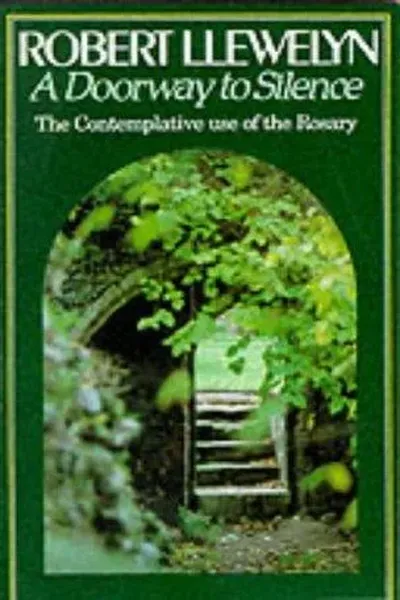



More Free Occult Philosophy Books
View all →