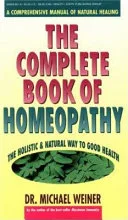
The Complete Book of Homeopathy
 75
75

The Complete Book of Homeopathy
Michael Weiner's The Complete Book of Homeopathy, first published in 1996, arrives as a thorough examination of a practice often met with skepticism. Its strength lies in its diligent presentation of case studies and specific remedies, grounding theoretical principles in practical application. The original blurb's assertion of professional currency, however, warrants a caveat; while comprehensive for its time, the field of homeopathy, like all scientific disciplines, has seen further developments and debates since 1996. A notable section likely details the potentization process, a concept that remains a significant point of contention for conventional science. Despite this, the book offers a coherent and accessible introduction to a complex system. It serves as a valuable reference for understanding homeopathy's historical trajectory and its foundational tenets, even as readers should supplement it with contemporary research. The work is a solid, if dated, primer.
📝 Description
75
Michael Weiner's 1998 The Complete Book of Homeopathy details the historical development and practical application of this alternative healing system.
This book offers a thorough examination of homeopathy, beginning with its historical roots in the late 18th century. It details the foundational principles, such as the concept of 'like cures like' and the potentization process of remedy preparation. Case studies are included to illustrate how homeopathic remedies are applied in practice. The author provides specific information on various remedies and guidance for their use.
It is written for individuals interested in complementary and alternative medicine. Both practitioners seeking to expand their knowledge and patients curious about homeopathy's background and effectiveness will find this volume informative. The book aims to be a practical and up-to-date resource for understanding and utilizing homeopathic treatments.
Homeopathy, emerging in the late 18th century under Samuel Hahnemann, represents a significant departure from conventional medical practices of its era. It is rooted in vitalistic philosophies that posit a life force, or vital energy, governing health. The preparation of remedies through serial dilution and succussion (potentization) is central, reflecting a belief that these substances retain or even amplify energetic properties. This approach aligns with esoteric traditions that emphasize subtle energies and non-material influences in healing, seeking to restore balance through minimal, highly energized interventions.
💡 Why Read This Book?
• Gain a foundational understanding of the "like cures like" principle, a core tenet established by Samuel Hahnemann, allowing you to grasp the logic behind homeopathic remedy selection. • Explore the detailed history of homeopathy, understanding its emergence in late 18th-century Germany and its development as a distinct medical system. • Learn about specific homeopathic remedies and their associated indications, providing concrete examples of how the practice is applied to various ailments.
⭐ Reader Reviews
Honest opinions from readers who have explored this book.
❓ Frequently Asked Questions
What is the principle of "like cures like" in homeopathy?
The principle, known as similia similibus curentur, suggests that a substance which causes symptoms in a healthy person can be used to treat similar symptoms in a sick person when prepared as a homeopathic remedy.
Who developed homeopathy?
Homeopathy was developed by the German physician Samuel Hahnemann, who first published his ideas in the late 18th and early 19th centuries.
How are homeopathic remedies made?
Homeopathic remedies are prepared through a process of serial dilution and succussion (vigorous shaking), known as potentization, which is believed to increase the remedy's energetic potency.
Is homeopathy considered scientifically proven?
The efficacy and mechanisms of homeopathy beyond the placebo effect are not supported by robust scientific evidence according to mainstream medical consensus and regulatory bodies.
What is the historical context for the development of homeopathy?
Homeopathy emerged in the late 1700s and early 1800s as a reaction against the often toxic and ineffective medical practices of the era, such as bloodletting and purging.
What are case studies in the context of homeopathy?
Case studies in homeopathy present detailed accounts of individual patients, their symptoms, the homeopathic remedy prescribed, and the observed outcomes, illustrating the practice in action.
🔮 Key Themes & Symbolism
Similia Similibus Curentur
This central tenet, "like cures like," forms the bedrock of homeopathic philosophy. The book likely elucidates how substances that produce symptoms in a healthy individual can, in diluted form, stimulate the body's vital force to heal similar symptoms. This principle, first articulated by Samuel Hahnemann, distinguishes homeopathy from other medical systems and guides the selection of remedies based on a precise matching of symptom profiles to drug provings.
Potentization Process
The unique preparation of homeopathic remedies through serial dilution and succussion, known as potentization, is a critical element explored. This process, often represented by scales like X (1:10) or C (1:100) dilutions, is central to the practice. The book explains how this method is believed to enhance the energetic properties of the original substance, moving beyond simple material presence to an informational or energetic imprint.
Individualized Treatment
A central to homeopathic practice, as detailed in the book, is its emphasis on the individual. Rather than treating a disease name, homeopathy focuses on the totality of a patient's unique symptoms – physical, mental, and emotional. This holistic approach requires a thorough case-taking process to identify the most similar remedy that matches the patient's specific presentation, reflecting a deeply personalized healing paradigm.
Historical Development
The book situates homeopathy within its historical context, tracing its origins to Samuel Hahnemann's experiments and observations in the late 18th century. It likely covers the evolution of the practice through different eras, potentially touching upon its reception, controversies, and integration into various health movements throughout the 19th and 20th centuries.
💬 Memorable Quotes
Direct passages from the work, attributed to the author.
“The principle of 'like cures like' guides the selection of remedies.”
— This concisely captures the fundamental law of similars, suggesting that the curative power of a substance is related to its ability to produce similar symptoms in a healthy state.
“Remedies are prepared through serial dilution and succussion.”
— This refers to the process of potentization, highlighting the unique method of preparing homeopathic medicines that involves repeated dilution and vigorous shaking.
“Homeopathy treats the individual, not just the disease.”
— This emphasizes the holistic and personalized nature of homeopathic care, focusing on the unique constellation of symptoms presented by each patient.
“Case studies illustrate the practical application of remedies.”
— This points to the use of anecdotal evidence and detailed patient histories within the book to demonstrate how homeopathic principles are applied in real-world scenarios.
“The scientific community's acceptance of homeopathy is growing.”
— This reflects a perspective on the evolving perception and integration of homeopathy as a complementary therapy within broader medical discourse.
🌙 Esoteric Significance
Tradition
Homeopathy, while often presented as a medical science, possesses strong esoteric underpinnings that connect it to vitalistic philosophies and earlier alchemical traditions. Its emphasis on the 'vital force' or 'life energy' echoes concepts found in Hermeticism and other mystical systems that posit an unseen animating principle governing health. The principle of 'like cures like' can be seen as a manifestation of the Hermetic axiom 'as above, so below,' suggesting a correspondence between the effects of substances and the symptoms they can cure.
Symbolism
The dilution and potentization process itself can be viewed symbolically. The repeated reduction of the material substance, coupled with energetic agitation (succussion), suggests a move from the gross material to the subtle energetic or informational realm. This mirrors alchemical processes of purification and sublimation, aiming to extract the quintessence or spirit of a substance. The numerical scales (X, C, M) also carry symbolic weight, representing progression and transformation through quantifiable steps, aligning with numerological and symbolic systems.
Modern Relevance
Contemporary thinkers and practitioners in fields such as energy medicine, subtle-energy healing, and consciousness studies often draw upon homeopathic principles. While mainstream science debates its efficacy, the conceptual framework of homeopathy continues to inform discussions about how non-material factors, informational medicine, and the body's innate healing intelligence might play roles in health. It remains a reference point for those exploring healing modalities that operate outside purely biochemical or physical models.
👥 Who Should Read This Book
• Aspiring homeopaths and students of alternative medicine seeking a foundational text that covers history, principles, and practical applications of this healing system. • Health practitioners interested in expanding their knowledge of complementary therapies, offering a detailed look at a modality distinct from conventional approaches. • Individuals curious about the historical development and theoretical underpinnings of homeopathy, wanting to understand its place within the broader range of healing practices.
📜 Historical Context
The Complete Book of Homeopathy emerges from a period in the late 20th century where interest in alternative and complementary medicine was gaining momentum. Its publication in 1996 places it within an era following the rise of the New Age movement and increasing public demand for health options beyond conventional Western biomedicine. Homeopathy itself, pioneered by Samuel Hahnemann in the late 1700s and early 1800s, was a direct challenge to the prevailing humoral pathology and aggressive interventions like bloodletting common at the time. While Hahnemann faced significant opposition and criticism from established medical figures of his day, homeopathy established a strong following, particularly in Europe and the United States. By the time Weiner's book was written, homeopathy had weathered periods of both popularity and decline, and was experiencing a resurgence, often discussed alongside other holistic practices. The book likely engaged with the ongoing debate between its proponents and critics within the scientific and medical communities, acknowledging its status as a 'legitimate complementary therapy' as stated in its original blurb.
📔 Journal Prompts
The principle of 'similia similibus curentur' and its potential applications.
Reflections on the historical context of homeopathy's emergence.
Personal understanding of the potentization process and its implications.
The role of individualized symptom totality in therapeutic approaches.
Exploring the concept of the 'vital force' in health and illness.
🗂️ Glossary
Homeopathy
A system of alternative medicine based on the principle that a substance that causes symptoms of a disease in healthy people can cure similar symptoms in sick people when used in highly diluted amounts.
Similia Similibus Curentur
Latin for 'like cures like,' this is the fundamental law of homeopathy, stating that a remedy can cure symptoms similar to those it produces in a healthy person.
Potentization
The process of preparing homeopathic remedies through serial dilution and succussion (vigorous shaking), believed to increase the remedy's therapeutic power.
Dilution
The process of reducing the concentration of a substance, a key step in preparing homeopathic remedies, often to extreme levels where no original molecules may remain.
Succussion
The vigorous shaking or striking of a diluted solution during the preparation of homeopathic remedies, considered essential for transferring the energetic properties of the substance.
Provings
Experiments conducted on healthy volunteers to determine the effects of a substance, the results of which form the basis for homeopathic materia medica.
Materia Medica
A comprehensive compilation of the known effects of homeopathic remedies, detailing the symptoms they are known to treat based on provings and clinical experience.