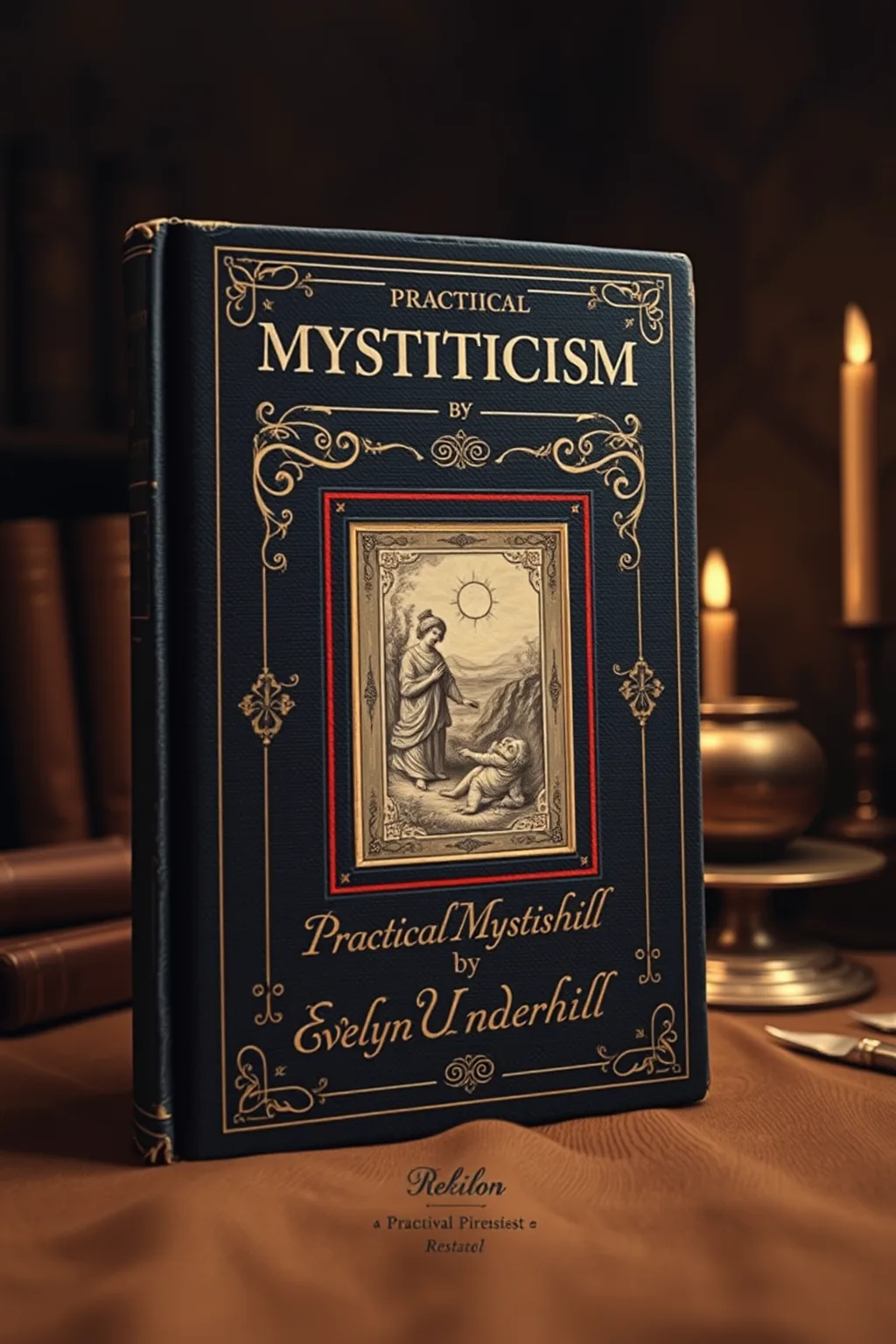
Practical mysticism
 81
81

Practical mysticism
Evelyn Underhill's 'Practical Mysticism' attempts to map the terrain of spiritual experience with a clarity that few authors achieve. Her strength lies in her ability to articulate the often ineffable, presenting the mystical path not as a flight from reality but as a deeper engagement with it. The book is most compelling when it details the disciplined 'Dark Night' of the soul, not as a punitive phase but as a necessary stripping away of egoic attachments. However, the work occasionally feels overly tethered to a specific Christian framework, which may limit its resonance for those outside that tradition, despite Underhill's universalist leanings. A notable passage is her description of the 'Great Choice,' which captures the critical juncture where deliberate will engages with nascent spiritual awareness. While somewhat dated in its prose, 'Practical Mysticism' remains a valuable guide for serious spiritual aspirants.
📝 Description
81
Evelyn Underhill published 'Practical Mysticism' in 1942, detailing an accessible path to spiritual experience.
Published in 1942, Evelyn Underhill's 'Practical Mysticism' outlines a structured method for spiritual growth, moving beyond abstract theory to emphasize active experience. Underhill argues that mysticism is not an exclusive gift but a practice attainable through discipline and attention to the divine in daily life. The book maps stages of spiritual development, from initial divine awareness to the union mystics seek. It is for those dissatisfied with abstract religious dogma, desiring a direct, experiential connection with the sacred. Underhill's work encourages self-observation and disciplined practice for the earnest seeker.
The book frames mystical experience as a reciprocal relationship between the soul and God, rather than passive reception. It defines the 'Unitive Life' as the ultimate goal of spiritual development. Underhill's approach is primarily rooted in the Christian contemplative tradition, yet it acknowledges universal principles that resonate beyond specific dogmas. She sought to demystify mysticism, making it understandable and actionable for a wider audience during a time of societal uncertainty.
Evelyn Underhill wrote 'Practical Mysticism' in 1942, a time when movements like Theosophy and Anthroposophy gained popularity. While aware of these systems and Eastern influences, Underhill grounded her work in the Christian contemplative tradition. She aimed to demystify the subject for a general audience, distinguishing her approach from more overtly esoteric paths. Her focus was on making the core principles of mystical union accessible through disciplined practice and attention to the divine presence in ordinary life.
💡 Why Read This Book?
• Gain a structured understanding of the stages of spiritual development, as Underhill outlines the progression from initial awareness to the 'Unitive Life', offering a clear roadmap for personal growth. • Learn the importance of 'Spiritual Discipline' as a practical tool for cultivating inner awareness, moving beyond abstract ideals to concrete daily practices. • Grasp the concept of the 'Great Choice' as presented by Underhill, understanding the pivotal role of conscious intention and will in initiating and sustaining the mystical journey.
⭐ Reader Reviews
Honest opinions from readers who have explored this book.
❓ Frequently Asked Questions
When was Evelyn Underhill's 'Practical Mysticism' first published?
'Practical Mysticism' by Evelyn Underhill was first published in 1942, a period when many were seeking inner stability amidst global conflict.
What is the central aim of 'Practical Mysticism'?
The central aim is to present mysticism as an accessible, disciplined practice rather than an exclusive or purely intellectual pursuit, guiding readers toward direct experience of the divine.
Does 'Practical Mysticism' require adherence to a specific religion?
While rooted in the Christian contemplative tradition, Underhill emphasizes universal principles of spiritual growth, making the core teachings applicable to sincere seekers of various backgrounds.
What does Evelyn Underhill mean by 'Spiritual Discipline'?
Underhill defines 'Spiritual Discipline' as the conscious, consistent effort and practice required to cultivate inner awareness, detachment, and receptivity to the divine.
Is 'Practical Mysticism' suitable for beginners in spirituality?
Yes, its structured approach and clear explanations make it suitable for beginners who are serious about developing their inner life, provided they are prepared for disciplined self-reflection.
How does 'Practical Mysticism' differ from Evelyn Underhill's earlier work, 'Mysticism'?
'Mysticism' (1911) was a broader, scholarly survey of mystical experience across history, whereas 'Practical Mysticism' (1942) focuses on the actionable methods and stages for the individual practitioner.
🔮 Key Themes & Symbolism
The Unitive Life
This theme explores the ultimate goal of the mystical path: a state of profound, conscious union with the divine. Underhill details this as the culmination of rigorous spiritual practice, where the individual soul experiences a deep, abiding connection with God. It is not merely an intellectual concept but an experiential reality to be cultivated through dedicated effort, involving the integration of one's whole being into a divine awareness. This state represents the highest fulfillment of the spiritual journey, characterized by love, peace, and a transformed perception of reality.
Spiritual Discipline
Underhill posits that the mystical life is not a passive gift but requires active engagement through consistent 'Spiritual Discipline'. This involves practices aimed at purifying the mind and will, fostering detachment from worldly distractions, and cultivating a deep interiority. Such discipline is presented as the essential framework upon which direct spiritual experience can be built. It encompasses conscious effort, self-observation, prayer, and meditation, all directed towards making the individual soul more receptive to divine presence and guidance.
The Great Choice
Central to Underhill's practical approach is the concept of 'The Great Choice', representing the decisive moment when an individual consciously commits to the pursuit of spiritual reality. This is not a fleeting emotion but a deliberate act of will that redirects the course of one's life towards the divine. Underhill emphasizes that this choice requires courage and conviction, setting the foundation for the subsequent disciplines and stages of mystical development. It is the turning point where the seeker actively embraces the path ahead.
Immanence and Transcendence
The work navigates the delicate balance between the divine's immanence (presence within creation) and transcendence (existence beyond it). Underhill argues that true mystical experience involves recognizing God not only as a distant entity but as intimately present in the world and within the human soul. This dual perspective allows for a grounded spirituality that finds the sacred in the ordinary, while still acknowledging the ultimate mystery and otherness of the divine. It bridges the gap between the material and spiritual realms.
💬 Memorable Quotes
Direct passages from the work, attributed to the author.
“The spiritual life is a life of relationship.”
— This succinctly captures Underhill's view that mysticism is not solitary contemplation but an active, reciprocal connection between the human soul and the divine, emphasizing engagement over passive observation.
“The Great Choice is the decisive moment where will engages with the soul's yearning.”
— This highlights the active role of conscious decision-making in spiritual progress. It suggests that the spiritual journey begins not just with feeling but with a deliberate commitment of one's will.
“Detachment is not asceticism, but a freeing of the spirit.”
— Underhill clarifies that detachment from worldly concerns is not about self-denial for its own sake, but about liberating the inner self to focus on higher realities and divine connection.
“We must learn to see the Eternal in the Temporal.”
— This interpretation emphasizes finding the divine presence and ultimate reality within the mundane, everyday experiences and objects of the material world.
“Mysticism is the art of union with Reality.”
— This defines mysticism as a practical skill or art form focused on achieving direct, conscious oneness with the ultimate nature of existence, or God.
🌙 Esoteric Significance
Tradition
Underhill's work is firmly rooted in the Western esoteric tradition, specifically the Christian contemplative path. While drawing on universal mystical principles, she frames her teachings within a Christocentric understanding of divine union. Her approach departs from more overtly magical or Gnostic systems by emphasizing inner transformation and direct experience of God's presence through disciplined prayer and contemplation, aligning with figures like St. John of the Cross and St. Teresa of Ávila.
Symbolism
The book frequently employs the symbolism of light and darkness, representing divine illumination and the soul's journey through periods of spiritual obscurity or trial (the 'Dark Night'). The concept of 'union' itself acts as a potent symbol, representing the ultimate integration of the individual self with the divine, moving from separation to wholeness. The 'Great Choice' can be seen as a symbolic gateway, marking the transition from ordinary consciousness to a dedicated spiritual pursuit.
Modern Relevance
Contemporary spiritual seekers, particularly those interested in contemplative Christianity, mindfulness, and practical psychology of religion, continue to draw from Underhill's work. Her emphasis on disciplined practice and the integration of spiritual life into everyday existence finds echoes in modern therapeutic approaches and secularized mindfulness practices. Thinkers and practitioners exploring the 'immanent divine' within the modern world often reference her ability to articulate the experiential core of spirituality.
👥 Who Should Read This Book
['• Individuals seeking a structured, step-by-step approach to developing their inner spiritual life, moving beyond abstract concepts to practical application.', '• Students of Christian mysticism and contemplative prayer who desire a guide that bridges historical practice with personal experience.', '• Seekers of any background looking for methods to deepen their connection to the sacred through disciplined self-awareness and intentional practice.']
📜 Historical Context
Evelyn Underhill's 'Practical Mysticism', published in 1942, emerged during a period of intense global conflict and widespread spiritual searching. Following the success of her more academic treatise 'Mysticism' (1911), this later work aimed to provide a more accessible, actionable guide to spiritual development. It offered an alternative to the sometimes abstract philosophical explorations of the divine prevalent at the time. While influenced by the Christian contemplative tradition, Underhill's approach resonated with a broader audience interested in personal spiritual experience, distinguishing it from the more theosophical or anthroposophical movements gaining popularity. The book's emphasis on disciplined practice provided a grounded counterpoint to the era's anxieties, positioning mysticism as a vital, attainable aspect of human life rather than an esoteric rarity.
📔 Journal Prompts
The concept of 'Spiritual Discipline' as outlined by Underhill: identify one practice you can integrate this week.
Reflect on your own experience of the 'Great Choice' – when did you consciously commit to your spiritual path?
Consider the 'Unitive Life': what does this state of being signify for your current understanding of existence?
Analyze your current 'Detachment' from worldly distractions and identify areas for potential freeing of the spirit.
How does Underhill's idea of seeing the 'Eternal in the Temporal' apply to your daily routines?
🗂️ Glossary
The Unitive Life
The ultimate stage of mystical development, characterized by a deep, conscious, and abiding union with the Divine.
Spiritual Discipline
The consistent, intentional practices undertaken to cultivate inner awareness, purify the mind and will, and foster receptivity to the divine.
The Great Choice
The decisive moment of conscious commitment and redirection of one's will towards the pursuit of spiritual reality.
Detachment
A state of freedom from excessive attachment to worldly concerns, enabling greater focus on the inner life and the divine.
Immanence
The concept of the divine being present and active within the created universe and the human soul.
Transcendence
The concept of the divine existing beyond and independent of the material universe.
The Dark Night
A period of spiritual trial and purification, often characterized by a sense of dryness or absence, necessary for deeper union.
🔮 Readers Also Liked
Browse all →









More by Evelyn Underhill
All books →





More Free Spiritual Development Books
View all →