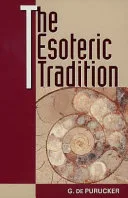
The Esoteric Tradition
 71
71

The Esoteric Tradition
Gottfried Purucker's 'The Esoteric Tradition' offers a dense, systematic exposition of Theosophical thought, aiming to present a unified view of ancient wisdom. Its strength lies in its sheer scope, attempting to reconcile disparate religious and philosophical systems under a single, overarching esoteric framework. Purucker's detailed exploration of concepts like cosmic cycles and evolutionary pathways is impressive in its ambition. However, the work's primary limitation is its inherent reliance on Theosophical doctrine; it assumes a familiarity with or acceptance of Blavatsky's interpretations, which can make the text challenging for those outside that specific lineage. The chapter on 'Allegory and Mystical Symbolism' is particularly illuminating, demonstrating how common motifs across cultures might point to shared, underlying spiritual realities. While valuable for its detailed synthesis, its perspective remains firmly rooted in its specific Theosophical origins. It is an important text for understanding that tradition, rather than a neutral survey of all esoteric thought.
📝 Description
71
Gottfried Purucker's 'The Esoteric Tradition' was first published in 1973.
Gottfried Purucker's 1973 book, 'The Esoteric Tradition,' attempts to outline a universal wisdom tradition that underlies many world religions and philosophies. Purucker, who led the Theosophical Society after Katherine Tingley, based much of his work on Helena Blavatsky's 'The Secret Doctrine.' The book aims to present the core ideas of this ancient knowledge, suggesting it influenced even early Vedic writings. It seeks to create a framework for understanding the universe, its various planes, and human evolution within a single, consistent pattern.
This text is intended for serious students of comparative religion, ancient philosophy, and esoteric studies. It is for those who want to see the common links between different spiritual systems, like Buddhism or Hermeticism. Readers interested in the history of Theosophy and its key writings will find a lot here. It is especially useful for individuals who want more than simple answers and are looking for a structured way to grasp metaphysical ideas and their history, as seen through the Theosophical perspective.
Published in 1973, 'The Esoteric Tradition' emerged during a period of growing, though often scattered, interest in Eastern religions and Western esotericism. Gottfried Purucker's work is a direct continuation of the Theosophical movement founded by Helena Blavatsky with 'The Secret Doctrine' in 1888. This era saw renewed attention to ancient texts and philosophies, often as an alternative to materialistic scientific viewpoints. Purucker's effort to unify these diverse sources into a singular 'Esoteric Tradition' offered a comprehensive Theosophical interpretation.
💡 Why Read This Book?
• Gain a coherent understanding of the evolutionary journey of cosmos and consciousness, as presented through the lens of the Theosophical Society, by examining Purucker's interpretation of concepts like the 'Evolutionary Pathway to the Gods'. • Uncover the allegorical and symbolic meanings embedded within world scriptures, learning to discern hidden metaphysical truths through the exploration of 'Allegory and Mystical Symbolism'. • Comprehend the interconnectedness of all existence, seeing universes, worlds, and humanity as facets of a single cosmic pattern, as detailed in the book's panoramic exposition.
⭐ Reader Reviews
Honest opinions from readers who have explored this book.
❓ Frequently Asked Questions
What is the core argument of Gottfried Purucker's 'The Esoteric Tradition'?
The book argues that a single, ancient wisdom tradition underlies all major religions and philosophies. It presents this 'Esoteric Tradition' as a universal framework for understanding cosmic evolution, human consciousness, and the interconnectedness of all beings, tracing its roots back further than the Vedas.
How does 'The Esoteric Tradition' relate to H.P. Blavatsky's 'The Secret Doctrine'?
Purucker's work is deeply indebted to 'The Secret Doctrine', which he regarded as containing fundamental principles of this ancient wisdom. 'The Esoteric Tradition' aims to elaborate on and synthesize the concepts presented by Blavatsky, offering a more panoramic view of the subject.
What kind of symbolic language does the book discuss?
The book delves into allegorical and mystical symbolism found across various cultures and religions. It suggests that these symbols, when understood esoterically, reveal profound metaphysical truths about the universe and humanity's place within it.
Is 'The Esoteric Tradition' suitable for beginners in esoteric studies?
While comprehensive, the book assumes a certain level of engagement with metaphysical concepts. Beginners might find it more accessible after familiarizing themselves with foundational Theosophical texts or introductory works on comparative mysticism.
When was 'The Esoteric Tradition' first published, and who was Gottfried Purucker?
The book was first published in 1973. Gottfried Purucker (1864-1942) was a prominent figure in the Theosophical movement, succeeding Katherine Tingley as the leader of the Theosophical Society.
What does the book suggest about the origin of universal wisdom?
Purucker posits that the wisdom tradition discussed in the book is ancient, predating recorded history and known religious scriptures like the Vedas. He views it as a continuous, unbroken stream of knowledge about the cosmos and spiritual laws.
🔮 Key Themes & Symbolism
The Unbroken Wisdom Stream
Purucker posits the existence of a singular, continuous stream of esoteric knowledge that predates all known civilizations and scriptures, including the Vedas. This 'Esoteric Tradition' is presented not as a historical religion, but as the underlying source from which diverse spiritual expressions emerge. The work meticulously traces conceptual lineages, suggesting that apparent differences between systems are superficial, masking a profound, universal coherence accessible through esoteric interpretation.
Cosmic Pattern and Evolution
A central theme is the depiction of the universe, its myriad worlds, and humanity as interconnected aspects of a single, grand cosmic pattern. The book outlines an intricate evolutionary pathway, not merely biological but spiritual and intellectual, guiding consciousness from primal states towards divine realization. This process is shown to operate across vast cycles of time and through successive manifestations of form and consciousness.
Allegory and Mystical Symbolism
The work places significant emphasis on the allegorical nature of religious texts and myths. Purucker argues that scriptures are often encoded with profound metaphysical truths, accessible only through understanding their mystical symbolism. Chapters dedicated to this theme demonstrate how common archetypes and narrative structures across different cultures point to a shared esoteric understanding of cosmic laws and spiritual realities.
Hierarchies and Guiding Intelligences
The Esoteric Tradition, as presented by Purucker, involves a complex hierarchy of conscious beings and guiding intelligences responsible for the unfolding of cosmic and human evolution. These entities, often referred to in various traditions as gods, dhyan-chohans, or spiritual rulers, play a central role in maintaining cosmic order and facilitating the progress of lower forms of life towards greater awareness and self-mastery.
💬 Memorable Quotes
Direct passages from the work, attributed to the author.
“Universes, worlds, and men are but different aspects of one cosmic pattern.”
— This statement expresses the book's core thesis: the fundamental unity underlying all manifested reality. It suggests that the vast diversity of existence, from celestial bodies to individual lives, is not chaotic but part of an ordered, interconnected whole governed by underlying principles.
“The Secret Doctrine contains the principles of an ancient wisdom which far antedates the Vedas.”
— This highlights Purucker's view of Blavatsky's work as a key to understanding a wisdom tradition that predates even the earliest known historical religious texts, positioning it as a foundational source for esoteric knowledge.
“Allegory and Mystical Symbolism are the keys to unlocking the hidden meaning of sacred texts.”
— This emphasizes the book's approach to religious and mythological literature. It suggests that literal interpretations are insufficient and that true understanding requires deciphering the symbolic language that conveys deeper metaphysical and spiritual truths.
“The evolutionary pathway leads not just to survival, but towards the gods.”
— This points to the teleological aspect of Purucker's cosmology. Evolution is not merely adaptation but a purposeful ascent of consciousness, a journey towards higher spiritual states and identification with divine principles.
“Worlds visible and invisible are expressions of the same underlying reality.”
— This idea underscores the book's metaphysical perspective, asserting that the material and immaterial realms are not fundamentally separate but are different manifestations of a single, unified existence.
🌙 Esoteric Significance
Tradition
This work is firmly situated within the modern Theosophical tradition, initiated by Helena Blavatsky. Purucker functions as an interpreter and synthesizer, elaborating on the complex cosmological and anthropological doctrines presented in 'The Secret Doctrine'. While drawing from Gnostic, Hermetic, and Vedic sources, his primary contribution is the systematic articulation of these ancient ideas through a distinctly Theosophical lens, emphasizing universal spiritual laws and evolutionary cycles.
Symbolism
The book frequently references key esoteric symbols. The 'Serpent' often symbolizes wisdom, cyclical time, or primal energy. The concept of 'Worlds Visible and Invisible' points to the multi-layered nature of reality, with physical manifestation being only one aspect. The 'Lotus' is a recurring motif, representing spiritual unfoldment and the emergence of consciousness from material conditions, mirroring the cosmic evolutionary process.
Modern Relevance
Contemporary students of comparative religion, esoteric philosophy, and the history of Theosophy continue to engage with Purucker's work. Thinkers exploring unified field theories in consciousness studies or seeking to understand the perennial philosophy through a systematic lens may find his comprehensive approach valuable. His detailed exegesis of ancient symbolism also informs modern practitioners of Hermeticism and other Western esoteric paths seeking deeper textual understanding.
👥 Who Should Read This Book
• Students of Theosophy seeking a comprehensive overview of its core doctrines, particularly as synthesized by Gottfried Purucker following H.P. Blavatsky's foundational texts. • Researchers in comparative religion and philosophy interested in tracing the conceptual lineage of esoteric ideas across diverse cultures and historical periods. • Individuals drawn to metaphysical explorations of cosmology, consciousness, and human evolution who desire a systematic, albeit Theosophically-oriented, framework.
📜 Historical Context
Published in 1973, Gottfried Purucker's 'The Esoteric Tradition' emerged in an era of burgeoning interest in Eastern philosophies and Western occultism, fueled partly by counter-cultural movements and a search for alternatives to materialist worldviews. Purucker, a successor to Katherine Tingley in the leadership of the Theosophical Society, built directly upon the foundational work of Helena Blavatsky, particularly her 'The Secret Doctrine' (1888). This period saw a variety of esoteric and New Age movements gaining traction, often engaging with ancient texts and spiritual practices. Purucker's work offered a systematic, Theosophical synthesis, seeking to present a unified vision of universal wisdom. While it engaged with concepts found in Hermeticism, Gnosticism, and Vedic thought, its primary frame of reference remained the specific doctrines and interpretations advanced by Blavatsky and her successors. The reception often depended on the reader's prior alignment with Theosophical principles.
📔 Journal Prompts
The concept of the 'Evolutionary Pathway to the Gods' suggests a directed journey; what are your personal reflections on this idea?
Reflect on the role of 'Allegory and Mystical Symbolism' in understanding a spiritual text meaningful to you.
Consider the idea that 'Universes, worlds, and men are different aspects of one cosmic pattern.' How does this perspective alter your view of reality?
What connections can you draw between the 'Secret Doctrine of Gautama the Buddha' as presented here and your understanding of Buddhist teachings?
Explore the implications of 'Worlds Visible and Invisible' existing as facets of a single reality for your daily life.
🗂️ Glossary
The Secret Doctrine
The monumental work by Helena Blavatsky, first published in 1888, which Purucker considered foundational for understanding the ancient esoteric wisdom tradition. It presents a complex cosmology and anthropology.
Ancient Wisdom
Purucker's term for a universal, perennial body of knowledge concerning the fundamental nature of reality, consciousness, and the cosmos, believed to be the source of all religious and philosophical traditions.
Cosmic Pattern
The underlying, ordered structure or blueprint of the universe, according to which all manifested phenomena, including worlds and beings, are organized and evolve.
Evolutionary Pathway
The process by which consciousness and form develop over vast periods, progressing through successive stages of complexity and spiritual awareness, as described in esoteric traditions.
Allegory
A narrative or symbol that has a deeper, often spiritual or moral, meaning beyond its literal interpretation, used extensively in sacred texts to convey metaphysical truths.
Mystical Symbolism
The use of symbolic language, images, and archetypes within esoteric traditions to represent abstract spiritual concepts, divine realities, and the hidden workings of the universe.
Theosophical Society
An international organization founded in 1875 by Helena Blavatsky, William Quan Judge, and others, dedicated to the study of comparative religion, philosophy, and science, and to the pursuit of spiritual wisdom.