Dream Magic

 81
81

Dream Magic
Sirona Knight's Dream Magic attempts to bridge the gap between psychological dream analysis and active magical practice, a commendable if ambitious goal. The book's strength lies in its detailed guidance on achieving lucidity and utilizing dream states for personal empowerment, moving beyond passive observation. Knight presents a compelling argument for dreams as a vital, untapped resource for spiritual practitioners. However, the work occasionally suffers from a lack of rigorous differentiation between subjective experience and universal truths, particularly when discussing interactions with dream entities. A passage detailing the 'Dream Body' and its potential for astral projection, while intriguing, leans heavily on assertion without offering extensive empirical grounding. Despite this, the book's practical exercises offer tangible methods for readers to explore their own dream lives more purposefully. It serves as a valuable, albeit sometimes overly confident, manual for the aspiring oneironaut.
📝 Description
81
Sirona Knight's Dream Magic, published in 2000, examines dreams as tools for magical practice.
Dream Magic, first released in 2000, moves past simple dream interpretation to explore the active role dreams play in personal and spiritual growth. Sirona Knight argues that dreams are not just reflections of the subconscious but are potent instruments for magical engagement and self-discovery. The book details methods for consciously interacting with dream states.
This work is for those interested in the occult, esotericism, and the practical use of altered states of consciousness. It appeals to readers seeking to understand dream symbolism for psychological insight and as a conduit for spiritual power and magical endeavors. Individuals familiar with symbolic systems or contemplative practices will find this a rich resource.
Knight's book arrived during a time of renewed interest in esoteric traditions and their connection to modern psychology. The early 2000s saw a rise in accessible literature on witchcraft, paganism, and divination, placing Dream Magic within a larger cultural movement to apply ancient wisdom to contemporary life. It follows a line of thought that includes Carl Jung's work on archetypes and the collective unconscious.
Dream Magic emerged at the turn of the millennium, a period marked by a resurgence of interest in esoteric traditions and their integration with contemporary psychological thought. Knight's work contributes to a broader cultural conversation that sought to reclaim and apply ancient wisdom to modern life. It builds upon earlier studies of the unconscious and symbolism, particularly the framework provided by Carl Jung's research into archetypes and the collective unconscious, which offered a foundation for many subsequent dream studies.
💡 Why Read This Book?
• Understand the 'Dream Body' concept to explore your subconscious realm with intention, as detailed in Knight's practical exercises for navigating dreamscapes. • Develop techniques for achieving lucidity within your dreams, transforming passive sleep into an active space for personal growth and self-discovery. • Learn to interpret dream symbols not just for psychological insight but as direct messages from your higher self or spiritual guides, following the book's methods.
⭐ Reader Reviews
Honest opinions from readers who have explored this book.
❓ Frequently Asked Questions
What is the primary focus of Sirona Knight's Dream Magic?
The book focuses on using dreams as a tool for magical practice and spiritual development, emphasizing techniques like lucid dreaming and conscious interaction within the dreamscape, moving beyond simple interpretation.
When was Dream Magic first published and by whom?
Dream Magic was first published in 2000 by author Sirona Knight, positioning it within the early 2000s resurgence of interest in esoteric and occult literature.
What is 'dream walking' as described in Dream Magic?
Dream walking, as presented in the book, refers to the intentional exploration and interaction with dream figures and environments, suggesting a conscious engagement with the dream world for specific purposes.
How does Dream Magic relate to Jungian psychology?
While not solely a Jungian text, Dream Magic draws on concepts like archetypes and the symbolic nature of the unconscious, foundational ideas explored by Carl Jung in his studies of dreams and mythology.
Is Dream Magic suitable for beginners in esoteric studies?
Yes, the book offers practical guidance and exercises that can be beneficial for beginners interested in esoteric dream work, provided they approach the material with an open but critical mind.
What is the 'Dream Body' concept in this book?
The 'Dream Body' is presented as a subtle vehicle or energetic form through which one can navigate and influence the dream world, a key concept for advanced dream magic practice detailed by Knight.
🔮 Key Themes & Symbolism
Lucid Dreaming as Conscious Magic
Knight presents lucid dreaming not just as a phenomenon but as a primary tool for magical efficacy. The ability to recognize one is dreaming while asleep allows the practitioner to consciously direct dream narratives, interact with dream figures purposefully, and even manifest desired outcomes within the dreamscape. This transforms the passive experience of dreaming into an active, potent form of oneiric magic, a deliberate engagement with the subconscious for personal transformation and power acquisition.
The Dreamscape as a Realm
The work posits the dreamscape as a distinct, albeit non-physical, reality. It is not merely a product of individual psychology but a navigable territory with its own laws and inhabitants. Knight encourages readers to view this realm as a place for exploration, learning, and interaction, suggesting that the symbols and entities encountered within it hold significant meaning and potential for communication, akin to navigating an astral plane.
Symbolism and Archetypal Language
Central to Dream Magic is the understanding that dreams communicate through a rich symbolic language. Knight explores how recurring symbols, archetypes, and personal dream imagery serve as direct messages from the unconscious or higher self. Deciphering this symbolic lexicon is presented as crucial for spiritual growth, self-understanding, and uncovering hidden potentials, drawing parallels to the symbolic systems found in ancient mythologies and esoteric traditions.
The Dream Body and Astral Projection
Knight introduces the concept of the 'Dream Body,' a subtle energetic form that acts as a vehicle for conscious travel within the dream world. This concept links dream magic to practices like astral projection, suggesting that by mastering the Dream Body, practitioners can achieve greater control and awareness within their dream experiences, potentially extending their consciousness beyond the physical body during sleep.
💬 Memorable Quotes
Direct passages from the work, attributed to the author.
“Dreams are not passive visions; they are active landscapes we can shape and learn from.”
— This statement highlights the core tenet of the book: that dream states are not merely subconscious effluvia but dynamic arenas for conscious engagement and magical practice.
“Your dream figures are traces of your own psyche, waiting to impart wisdom.”
— This interpretation suggests that dream characters, often perceived as mere figments, are viewed within the book's framework as potent symbolic representations offering guidance and insight.
“Decode the symbols, and you unlock the messages of your deepest self.”
— This highlights the book's focus on symbolic interpretation within dreams as a pathway to self-knowledge and understanding one's inner world.
💡 Key Ideas
Editorial paraphrase of the work's core concepts — not direct quotes.
Recognizing the dream state is the first step to unlocking its power.
This paraphrased concept emphasizes the critical role of lucidity in dream magic, positing that the moment of awareness within a dream is the gateway to its transformative potential.
The dream body allows for travel and interaction within the non-physical areas of sleep.
This paraphrased concept refers to the 'Dream Body' as an energetic vehicle enabling conscious exploration and manipulation of the dream environment.
🌙 Esoteric Significance
Tradition
Dream Magic aligns with contemporary esoteric traditions that blend psychological insights with practical magical application, often drawing loosely from Hermeticism, shamanism, and modern witchcraft. It departs from strictly traditional lineages by focusing intensely on the internal field of the dream as a primary locus of power and interaction, rather than solely relying on external ritual or established planetary correspondences.
Symbolism
Key symbols include the 'Dream Body,' representing the subtle vehicle for working through the oneiric realm, akin to an astral body. The 'Dreamscape' itself functions as a symbolic map of the psyche and a spiritual territory. Dream figures and recurring motifs are treated as potent symbols, interpreted not just psychologically but as potential guides or manifestations of archetypal forces.
Modern Relevance
The work remains relevant to contemporary practitioners of lucid dreaming, modern witchcraft, and self-directed spiritual development. Thinkers and groups focused on consciousness studies, oneirology, and embodied spirituality often reference or echo Knight's emphasis on the active, intentional use of dream states for personal growth and magical exploration.
👥 Who Should Read This Book
• Aspiring oneironauts and practitioners of lucid dreaming seeking to move beyond passive observation into active dream manipulation. • Students of esoteric traditions interested in integrating dream work with other magical disciplines like divination or energy work. • Individuals exploring consciousness and altered states who wish to understand dreams as a powerful tool for self-discovery and spiritual insight.
📜 Historical Context
Sirona Knight's Dream Magic, published in 2000, emerged during a period of significant resurgence in popular interest in esoteric traditions, New Age spirituality, and practical occultism. The late 20th and early 21st centuries saw a proliferation of books aimed at explaining practices like witchcraft, divination, and altered states of consciousness for a wider audience. Knight's work fits within this milieu, offering a more active and magical approach to dream study, distinct from purely psychological interpretations prevalent since the work of Carl Jung. While Jung explored the symbolic depths of the unconscious through dreams, Knight shifts the focus towards harnessing these experiences for deliberate magical effect. The book's publication coincided with the growth of online communities dedicated to spiritual exploration, providing a platform for disseminating such ideas. Unlike earlier, more academic or secretive esoteric texts, Dream Magic aimed for accessibility, contributing to the broader cultural conversation about personal empowerment through unconventional spiritual means.
📔 Journal Prompts
The nature of your 'Dream Body' as described by Knight.
Specific symbols encountered during lucid dreaming experiences.
The potential for dream figures to act as guides.
The distinctiveness of the Dreamscape compared to waking reality.
Developing intentionality within a dream narrative.
🗂️ Glossary
Lucid Dreaming
A state of consciousness during sleep where the dreamer is aware that they are dreaming and can often exert a degree of control over the dream narrative, characters, and environment.
Dreamscape
The subjective, often surreal, environment experienced during a dream. In an esoteric context, it's viewed as a distinct realm or plane of existence accessible through sleep.
Dream Body
A concept referring to a subtle, energetic form or 'body' that allows for conscious navigation and interaction within the dreamscape, distinct from the physical body.
Oneironaut
A term for a person who consciously explores the dream world, particularly during lucid dreams, akin to an astronaut exploring space.
Archetype
Universal, archaic patterns and images that derive from the collective unconscious and are the psychic counterpart of instinct. Often appear in dreams.
Dream Walking
The practice of intentionally entering, exploring, and interacting with specific elements or entities within the dream state.
Symbolic Interpretation
The process of understanding the deeper, often hidden, meanings behind the images, events, and characters encountered in dreams.
🔮 Readers Also Liked
Browse all →








More by Sirona Knight
All books →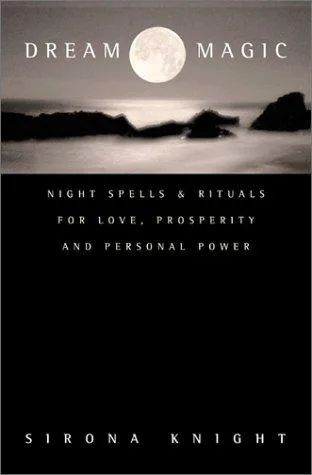




More Free Occult Philosophy Books
View all →