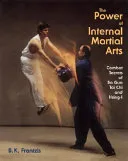
Power of Internal Martial Arts
 78
78

Power of Internal Martial Arts
Bruce Kumar Frantzis's "Power of Internal Martial Arts" offers a welcome counterpoint to the often overly physical or dogmatic approaches found in many martial arts texts. Frantzis articulates a clear distinction between external force and internal power, a concept that, while not new, is presented here with accessible detail for Western practitioners. The book's strength lies in its methodical explanation of cultivating 'qi' for martial application, moving beyond abstract notions to practical somatic understanding. A notable limitation is the relatively small number of photographs, which, while illustrative, can sometimes leave the reader wanting more visual guidance on complex movements. The section detailing the 'Three Internal Arts' provides a solid comparative framework, highlighting their unique energetic signatures. It's a valuable resource for those ready to explore the energetic dimensions of combat.
📝 Description
78
Published in 1997, Bruce Kumar Frantzis's book introduces three internal martial arts focused on subtle energy.
Unlike external martial arts that rely on muscle strength or rigid stances, the internal disciplines detailed in this 1997 book harness the body's subtle energy, often called 'qi' or 'prana'. Frantzis explains how to cultivate and direct this internal power through an integrated, flowing approach to movement and combat. This work is for martial artists looking to move beyond purely physical techniques and explore the energetic dimensions of self-defense. It also appeals to those interested in the philosophical aspects of martial traditions. Practitioners of any style, from Karate to Tai Chi, can find value in understanding these internal principles.
The book's main ideas center on developing and using internal energy. This involves distinguishing between 'jing' (physical essence) and 'qi' (vital energy), building a relaxed yet stable structure, and learning to generate power from the dantian. Frantzis covers specific exercises designed to heighten awareness of one's own energy field and that of an opponent. The goal is to achieve subtle energetic control, moving past gross motor skills.
This book emerged during a late 20th century resurgence of mind-body practices and less common spiritual disciplines. While more overt martial arts were widely known, the subtle, energy-focused internal styles remained obscure. Frantzis's earlier 1993 work, "Opening the Energy Gates of Your Body," helped prepare a wider audience for this deeper look into traditions often kept private. It connects with a broader interest in holistic personal development.
💡 Why Read This Book?
• Understand the fundamental energetic differences between 'external' and 'internal' martial arts, as explained through Frantzis's detailed breakdowns of key concepts like 'qi' cultivation. • Gain practical methods for developing internal power, moving beyond muscle-based strength by learning to generate force from your dantian, as detailed in the book's training sections. • Appreciate the historical placement of these practices, understanding their emergence in the context of Frantzis's earlier work like "Opening the Energy Gates of Your Body" (1993) and their place in esoteric traditions.
⭐ Reader Reviews
Honest opinions from readers who have explored this book.
❓ Frequently Asked Questions
What are the three internal martial arts discussed in Bruce Kumar Frantzis's book?
The book introduces practitioners to three primary internal martial arts: Hsing-I, Pa Kua, and Tai Chi. Frantzis elucidates their distinct methods of cultivating and applying internal energy for combat and health.
How does 'Power of Internal Martial Arts' differ from books on external martial arts?
This book emphasizes the use of internal energy ('qi') and a relaxed, integrated body structure rather than brute muscular force or rigid tension, which are characteristic of external styles.
When was 'Power of Internal Martial Arts' first published?
The original publication date for 'Power of Internal Martial Arts' by Bruce Kumar Frantzis was December 31, 1997.
What is the 'dantian' mentioned in the book?
The 'dantian' is a key concept referring to the primary energy center in the lower abdomen, considered the source from which internal power is generated and directed in internal martial arts.
Does the book require prior martial arts experience?
While beneficial, prior experience is not strictly required. The book aims to introduce internal principles to martial artists, but newcomers interested in energy cultivation can also find value in its foundational explanations.
What kind of visual aids are included in the book?
The book contains approximately 15 photographs intended to illustrate techniques and concepts related to the internal martial arts discussed.
🔮 Key Themes & Symbolism
Internal Energy Cultivation
The central theme is the cultivation and application of 'qi', or internal energy, as the primary source of power in martial arts. Frantzis distinguishes this from muscular strength, detailing methods to develop a sensitive, energetic body capable of generating force from core energy centers like the dantian. This contrasts with external styles that rely on gross physical power and tension, offering a pathway to a more integrated and subtle form of combat effectiveness and personal development.
The Three Internal Arts
The book systematically introduces three major internal martial arts traditions: Hsing-I, Pa Kua, and Tai Chi. It explores the unique energetic signatures and methodological approaches of each, highlighting how they differ yet share the common foundation of internal energy cultivation. This comparative analysis helps readers understand the spectrum of internal martial development and identify paths that align with their personal goals.
Mind-Body Integration
A core tenet is the profound connection between mind and body in martial practice. Power of Internal Martial Arts emphasizes that true strength arises not from isolated physical exertion but from a unified, relaxed, and focused state. The text guides readers to develop proprioception and energetic awareness, fostering a state where intention and action are seamlessly aligned, leading to greater efficiency and control.
Energetic Combat Principles
Beyond mere physical techniques, the book looks at the principles of energetic combat. This includes understanding how to neutralize an opponent's force through yielding and redirection, and how to project one's own energy effectively. It explores concepts like 'listening energy' and the strategic application of internal power to disrupt an opponent's structure and balance, offering a sophisticated view of conflict resolution.
💬 Memorable Quotes
Direct passages from the work, attributed to the author.
“Internal arts rely on internal energy for power rather than on muscles or tension.”
— This foundational statement from the original blurb expresses the core thesis. It posits that true martial power originates from subtle energetic forces cultivated within the body, not from the brute strength of muscles or the detrimental effects of muscular bracing.
“Opening the Energy Gates of Your Body”
— This phrase, the title of Frantzis's earlier work, represents the prerequisite or foundational understanding for the concepts presented in 'Power of Internal Martial Arts'. It signifies the initial steps in learning to sense and move internal energy.
“Hsing-I, Pa Kua, and Tai Chi are the three internal arts.”
— This identifies the specific lineages of practice that Bruce Kumar Frantzis focuses on, distinguishing them from external martial styles and outlining the core subject matter of the book.
“Power comes from a relaxed, integrated structure.”
— This interpretation of the book's philosophy emphasizes that martial effectiveness is achieved through a state of physical and energetic coherence, free from unnecessary tension, allowing for efficient force transmission.
💡 Key Ideas
Editorial paraphrase of the work's core concepts — not direct quotes.
The dantian is the center of internal power generation.
This paraphrased concept highlights the importance of the dantian, a specific energy locus in the lower abdomen, as the origin point for generating and directing the 'qi' discussed throughout the book.
🌙 Esoteric Significance
Tradition
This work fits within the broader Hermetic and Daoist esoteric traditions, which emphasize the cultivation and manipulation of subtle energies (qi/prana) for personal transformation and practical application. It draws heavily from Daoist internal alchemy principles applied to martial arts, seeking not just physical prowess but energetic mastery and spiritual development. Frantzis's approach bridges these ancient concepts with modern pedagogical methods, making them accessible to a Western audience.
Symbolism
Key symbols include the 'dantian,' representing the energetic core and source of power, analogous to alchemical vessels. The concept of 'qi' itself is a potent symbol of vital life force, flowing through the body's energetic channels ('meridians'). The integration of mind, body, and spirit in movement symbolizes the Hermetic principle of 'As Above, So Below,' where microcosm (the body) reflects macrocosm (universal energies).
Modern Relevance
Contemporary practitioners of Qigong, Tai Chi, and various internal martial arts often reference Frantzis's work as a foundational text for understanding energetic principles. His pragmatic approach influences modern somatic therapies and energy healing modalities that seek to integrate Eastern energetic concepts with Western scientific understanding. Thinkers exploring embodied cognition and the phenomenology of consciousness also find value in his detailed exploration of internal states.
👥 Who Should Read This Book
• Martial artists seeking to transcend purely physical techniques and explore the energetic dimensions of combat, gaining a deeper understanding of power generation. • Individuals interested in holistic self-development and mind-body integration, looking for practical methods to cultivate internal energy for health and vitality. • Students of esoteric traditions or comparative religion researchers interested in the practical application of Daoist energy cultivation principles within a martial context.
📜 Historical Context
Published in 1997, "Power of Internal Martial Arts" emerged during a period of increasing Western interest in mind-body practices and alternative health modalities. While figures like Bruce Lee had popularized martial arts in the preceding decades, the focus was often on external athleticism. Frantzis's work tapped into a growing niche seeking deeper, energetic dimensions, building on his earlier book "Opening the Energy Gates of Your Body" (1993). He engaged with a lineage of internal arts that had historically been guarded, offering them to a broader audience. This contrasted with the more widely disseminated and often simplified versions of Tai Chi that had entered Western consciousness, presenting a more rigorous, combat-oriented perspective. The late 20th century saw numerous books on Eastern philosophies and practices; Frantzis's contribution was significant for its direct, practical approach to the internal martial arts, particularly for practitioners outside of traditional Asian training environments.
📔 Journal Prompts
Internal energy cultivation as a pathway to martial power.
The concept of 'qi' versus muscular force.
Dantian activation exercises and their somatic correlates.
Integrating mind and body for efficient movement.
Energetic principles in neutralizing an opponent's force.
🗂️ Glossary
Qi (Chi)
The fundamental vital life force or energy that flows through all living things, central to internal martial arts and traditional Chinese medicine. Cultivating and directing qi is the primary goal.
Dantian
A key energy center located in the lower abdomen, considered the reservoir and generator of internal power (qi) in Daoist practices and internal martial arts.
Hsing-I Quan
A Chinese internal martial art characterized by direct, linear movements and aggressive intent, focusing on the mind's intention guiding the body's energy.
Pa Kua Zhang (Baguazhang)
A Chinese internal martial art known for its circular walking patterns, evasive footwork, and continuous, flowing movements that generate power from coordinated body rotation.
Tai Chi Chuan (Taijiquan)
A Chinese internal martial art practiced for both its health benefits and its martial applications, characterized by slow, flowing, and continuous movements that emphasize balance and internal energy development.
Jing
Often translated as 'essence' or 'physicality,' it refers to the fundamental substance and structure of the body, distinct from but interconnected with qi. It represents the foundational physical component.
Internal Power
The force generated and applied through the cultivation and direction of qi, utilizing a relaxed, integrated body structure rather than brute muscular tension.