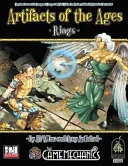
Artifacts of the Ages: Rings
 72
72

Artifacts of the Ages: Rings
Wiker and Astleford’s *Artifacts of the Ages: Rings* presents a robust system for developing dynamic magical jewelry in RPGs. Its strength lies in the detailed mechanics for item progression, moving beyond mere stat boosts to offer evolving abilities that can truly shape a character's narrative arc. The concept of a ring that grows with the player, as detailed in the chapter on 'Gemstone Resonance,' is particularly well-executed, providing concrete examples of how power can manifest and change. However, the book's focus is intensely mechanical. While it offers a solid framework, the narrative prompts for integrating these items into a campaign feel somewhat underdeveloped compared to the intricate rules presented. A game master would need to do substantial work to fully flesh out the lore behind each artifact. Nonetheless, for those seeking to create truly memorable, evolving magical items, this volume offers a valuable, albeit system-heavy, resource.
📝 Description
72
Artifacts of the Ages: Rings, published in 2006, details magical gems and jewelry for RPGs.
Published in 2006, Artifacts of the Ages: Rings by J. D. Wiker and Gary Astleford builds on the foundation of their earlier work, Swords and Staves. This volume specifically addresses the design and integration of magical gems and jewelry within role-playing game systems. It establishes a framework for creating items that increase in power alongside player characters, moving beyond static enchantments to dynamic magical artifacts.
The book aims to give game masters practical tools for crafting narrative elements through magical objects. It is intended for tabletop role-playing game designers and game masters looking to enrich their campaigns with sophisticated magical item systems. Those interested in game mechanics that support character progression and narrative development, especially in fantasy settings, will find this useful. Players who appreciate the lore and mechanics behind magical items may also gain a deeper understanding of how such systems are constructed.
This book enters the esoteric tradition of magical item creation, focusing on the principles behind imbuing objects with power that responds to the user. Unlike purely historical or theoretical texts on enchantment, it frames these concepts within a game design context. The idea of items 'growing' with their wielders echoes certain magical philosophies where a tool's efficacy is tied to the practitioner's development and intent. It translates these deeper concepts into tangible mechanics for interactive fantasy worlds.
💡 Why Read This Book?
• Understand how to design magic rings that gain power alongside player characters, moving beyond static enchantments as detailed in the 'Gemstone Resonance' mechanics. • Learn to create narrative hooks tied to artifact evolution, transforming simple jewelry into items with their own developing destinies, as explored in the book's design principles. • Acquire concrete game mechanics for evolving magical items, specifically applying to rings and gems, which can be directly integrated into tabletop RPG campaigns published after 2006.
⭐ Reader Reviews
Honest opinions from readers who have explored this book.
❓ Frequently Asked Questions
What kind of magical items does Artifacts of the Ages: Rings focus on?
This 2006 book specifically details magical gems and jewelry, with a primary emphasis on rings. It provides rules for creating these items so they grow in power as player characters advance in the game.
How does this book differ from Artifacts of the Ages: Swords and Staves?
While both books offer rules for magical artifacts, 'Rings' builds upon the foundational system from 'Swords and Staves' by concentrating solely on gems and jewelry, providing specialized mechanics for these item types.
Is this book useful for players or only for game masters?
Primarily, the book is designed for game masters and RPG designers. However, players interested in the mechanics and lore behind magic items, and how they are developed, will find it offers valuable insights into game design.
What is the core mechanic for the items in this book?
The core mechanic is 'growing artifacts,' where magical items, particularly rings and gems, increase in power, gain new abilities, or change their properties as the player character progresses through levels or achieves specific in-game goals.
When was Artifacts of the Ages: Rings first published?
The book was first published on July 11, 2006, by J. D. Wiker and Gary Astleford, continuing the series that began with 'Artifacts of the Ages: Swords and Staves'.
Does the book offer lore or just game mechanics?
It offers a framework for mechanics that directly encourage lore integration. While it provides systems, the book prompts GMs to develop the specific stories and histories behind these evolving rings and gems.
🔮 Key Themes & Symbolism
Evolving Artifacts Mechanics
The central innovation presented is the concept of 'growing artifacts,' a system designed to make magical items feel dynamic rather than static. Unlike typical RPG magic items that possess fixed properties, the rings detailed in this work are designed to increase in power, unlock new abilities, or even change their nature as the player character advances. This approach encourages a deeper connection between the player and their gear, transforming a simple enchanted ring into a companion in the character's journey. The book provides concrete rules and examples for implementing this progression, moving beyond simple numerical increases to more complex transformations.
Narrative Integration of Magic
Beyond mere mechanics, the book emphasizes how 'growing artifacts' can serve as potent narrative devices. The idea is that a ring's evolution isn't arbitrary but tied to the character's deeds, discoveries, or even the artifact's own hidden history. This intertwines the item's destiny with the player character's, offering opportunities for plot hooks, character development, and world-building. The authors suggest that these items can possess their own 'true nature' and 'destiny,' which gradually reveals itself, adding layers of mystery and purpose to the player's quest.
Gems and Jewelry as Power Sources
The focus on rings and other jewelry highlights the symbolic and practical significance of gems and precious metals within esoteric traditions and fantasy lore. The book explores how these materials can serve as conduits or reservoirs for magical energy. It moves beyond generic enchantments to consider the specific properties that different gemstones might imbue, offering a more granular and thematically rich approach to magical item creation. This allows for greater variety and customization in the types of magical effects players can encounter or wield.
Advancement Beyond Static Bonuses
Artifacts of the Ages: Rings directly challenges the convention of static magic item bonuses prevalent in many role-playing games. By presenting a system where items grow, the authors provide a method for creating gear that remains relevant and exciting throughout a campaign. This is achieved through structured progression, where a ring might start with a simple enchantment and evolve into a more complex artifact with multiple abilities. This ensures that powerful items feel earned and continue to contribute meaningfully to gameplay long after they are acquired.
💬 Memorable Quotes
Direct passages from the work, attributed to the author.
“magic gems and jewelry that grow in power as wielders advance”
— This core concept highlights the book's departure from static magic items. It posits that artifacts are not fixed in their potency but can scale with a character's development, suggesting a more dynamic and integrated approach to magical gear in game design.
“The greatest tales of epic fantasy sometimes begin with a humble little bauble”
— This opening line sets the stage for the book's focus on seemingly simple objects that hold immense, often hidden, potential. It underscores how even a small item like a ring can be the catalyst for grand adventures and profound discoveries.
“these amazing items gradually reveal the full extent of their powers--and, often, the true nature of their destinies.”
— This emphasizes the narrative potential of the items. It suggests that the power and purpose of these magical artifacts are not immediately apparent but unfold over time, mirroring the character's own journey of discovery and growth.
“Continuing the rules developed in Artifacts of the Ages: Swords and Staves”
— This indicates that the book is part of a larger system or series. It builds upon established design principles, suggesting a coherent framework for creating various types of magical artifacts within a consistent game world.
“a ring that renders the wearer invisible.”
— This serves as a classic, tangible example of a magical ring's power, illustrating the fundamental type of effect the book aims to explore, while also hinting at the broader potential for unique and impactful magical abilities.
🌙 Esoteric Significance
Tradition
While not explicitly tied to a single esoteric lineage like Hermeticism or Kabbalah, the work draws upon archetypal concepts found across various mystical traditions. The idea of objects imbued with power, capable of influencing fate and revealing hidden truths, echoes themes found in talismanic magic and artifact-based lore prevalent in Western esotericism. It adapts these ancient notions into a structured game mechanic, making the concept of magically potent items accessible and functional within a modern fantasy context.
Symbolism
The primary symbols are the ring itself, representing cycles, unity, and commitment, and the gems, often seen as concentrated sources of natural or cosmic energy. In many traditions, rings can serve as focal points for power or as keys to unlocking hidden potentials. The book utilizes this inherent symbolism to justify the evolving nature of the artifacts, suggesting that the ring acts as a vessel and amplifier for the wearer's own developing magical or spiritual capacity.
Modern Relevance
Contemporary tabletop RPG design, particularly in indie and narrative-focused games, often seeks to create items that are more than just stat upgrades. The principles explored in Artifacts of the Ages: Rings—item evolution, narrative integration, and player-item synergy—resonate with modern design philosophies. Thinkers and designers interested in emergent gameplay and player agency through equipment might find the foundational ideas here still relevant for creating unique and memorable magical items in current gaming landscapes.
👥 Who Should Read This Book
• Tabletop RPG Game Masters seeking to create unique, evolving magical items for their campaigns, moving beyond standard treasure tables. • RPG Designers interested in developing game mechanics that tie item progression directly to character advancement and narrative arcs. • Fantasy enthusiasts who appreciate the lore and mechanics behind magical artifacts and want to understand how they are constructed in game systems.
📜 Historical Context
Artifacts of the Ages: Rings, released in July 2006, emerged within a vibrant period for tabletop role-playing game design, particularly for systems like Dungeons & Dragons (which saw its 3.5 edition in 2003) and Pathfinder (launched in 2009). The early to mid-2000s were characterized by a push towards more detailed rule sets and expansive customization options. Authors like J. D. Wiker and Gary Astleford were contributing to this trend by offering specialized supplements that addressed specific game mechanics. Their approach to 'growing artifacts' offered an alternative to the more common static magic item tables. While rival systems might have focused on broader world-building or simplified mechanics, Wiker and Astleford's work provided intricate systems for GMs. This focus on detailed item progression was part of a larger design philosophy aiming to increase player engagement through evolving character and equipment capabilities.
📔 Journal Prompts
The concept of 'growing artifacts' and its potential to mirror character growth.
Reflecting on the symbolic significance of rings in fantasy narratives.
How a ring's 'true nature' might be revealed through player actions.
Designing a unique magical ring based on the 'Gemstone Resonance' principles.
The narrative impact of a 'humble little bauble' becoming a central artifact.
🗂️ Glossary
Growing Artifacts
Magical items, such as rings, that increase in power, gain new abilities, or change their properties as the player character advances in level or achieves specific in-game milestones.
Gemstone Resonance
A mechanic or concept explored in the book that likely details how specific gemstones within a ring contribute to or influence its magical properties and evolution.
Artifact Destiny
The idea that magical items possess their own inherent purpose or path of development, which gradually unfolds throughout the course of a campaign, often intertwined with the wearer's fate.
Static Enchantment
A traditional magical item enchantment that provides a fixed bonus or effect, unchanging regardless of the character's progress or the item's history.
Conduit/Amplifier
Describes the role of magical items, particularly jewelry like rings, in channeling or magnifying magical energies, often tied to the wearer's own innate abilities or spiritual state.
Narrative Integration
The process of combining the history, powers, and evolution of magical items directly into the storyline of a role-playing game campaign.
Humble Little Bauble
A phrase used to describe seemingly simple or common objects that possess hidden magical potential, serving as the genesis for significant adventures or discoveries.
This book appears in 1 collection
🔮 Readers Also Liked
Browse all →









From the “Spellcraft” Collection
View all →





More Free Occult Philosophy Books
View all →