Pooh and the Ancient Mysteries
 83
83

Pooh and the Ancient Mysteries
John Tyerman Williams's 'Pooh and the Ancient Mysteries' is a fascinating, if occasionally overstretched, exploration of the Hundred Acre Wood's hidden depths. The strength of the work lies in its audacious premise: that A.A. Milne's creations are vessels for profound esoteric wisdom. Williams skillfully draws parallels between Pooh's quests for honey and existential yearnings, and Piglet's anxieties mirroring the seeker's trepidation. A particularly engaging section examines Eeyore's melancholic disposition not as mere sadness, but as a symbol of the shadow self or the acceptance of life's inherent difficulties. However, the book sometimes falters under the weight of its own interpretation, occasionally forcing connections that feel tenuous. The primary limitation is the subjective nature of esoteric readings; what one reader sees as profound symbolism, another might dismiss as projection. Ultimately, Williams offers an imaginative and often insightful re-reading of beloved characters, inviting readers to look beyond the surface of familiar tales.
📝 Description
83
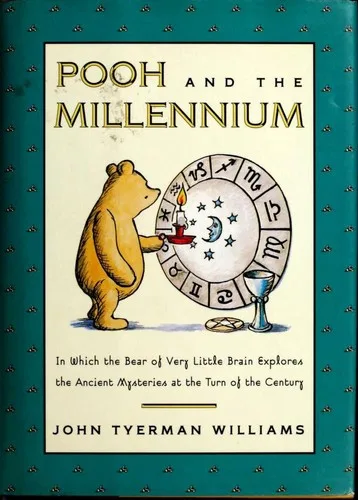
Published in 2000, John Tyerman Williams' 'Pooh and the Ancient Mysteries' reads A.A. Milne's tales through an esoteric lens.
This book examines the Winnie-the-Pooh stories by A.A. Milne, proposing that the characters and narratives of the Hundred Acre Wood hold hidden meanings. Williams suggests these simple tales reflect ancient philosophical and mystical traditions, as well as deeper psychological archetypes and spiritual quests. The work is for readers interested in comparative mythology, literary criticism with a spiritual focus, and unconventional interpretations of familiar texts. It will appeal to those familiar with Jungian psychology, esoteric symbolism, and occult thought who seek a unique perspective on children's literature. The author posits that even the most innocent stories can contain hidden wisdom.
The book joins a tradition of finding hidden meanings in folklore and children's stories, a practice seen in authors like J.R.R. Tolkien. Williams's work aligns with a late 20th-century cultural interest in archetypal psychology, influenced by Carl Jung's theories on the collective unconscious. It applies Jungian frameworks to understand universal symbols within Milne's narratives, viewing characters like Pooh and Piglet as embodiments of archetypal figures.
💡 Why Read This Book?
• Gain a new appreciation for the archetypal symbolism within seemingly simple children's literature, specifically how characters like Pooh embody the innocent seeker's journey. • Understand the application of Jungian psychology to literary analysis, exploring how Piglet's fears can represent the initial hesitations of engaging with the unconscious. • Discover how the structure of the Hundred Acre Wood can be interpreted as a symbolic landscape for personal growth, akin to the stages described in ancient mystery traditions.
⭐ Reader Reviews
Honest opinions from readers who have explored this book.
❓ Frequently Asked Questions
What is the main argument of 'Pooh and the Ancient Mysteries'?
The book argues that A.A. Milne's Winnie-the-Pooh stories contain layers of esoteric meaning, with characters and narratives reflecting ancient philosophical concepts and psychological archetypes, particularly those influenced by Carl Jung's work.
When was 'Pooh and the Ancient Mysteries' first published?
The book was first published in the year 2000, offering a modern esoteric interpretation of classic literature.
Does the book use specific esoteric traditions as a framework?
Yes, it frequently draws on concepts from Jungian psychology and broader archetypal symbolism, framing the Hundred Acre Wood as a symbolic landscape for inner exploration.
Is this book suitable for fans of Winnie-the-Pooh who aren't interested in esoteric subjects?
While the core appeal is to those interested in esoteric studies and literary symbolism, readers who deeply love the Pooh stories might find the novel interpretations intriguing, though the dense symbolic analysis may be challenging.
What kind of analysis does John Tyerman Williams apply?
Williams employs a method that blends literary criticism with esoteric and psychological analysis, looking for hidden meanings, archetypes, and symbolic resonances within the text of the Pooh stories.
Can this book be considered a scholarly work?
It functions as a work of popular esoteric scholarship, applying academic concepts like archetypal psychology to a beloved literary subject in an accessible yet analytical manner.
🔮 Key Themes & Symbolism
Archetypal Characters
The work posits that each character in the Hundred Acre Wood embodies distinct archetypes. Pooh represents the innocent seeker, driven by simple desires but beginning profound journeys. Piglet embodies the anxious but loyal companion, highlighting the courage required to face the unknown. Eeyore, with his pervasive melancholy, can be seen as representing the shadow self or the acceptance of life's inherent difficulties, a crucial element in psychological integration and spiritual maturity. These characterizations are analyzed as reflections of universal human psychological patterns identified by figures like Carl Jung.
Symbolic Landscape
The Hundred Acre Wood is presented not merely as a setting but as a symbolic geography representing the inner world or the stages of spiritual development. Locations like the 'Dark and Gloomy Place' or the journey to find the North Pole are interpreted as metaphors for confronting internal challenges or working through the path of self-discovery. The woods function as a contained universe where characters encounter obstacles and revelations, mirroring the journey of the soul through various states of consciousness and existential inquiry.
The Quest for Meaning
At its heart, the book interprets the seemingly mundane adventures of Pooh and his friends as a profound quest for meaning and belonging. Pooh's constant search for honey is seen as a metaphor for the pursuit of fulfillment or enlightenment. The characters' interactions and their attempts to solve problems (like finding Eeyore's tail) represent the human drive to understand the world and one's place within it, often through community and shared experience, echoing themes found in ancient wisdom traditions.
Psychological Integration
Williams explores how the dynamics between the characters can be understood through the lens of psychological integration. The contrasting personalities and their reactions to events illustrate different facets of the psyche. The book suggests that the harmonious, albeit sometimes chaotic, coexistence of these diverse personalities within the Hundred Acre Wood represents a model for integrating different aspects of the self, acknowledging both light and shadow for wholeness, a core concept in depth psychology.
💬 Memorable Quotes
Direct passages from the work, attributed to the author.
“Pooh's search for honey is a symbol of the soul's yearning for sustenance and fulfillment.”
— This interpretation suggests that Pooh's simple, everyday desire for honey is elevated to a spiritual quest, representing a universal human drive for something more, whether that be knowledge, peace, or connection.
“Piglet’s anxieties mirror the initial hesitations of the spiritual aspirant.”
— This highlights how Piglet's timidity when facing new or frightening situations can be seen as analogous to the trepidation many feel when beginning inner work or confronting the unknown aspects of themselves.
“Eeyore’s perspective offers a necessary grounding in the acceptance of life's inherent difficulties.”
— This views Eeyore's persistent gloom not as a flaw, but as a vital element within the collective psyche of the Hundred Acre Wood, representing the acknowledgment and integration of life's challenges.
“The Hundred Acre Wood serves as a microcosm of the human psyche.”
— This suggests that the entire world inhabited by Pooh and his friends functions as a symbolic representation of the internal landscape, where different characters and events correspond to various psychological states and processes.
“The journey to find the North Pole is a metaphor for the search for ultimate truth or self-knowledge.”
— This interprets the characters' attempts to locate the North Pole, despite their confusion, as a symbolic representation of the often-misguided but persistent human effort to discover fundamental truths about existence and the self.
🌙 Esoteric Significance
Tradition
This work fits within the broader tradition of esoteric literary criticism, which seeks to uncover hidden philosophical, psychological, or spiritual meanings within texts. It draws heavily on Jungian psychology, particularly its concepts of archetypes and the collective unconscious, to interpret the characters and narratives of Winnie-the-Pooh. While not strictly adhering to a single lineage like Hermeticism or Gnosticism, it employs a symbolic hermeneutics that appeals to the interpretive methods found across many esoteric traditions, focusing on the universal patterns of the human psyche.
Symbolism
Key symbols include Pooh himself, representing the innocent seeker or the id driven by primal desires (like honey), yet capable of journeys of discovery. The Hundred Acre Wood functions as a symbolic landscape, mirroring the inner world or the stages of spiritual development, with specific locations like the 'Dark and Gloomy Place' representing confronting the shadow or the unknown. Eeyore's tail, a recurring lost object, can symbolize the search for wholeness or the fragmented self that needs to be reassembled.
Modern Relevance
Contemporary thinkers and practitioners in areas such as depth psychology, comparative mythology, and even some forms of mindfulness and self-help literature can find relevance in Williams's approach. The book's exploration of archetypes and the symbolic journey of self-discovery appeals to modern therapeutic practices that utilize narrative and metaphor. It offers a framework for understanding how seemingly simple stories can serve as potent vehicles for exploring complex psychological and existential themes relevant to contemporary spiritual and personal development.
👥 Who Should Read This Book
• Students of Jungian psychology and archetypal symbolism seeking practical examples of theory applied to familiar texts. • Literary critics interested in unconventional analytical approaches and the hidden meanings within children's literature. • Readers exploring personal growth and self-discovery who appreciate metaphorical interpretations of classic narratives.
📜 Historical Context
Published in 2000, 'Pooh and the Ancient Mysteries' arrived during a period of renewed interest in Jungian psychology and archetypal interpretations of literature. The late 20th century saw scholars and enthusiasts exploring hidden meanings in popular culture, a trend influenced by earlier works like Mircea Eliade's comparative studies of religion and myth. John Tyerman Williams's book contributes to this by applying these lenses to A.A. Milne's beloved characters. It follows in a lineage that includes figures who saw deep symbolism in children's stories, though often from more explicitly mythological or religious standpoints. While not directly engaging with a specific competing school of thought in terms of literary analysis, it implicitly contrasts with purely literal or historical readings of Milne's work. Its reception was primarily within niche circles interested in esoteric literature and symbolic analysis, rather than mainstream literary criticism.
📔 Journal Prompts
Pooh's perpetual search for honey as a metaphor for the soul's yearning.
Piglet's anxieties and the courage required to face the unknown.
Eeyore's melancholic acceptance as a symbol of integrating life's difficulties.
The Hundred Acre Wood as a map of the inner psychological landscape.
The dynamics between characters as reflections of different facets of the self.
🗂️ Glossary
Archetype
A universal, inherited pattern of thought or imagery derived from the collective unconscious, as proposed by Carl Jung. These are fundamental symbolic representations of human experience.
Collective Unconscious
A concept introduced by Carl Jung, referring to a layer of the unconscious mind shared by all humanity, containing archetypes and primal experiences.
Shadow Self
In Jungian psychology, the unconscious, repressed, or unacknowledged aspects of the personality, often perceived as negative but essential for wholeness.
Symbolic Landscape
A setting or environment that is interpreted as representing inner psychological states, spiritual journeys, or abstract concepts, rather than existing purely literally.
Esoteric Hermeneutics
The practice of interpreting texts through the lens of hidden, mystical, or symbolic meanings, often drawing on traditions outside mainstream understanding.
Id
In Freudian and related psychological theories, the part of the mind that contains instinctual drives, urges, and desires, operating on the pleasure principle.
Inner Work
Personal psychological or spiritual development undertaken through introspection, self-reflection, and the exploration of one's own consciousness.