Plotinus the Platonist
 79
79

Plotinus the Platonist
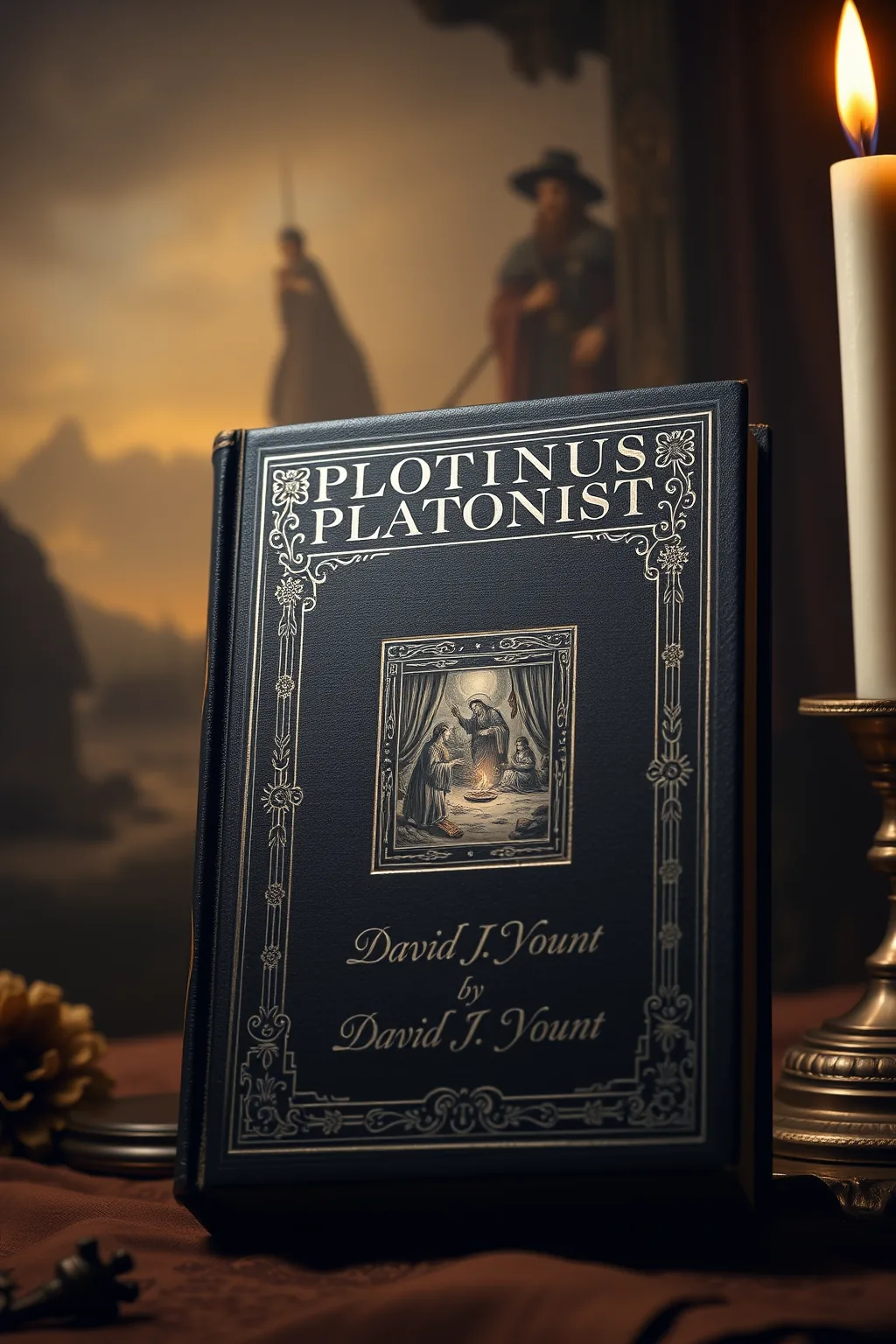
David J. Yount's *Plotinus the Platonist* provides a lucid and accessible entry into the dense philosophical world of Plotinus. The book's strength lies in its clear exposition of complex metaphysical concepts, particularly the emanationist structure of reality from the ineffable One. Yount excels at translating Plotinus's abstract thought into comprehensible terms without oversimplifying. A potential limitation for seasoned scholars might be the book's introductory nature; it covers essential ground but doesn't always push into the most debated contemporary interpretations of Plotinus's work. For instance, the discussion on the ascent of the soul, while accurate, could benefit from a deeper engagement with how modern philosophers of religion interpret this mystical journey. Nevertheless, for anyone seeking a solid foundation in Plotinian philosophy, this work is a commendable guide.
📝 Description
79
David J. Yount's 2014 book examines Plotinus not just as a Platonist, but as a distinct philosophical voice.
Plotinus the Platonist by David J. Yount analyzes the philosopher Plotinus, a central figure in Neoplatonism. Yount argues that Plotinus was more than a follower of Plato; he was a unique thinker whose ideas profoundly influenced Western thought and occult philosophy. The book traces Plotinus's intellectual background and his original contributions, moving beyond simple historical summaries to dissect the core principles of his philosophical system. This work is intended for serious students of philosophy, especially those interested in the Hellenistic era and the evolution of Platonic ideas. It will also interest scholars of comparative religion and intellectual history who want to understand the origins of mystical and metaphysical traditions. Readers with a background in classical philosophy or a specific focus on Neoplatonism will find this book useful for gaining a deeper understanding of Plotinus's doctrines and their consequences.
Yount situates Plotinus in the intellectual climate of the 3rd century CE, a time of considerable philosophical and religious change in the Roman Empire. Plotinus taught in Rome around the middle of that century, affecting many thinkers. His philosophy developed through engagement with, and often critique of, earlier Platonic schools and Stoicism. It also foreshadowed Gnostic and later Christian theology. The book addresses the difficulties in interpreting Plotinus's Enneads, the collection of his writings assembled by his student Porphyry. Yount systematically explains Plotinus's main ideas, such as the nature of the One, the emanation of Intellect and Soul from the One, and the soul's journey back to its divine source. It details the structure of Plotinian metaphysics, showing the hierarchical relation between different hypostases and their ethical and spiritual implications.
Plotinus the Platonist places its subject within the lineage of Neoplatonism, a philosophical system that profoundly shaped esoteric traditions. Plotinus's ideas about emanation from a supreme, unified source (the One) and the soul's ascent back to that source became fundamental concepts in many mystical and occult schools. His metaphysics, detailing the hierarchy of being and the structure of reality, provided a framework for understanding divine principles and spiritual practices. This book examines how Plotinus synthesized Platonic philosophy with other contemporary ideas, creating a complex system that influenced later Gnostic, Hermetic, and Christian mystical thought, thereby cementing his importance in the history of Western esotericism.
💡 Why Read This Book?
• Gain a foundational understanding of Plotinus's concept of the 'One,' the ultimate, ineffable source from which all reality emanates, a core tenet of Neoplatonism that influenced centuries of mystical thought. • Explore the structure of Plotinus's metaphysical system, including the hypostases of Intellect (Nous) and Soul (Psyche), as presented in the 3rd century CE, providing context for later esoteric developments. • Understand the ethical and spiritual implications of Plotinus's philosophy, particularly his ideas on the soul's 'return' to the One, offering insights into ancient contemplative practices.
⭐ Reader Reviews
Honest opinions from readers who have explored this book.
❓ Frequently Asked Questions
What is Neoplatonism and how does Plotinus fit into it?
Neoplatonism is a philosophical system that emerged in the 3rd century CE, with Plotinus as its most influential figure. It builds upon Plato's philosophy, emphasizing a hierarchical structure of reality emanating from an ultimate, transcendent 'One'.
Who was Plotinus and when did he live?
Plotinus was a prominent philosopher of the 3rd century CE, considered the founder of Neoplatonism. He taught in Rome around 250 CE, and his teachings were compiled by his student Porphyry into the *Enneads*.
What are the main ideas presented in Plotinus the Platonist?
The book focuses on Plotinus's core metaphysical concepts, such as the One, Intellect, and Soul, and the process of emanation and return. It also explores his views on ethics, beauty, and the spiritual life.
Is this book suitable for beginners in philosophy?
Yes, *Plotinus the Platonist* is written to be accessible to those new to Plotinus or Neoplatonism, explaining complex ideas clearly without assuming extensive prior knowledge.
What is the significance of Porphyry in relation to Plotinus?
Porphyry was a devoted student of Plotinus who compiled and edited his teacher's philosophical writings into the collection known as the *Enneads*. His work is crucial for our understanding of Plotinus's thought.
How did Plotinus influence later thought?
Plotinus's philosophy deeply influenced subsequent philosophical and religious traditions, including Christian theology (e.g., Augustine), Islamic philosophy, and various Western esoteric movements for centuries.
🔮 Key Themes & Symbolism
The Transcendent One
The work meticulously details Plotinus's concept of the One, an ultimate, supra-rational principle that is beyond being and comprehension. It is not a 'thing' but the source from which all existence, including Intellect and Soul, emanates. Yount emphasizes how this concept differs from simpler monotheistic deities, positing a radical transcendence that necessitates a mystical apprehension rather than intellectual grasp, influencing later mystical traditions.
Emanation and Return
A central theme is the dynamic process of emanation, where reality flows from the One in a series of descending hypostases: Intellect (Nous) containing the Platonic Forms, and Soul (Psyche), which animates the material world. The book also details the soul's journey of 'return,' a spiritual ascent through purification and contemplation, aiming to re-unite with its divine origins in the One, a key aspiration in Neoplatonic practice.
The Structure of Reality
Yount explains Plotinus's hierarchical metaphysical structure, detailing the distinct roles and relationships between the One, Intellect, and Soul. This framework provides an ordered cosmos where the material world, though distant from the One, is still imbued with divine presence through the Soul's activity. This ordered cosmology offered a coherent worldview for many in late antiquity and beyond.
Beauty and the Good
The book examines Plotinus's profound ideas on beauty and its connection to the Good. Beauty is not merely aesthetic but a manifestation of the divine, a lure that draws the soul upward. The contemplation of beauty, whether in the sensible or intellectual realms, serves as a crucial step in the soul's journey back to its source, a concept that resonated deeply with artists and mystics.
💬 Memorable Quotes
Direct passages from the work, attributed to the author.
“The One is not anything; it is beyond being.”
— This statement captures the radical transcendence of Plotinus's ultimate principle. It signifies that the One cannot be categorized or described using attributes applicable to existing entities, pointing towards a reality that is fundamentally different from all that we know.
“The soul's aim is to ascend towards the One.”
— This highlights the teleological nature of Plotinian philosophy. The entire purpose of the soul's existence is to undergo a process of purification and contemplation to achieve union with its divine source.
“Intellect contains all Forms.”
— This interpretation of Plotinus's concept of Nous (Intellect) emphasizes its role as the repository of all Platonic Forms or Ideas. It is the realm where perfect archetypes exist, serving as the blueprint for the sensible world.
“Beauty calls the soul home.”
— This captures Plotinus's view of beauty as a spiritual catalyst. Experiencing beauty, especially in its higher forms, serves to remind the soul of its divine origin and encourages its return journey towards the One.
💡 Key Ideas
Editorial paraphrase of the work's core concepts — not direct quotes.
The sensible world is a reflection of the intelligible.
This paraphrase illustrates the Neoplatonic principle of hierarchy and emanation, where the physical realm is a less perfect, derivative copy of the true reality found in the field of Intellect and the Forms.
🌙 Esoteric Significance
Tradition
Plotinus is the foundational figure of Neoplatonism, a philosophical system deeply influential in numerous esoteric traditions, including Hermeticism, Gnosticism, and later Western magical and mystical paths. While distinct from Hermeticism's focus on divine texts or Gnosticism's dualism, Neoplatonism provided a metaphysical framework and contemplative methodology that resonated with and informed these lineages, offering a sophisticated cosmology of emanation and spiritual ascent.
Symbolism
Key symbols in Plotinus's thought include the 'One' as an ineffable, unified source; the 'Intellect' (Nous) as the field of perfect Forms and divine thought; and the 'Soul' (Psyche) as the intermediary principle that bridges the spiritual and material worlds. The concept of 'ecstasy' or 'henosis' (union) represents the ultimate goal of the soul's return to the One, symbolizing a state of supra-rational communion beyond ordinary consciousness.
Modern Relevance
Contemporary thinkers and practitioners in fields ranging from philosophy of religion to depth psychology and various forms of esotericism continue to draw inspiration from Plotinus. His emphasis on inner experience, the hierarchy of being, and the possibility of transcendent knowledge informs modern discussions on consciousness, metaphysics, and contemplative practices. Schools exploring Hermeticism and various forms of Western esotericism often reference Plotinus as a core part of their intellectual heritage.
👥 Who Should Read This Book
["• Students of classical philosophy: Those seeking a deeper understanding of the transition from ancient Greek philosophy to later metaphysical systems will find Yount's clear exposition invaluable.", "• Seekers of esoteric knowledge: Individuals interested in the roots of Western mysticism and esotericism will benefit from understanding Neoplatonism's core tenets and its influence.", "• Comparative religion scholars: Researchers examining the development of philosophical and theological ideas in late antiquity will find this book a crucial resource for Plotinus's specific contributions."]
📜 Historical Context
Plotinus developed his philosophy in the vibrant intellectual milieu of the 3rd century CE Roman Empire, a period marked by the decline of classical paganism and the rise of new religious and philosophical movements. He lectured in Rome from around 245 CE onwards, drawing students and intellectual engagement from various backgrounds. His work emerged in dialogue with, and often as a critique of, earlier Platonic traditions and Stoicism, seeking to synthesize and elevate Platonic thought to address the spiritual yearnings of his time. While Plotinus himself was not directly engaged in public controversy, his ideas presented a sophisticated alternative to emerging Gnostic systems and laid crucial groundwork for later Christian theology, notably influencing Augustine of Hippo. His student Porphyry's meticulous compilation of his writings into the *Enneads* ensured Plotinus's enduring legacy.
📔 Journal Prompts
Plotinus's concept of the 'One' is beyond description; how does this idea challenge conventional understanding of divinity?
Reflect on the 'procession' of Intellect and Soul from the One as described by Plotinus.
What are the practical implications of the soul's 'return' to the One for modern contemplative practices?
Analyze the role of beauty in Plotinus's philosophy as a catalyst for spiritual ascent.
Consider the hierarchical structure of Plotinian reality and its potential impact on one's worldview.
🗂️ Glossary
The One
Plotinus's ultimate principle of reality, an ineffable, transcendent source that is beyond being and all predication. It is the origin from which all existence emanates.
Intellect (Nous)
The second hypostasis in Plotinus's system, the field of divine thought containing all Platonic Forms. It is the first emanation from the One and the source of Soul.
Soul (Psyche)
The third hypostasis, which emanates from Intellect. It bridges the intelligible and sensible worlds, animating the universe and possessing the capacity to ascend back to its divine origins.
Emanation
The Neoplatonic concept of reality flowing or proceeding from a higher principle (the One) in a series of descending levels or hypostases, without diminishing the source.
Return (Epistrophe)
The spiritual journey of the soul to ascend from the material world back to its ultimate source in the One, achieved through purification, virtue, and contemplation.
Hypostasis
A fundamental reality or level of being in Plotinus's metaphysics, particularly referring to the One, Intellect, and Soul.
Enneads
The collected works of Plotinus, compiled and edited by his student Porphyry. The title refers to the nine treatises within each of the six books.
🔮 Readers Also Liked
Browse all →








More by David J. Yount
All books →
More Free Occult Philosophy Books
View all →