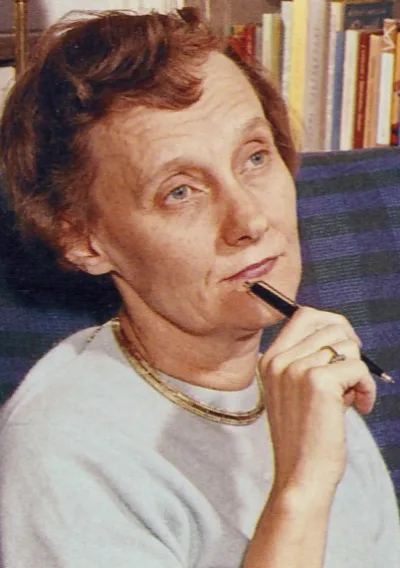
Astrid Lindgren was a globally celebrated Swedish author known for beloved children's books and advocacy for children's and animal rights.
Astrid Lindgren, born in 1907, was a Swedish writer and screenwriter, renowned internationally for her prolific contributions to children's literature. Her most famous creations include characters like Pippi Longstocking, Emil of Lönneberga, and Karlsson-on-the-Roof, alongside fantasy novels such as Mio, My Son and Ronia the Robber's Daughter. Lindgren authored over 30 books, which have been translated into numerous languages and sold millions worldwide, making her one of the most translated authors globally. Beyond her literary achievements, she was a significant public figure, advocating strongly for children's rights, individuality, and animal welfare. Her activism led to legislative changes, including a law against corporal punishment of children and improved animal protection regulations, earning her prestigious awards like the Right Livelihood Award.
Literary Career and Impact
Astrid Lindgren's writing career began in earnest after winning a competition held by Rabén & Sjögren publishing house. Her first major success was Pippi Longstocking, a book that, despite initial rejection from another publisher, became a global phenomenon and has since been translated into at least 100 languages. Her works, characterized by a unique spirit and often challenging conventional authority, have resonated with readers across generations. Lindgren also worked as a secretary and journalist before dedicating herself fully to writing. She received numerous accolades throughout her career, including the Hans Christian Andersen Medal, and her books have achieved immense commercial success, with hundreds of millions sold worldwide. Her profound impact on children's literature is recognized through awards and memorials established in her name.
Advocacy and Social Influence
Lindgren's influence extended far beyond the realm of literature, as she became a prominent advocate for social causes. Her public stance against corporal punishment, articulated in speeches like 'Never Violence!', contributed to the introduction of a Swedish law prohibiting such practices. Furthermore, her passionate campaigning for animal welfare, alongside veterinarian Kristina Forslund, resulted in the passage of 'Lex Lindgren,' a significant animal protection law. Lindgren's engagement with political issues was also evident in her critique of Sweden's high marginal tax rates, famously detailed in her satirical allegory 'Pomperipossa in Monismania,' which some believe contributed to a shift in government. Despite her political engagement, she remained a lifelong supporter of the Social Democrats.
Legacy and Recognition
The enduring legacy of Astrid Lindgren is marked by numerous honors and memorials. The Astrid Lindgren Prize, established by her publisher, recognizes Swedish children's authors annually. Following her death in 2002, the Swedish government instituted the Astrid Lindgren Memorial Award, the world's largest prize for children's and youth literature. Her original manuscripts are preserved in UNESCO's Memory of the World Register. Lindgren's image has graced Swedish currency, and her life has been the subject of biographical films. Places like Astrid's Wellspring sculpture and the Astrid Lindgren's World theme park further commemorate her contributions, ensuring her stories and the values they represent continue to inspire.
Key Ideas
- Children's rights and individuality
- Animal welfare
- Non-violent upbringing
- Critique of taxation policies
- Respect for children's autonomy
Books by
4 free public domain books · Read online or download