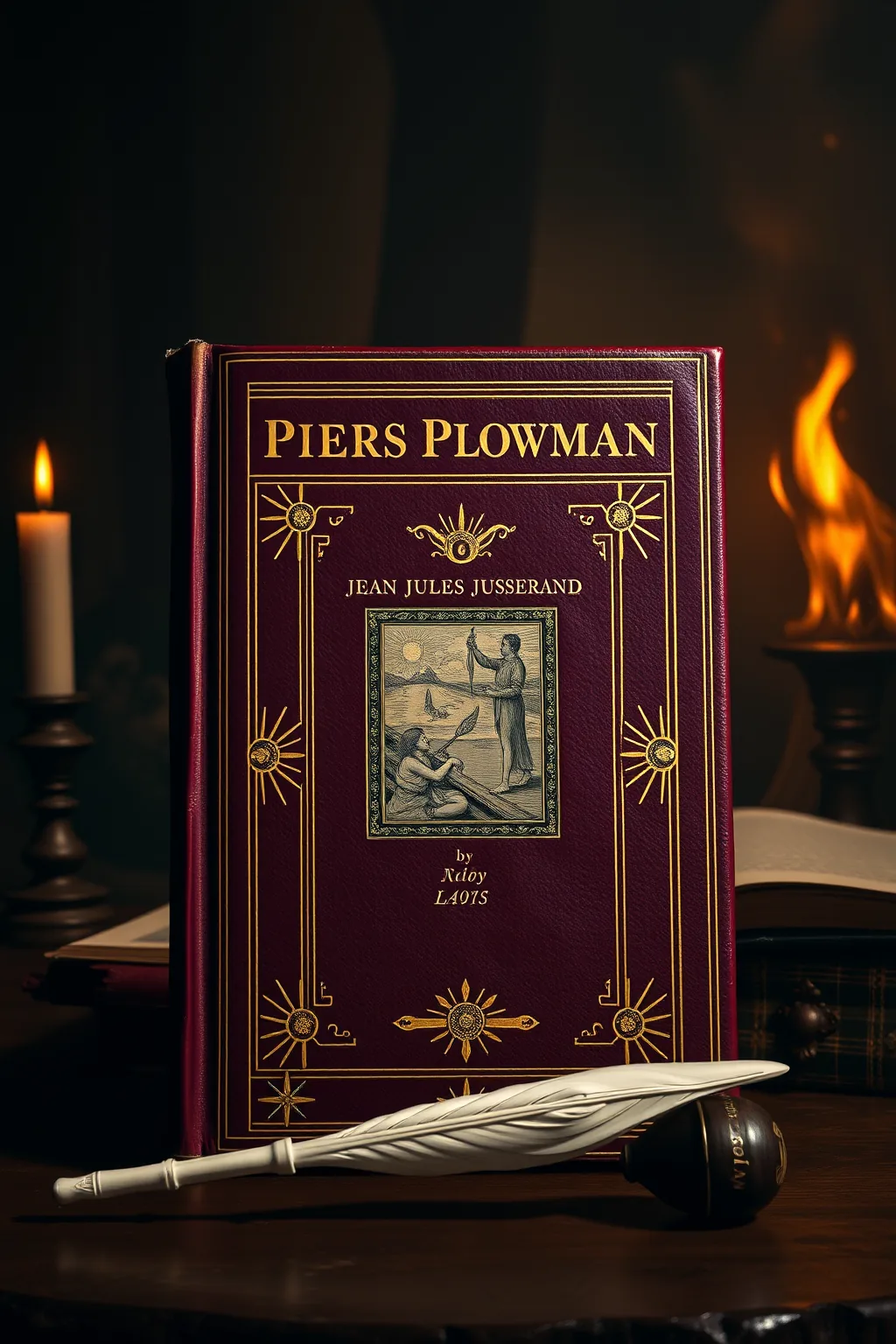
Piers Plowman: A Contribution to the History of English Mysticism
 80
80

Piers Plowman: A Contribution to the History of English Mysticism



Piers Plowman: A Contribution to the History of English Mysticism by Jean Jules Jusserand is a seminal work that offers a deep dive into the mystical underpinnings of one of the most celebrated allegorical poems in English literature. For modern esoteric seekers, this text provides a rich tapestry of medieval thought and practice, illuminating the spiritual quests of the past. Jusserand's scholarly approach makes the esoteric accessible, providing clear and insightful commentary on the mystical themes present in Piers Plowman. The book's historical context, combined with its detailed analysis, makes it an essential read for anyone interested in the evolution of mystical traditions. The digitization of this work by Google and its availability on the Internet Archive further enhances its accessibility, making it a valuable resource for contemporary esoteric studies.
📝 Description
80
Jean Jules Jusserand analyzed the mystical dimensions of William Langland's 'Piers Plowman' in 1899.
Jean Jules Jusserand's 1899 study, 'Piers Plowman: A Contribution to the History of English Mysticism,' examines the spiritual and symbolic content of William Langland's allegorical poem. Jusserand approaches Langland's work not merely as literature but as a significant expression of medieval English mysticism. He traces the poem's allegorical journey, focusing on its representations of spiritual striving and the search for divine truth.
The book aims to illuminate the esoteric currents within 'Piers Plowman,' demonstrating how the poem reflects the contemplative practices and theological concerns of its time. Jusserand's detailed analysis unpacks the poem's complex imagery and its engagement with themes of salvation, earthly life, and the divine. It serves as a guide to understanding the mystical underpinnings that scholars and spiritual seekers might find in Langland's text.
This study situates Langland's 'Piers Plowman' within the broader tradition of Christian mysticism, particularly as it manifested in England during the late medieval period. Jusserand explores how the poem's allegorical structure and its depictions of spiritual journeys align with esoteric concepts of divine illumination and the soul's ascent. It connects Langland's work to a lineage of texts and practices concerned with inner spiritual experience and the direct apprehension of the divine, distinguishing these from more conventional theological discourse.
💡 Why Read This Book?
Reading Piers Plowman: A Contribution to the History of English Mysticism today offers a unique perspective on the mystical traditions that have shaped Western spirituality. Modern esoteric seekers will gain a deeper understanding of the contemplative practices and theological beliefs that have endured through the centuries. This book provides a bridge between the medieval world and contemporary spiritual inquiry, enriching the reader's esoteric journey with historical depth and scholarly insight.
⭐ Reader Reviews
Honest opinions from readers who have explored this book.
❓ Frequently Asked Questions
What is the main focus of Piers Plowman: A Contribution to the History of English Mysticism?
The main focus of this book is the exploration of mystical themes within the allegorical poem Piers Plowman by William Langland. It delves into the spiritual and contemplative dimensions of the work, providing a historical context for English mysticism.
Who should read this book?
This book is ideal for scholars of medieval literature, mystics, and anyone interested in the esoteric traditions of the past. It offers valuable insights into the mystical traditions that have shaped Western spirituality.
Is this book available digitally?
Yes, this book has been digitized by Google from the library of Harvard University and is available on the Internet Archive, making it accessible to a wider audience.
🔮 Key Themes & Symbolism
Medieval Mysticism
The book examines the mystical traditions of the Middle Ages, focusing on the esoteric elements within 'Piers Plowman.' It explores how these traditions influenced the spiritual quests of the era, providing a body of contemplative practices and hidden knowledge.
Symbolism and Allegory
Jusserand's analysis highlights the profound symbolism and allegory within 'Piers Plowman,' revealing the deeper meanings and spiritual messages embedded within the text. This theme is crucial for understanding the mystical range of the Middle Ages.
Spiritual Contemplation
The book emphasizes the importance of spiritual contemplation in medieval mysticism, offering insights into the contemplative practices that defined the era. It invites readers to engage in their own spiritual journeys, reflecting on the esoteric wisdom within 'Piers Plowman'.
💡 Key Ideas
Editorial paraphrase of the work's core concepts — not direct quotes.
The path to spiritual enlightenment is often hidden within the mundane.
This quote underscores the esoteric theme of finding divine truths in everyday life.
In the quiet of the soul, the whispers of the divine can be heard.
This passage highlights the importance of inner contemplation in the mystical journey.
The symbolic range of the Middle Ages is a map to the divine.
This quote emphasizes the significance of symbolism in medieval mysticism.
The seeker of truth must explore the depths of the soul to find enlightenment.
This passage encourages readers to engage in deep spiritual introspection.
The mystical traditions of the Middle Ages offer a body of spiritual wisdom.
This quote underscores the profound esoteric knowledge embedded within medieval literature.
🌙 Esoteric Significance
Tradition
This book belongs to the Hermetic tradition of esoteric thought, emphasizing the hidden knowledge and spiritual wisdom that can be found within medieval literature. It explores the mystical undercurrents of 'Piers Plowman,' revealing the profound symbolism and allegory that define this tradition.
Symbolism
Key symbols in the book include the allegorical figures and landscapes that represent spiritual journeys and divine truths. These symbols are crucial for understanding the mystical messages embedded within the text.
Modern Relevance
The esoteric insights provided by Jusserand are still relevant today, as modern practitioners of mysticism and seekers of spiritual wisdom continue to explore the less-obvious layers of medieval literature. This book offers a timeless exploration of the mystical landscape, inviting readers to engage in their own spiritual quests.
👥 Who Should Read This Book
Beginners in the field of mysticism will find this book accessible due to its clear explanations of esoteric concepts and historical context. Scholars of medieval literature will appreciate the deep analysis and insights provided by Jusserand. Spiritual seekers will benefit from the contemplative practices and spiritual wisdom embedded within the text. Practitioners of mysticism will find this book an invaluable resource for exploring the mystical undercurrents of medieval English spirituality.
📜 Historical Context
Written in the late 19th century, 'Piers Plowman: A Contribution to the History of English Mysticism' provides a comprehensive analysis of one of the most influential works of medieval literature. The book was important during its time as it shed light on the mystical and contemplative traditions that defined the spiritual range of the Middle Ages. Jusserand's work has since become a cornerstone in the study of English mysticism, influencing scholars and seekers alike with its useful insights into the esoteric themes within 'Piers Plowman.'
📔 Journal Prompts
Reflect on the mystical symbols within 'Piers Plowman' and their significance in your own spiritual journey.
Consider the role of contemplative practices in your daily life and how they can enhance your spiritual growth.
Explore the esoteric themes within medieval literature and their relevance to modern spirituality.
Journal about the hidden knowledge and divine truths you have discovered within 'Piers Plowman.'
Reflect on the spiritual range of the Middle Ages and how it influences your understanding of mysticism.
🗂️ Glossary
Hermetic Tradition
An esoteric tradition that emphasizes the pursuit of hidden knowledge and spiritual wisdom.
Allegory
A symbolic representation of abstract ideas or principles, often used in literature to convey deeper meanings.
Medieval Mysticism
The spiritual and contemplative practices of the Middle Ages, focusing on the mystical experiences and divine truths.
Symbolism
The use of symbols to represent abstract ideas or spiritual concepts within literature and art.
Spiritual Contemplation
The practice of deep introspection and meditation to achieve spiritual enlightenment and divine connection.
This book appears in 1 collection
🔮 Readers Also Liked
Browse all →






From the “Christian Mysticism” Collection
View all →







More Free Mysticism & Contemplation Books
View all →