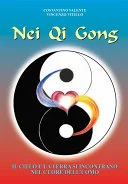
Nei Qi Gong
 77
77

Nei Qi Gong
Vincenzo Vitillo and Costantino Valente’s *Nei Qi Gong* attempts to bridge the gap between technical instruction and philosophical inquiry, presenting Qi Gong as a means of apprehending reality. The book’s strength lies in its commitment to experiential learning, eschewing dry didacticism for a more personal exploration drawn from master practitioners. However, this approach can sometimes lead to a lack of concrete detail for those seeking specific methods. The discussion surrounding the energetic-physical aspects and their role in personal growth is particularly illuminating, offering a valuable perspective on how subtle energy work can influence one's life. A passage detailing the subjective experience of cultivating *Qi* offers a glimpse into the transformative potential discussed. While it avoids becoming a mere technical manual, it occasionally falters in providing enough substance for serious practitioners. The work ultimately serves as a thoughtful introduction to the broader implications of Qi Gong practice.
📝 Description
77
Published in 2019, Nei Qi Gong by Vitillo and Valente moves beyond technical instruction.
This text explores Eastern energetic practices, focusing on Nei Qi Gong as a means to understand reality and foster personal growth. It draws on the contributors' experiences to detail the practical applications of these arts. The book is for individuals interested in a philosophical and experiential approach to Qi Gong, emphasizing personal development through energy cultivation. Readers should be willing to connect physical practice with psychological and existential reflection. The work was published in 2019, a time of renewed interest in Eastern traditions, yet it seeks to offer a more substantial perspective amid potential superficial engagement. It aims to provide a grounded view of these practices in an era of globalized information. The core ideas center on unifying internal and external cultivation methods. Qi Gong is presented as a way to build energetic awareness, influencing how one perceives the self and the environment. The authors highlight the connections between physical health, mental focus, and spiritual understanding, treating them as parts of a single system.
Nei Qi Gong is situated within the broader tradition of internal Chinese alchemy and cultivation arts, often referred to as Neidan. These practices seek to refine the body's vital energy, or Qi, to achieve greater health, longevity, and spiritual awareness. The book's focus on integrating internal (Nei) and external aspects reflects a core principle in many Daoist cultivation systems, where physical exercises and meditative techniques are combined to harmonize the individual with the Dao. It offers a contemporary interpretation of these age-old methods, bridging them with modern psychological inquiry.
💡 Why Read This Book?
• Gain an understanding of Nei Qi Gong as a tool for comprehending reality, as explored through the personal experiences of masters referenced in the text. • Discover how Qi Gong practices, particularly the integration of internal and external methods as discussed in the book's early sections, can foster personal growth. • Appreciate the energetic-physical dimensions of Qi Gong, moving beyond simple exercise to see its application in understanding one's relationship with the world, a perspective highlighted since the 2019 publication.
⭐ Reader Reviews
Honest opinions from readers who have explored this book.
❓ Frequently Asked Questions
Is Nei Qi Gong suitable for absolute beginners?
While not a technical manual, the book offers a philosophical introduction to Nei Qi Gong. Beginners interested in the conceptual and personal growth aspects, rather than step-by-step instruction, will find it valuable. It serves as a guide to understanding the practice's broader implications.
What is the difference between internal and external Qi Gong mentioned in the book?
The work distinguishes between 'internal' practices focusing on cultivating and directing internal energy (Qi) and 'external' methods that might involve physical forms or external stimuli. Nei Qi Gong, as presented, seeks to integrate these dimensions for holistic development.
What kind of personal growth does Nei Qi Gong facilitate according to the authors?
The book posits that Nei Qi Gong facilitates growth by enhancing one's comprehension of reality and self-awareness. It suggests that cultivating energy impacts not just physical health but also mental clarity and existential understanding.
Does the book provide specific exercises or techniques?
No, the book explicitly states it is not a technical manual. Instead, it focuses on the study and understanding of Nei Qi Gong, drawing from master experiences rather than providing direct instructions for exercises.
Who are Vincenzo Vitillo and Costantino Valente?
They are the authors of Nei Qi Gong, first published in 2019. Their work aims to illuminate the practice of Nei Qi Gong through a blend of personal experience and philosophical exploration.
What is the primary focus of the book's exploration of Qi Gong?
The primary focus is on Nei Qi Gong as a means to understand reality and personal growth. It emphasizes the energetic-physical aspects and their role in developing a deeper connection to oneself and the world.
🔮 Key Themes & Symbolism
Energetic Cultivation
The book emphasizes Nei Qi Gong as a practice centered on the cultivation and direction of internal energy, or Qi. It explores how this cultivation extends beyond mere physical health, influencing mental states and one's perception of reality. The interplay between internal energy work and external physical forms is presented as crucial for a comprehensive understanding and application of these disciplines, moving towards a holistic energetic awareness.
Personal Growth Framework
Nei Qi Gong is framed not solely as a set of exercises but as a profound tool for personal development. The authors draw on master experiences to illustrate how engaging with these practices can lead to enhanced self-understanding and a more nuanced perception of the world. This growth is depicted as an unfolding process, where energetic awareness becomes integral to psychological and existential maturation.
Understanding Reality
A central thesis is that Nei Qi Gong offers a unique lens through which to comprehend the nature of reality. By developing sensitivity to subtle energies, practitioners are encouraged to see beyond superficial appearances and engage with existence on a deeper level. The book suggests that this energetic perception is intrinsically linked to one's personal journey and capacity for insight.
Integration of Internal & External
The text highlights the necessity of balancing internal energetic cultivation with external physical practices. This integration is presented as key to unlocking the full potential of Qi Gong. The book moves beyond favoring one over the other, advocating for a unified approach where mind, body, and energy work in concert to achieve balance and profound personal transformation.
💬 Memorable Quotes
Direct passages from the work, attributed to the author.
“This book is a small light to orient oneself in the field of Eastern 'internal and external' practices.”
— This statement sets the tone, positioning the work as a guide rather than an exhaustive manual. It acknowledges the complexity of Eastern energetic arts and offers a foundational perspective for readers navigating this terrain.
“Not a technical manual but a study drawn from personal experiences of Masters.”
— This clarifies the book's purpose: to offer insights and understanding derived from lived experience rather than prescriptive instructions. It signals an approach focused on wisdom and application, not just technique.
“Considered from the energetic-physical point of view, but also as a tool for understanding reality.”
— This highlights the many-sided nature of Nei Qi Gong as presented. It emphasizes that the practice's benefits extend beyond the physical to encompass cognitive and existential dimensions, impacting how one perceives and interacts with the world.
“Experience of Masters informs the study of Nei Qi Gong.”
— This emphasizes the authority and depth derived from the accumulated wisdom of experienced practitioners. It assures the reader that the content is grounded in practical application and long-term engagement with the subject matter.
💡 Key Ideas
Editorial paraphrase of the work's core concepts — not direct quotes.
The work explores the connection between energy cultivation and personal growth.
This paraphrased concept underscores the book's focus on self-development. It suggests that the practices discussed are intended to foster internal change and maturation, integrating energetic awareness with psychological evolution.
🌙 Esoteric Significance
Tradition
The work engages with Taoist internal alchemy and energetic cultivation practices, a lineage deeply rooted in traditional Chinese esoteric thought. It departs from purely monastic or strictly medical interpretations by emphasizing Nei Qi Gong as a tool for general personal growth and philosophical understanding, accessible to lay practitioners. It aligns with broader esoteric principles of mind-body unity and the cultivation of subtle energies for spiritual development.
Symbolism
While not heavily reliant on overt symbolism in the manner of Western esotericism, the concept of *Qi* itself is a fundamental symbol representing vital life force. The distinction between internal (*Nei*) and external cultivation points to the symbolic interplay between the unseen energetic body and the manifest physical form. The practice implies a journey inward, symbolizing the path of self-discovery and transformation.
Modern Relevance
Contemporary thinkers and practitioners in fields like somatic psychology, integrative health, and even certain strands of consciousness studies can find resonance in *Nei Qi Gong*'s approach. Its emphasis on embodied awareness and the cultivation of subtle energies aligns with modern explorations of interoception and the mind-body connection, offering a practical framework for those seeking experiential paths to well-being and expanded perception.
👥 Who Should Read This Book
• Students of Eastern philosophies and energetic practices seeking a conceptual framework beyond technical instruction. • Individuals interested in personal development who wish to explore the mind-body connection through cultivated energy work. • Practitioners of martial arts or meditation seeking to deepen their understanding of internal cultivation principles.
📜 Historical Context
Published in 2019, *Nei Qi Gong* enters a contemporary landscape fascinated by Eastern wellness traditions. The early 21st century has seen a significant global diffusion of practices like Qi Gong and Tai Chi, often adapted for Western audiences through channels like yoga studios and community centers. This period is marked by a tension between the popularization of these arts, sometimes leading to superficial interpretations, and a renewed academic and practitioner interest in their deeper philosophical and energetic dimensions. While earlier generations might have encountered these practices through figures like Lin Yutang or scholarly works on Taoism, Vitillo and Valente's contribution arrives in an era of digital accessibility and a burgeoning self-help industry. Competing schools of thought in the wellness sphere, from mindfulness meditation to various forms of somatic experiencing, offer alternative paths to self-cultivation, making the specific focus on energetic principles within *Nei Qi Gong* a distinct proposition.
📔 Journal Prompts
The concept of Nei Qi Gong as a 'small light' for orientation.
Personal experiences of internal vs. external energetic practices.
How does cultivating 'Qi' influence your understanding of reality?
Reflecting on the energetic-physical dimensions of personal growth.
The role of master experiences in studying Eastern practices.
🗂️ Glossary
Nei Qi Gong
Literally 'Internal Energy Work/Skill.' Refers to practices focused on cultivating, refining, and directing the body's vital energy (Qi) through specific methods, often emphasizing internal awareness and intention.
Qi
The fundamental concept of vital life force or energy that permeates all things in traditional Chinese philosophy and medicine. Its cultivation and circulation are central to practices like Qi Gong.
Internal Practices
Aspects of Qi Gong that focus primarily on cultivating and manipulating internal energy (Qi) within the body, often through breathwork, visualization, and meditative states.
External Practices
Aspects of Qi Gong that may involve physical postures, movements, or external stimuli to facilitate the flow and cultivation of Qi, often complementing internal methods.
Energetic-Physical
Describes the interplay and integration between the body's physical structure and its subtle energy systems (Qi). Practices often aim to harmonize these two aspects.
Personal Growth
In the context of Nei Qi Gong, this refers to the development of self-awareness, mental clarity, emotional balance, and a deeper understanding of one's existence through energetic cultivation.
Understanding Reality
The book's perspective on how Nei Qi Gong can enhance one's perception and comprehension of the world, moving beyond superficial observation to a more fundamental awareness.