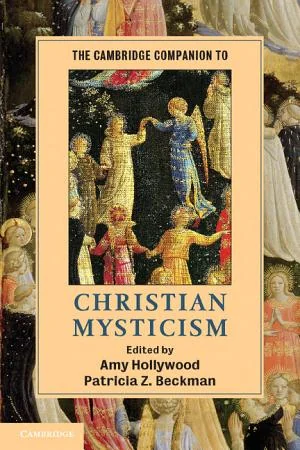
The Cambridge Companion to Christian Mysticism
 77
77

The Cambridge Companion to Christian Mysticism
Amy Hollywood and Patricia Z. Beckman's edited collection, *The Cambridge Companion to Christian Mysticism*, is a substantial academic undertaking. Its strength lies in the breadth of its coverage and the rigor of its contributors, who collectively dismantle easy assumptions about what constitutes Christian mystical experience. The section on the Desert Fathers, for instance, effectively contextualizes early asceticism as a precursor to later, more overtly 'mystical' expressions. However, the volume occasionally suffers from its own interdisciplinary ambition; some essays, while expert, assume a level of prior knowledge that might leave readers new to the specific figures or concepts feeling somewhat adrift. A particular point of contention might be the treatment of the later medieval period, where the sheer volume of material necessitates a degree of compression. Nevertheless, the scholarly apparatus and the ambition to offer a new critical approach to the study of mysticism make this an essential resource for serious researchers.
📝 Description
77
This 2017 collection examines Christian mysticism from the 3rd to the 17th centuries.
Edited by Amy Hollywood and Patricia Z. Beckman, this volume presents essays on Christian mysticism, covering the period from the 3rd to the 17th centuries. It brings together contributions from scholars across theology, religious studies, and history. The book aims to offer a comprehensive look at the Christian mystical tradition and to suggest new methods for its analysis. It discusses various figures and movements, moving past simple definitions to show the complex nature of mystical experience in Christianity.
The companion places Christian mysticism in its historical and intellectual setting. It traces its development from early Christian ascetics and desert fathers through medieval mystics to the Reformation. The essays highlight the connections between theological ideas, monastic life, and personal spiritual quests. The focus on the 3rd through 17th centuries allows for a detailed study of key periods and significant changes within the tradition.
This collection addresses Christian mysticism, a tradition concerned with direct, intuitive knowledge of the divine. It delves into a period rich with figures and texts that sought to articulate experiences beyond ordinary language and rational comprehension. By examining concepts like apophatic theology and divine union, the book engages with the core concerns of esoteric spirituality. It also considers the historical development and scholarly interpretation of these practices, situating them within broader religious and intellectual currents.
💡 Why Read This Book?
• Gain a nuanced understanding of the historical development of Christian mysticism from its 3rd-century origins through the Reformation, appreciating figures like the Desert Fathers and their enduring influence. • Explore the diverse methodologies for studying mysticism, moving beyond simplistic definitions to engage with complex theoretical approaches articulated by leading scholars. • Analyze specific mystical concepts, such as apophatic theology and the interpretation of ecstatic states, within their historical and theological contexts, as presented in dedicated chapters.
⭐ Reader Reviews
Honest opinions from readers who have explored this book.
❓ Frequently Asked Questions
What time period does *The Cambridge Companion to Christian Mysticism* primarily cover?
The book focuses significantly on Christian mysticism from the 3rd century through the 17th century, encompassing foundational periods like early monasticism and the high Middle Ages up to the Reformation.
Who are the editors of *The Cambridge Companion to Christian Mysticism*?
The volume is edited by Amy Hollywood and Patricia Z. Beckman, who have gathered contributions from numerous leading authorities and younger scholars in the field.
What kind of approach does the book take to studying mysticism?
It offers an interdisciplinary guide, presenting a bold new approach to the study of mysticism by drawing on various academic disciplines and critical methodologies.
Does the book focus only on well-known mystics?
While it covers major figures, the companion also explores a wide range of lesser-known mystics and movements, providing a comprehensive overview of the tradition.
Is this book suitable for beginners in the study of Christian mysticism?
The book is an academic guide, best suited for advanced students and scholars. It provides a clear introduction but also engages with complex scholarly debates and theoretical frameworks.
What is the significance of the 3rd to 17th centuries for Christian mysticism?
This period is crucial as it includes the development of early Christian asceticism, the flowering of medieval mysticism (e.g., Meister Eckhart), and the mystical currents during the Reformation, laying the groundwork for subsequent traditions.
🔮 Key Themes & Symbolism
Asceticism and the Body
The work critically examines the role of ascetic practices in Christian mysticism, not merely as denial, but as a means of spiritual transformation and engagement with the divine. It explores how early Christian ascetics and later mystics understood the body as a site for spiritual discipline and encounter, moving beyond simplistic notions of renunciation to a more integrated view of physical and spiritual life.
Apophatic Theology
A significant focus is placed on apophatic or negative theology – the understanding of God through negation, emphasizing what God is not rather than what God is. This approach, prominent in figures like Pseudo-Dionysius the Areopagite, is explored as a method for transcending conceptual limitations and achieving direct, ineffable experience of the divine, challenging rationalistic approaches to spirituality.
Mystical Experience and Interpretation
The companion studies the nature of mystical experiences themselves – visions, ecstasies, and the sense of divine union – and the diverse ways these experiences have been interpreted throughout Christian history. It highlights the interplay between the subjective experience and the theological, social, and literary frameworks used to articulate and validate these profound encounters.
Diversity of Christian Mystical Traditions
This volume underscores the variety within Christian mysticism, moving beyond a monolithic view. It encompasses the contemplative traditions of the East and West, the heterodox movements, and the mystical dimensions found in various theological currents, demonstrating that Christian mysticism is not a single, unified path but a complex, evolving range of spiritual seeking.
💬 Memorable Quotes
Direct passages from the work, attributed to the author.
“The volume articulates a bold new approach to the study of mysticism.”
— This statement highlights the book's intention to move beyond traditional scholarship, offering innovative theoretical frameworks and methodologies for understanding the phenomenon of Christian mysticism.
“An interdisciplinary guide to the study of Christian mysticism.”
— This emphasizes the book's broad scope, drawing insights from theology, history, philosophy, and literary studies to provide a comprehensive and complex perspective on the subject.
“Emphasis on the 3rd through the 17th centuries.”
— This temporal focus signifies the book's deep engagement with the foundational and transformative periods of Christian mystical development, from early monasticism to the Reformation era.
“Written by leading authorities and younger scholars.”
— This points to the diverse range of expertise within the collection, ensuring both established perspectives and fresh, contemporary analyses of Christian mystical traditions.
“Provides a clear introduction to the Christian mystical life.”
— This suggests that despite its academic rigor, the book aims to be accessible, offering foundational knowledge for those seeking to understand the essence and practice of Christian mysticism.
🌙 Esoteric Significance
Tradition
This work fits within the broad lineage of Western Esotericism by critically examining a core component: Christian mysticism. While not strictly an esoteric text itself, it provides scholarly context for figures and movements often studied by esotericists. It engages with traditions often considered part of the esoteric canon, such as Dionysian thought and certain strands of monastic spirituality, analyzing their historical development and interpretive frameworks.
Symbolism
The companion explores key symbols within Christian mysticism, such as the 'divine darkness' in apophatic theology, representing the ineffable nature of God beyond human comprehension. It also touches upon the symbolism of the 'burning heart' or ecstatic union, signifying the direct, passionate encounter with the divine that transcends ordinary consciousness and earthly attachment.
Modern Relevance
Contemporary thinkers and practitioners in fields like contemplative Christianity, depth psychology (especially Jungian), and various schools of Western Esotericism find value in this companion's scholarly approach. It informs modern discussions on consciousness, spiritual experience, and the historical roots of practices seeking direct apprehension of the divine, providing a critical lens for contemporary spiritual seekers.
👥 Who Should Read This Book
• Advanced students of theology and religious studies: Gain a comprehensive overview of Christian mystical traditions and current scholarly debates, enhancing your research and understanding. • Scholars of Western Esotericism: Access critical historical and theological analyses of movements and figures often central to esoteric studies, providing essential context. • Serious practitioners of contemplative prayer: Deepen your appreciation for the historical and theological underpinnings of your practice, understanding its roots from the 3rd century onwards.
📜 Historical Context
Published in 2012, *The Cambridge Companion to Christian Mysticism* arrived at a time when academic interest in mysticism, particularly Western esotericism, was robust. The volume engages with the legacy of scholars like Bernard McGinn, whose work on the history of Western spirituality had already established significant groundwork. It situates itself within ongoing scholarly conversations, implicitly addressing earlier, sometimes hagiographic, approaches by offering critical, interdisciplinary analyses. The focus on the 3rd through 17th centuries allows for a deep examination of periods often dominated by theological debate, such as the medieval flourishing of mystics like Meister Eckhart and the impact of the Reformation, which saw both increased mystical expression and heightened theological scrutiny, sometimes leading to censorship or suspicion of heterodoxy.
📔 Journal Prompts
The concept of apophatic theology and its implications for understanding the divine.
The role of the Desert Fathers in shaping early Christian mystical asceticism.
Interpreting the ecstatic experiences described by medieval mystics.
The relationship between scripture and direct mystical apprehension.
Comparing the mystical currents before and after the Reformation.
🗂️ Glossary
Apophatic Theology
A theological approach that seeks to describe God by focusing on what God is not, emphasizing the divine ineffability and transcendence beyond human concepts and language.
Asceticism
A practice of rigorous self-discipline and self-denial, often involving fasting, prayer, and solitude, undertaken for spiritual growth and closer union with the divine.
Contemplation
A form of prayer or meditation characterized by deep, silent attention to God, often involving a direct, intuitive apprehension of the divine presence.
Divine Union
The mystical experience of becoming one with God, a state of profound communion and inseparable connection with the divine, central to many mystical traditions.
Mystical Experience
A subjective experience of profound spiritual significance, often characterized by a sense of transcendence, ineffability, and direct encounter with the divine or ultimate reality.
Theosis
An Eastern Orthodox Christian concept meaning 'deification' or 'union with God,' describing the process by which believers, through grace, become more like God.
Via Negativa
Another term for apophatic theology, referring to the 'negative way' of approaching God by negating all positive attributes and descriptions.
🔮 Readers Also Liked
Browse all →









More Free Occult Philosophy Books
View all →