Ba-duan-jin
 83
83

Ba-duan-jin
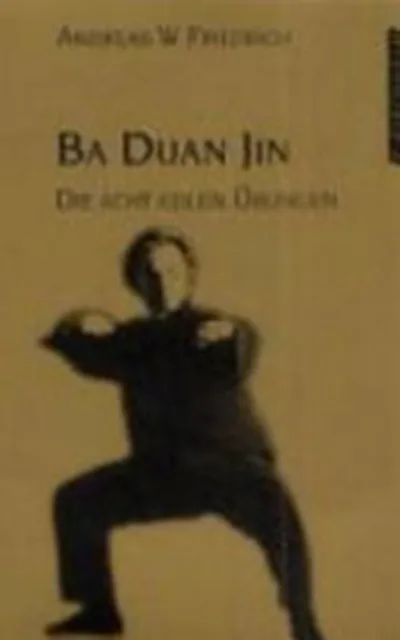
Andreas W. Friedrich's Ba-duan-jin offers a welcome scholarly counterpoint to the often-simplified Western understanding of Qigong. The author commendably grounds the Eight Brocades in their historical and philosophical Taoist roots, moving beyond a purely physical interpretation. Friedrich’s exploration of Qi, Jing, and Shen within the context of the movements is particularly insightful, providing a framework for deeper practice. However, the book's academic tone, while a strength for serious study, may alienate those seeking a more accessible, step-by-step guide to performing the exercises. A notable passage detailing the energetic pathways stimulated by the "Raising the Hands" sequence exemplifies the work's depth, though it assumes a certain familiarity with meridian theory. Ultimately, Ba-duan-jin is a valuable resource for practitioners and scholars willing to engage with its rigorous analysis of this ancient practice.
📝 Description
83
Andreas W. Friedrich's 1994 book critically examines the Ba-duan-jin Qigong exercise.
Andreas W. Friedrich's 1994 book, Ba-duan-jin, offers a scholarly analysis of the traditional Chinese Qigong exercise known as the "Eight Brocades." It moves beyond simple instruction to study the practice's historical development, philosophical roots, and energetic principles. Friedrich focuses on the esoteric dimensions, explaining how these movements aim to cultivate internal vitality and balance the body's subtle energies. The book is intended for individuals with a serious interest in the deeper aspects of Qigong and traditional Chinese energetic practices. It is suitable for practitioners who have surpassed basic levels and desire a more thorough grasp of the underlying theory and historical background. Scholars of comparative religion, East Asian studies, and alternative healing traditions will also find valuable content.
Friedrich's work appeared during the 1990s, a time of increasing Western interest in Qigong and Chinese martial arts. This popularity sometimes outpaced rigorous academic or historical research. The book places the Ba-duan-jin within the lineage of Taoist cultivation practices, tracing its potential origins and evolution. It serves as a counterpoint to purely secular or simplified interpretations, highlighting the integrated mind-body-spirit approach central to its traditional form. This publication fostered a more detailed understanding of Chinese energetic arts within Western esoteric communities.
Friedrich situates the Ba-duan-jin within the broader tradition of Taoist internal cultivation, a set of practices focused on harmonizing body, mind, and spirit to achieve balance and vitality. This approach emphasizes the manipulation and circulation of vital energy, or 'qi,' through specific postures, movements, and mental focus. The book examines how these elements, when applied systematically, are believed to affect the body's energetic pathways, or meridians, and its subtle energy centers. It contrasts this integrated view with more recent, often simplified, interpretations that may overlook the deep philosophical and spiritual underpinnings inherent in the practice's traditional form.
💡 Why Read This Book?
• Gain a rigorous understanding of the Eight Brocades' Taoist philosophical underpinnings, moving beyond superficial exercise routines. • Learn to differentiate between simplified modern interpretations and the original energetic cultivation goals of Ba-duan-jin, as explored in the historical context section. • Comprehend the specific roles of Qi, Jing, and Shen in the practice, as detailed in Friedrich's analysis of the core concepts.
⭐ Reader Reviews
Honest opinions from readers who have explored this book.
❓ Frequently Asked Questions
What is the historical origin of the Ba-duan-jin as discussed by Friedrich?
Friedrich situates the Ba-duan-jin within the lineage of Taoist cultivation practices, suggesting its roots lie in ancient Chinese energetic arts, evolving over centuries.
Does Ba-duan-jin by Andreas W. Friedrich include illustrations or step-by-step instructions?
While the book focuses on philosophical and historical analysis, it does not primarily serve as an instructional manual with detailed visual guides for performing the movements.
What is 'Qi' according to Friedrich's interpretation of Ba-duan-jin?
Friedrich explains 'Qi' as the vital energy or life force that flows through the body's meridians, which the Ba-duan-jin exercises are designed to cultivate and harmonize.
Is Ba-duan-jin by Friedrich suitable for absolute beginners in Qigong?
The book's scholarly approach and focus on theory may be challenging for absolute beginners; it is best suited for those with some prior experience or interest in the deeper aspects of Qigong.
What is the significance of the 'Eight Brocades' title?
The 'Eight Brocades' refers to the eight distinct sets of movements within the Qigong form, each likened to a precious brocade for its intricate and beneficial energetic effects.
When was Andreas W. Friedrich's book on Ba-duan-jin first published?
Andreas W. Friedrich's work on Ba-duan-jin was first published in 1994, contributing to Western understanding of the practice.
🔮 Key Themes & Symbolism
Energetic Cultivation through Movement
The book emphasizes that Ba-duan-jin is more than physical exercise; it's a method for cultivating vital energy (Qi). Friedrich details how specific postures and coordinated movements are designed to stimulate the body's energetic channels, known as meridians. This cultivation aims to harmonize the flow of Qi, leading to improved health and spiritual balance, a central tenet in Taoist internal alchemy practices.
The Triad of Jing, Qi, and Shen
Friedrich intricately explores the Taoist concept of Jing (essence), Qi (vital energy), and Shen (spirit) as they are addressed by the Ba-duan-jin. The exercises are presented as a means to refine Jing, circulate and replenish Qi, and ultimately elevate Shen. This integrated approach highlights the holistic nature of the practice, aiming for the refinement of the entire being, not just physical vitality.
Historical and Philosophical Roots
A significant theme is tracing the Ba-duan-jin's lineage within Taoism. Friedrich moves beyond contemporary interpretations to connect the practice with ancient Taoist principles of longevity, health, and spiritual development. The work examines how these movements were historically used as a form of self-cultivation, integral to the broader Taoist path of living in accordance with the Tao.
Meridian Stimulation and Organ Harmony
The book explores the specific energetic effects of each of the eight brocades. Friedrich explains how particular movements are intended to open, clear, and strengthen specific meridian pathways, thereby influencing the health and function of associated internal organs. This detailed analysis underscores the diagnostic and therapeutic potential inherent in the practice when understood correctly.
💬 Memorable Quotes
Direct passages from the work, attributed to the author.
“The Eight Brocades are not merely physical postures but energetic conduits.”
— This statement captures the core argument that the value of Ba-duan-jin lies in its ability to interact with and cultivate the body's subtle energy system (Qi), rather than just providing a physical workout.
“Harmony of Jing, Qi, and Shen is the ultimate aim.”
— This highlights the holistic goal of the practice: refining physical essence (Jing), circulating vital energy (Qi), and elevating consciousness (Shen) for complete well-being.
“Each movement serves to unblock and invigorate specific meridians.”
— This points to the detailed understanding of Traditional Chinese Medicine (TCM) principles within Ba-duan-jin, where each exercise has a targeted effect on the body's energy pathways.
“The practice requires a cultivated mind as much as a supple body.”
— This emphasizes the crucial role of focused intention and mental presence in Qigong, indicating that the effectiveness of Ba-duan-jin is amplified by mindful engagement.
“Understanding the Taoist context illuminates the practice's depth.”
— This suggests that a superficial approach misses the profound philosophical and spiritual dimensions of Ba-duan-jin, urging readers to engage with its broader cultural and spiritual heritage.
🌙 Esoteric Significance
Tradition
Ba-duan-jin, as analyzed by Friedrich, firmly resides within the Taoist tradition of internal cultivation and energetic alchemy. It is a practice aimed at harmonizing the body's vital forces, refining essence, and nurturing the spirit, aligning with core Taoist principles of longevity and achieving balance with the natural order (the Tao). The work fits within this lineage by focusing on the systematic development of Qi, a fundamental concept in Taoist energetics, and its connection to physical and spiritual well-being.
Symbolism
The "Eight Brocades" themselves are symbolic, each representing a specific energetic action or benefit akin to a precious, finely woven fabric. Friedrich likely explores motifs such as the dragon, tiger, or crane, which often appear in Taoist arts and symbolize different energetic qualities or correspondences with natural forces. The cyclical nature of the movements can symbolize the perpetual flow and transformation of Qi within the cosmos and the individual body.
Modern Relevance
Contemporary practitioners of Taoist arts, Qigong masters seeking to deepen their theoretical knowledge, and scholars of comparative religion and East Asian studies continue to draw on works like Friedrich's. The renewed interest in mind-body practices and holistic health globally means that rigorous analyses of traditions like Ba-duan-jin remain relevant for those seeking authentic, historically grounded methods for energetic cultivation beyond superficial trends.
👥 Who Should Read This Book
• Advanced Qigong practitioners seeking to understand the historical and philosophical depth of the Eight Brocades beyond mere physical execution. • Scholars of East Asian Studies or Comparative Religion interested in the esoteric dimensions of Taoist practices and traditional Chinese energetic arts. • Individuals exploring alternative healing modalities who wish to grasp the theoretical underpinnings of Qi cultivation and meridian theory as presented in a scholarly context.
📜 Historical Context
Published in 1994, Andreas W. Friedrich's Ba-duan-jin arrived during a period of burgeoning Western interest in Qigong and traditional Chinese medicine, often fueled by popular, less academically rigorous accounts. Friedrich's work distinguished itself by anchoring the Eight Brocades within their authentic Taoist philosophical and energetic framework. This era saw a dichotomy: on one hand, simplified exercises for general wellness, and on the other, deeper explorations like Friedrich's that emphasized the internal alchemy aspects. The book offered a scholarly counterpoint to the often-secularized presentation of Qigong, engaging with concepts like Qi, Jing, and Shen that were less commonly discussed in mainstream fitness circles. Its publication contributed to a more nuanced academic and esoteric understanding of these practices in the West, differentiating it from purely health-oriented Qigong literature.
📔 Journal Prompts
The energetic conduits represented by the Eight Brocades: which aspects of your own energy flow do they seem designed to influence?
Reflect on the Taoist triad of Jing, Qi, and Shen; how might the Ba-duan-jin practice serve to refine each element?
Consider the historical context of Ba-duan-jin's development; how does this inform its practice today?
Analyze the concept of meridian stimulation in Ba-duan-jin; what physical or energetic sensations might indicate its activation?
Evaluate the balance between physical movement and mental cultivation in the Eight Brocades; where does your own practice lean?
🗂️ Glossary
Ba-duan-jin
Literally 'Eight Brocades,' a traditional Chinese Qigong exercise consisting of eight distinct sets of movements designed for health and energetic cultivation.
Qi
The fundamental concept of vital life force or energy believed to flow through all living things, central to Chinese medicine and Qigong practices.
Jing
Often translated as 'essence,' Jing is considered a fundamental substance in Taoism, related to physical vitality, reproductive capacity, and inherited constitution.
Shen
Refers to the spirit, mind, or consciousness. In Taoist cultivation, Shen is refined and elevated through practices that harmonize Jing and Qi.
Meridians
Channels or pathways within the body through which Qi is believed to flow, connecting organs and regulating physiological functions in Traditional Chinese Medicine.
Taoism
An ancient Chinese philosophy and religion emphasizing living in harmony with the Tao (the Way), the fundamental, natural order of the universe.
Internal Alchemy (Neidan)
A Taoist tradition focused on cultivating the body's internal energies (Jing, Qi, Shen) to achieve spiritual immortality or enlightenment, often through practices like Qigong and meditation.