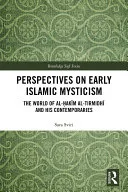
Perspectives on Early Islamic Mysticism
 79
79

Perspectives on Early Islamic Mysticism
Sara Sviri's "Perspectives on Early Islamic Mysticism" distinguishes itself by meticulously engaging with the actual writings of the tradition's earliest proponents, rather than relying on the often mythologized accounts of later centuries. The strength of this monograph lies in its rigorous textual analysis, offering a clear view of the intellectual landscape as it was being shaped. Sviri's focus on the ninth-century figures, particularly al-Ḥakīm al-Tirmidhī, allows for a granular understanding of theological and spiritual concepts before they became standardized. A potential limitation for the casual reader is the density of scholarly apparatus, demanding a certain familiarity with the field. The detailed exploration of al-Tirmidhī's concept of *walāya* (sainthood) as distinct from later interpretations provides a compelling example of the book's contribution. It is a vital scholarly resource for understanding the roots of Islamic mysticism.
📝 Description
79
Sara Sviri's 1992 monograph examines early Islamic mysticism through its original literary works.
This book offers a close reading of the original writings from mystics active between the 8th and 10th centuries CE. It prioritizes these direct accounts over later compilations, giving readers a clear view of their thoughts and spiritual ideas. The study focuses on a formative period for Islamic thought, when mystical expressions, often called early Sufism, were developing distinct theological and philosophical structures. Sviri's work distinguishes itself by relying on primary sources from figures like al-Tustarī and al-Muḥāsibī, contrasting with studies that depend on later hagiographies or systematized accounts.
The book investigates how core concepts in Islamic mysticism first appeared. It follows early figures as they described their ideas about God, the soul's path, and spiritual experience. Special attention is given to the specific language and conceptual frameworks these early mystics created, avoiding interpretations that might be applied too late. The unique theological points made by figures such as al-Ḥakīm al-Tirmidhī are also brought to the forefront.
This work places early Islamic mysticism within the broader historical development of contemplative and devotional traditions. By concentrating on the 8th to 10th centuries, it addresses a key period when Islamic spiritual thought was forming its unique expressions. The focus on primary texts from figures like al-Tirmidhī and al-Muḥāsibī allows for an understanding of the intellectual and experiential foundations before later systematizations became dominant. This approach connects to a wider scholarly interest in the genesis of esoteric practices and beliefs across different religious histories.
💡 Why Read This Book?
• Understand the foundational writings of early Islamic mystics, moving beyond later compilations, to grasp the original spiritual discourse as articulated in the 8th-10th centuries. • Gain direct access to the thought of key figures like al-Tustarī and al-Muḥāsibī, examining their extant works to appreciate their unique contributions to early Sufi thought. • Explore the development of core mystical concepts and terminology during Islam's formative centuries, appreciating the intellectual context that shaped these spiritual traditions.
⭐ Reader Reviews
Honest opinions from readers who have explored this book.
❓ Frequently Asked Questions
What is the primary focus of "Perspectives on Early Islamic Mysticism"?
The book focuses on the original literary output of Muslim mystics from the 8th to 10th centuries, emphasizing their extant writings over later compilations and offering a direct look at formative ideas.
Which specific 9th-century mystics are highlighted in the book?
Key figures explored include al-Tustarī, al-Muḥāsibī, al-Kharrāz, al-Junayd, and particularly al-Ḥakīm al-Tirmidhī.
How does this study differ from other works on the 'Formative Period' of Islamic mysticism?
Unlike studies that rely heavily on later Sufi compilations, Sviri's work prioritizes the direct examination of writings from the early mystics themselves.
What is the significance of focusing on extant writings?
Examining extant writings allows for a more authentic understanding of the early mystics' own formulations, avoiding potential distortions or later interpretations that might have entered compilations.
What kind of reader would benefit most from this book?
Scholars of Islamic history, comparative religion, Sufism, and serious students of esoteric traditions seeking foundational textual analysis would find this book highly beneficial.
What is the approximate timeframe covered by the book's analysis?
The book primarily covers the 8th to 10th centuries CE, with a special emphasis on developments within the 9th century.
🔮 Key Themes & Symbolism
Original Literary Produce
This theme centers on the book's commitment to engaging with the direct textual output of early Islamic mystics. By prioritizing extant writings from figures like al-Muḥāsibī and al-Tustarī, the work bypasses later interpretations and compilations, offering a critical engagement with the foundational discourse. This approach allows for a nuanced understanding of how concepts were initially articulated, providing scholars and serious students with an unmediated perspective on the genesis of Islamic mystical thought during the 8th to 10th centuries.
Formative Period Dynamics
The book illuminates the intellectual and spiritual currents of Islam's formative period (8th-10th centuries). It highlights how early mystics were developing distinct theological and philosophical frameworks that would later become central to Sufism. By focusing on the 9th century, a key era, Sviri demonstrates the dynamism of this period, showing the emergence of specific doctrines and practices before widespread systematization, thereby offering a critical lens on the evolution of Islamic spirituality.
Textual Authenticity in Sufi Studies
A core concern is the methodological approach to studying Sufism, advocating for a return to the earliest available texts. The monograph contrasts its method with studies that rely on later hagiographies or systematized compilations, which may present a more curated or evolved understanding. This emphasis on textual authenticity, particularly concerning figures like al-Ḥakīm al-Tirmidhī, aims to provide a more accurate representation of early Islamic mystical thought and practice.
Theological Nuances of Early Mystics
This theme explores the specific theological and philosophical ideas developed by early Islamic mystics. It looks at how figures such as al-Tirmidhī articulated their understanding of divine proximity, sainthood (*walāya*), and the spiritual path. The work aims to uncover the unique conceptual language and doctrinal specificities of these thinkers, offering an alternative to generalized accounts and providing detailed insights into their individual spiritual and intellectual contributions during a crucial phase of Islamic intellectual history.
💬 Memorable Quotes
Direct passages from the work, attributed to the author.
“The extant writings of early mystics rather than later Ṣūfī compilations.”
— This highlights the book's core methodological commitment: to prioritize primary source material directly from the early figures, eschewing potentially filtered or reinterpreted accounts from subsequent generations.
“Special attention to ninth-century mystics.”
— This indicates a focused period of study within the broader 8th-10th century timeframe, suggesting a deep dive into the specific contributions and intellectual milieu of figures active during this key century.
“These early mystics articulated what would become a hallmark of Islamic mysti”
— This suggests the book traces the origins of key concepts and practices that later defined Islamic mysticism, showing how these foundational elements were first expressed by the early figures themselves.
“Focuses on the extant writings of early mystics rather than on the later Ṣūfī compilations.”
— This emphasizes the critical distinction the book makes, grounding its analysis in the earliest available texts to reconstruct an authentic understanding of early Islamic spiritual thought.
“Explores the original literary produce of Muslim mystics during the eighth–tenth centuries.”
— This defines the chronological and thematic scope, identifying the primary objective as the investigation of the initial literary expressions of Islamic mysticism within a specific historical epoch.
🌙 Esoteric Significance
Tradition
This work engages with the nascent stages of what would become the esoteric tradition of Islamic mysticism, commonly known as Sufism. It situates itself within the broader Abrahamic esoteric lineage, exploring how early Muslim mystics developed unique spiritual paths and theological interpretations. By focusing on original texts, it offers a perspective distinct from later schools that might have incorporated external philosophical influences or developed more formalized structures.
Symbolism
While the book primarily focuses on theological and literary analysis, early Islamic mysticism is rich in symbolism. Concepts like the 'heart' (*qalb*) as the locus of divine knowledge, or the journey of the soul towards God, often carry symbolic weight. The writings of figures like al-Tirmidhī explore states of spiritual proximity and the nature of sainthood (*walāya*), which can be interpreted through symbolic frameworks relating to divine presence and human transformation.
Modern Relevance
Contemporary scholars and practitioners of comparative mysticism and Islamic studies continue to draw on the foundational texts examined in this monograph. Thinkers interested in the origins of contemplative practices within Islam, or those seeking to understand the theological underpinnings of mystical experience, find Sviri's work useful for its direct engagement with early sources, providing a more authentic basis for understanding these enduring spiritual traditions.
👥 Who Should Read This Book
• Scholars of Islamic history and religion: To gain a deeper, textually grounded understanding of Sufism's formative centuries and the intellectual debates of the period. • Students of comparative mysticism: To explore the origins and early articulations of a major spiritual path within the Abrahamic traditions, comparing its foundational concepts. • Serious practitioners of esoteric traditions: To connect with the earliest expressions of Islamic spirituality, appreciating the direct literary heritage before later systematizations and interpretations.
📜 Historical Context
The period spanning the 8th to 10th centuries CE was a dynamic era for the development of Islamic thought, witnessing the maturation of jurisprudence, theology, and early forms of mysticism that would evolve into what is known as Sufism. This era saw the flourishing of intellectual centers and diverse schools of thought. Competing theological currents, such as Mu'tazilism, influenced the intellectual landscape, prompting mystics to articulate their spiritual doctrines with increasing precision. Figures like al-Tustarī and al-Muḥāsibī were active during this time, producing foundational texts. Notably, this period predates the more systematized and widespread codification of Sufi teachings seen in later centuries. The work's emphasis on primary sources from this era provides a crucial counterpoint to later compilations and hagiographies, which could sometimes present a more synthesized or even mythologized view of these early figures and their teachings.
📔 Journal Prompts
Al-Ḥakīm al-Tirmidhī's articulation of *walāya* (sainthood) as distinct from later interpretations.
The emphasis on extant writings over later compilations in understanding early Islamic mysticism.
The theological concepts articulated by ninth-century mystics like al-Tustarī and al-Muḥāsibī.
The distinction between early mystical expressions and later Sufi systematizations.
The intellectual milieu of the 8th-10th centuries and its impact on mystical thought.
🗂️ Glossary
Ṣūfī
A practitioner of Sufism, the mystical dimension of Islam. The term often refers to adherents of various orders and traditions focused on direct experience of God.
Formative Period
Refers to the early centuries of Islam (roughly 7th to 10th centuries CE) during which foundational Islamic disciplines, theology, and law, as well as early mystical traditions, were developing and taking shape.
Extant Writings
Literary works, texts, or documents that still exist and survive from a particular period or author, as opposed to those that are lost or only known through references.
Al-Tustarī
Abu Muhammad Sahl ibn Abd Allah al-Tustari (d. c. 896 CE), an influential early Persian mystic whose theological and mystical ideas significantly impacted later Sufi thought.
Al-Muḥāsibī
Al-Harith ibn Asad al-Muḥāsibī (d. 857 CE), an important early Islamic theologian and mystic known for his ethical and psychological analyses of spiritual life and his emphasis on self-examination.
Al-Ḥakīm al-Tirmidhī
Abu Abd Allah Muhammad ibn Ali al-Tirmidhi (d. c. 932 CE), a prominent early mystic and writer from Tirmidh, known for his sophisticated theological ideas, particularly concerning sainthood (*walāya*) and esotericism.
Ṣūfī Compilations
Later collections of texts, stories, biographies, and teachings attributed to Sufis, often compiled by later generations, which may present a more developed or systematized view of Sufi thought than the original sources.