Wonders of Palmistry
 74
74

Wonders of Palmistry
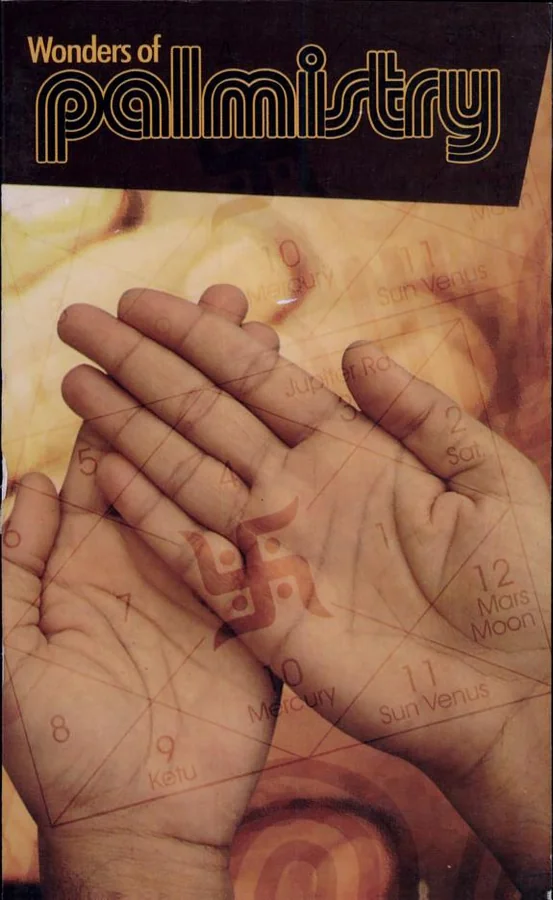
Dr. Bhojraj Dwivedi’s *Wonders of Palmistry* presents a structured and detailed approach to a practice often relegated to the fringes of occultism. Its strength lies in its systematic cataloging of hand features, from the prominent Heart Line to the subtle influence of the Mount of Apollo. Dwivedi’s explanation of the seven mounts, for instance, offers a clear framework for understanding their respective energetic influences. However, the book’s sheer comprehensiveness can occasionally feel overwhelming; a reader might find themselves lost in the extensive lists of minor lines without a clear guiding principle for synthesis, a challenge noted by early reviewers of such comprehensive manuals. The section on the relationship between the palm and planetary influences, particularly Saturn’s association with the palm's center, provides a concrete, albeit traditional, linkage. Ultimately, Dwivedi offers a thorough, if dense, guide for the dedicated student of chiromancy.
📝 Description
74
Dr. Bhojraj Dwivedi's Wonders of Palmistry details chiromancy, the ancient practice of reading the palm.
This book examines chiromancy, the art of palm reading. Dr. Bhojraj Dwivedi systematically breaks down the interpretations of hand lines, mounts, and shapes, presenting them as a language of the self. The text covers major lines like the Heart, Head, and Life lines, alongside lesser lines and their meanings, making the practice accessible.
It is intended for those who want to understand themselves and others better through palmistry. The book functions as a resource for students of esoteric subjects, comparative mythology, and psychological archetypes. It offers a structured approach for both experienced practitioners aiming to improve their skills and beginners curious about hand analysis. The work stresses that palmistry reveals inherent potentials and tendencies, rather than fixed predictions.
Dwivedi's study places palmistry within its historical context, noting its roots in ancient India, Greece, and Rome. The book draws on classical texts and traditions, acknowledging this lineage. By treating palmistry as a serious area of study, Dwivedi adds to its scholarly conversation, framing it as a sophisticated system of physiognomic interpretation.
Palmistry, or chiromancy, is an ancient system of divination with roots in classical India, Greece, and Rome. It operates on the principle that the palm reflects an individual's character, potentials, and life path. The practice involves analyzing various features of the hand, including lines, mounts (fleshy areas), and the overall shape and texture. Dwivedi's work places this tradition within a lineage of esoteric study, connecting it to classical philosophical ideas and broader physiognomic traditions. It positions palmistry not merely as fortune-telling, but as a method for understanding inherent human tendencies.
💡 Why Read This Book?
• Gain a systematic understanding of the seven planetary mounts (Venus, Jupiter, Saturn, Sun, Mercury, Luna, Mars) as detailed by Dwivedi, allowing for nuanced personality analysis beyond simple line readings. • Learn to interpret the specific significance of the Hand of Jupiter, a concept explored in the book, to understand leadership qualities and ambition in oneself and others. • Grasp the historical context of palmistry as presented in the book, recognizing its ancient Indian and Greek roots to appreciate its long-standing tradition of esoteric study.
⭐ Reader Reviews
Honest opinions from readers who have explored this book.
❓ Frequently Asked Questions
What is the historical origin of the concepts presented in Wonders of Palmistry?
The concepts in Wonders of Palmistry draw heavily from ancient Indian (Vedic) and classical Greek traditions, with evidence of palm reading practices dating back thousands of years in both cultures.
Does Dr. Bhojraj Dwivedi’s book focus on prediction or character analysis?
Dr. Dwivedi emphasizes that palmistry, as presented in his work, is primarily a tool for understanding inherent potentials, tendencies, and character, rather than a deterministic method of prediction.
What are the 'seven mounts' mentioned in palmistry?
The seven mounts are areas on the palm associated with planets: Venus, Jupiter, Saturn, Sun (Apollo), Mercury, Luna (Moon), and Mars. Their prominence indicates corresponding personality traits and energies.
How does the book explain the major lines like the Heart Line and Head Line?
The book systematically explains these major lines, detailing how their length, clarity, and formations relate to emotional disposition (Heart Line) and intellectual processes (Head Line).
Is Wonders of Palmistry suitable for absolute beginners?
Yes, the book is structured to guide beginners through the fundamentals, systematically explaining hand shapes, lines, and mounts, though its depth requires dedicated study.
When was Wonders of Palmistry first published?
Wonders of Palmistry by Dr. Bhojraj Dwivedi was first published in 2002, bringing a comprehensive overview of the subject to a modern audience.
🔮 Key Themes & Symbolism
The Seven Planetary Mounts
The text meticulously details the seven mounts on the palm, each linked to a classical planet: Venus, Jupiter, Saturn, Sun, Mercury, Luna, and Mars. Dwivedi explains how the development and characteristics of these mounts—whether prominent, flat, or marked—correlate directly with specific personality traits, desires, and life potentials. For instance, a well-developed Mount of Jupiter is associated with ambition and leadership, while a prominent Mount of Luna suggests imagination and intuition. This systematic approach forms a central to Dwivedi's interpretation framework.
Line Interpretation Framework
Beyond the mounts, the book provides an exhaustive guide to interpreting the various lines on the palm, classifying them into major and minor categories. It moves beyond simplistic definitions, exploring the subtle variations in breaks, chains, islands, and star formations along lines like the Heart, Head, and Life lines. Dwivedi emphasizes that these lines are not static but can evolve, reflecting changes in an individual's life and consciousness. The work provides detailed charts and examples for understanding these complex patterns.
Chiromancy as a System of Self-Knowledge
A central theme is the presentation of palmistry not as a tool for fatalistic prophecy but as a sophisticated system for self-understanding and personal development. Dwivedi posits that the hand's configuration offers insights into an individual's innate strengths, weaknesses, challenges, and opportunities. By understanding these patterns, as illuminated by the book's detailed analysis of hand shape, finger length, and dermal patterns, readers are encouraged to make conscious choices and navigate their life paths more effectively.
Historical and Cultural Roots
The book acknowledges the deep historical lineage of palmistry, tracing its origins to ancient India and Greece. Dwivedi situates his work within this long tradition, referencing classical texts and philosophical underpinnings. This grounding in history highlights palmistry's enduring relevance across millennia and various cultures, presenting it as a legitimate field of study rather than a modern fad. The text implicitly connects the practice to broader esoteric traditions that seek to understand the human condition through symbolic systems.
💬 Memorable Quotes
Direct passages from the work, attributed to the author.
“The hand is a mirror of the soul, reflecting its capacities and inclinations.”
— This aphorism captures the book's core thesis: that the physical lines and formations of the palm are not random but symbolic representations of an individual's inner nature and potential.
“Each mount on the palm corresponds to a celestial body and its influence.”
— This highlights the astrological underpinnings of palmistry, as presented by Dwivedi, where planetary energies are believed to manifest physically on the hand.
“Minor lines often reveal specific circumstances or details of life's journey.”
— This points to the depth of interpretation possible, suggesting that beyond the major life indicators, a wealth of specific information can be gleaned from subtler markings.
“The study of chiromancy offers a path to understanding human character.”
— This emphasizes the book's focus on character analysis and self-awareness, positioning palmistry as a tool for psychological insight rather than mere fortune-telling.
“The flexibility and shape of the fingers provide crucial context for line readings.”
— This illustrates Dwivedi's holistic approach, indicating that no single element is interpreted in isolation; finger characteristics are essential modifiers for understanding the lines.
🌙 Esoteric Significance
Tradition
Dwivedi's work firmly sits within the Vedic and classical Greco-Roman chiromantic traditions. It aligns with esoteric systems that view the human body as a microcosm reflecting cosmic principles. This approach is consistent with Hermetic and Neoplatonic philosophies that sought correspondences between the celestial (macrocosm) and the terrestrial (microcosm), viewing the hand as a physical manifestation of an individual's destiny and character, influenced by planetary forces.
Symbolism
Key symbols include the seven planetary mounts (e.g., Jupiter symbolizing ambition, Saturn representing discipline and karma) and the major lines (Heart for emotions, Head for intellect, Life for vitality). The shapes of the hands themselves—spade, square, conic, etc.—also carry symbolic weight, representing elemental affinities and core personality types, as detailed in the text.
Modern Relevance
Contemporary practitioners of Western esotericism, particularly those interested in comparative divination systems, often reference Dwivedi’s detailed cataloging. His systematic approach to the mounts and lines provides a robust framework that complements astrological and numerological studies for those seeking integrated self-knowledge tools.
👥 Who Should Read This Book
• Aspiring chiromancers seeking a systematic, detailed foundation in hand analysis, moving beyond superficial fortune-telling. • Students of comparative divination and esoteric traditions interested in understanding the historical and cultural underpinnings of palmistry. • Individuals on a path of self-discovery looking for a structured method to explore their inherent potentials and psychological makeup through the lens of hand reading.
📜 Historical Context
Dr. Bhojraj Dwivedi's *Wonders of Palmistry*, first published in 2002, arrived at a time when esoteric studies were experiencing a resurgence, albeit often through New Age interpretations. Dwivedi’s work, however, anchors itself in a more classical, academic tradition of chiromancy, drawing heavily from ancient Indian (Vedic) and Greco-Roman texts. This approach contrasts with the more speculative or popularly simplified versions of palmistry prevalent in Western occultism during the late 20th century. While figures like William G. Benham had published comprehensive guides earlier in the century, Dwivedi’s text provides a detailed, culturally specific perspective. The book's reception within academic circles was limited, as palmistry generally remains outside mainstream scholarly discourse, yet it contributed to the ongoing dialogue within serious practitioners of esoteric arts, offering a rigorous framework that engaged with the historical depth of the practice.
📔 Journal Prompts
The influence of the Mount of Jupiter on your aspirations.
The clarity and meaning of your Head Line.
Reflections on the symbolic language of your dominant hand's mounts.
Interpreting the texture and temperature of your palms.
Connecting the shape of your fingers to your core personality traits.
🗂️ Glossary
Chiromancy
The practice of interpreting the lines, mounts, and other features of the human hand to understand character, predict future events, or gain insight into one's life.
Mounts
Fleshy, raised areas on the palm corresponding to the seven classical planets (Venus, Jupiter, Saturn, Sun, Mercury, Luna, Mars), believed to influence personality traits.
Heart Line
The uppermost horizontal line on the palm, typically running across the hand below the fingers, interpreted as relating to emotional capacity and relationships.
Head Line
A line running horizontally across the palm, usually below the Heart Line, interpreted as relating to intellectual processes, communication, and mental faculties.
Life Line
A curved line originating near the thumb and extending around the base of the thumb, interpreted as relating to vitality, physical health, and significant life events.
Dermatoglyphics
The scientific study of the patterns of friction ridges on human fingers, palms, and soles, which underlies some aspects of traditional palmistry.
Hand of Jupiter
A palm configuration where the Mount of Jupiter is well-developed, indicating traits such as ambition, leadership, confidence, and a desire for recognition.
This book appears in 1 collection
🔮 Readers Also Liked
Browse all →









From the “Palmistry” Collection
View all →









More Free Occult Philosophy Books
View all →