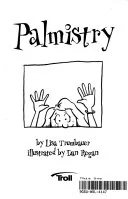
Palmistry
 76
76

Palmistry
Lisa Trumbauer's "Palmistry" offers a refreshingly direct entry into a practice often shrouded in mystique. Its strength lies in its clarity; the 1999 publication avoids overly ornate language, presenting the core tenets of hand-reading with accessible detail. The explanation of the major lines, particularly the delineation of the Head Line's variations and their implications for cognitive style, is a commendable section for beginners. However, the book’s primary limitation is its brevity in exploring the deeper historical or philosophical currents that inform chiromancy. While it covers the basics, it doesn't significantly engage with the lineage of thought, for instance, its connection to Hellenistic astrological traditions or later Hermetic influences. The section on the mounts, while present, could benefit from more nuanced interpretation beyond simple trait association. Ultimately, "Palmistry" functions well as a functional primer, but less so as a profound exploration of the discipline's rich past.
📝 Description
76
Lisa Trumbauer's "Palmistry" was published in December 1999, demystifying chiromancy for a modern audience.
Published in 1999, Lisa Trumbauer's "Palmistry" presents a clear guide to reading hands. The book systematically breaks down the practice, focusing on how to interpret the lines, mounts, and overall shape of the palm. It aims to show how these physical features can reflect an individual's character, potential, and life's direction, moving beyond simple fortune-telling to consider the hand as a reflection of inner psychology. This approach makes the ancient art accessible to those interested in self-understanding and symbolic systems. The work is designed for readers new to esoteric studies or anyone curious about the connection between outward traits and inner possibilities. It also appeals to those interested in psychology, comparative spirituality, or personal growth, offering a unique perspective on human potential.
Trumbauer's text addresses the historical context of palmistry, which has roots in ancient India, Persia, Greece, and Rome. By the late 20th century, the practice was often seen as part of popular occultism. Trumbauer's work aims to reconnect palmistry with its philosophical roots while presenting it in a way that resonates with contemporary readers. This distinguishes it from both highly traditional interpretations and more superficial modern takes, seeking a balanced understanding of its place in esoteric thought.
Palmistry, with its origins in ancient India, Persia, Greece, and Rome, represents a long-standing tradition of divinatory practice. By the late 20th century, its popular image was often mixed with general occultism. Trumbauer's "Palmistry" emerged in this period, aiming to provide a more grounded and understandable approach. It situates the art within a modern framework, seeking to illuminate its potential for psychological insight and self-understanding, distinguishing it from purely predictive or esoteric traditions.
💡 Why Read This Book?
• Understand the fundamental language of the hands, learning to identify and interpret the Life Line, Head Line, and Heart Line as detailed in the book's foundational chapters, providing a personal map of your inherent energies. • Gain insight into the symbolism of the palm's mounts, such as the Mount of Venus, and how their development, as explained by Trumbauer, correlates with specific personality traits and emotional capacities. • Explore the concept of the hand as a reflection of destiny, learning how the Fate Line, as presented in the text, can indicate major life directions and the influence of external circumstances on your path.
⭐ Reader Reviews
Honest opinions from readers who have explored this book.
❓ Frequently Asked Questions
What is the primary purpose of Lisa Trumbauer's book 'Palmistry'?
The book aims to demystify palmistry by explaining how to interpret lines, mounts, and shapes of the hand to understand personal character, potential, and life path, serving as an accessible guide for beginners.
When was Lisa Trumbauer's 'Palmistry' first published?
Lisa Trumbauer's 'Palmistry' was first published in December 1999, placing it within the popular esoteric literature of the late 20th century.
Does 'Palmistry' by Lisa Trumbauer focus on fortune-telling?
While it addresses potential life paths, the book emphasizes palmistry as a tool for understanding character and psychological makeup rather than solely as a predictive fortune-telling method.
What are the key elements of the hand discussed in 'Palmistry'?
The book covers the interpretation of major lines like the Life, Head, Heart, and Fate lines, as well as the various mounts on the palm and their associated meanings.
Is 'Palmistry' suitable for someone with no prior knowledge of the subject?
Yes, Trumbauer's 'Palmistry' is designed as an introductory text, breaking down complex concepts into clear, understandable explanations for novices interested in learning the basics.
How does Trumbauer's book approach the historical aspect of palmistry?
The book acknowledges the ancient origins of palmistry and frames its teachings within a modern context, aiming to make the practice relevant and accessible to contemporary readers.
🔮 Key Themes & Symbolism
Interpreting Major Hand Lines
The core of Trumbauer's work centers on the interpretation of the primary lines etched into the palm. The Life Line is examined not just for duration but for vitality and significant life changes. The Head Line is analyzed for intellectual capacity and thought patterns, with variations in its slope and depth offering clues to cognitive styles. The Heart Line reveals emotional nature and relationship dynamics. The Fate Line, though not present on all hands, is discussed for its indications of external influences and life's direction. Understanding these lines forms the bedrock of chiromantic analysis presented.
The Significance of Palm Mounts
Beyond the lines, "Palmistry" explores the fleshy mounds at the base of the fingers and palm. Each mount is associated with a planet and specific traits: the Mount of Venus (love, passion), Jupiter (ambition, leadership), Saturn (discipline, wisdom), Apollo (creativity, success), Mercury (communication, business), Mars (courage, aggression), and Luna (imagination, intuition). The book details how the prominence or flatness of these mounts can signify the strength or weakness of these associated qualities in an individual's personality.
Hand Shape and Finger Analysis
Trumbauer's guide extends to the overall shape of the hand and the characteristics of the fingers. Different hand shapes—such as Earth, Air, Fire, and Water hands—are linked to fundamental personality types and approaches to life. The length, shape, and even the nails of the fingers are also discussed as contributing factors to a complete reading. This holistic approach emphasizes that no single feature should be interpreted in isolation, but rather as part of a complex, interconnected system.
Palmistry as Self-Discovery
The book presents palmistry not merely as a predictive tool but as a method for self-awareness and personal growth. By understanding the narratives seemingly written on their palms, readers are encouraged to explore their innate potentials, challenges, and tendencies. This perspective frames the practice as a means to gain insight into one's own nature, fostering a more conscious engagement with life experiences and personal development opportunities.
💬 Memorable Quotes
Direct passages from the work, attributed to the author.
“The lines on your palm are a map of your life.”
— This statement captures the book's central premise: that the physical features of the hand are not random but symbolic representations of an individual's journey, character, and potential experiences.
“A clear, unbroken Life Line suggests good vitality.”
— This highlights a specific interpretive principle for a major palm line, illustrating how the continuity and condition of the Life Line are directly correlated with physical health and resilience.
“Prominent mounts indicate strong associated traits.”
— This refers to the concept that the fleshy pads on the palm, known as mounts, when well-developed, signify a pronounced expression of the qualities linked to their ruling planet.
💡 Key Ideas
Editorial paraphrase of the work's core concepts — not direct quotes.
The Head Line reveals your intellectual style.
This paraphrased concept points to the function of the Head Line, emphasizing its role in understanding how a person thinks, processes information, and approaches mental tasks.
Your hand shows your past, present, and future.
This succinctly summarizes the book's scope, suggesting that palmistry, as presented, offers a comprehensive view of an individual's temporal existence, from historical influences to future possibilities.
🌙 Esoteric Significance
Tradition
While palmistry has ancient roots across various cultures, Trumbauer's work primarily engages with the Western tradition of chiromancy, which gained significant traction during the Renaissance and was later influenced by 19th and 20th-century occult revivalists. It aligns with a practical, introspective approach to esoteric knowledge, viewing the hand as a microcosm reflecting universal principles and individual destiny, accessible through careful observation and interpretation.
Symbolism
Key symbols in "Palmistry" include the major lines—Life, Head, and Heart—each representing fundamental human experiences: vitality and physical being, intellect and consciousness, and emotion and relationships. The mounts, named after planets like Venus and Jupiter, symbolize archetypal energies and personality drives. The shape of the hand itself, often categorized into elemental types (Earth, Air, Fire, Water), symbolizes an individual's core disposition and interaction with the world.
Modern Relevance
In contemporary practice, Trumbauer's accessible approach to palmistry continues to inform beginners. Its clear explanations of line and mount interpretation resonate with modern self-help and personal development communities. While more complex schools of thought exist, this book serves as a gateway, allowing individuals to explore somatic symbolism and intuitive reading, which are increasingly integrated into holistic wellness and mindfulness practices.
👥 Who Should Read This Book
• Aspiring practitioners of divination arts seeking a clear, foundational text on interpreting the human hand before exploring more complex systems. • Individuals interested in psychological archetypes and self-discovery who wish to understand how symbolic systems can offer insights into personal traits and potential. • Readers of esoteric history curious about late 20th-century popularizations of ancient practices and their methods of instruction for a modern audience.
📜 Historical Context
Published in December 1999, Lisa Trumbauer's "Palmistry" arrived at a moment when esoteric subjects continued to hold popular fascination, albeit often filtered through a New Age lens. The late 20th century saw a resurgence of interest in divination and self-help practices, building on foundations laid by movements like Theosophy and various occult revivals of the early 20th century. Contemporaries exploring similar themes included authors like Scott Cunningham, who popularized Wicca and natural magic, offering a different but related path to spiritual exploration. While Trumbauer's work focuses specifically on chiromancy, it existed within a broader landscape where practices like astrology and tarot were also widely accessible. Unlike the more academic or historically grounded approaches to divination, Trumbauer's book aimed for straightforward instruction, potentially sidestepping deeper engagement with the philosophical debates surrounding determinism versus free will inherent in older traditions of palmistry.
📔 Journal Prompts
The Life Line's variations and their implications for personal energy.
Reflecting on the Head Line's specific shape and its connection to your thought processes.
Comparing the interpretation of the Mount of Venus with your emotional landscape.
The potential meaning of your Fate Line, if present, in the context of your life path.
How hand shape and finger characteristics, as described, align with your self-perception.
🗂️ Glossary
Chiromancy
The practice of foretelling character and future events by the examination of the palm and fingers; essentially, palmistry.
Life Line
A major line on the palm, typically extending in an arc around the base of the thumb, believed to indicate physical vitality, health, and significant life events.
Head Line
A prominent line on the palm, usually running horizontally across the middle, interpreted as representing intellect, mental ability, and cognitive style.
Heart Line
The uppermost horizontal line on the palm, often starting below the little finger and extending towards the index or middle finger, signifying emotional nature and relationships.
Fate Line
A vertical line on the palm, generally running upwards from the base towards the fingers, thought to represent external influences, career, and life's direction.
Mounts
The fleshy, raised pads on the palm located at the base of each finger and below the thumb, each associated with a planet and specific personality traits.
Hand Shape
The overall form of the palm, often categorized into elemental types (Earth, Air, Fire, Water), which provides a broad classification of personality and life approach.
This book appears in 1 collection
🔮 Readers Also Liked
Browse all →









From the “Palmistry” Collection
View all →








More Free Occult Philosophy Books
View all →