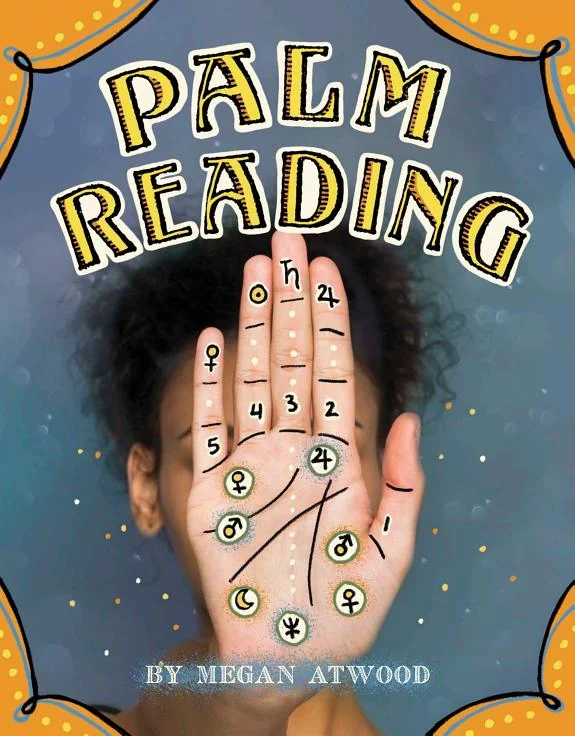
Palm Reading
 74
74

Palm Reading
Megan Atwood’s ‘Palm Reading’ approaches a complex subject with a disarming simplicity. The book’s strength lies in its directness, particularly how it translates the often-intimidating language of chiromancy into actionable insights for younger audiences. The explanation of the major lines – the Life Line, Head Line, and Heart Line – is particularly clear, avoiding excessive jargon. However, the work occasionally leans into the original blurb's STEAM connection a bit too heavily, sometimes presenting the practice with a pedagogical tone that might dilute its esoteric essence for older readers. A notable passage is the breakdown of the Mount of Venus, linking its prominence to vitality and affection, which offers a tangible example of how hand features correlate to personality. Ultimately, Atwood provides a competent, if somewhat basic, introduction to a practice with deep historical roots.
📝 Description
74
Megan Atwood's 2023 guide unpacks the ancient art of chiromancy for a modern audience.
This book explains the fundamental principles of palm reading, detailing how to interpret the lines, mounts, and shapes of the hand. Atwood frames palmistry not just as a divinatory art, but as a tool for self-understanding and personal problem-solving. The text presents the hand as a map of an individual's character and potential, offering insights into personality traits and life paths.
Designed with young readers in mind, the book offers an accessible introduction to palmistry. Its structure aligns with STEAM curriculum objectives, emphasizing the analytical and observational skills required for this practice. Beyond educational settings, the book appeals to anyone interested in self-discovery and exploring personal challenges through an esoteric lens, thanks to its direct approach.
Palmistry, or chiromancy, has a history stretching back thousands of years, with roots in ancient India, China, and Greece. Philosophers like Aristotle wrote on the subject. By the European Middle Ages, it was a recognized practice, often associated with astrology. The art's enduring appeal stems from its direct connection to the physical body as a source of personal revelation, making it a consistent thread in Western esoteric traditions.
💡 Why Read This Book?
• Gain a foundational understanding of chiromancy, learning to identify and interpret the major hand lines like the Life Line and Head Line, as presented in Megan Atwood’s 2019 guide. • Explore the connection between hand shapes and personality types, understanding the significance of different hand structures as detailed within the book’s framework. • Discover how the mounts on the palm, such as the Mount of Venus, are traditionally linked to specific traits like passion and energy, offering a tangible method for self-reflection.
⭐ Reader Reviews
Honest opinions from readers who have explored this book.
❓ Frequently Asked Questions
What is the primary purpose of palm reading according to this book?
The book presents palm reading as a method for young readers to understand their personalities and identify ways to address personal challenges, aligning with educational goals and self-discovery.
How does this book connect palm reading to STEAM education?
It frames palmistry as a topic that encourages observation, analysis, and pattern recognition, skills relevant to Science, Technology, Engineering, Arts, and Mathematics disciplines.
What are the main features of the hand discussed in the book?
The book focuses on interpreting the major lines (Life, Head, Heart), the mounts (like Venus, Jupiter), and the overall shape of the hand and fingers.
Is this book suitable for adults interested in palmistry?
While aimed at young readers, adults seeking a straightforward, introductory overview of palmistry's basics may find its clear explanations helpful as a starting point.
When was Megan Atwood's book on palm reading first published?
Megan Atwood's book 'Palm Reading' was first published in 2019, making it a relatively recent addition to the literature on chiromancy.
What historical context is provided for palm reading?
The book touches upon the ancient origins of palm reading in cultures like India and Greece, noting its historical presence and philosophical mentions.
🔮 Key Themes & Symbolism
Interpreting Hand Lines
The work meticulously breaks down the significance of the primary lines found on the palm: the Life Line, Head Line, and Heart Line. Each line is presented not as a rigid predictor of fate, but as an indicator of an individual's vitality, mental faculties, and emotional landscape. The book guides readers on how to trace these lines, noting their depth, clarity, and any breaks or intersections, offering a practical method for self-assessment and understanding personal tendencies.
The Mounts of the Hand
Beyond the lines, 'Palm Reading' explores the fleshy mounds at the base of the fingers and palm, known as the mounts. These include the Mount of Venus, associated with love and passion; the Mount of Jupiter, linked to ambition and leadership; and the Mount of Apollo, connected to creativity and success. The book explains how the prominence or lack thereof of these mounts can reflect specific character strengths, desires, and potentials within an individual's psyche.
Hand Shapes and Personality
A fundamental aspect of chiromancy covered is the classification of hand shapes. The book introduces basic categories, such as the Earth hand (broad palm, short fingers) often associated with practicality, and the Air hand (square palm, long fingers) linked to intellect and communication. By analyzing the overall structure of the hand, readers can gain a broader understanding of their core personality type and how it influences their approach to life.
Palm Reading as Self-Discovery
Central to the book's philosophy is the idea that palm reading serves as a tool for personal growth and problem-solving. It encourages readers to view their palms not as fixed destinies, but as maps of their inner world. By understanding the insights offered by their unique palm markings, individuals are empowered to navigate their challenges, recognize their strengths, and make more conscious choices in their lives.
💬 Memorable Quotes
Direct passages from the work, attributed to the author.
“The lines on your palm tell a story about who you are.”
— This statement captures the book's core premise: that the physical features of the hand are symbolic representations of an individual's character, potential, and life experiences.
“Understanding the Mount of Venus can reveal insights into your capacity for love and vitality.”
— This highlights a specific element of palmistry, linking a physical feature (the Mount of Venus) to psychological and emotional traits, encouraging readers to explore these connections.
“Your Head Line shows how you think and learn.”
— A concise explanation of one of the major palm lines, emphasizing its role in understanding cognitive processes and learning styles, making the practice accessible.
“Even small marks on the hand can have meaning.”
— This suggests that a detailed examination of the palm, including subtle features, is crucial for a comprehensive reading and deeper self-understanding.
💡 Key Ideas
Editorial paraphrase of the work's core concepts — not direct quotes.
Palmistry offers keys to understanding yourself and your problems.
This paraphrase from the original blurb frames palm reading as a practical psychological tool for self-awareness and resolution, rather than mere fortune-telling.
🌙 Esoteric Significance
Tradition
While not explicitly tied to a single lineage, 'Palm Reading' draws from the broad stream of Western esoteric traditions that incorporate physiognomy and symbolic interpretation of the human body. Its approach to reading lines and mounts echoes practices found within Hermeticism and Renaissance occultism, where the microcosm (human) reflects the macrocosm (universe). The book presents these interpretations in a modern, accessible format, departing from the more arcane language of earlier texts.
Symbolism
Key symbols explored include the major hand lines: the Life Line symbolizing vitality and life force, the Head Line representing intellect and thought processes, and the Heart Line indicating emotional nature and relationships. The mounts, such as the Mount of Venus (passion, love) and Mount of Jupiter (ambition, leadership), also function as symbolic representations of specific energies and potentials within the individual's character.
Modern Relevance
In contemporary practice, 'Palm Reading' speaks to modern self-help and mindfulness movements that emphasize self-awareness and personal growth. Thinkers and practitioners in fields like archetypal psychology and humanistic psychology often explore symbolic systems for understanding the psyche. The book's accessible format also appeals to a new generation exploring divination and esoteric arts through online communities and contemporary re-interpretations of ancient practices.
👥 Who Should Read This Book
• Young readers and students interested in exploring personality and self-understanding through symbolic systems, seeking an introduction aligned with educational frameworks. • Individuals curious about the basics of chiromancy and wanting a clear, jargon-free guide to interpreting hand lines and mounts for personal insight. • Educators or parents looking for supplementary material that connects esoteric studies with critical thinking and observational skills relevant to STEAM principles.
📜 Historical Context
Megan Atwood’s ‘Palm Reading,’ published in 2019, enters a field with a history stretching back millennia. Chiromancy was notably studied in ancient India, with texts like the Hindu ‘Hasta Samudrika Shastra’ exploring hand divination. By the European Renaissance, figures like Johannes Trithemius engaged with occult sciences, including palmistry, though often alongside more established disciplines. The practice faced periods of scrutiny, particularly during the witch trials, and intellectual currents like Enlightenment rationalism often dismissed it. However, it saw a resurgence in the late 19th and early 20th centuries, fueled by figures in the Theosophical Society and early occult revivalists like William Wynn Westcott, who sought to systematize esoteric knowledge. Atwood’s work arrives in an era where digital platforms have broadened access to such practices, contrasting with the more guarded dissemination of knowledge in earlier centuries.
📔 Journal Prompts
The meaning of your Head Line and its relationship to your learning style.
Prominence of the Mount of Venus and its expression in your relationships.
Comparing the shape of your hand to the classic elemental types.
How the length and clarity of your Life Line reflect your perceived energy levels.
Tracing the Heart Line for insights into your emotional expression.
🗂️ Glossary
Chiromancy
The practice of divination and character analysis through the study of the palm, commonly referred to as palm reading.
Life Line
A major line on the palm, typically curving around the base of the thumb, often interpreted as indicating vitality, physical health, and significant life events.
Head Line
A horizontal line across the palm, usually below the Heart Line, read to understand a person's intellectual capacity, thinking style, and communication methods.
Heart Line
The uppermost horizontal line on the palm, read to gain insight into an individual's emotional nature, romantic life, and capacity for affection.
Mounts
Fleshy, raised areas on the palm located at the base of the fingers and palm, each associated with a planet and corresponding character traits.
Mount of Venus
The fleshy mound at the base of the thumb, associated with the planet Venus, believed to indicate vitality, passion, love, and sensuality.
STEAM
An educational approach integrating Science, Technology, Engineering, Arts, and Mathematics, highlighting analytical and observational skills.
This book appears in 1 collection
🔮 Readers Also Liked
Browse all →








From the “Palmistry” Collection
View all →








More Free Occult Philosophy Books
View all →