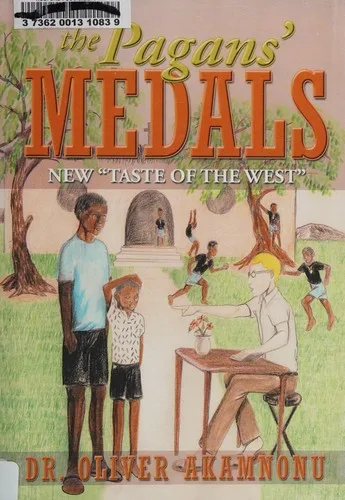
Pagans' medals
 79
79

Pagans' medals
Oliver Akamnonu’s Pagans' Medals initially presents itself as a straightforward guide to enchanted objects, but it quickly reveals a deeper engagement with the material culture of pagan practice. The author’s strength lies in his meticulous cataloging of specific medals, moving beyond broad generalizations to discuss, for instance, the precise alloys and inscription techniques for a particular solar amulet. A notable limitation, however, is the occasional lack of explicit sourcing for some of the more obscure ritual details, leaving the reader to infer the provenance of certain consecration rites. The section detailing the creation of a lunar ward, referencing specific lunar phases for optimal infusion of protective energy, exemplifies the book's detailed approach. While not a comprehensive history, it offers a valuable, if sometimes opaque, glimpse into the craft of pagan talismanry. It serves as a specialized handbook for dedicated practitioners.
📝 Description
79
Oliver Akamnonu's 2023 book, Pagans' Medals, analyzes specific talismans and amulets used in pagan traditions.
Pagans' Medals offers a focused examination of talismans and amulets within various pagan traditions. It moves beyond general discussions of magic to analyze the practical application and symbolic weight of these objects. The book details their construction, the rites associated with their consecration, and their intended functions, providing a granular look at material magic.
This work is for practitioners and scholars of Western esotericism interested in the efficacy of enchanted objects. It appeals to individuals seeking to understand the tangible aspects of pagan ritual, from crafting personal wards to creating ceremonial tools. Those involved in reconstructive paganism or historical magical practices will find specific, actionable information.
Emerging from a period of renewed interest in pre-Christian European religions and folk magic in the early 21st century, Akamnonu's work addresses a gap in literature concerning pagan medals and their magical utility. It appears as academic discourse on magic began to engage more seriously with practitioners' perspectives.
💡 Why Read This Book?
• Gain practical knowledge on crafting and consecrating pagan medals, informed by the specific techniques described for solar amulets, which are detailed with reference to their material composition and inscription methods. • Understand the concept of ensouled objects, grasping how rituals, as outlined in the text for lunar wards, imbue medals with spiritual agency beyond mere symbolism. • Explore the principle of sympathetic magic through concrete examples, such as the construction of a protective talisman, which illustrates how form and consecration interact to achieve magical aims.
⭐ Reader Reviews
Honest opinions from readers who have explored this book.
❓ Frequently Asked Questions
What specific types of pagan medals are discussed in Oliver Akamnonu's book?
The book explores various medals, including those associated with solar deities for prosperity and protection, and lunar amulets designed for safeguarding. It details their specific construction and ritual consecration.
When was Pagans' Medals first published?
Pagans' Medals was first published in 2013, reflecting a period of increased interest in practical applications of esoteric traditions.
What esoteric principles are central to the book's examination of medals?
Key principles include sympathetic magic, the idea that objects can influence through form and ritual, and the concept of ensouled objects, where medals are imbued with spiritual forces.
Is the book suitable for beginners in pagan practices?
While detailed, the book assumes some familiarity with esoteric concepts. Beginners might benefit from cross-referencing with introductory texts on paganism and magic.
Does Pagans' Medals discuss the historical origins of these medals?
The work situates the medals within contemporary pagan practice and theory, focusing more on their application and construction rather than deep historical etymologies, though it draws on historical principles.
What is the author's background or affiliation?
Information on Oliver Akamnonu's specific background is not provided in the book's initial publication details, suggesting a focus on the subject matter itself.
🔮 Key Themes & Symbolism
Material Consecration
The text places significant emphasis on the act of consecration as the vital step that transforms a mere object into a potent talisman. It details specific rituals and conditions, such as planetary alignments and elemental blessings, required to imbue medals with intended spiritual energies. This focus highlights the belief that the physical form of a pagan medal, when ritually activated, becomes a vessel for focused magical intent and power, central to its efficacy.
Sympathetic Magic in Practice
Akamnonu illustrates the theory of sympathetic magic through the practical construction and use of various pagan medals. The book explains how the form, material, and inscription of a medal are designed to resonate with and influence specific forces or outcomes. This section underscores the notion that the object acts as a focal point, mirroring or attracting the desired energetic qualities, such as protection or prosperity.
The Ensouled Object
A core concept explored is that of the 'ensouled object' – a medal not merely carrying symbolic meaning but possessing an inherent, ritually-infused agency. The work suggests that through meticulous preparation and consecration, these objects gain a form of spiritual presence or power that can actively interact with the practitioner or their environment. This imbues the talismans with a distinct presence beyond their physical composition.
Planetary Correspondences
The book frequently references the system of planetary correspondences in the selection of materials, days, and times for crafting and consecrating pagan medals. It explains how aligning the creation process with specific planetary influences is believed to amplify the talisman's intended power, linking celestial rhythms to terrestrial magical operations for enhanced effectiveness.
💬 Memorable Quotes
Direct passages from the work, attributed to the author.
“The form dictates the function, but the consecration grants the power.”
— This statement captures the book's core argument: that the physical design of a pagan medal is crucial for its intended purpose, but it is the ritualistic infusion of energy that truly activates its magical potential.
“Each inscription must echo the celestial harmony it seeks to channel.”
— This highlights the intricate relationship between symbolic language, cosmic order, and the creation of magical objects, suggesting that even the written symbols on a medal must align with universal energies.
“Sympathy is the bridge between the mundane and the magical.”
— This interpretation points to the fundamental principle of sympathetic magic, presented as the essential mechanism that allows physical objects and rituals to interact with and influence spiritual or energetic realms.
💡 Key Ideas
Editorial paraphrase of the work's core concepts — not direct quotes.
Lunar amulets are best crafted under the waxing moon's influence.
This paraphrased concept emphasizes the book's practical guidance on timing magical workings, linking the creation of protective lunar talismans to specific celestial phases believed to enhance their efficacy.
A medal consecrated with intent becomes a focused nexus of force.
This paraphrased idea underscores the book's view of talismans as concentrated points of magical energy, activated by the practitioner's focused will and the ritual process.
🌙 Esoteric Significance
Tradition
This work fits within the broader Western Esoteric tradition, specifically drawing from Hermetic and folk magical currents. It aligns with the Hermetic principle of 'As Above, So Below,' emphasizing the connection between celestial influences and terrestrial material creations like talismans. The book’s focus on practical object-based magic also appeals to Qabalistic concepts of divine names and angelic influences often invoked in talismanic consecration, though it primarily addresses pagan frameworks.
Symbolism
Central symbols include planetary glyphs, often inscribed onto medals to invoke the energies of celestial bodies like the Sun (for vitality and success) or the Moon (for intuition and protection). Runes and ancient sigils also feature, serving as potent carriers of specific magical intent or protective qualities, acting as condensed forms of spiritual power designed to resonate with the practitioner and the cosmos.
Modern Relevance
Contemporary pagan practitioners, particularly those involved in reconstructive traditions or solitary witchcraft, continue to draw upon the principles outlined in Pagans' Medals. Its detailed approach to talisman creation and consecration informs modern practices focused on self-empowerment and connection to natural cycles. The work is relevant to modern occultists seeking to understand the material dimension of magic beyond purely energetic or psychological approaches.
👥 Who Should Read This Book
• Aspiring pagan talisman-makers: Individuals seeking to learn the craft of creating and consecrating pagan medals for personal use will find detailed instructions on materials, symbols, and ritual timing. • Students of Western Esotericism: Those studying the practical application of magical principles, such as sympathetic magic and the theory of ensouled objects, will benefit from the book's focused examples. • Comparative religion scholars: Researchers interested in the material culture and ritual practices of modern pagan movements will find specific case studies of talismanic traditions.
📜 Historical Context
Published in 2013, Pagans' Medals emerged within a vibrant range of contemporary pagan revivalism and esoteric scholarship. This era saw a significant resurgence of interest in pre-Christian European religions, often termed Neo-Paganism, alongside a growing academic acceptance of studying occultism. Akamnonu's work appears during a period where scholars like Ronald Hutton were critically examining the historical roots of Wicca and Neo-Paganism, while practitioners were actively developing and codifying their own magical systems. The book addresses a specific niche – the practical application of talismanic magic within these traditions – differentiating itself from broader theological or historical surveys. It exists in conversation with, though not necessarily direct engagement with, the works of authors like Dion Fortune, who explored talismanic magic decades earlier, but Akamnonu’s focus is on tangible, contemporary craft.
📔 Journal Prompts
The consecration process for solar amulets: what personal intentions align with its described rituals?
Analyze the symbolic meaning of a specific rune mentioned in the text for personal protection.
Reflect on the principle of sympathetic magic as applied to a non-magical object in your daily life.
How does the concept of an 'ensouled object' challenge conventional views of material possessions?
Consider the timing of a personal project using the planetary correspondences discussed.
🗂️ Glossary
Talisman
An object believed to possess magical properties, typically inscribed with symbols or sigils, and consecrated through ritual to attract specific benefits or offer protection.
Consecration
The ritual act of dedicating or hallowing an object, imbuing it with spiritual power or specific intent, thereby transforming it into a magical tool or talisman.
Sympathetic Magic
A form of magic based on the principle that 'like produces like' or that a cause affects its like from a distance, often involving effigies, talismans, or symbolic representations.
Ensouled Object
A material item that is believed to have been imbued with a spiritual presence or agency through ritual, making it more than mere matter but a living, active entity.
Planetary Correspondences
A system within esoteric traditions that assigns specific attributes, materials, days, and times to the seven classical planets, used to enhance magical workings.
Sigil
A magical symbol, often created from letters or abstract designs, believed to hold specific intent or power when consecrated and used in rituals.
Lunar Amulet
A protective charm specifically consecrated under the influence of the Moon, typically associated with intuition, psychic abilities, and nocturnal safeguarding.
🔮 Readers Also Liked
Browse all →







More Free Witchcraft & Paganism Books
View all →