La Wicca pour débutants

 83
83

La Wicca pour débutants
Thea Sabin’s "La Wicca pour débutants" presents a clear, if somewhat conventional, entry point into Wiccan practice. Its strength lies in its methodical organization, guiding the reader through fundamental concepts without overwhelming them. Sabin's explanation of the ethics of spellcasting, for instance, is particularly well-articulated, emphasizing responsibility and harm avoidance. However, the book’s primary limitation is its adherence to established Wiccan norms, offering little in the way of novel perspectives or deeper dives into more complex magical theory. While the section on the Wheel of the Year is informative, it feels like a standard overview rather than an exploration of its deeper energetic significance. For a complete novice, this is a solid, if uninspired, primer.
📝 Description
83
Published in 2016, La Wicca pour débutants guides newcomers to modern witchcraft principles.
Thea Sabin's La Wicca pour débutants serves as an introduction for those new to Wiccan practices. It lays out the core beliefs and rituals of a specific modern tradition. The book aims to make complex magical ideas understandable for beginners. It covers practical aspects of witchcraft alongside ethical considerations.
Sabin structures the material to provide a clear path for learning. Readers will find explanations of seasonal cycles, the use of symbolic associations, and fundamental spellcasting techniques. The author emphasizes the personal responsibility involved in magic. This approach helps new practitioners establish a solid understanding of Wicca's framework.
La Wicca pour débutants is situated within the broader resurgence of pagan and witchcraft traditions in the late 20th and early 21st centuries. It follows in the lineage of mid-20th-century figures like Gerald Gardner, who formalized the first Wiccan covens. The book reflects the evolution of these practices, adapting them for a contemporary audience seeking accessible entry points into witchcraft.
💡 Why Read This Book?
• Learn the fundamental principles of modern Wicca, including the ethical framework presented in the chapter on "Harm None." • Understand the cyclical nature of the year as depicted by the Wheel of the Year, a core concept for many Wiccans. • Gain practical knowledge of basic spellcraft techniques, as outlined in the book's dedicated section on ritual and spell formulation.
⭐ Reader Reviews
Honest opinions from readers who have explored this book.
❓ Frequently Asked Questions
Is "La Wicca pour débutants" suitable for someone with no prior spiritual or magical experience?
Yes, the book is specifically written for beginners. It assumes no prior knowledge, explaining core concepts like deities, covens, and magical ethics from the ground up, making it accessible to absolute newcomers.
What is the significance of the Wheel of the Year in this book?
The Wheel of the Year represents the cyclical progression of the seasons and the eight major Wiccan festivals (Sabbats). Sabin uses it to frame the year's magical energies and the connection to nature's rhythms.
Does the book explain different Wiccan traditions?
While it primarily focuses on a general approach to Wicca, "La Wicca pour débutants" acknowledges that variations exist, providing a solid foundation that can be adapted as the reader explores other traditions later.
What kind of deities are discussed in "La Wicca pour débutants"?
The book typically introduces the concept of a God and a Goddess, representing the divine masculine and feminine principles fundamental to many Wiccan paths. It encourages personal connection rather than dogmatic adherence.
Are there practical exercises or rituals included?
Yes, the book includes guided exercises and outlines basic rituals for common purposes, such as setting up a sacred space, celebrating Sabbats, and performing simple spells.
When was "La Wicca pour débutants" first published?
The original publication date for "La Wicca pour débutants" by Thea Sabin was 2016, placing it within the modern resurgence of witchcraft literature.
🔮 Key Themes & Symbolism
The Divine in Nature
This theme explores the Wiccan reverence for the natural world as a manifestation of the divine. The book emphasizes viewing the Earth not just as a resource, but as a sacred entity. It connects seasonal changes, represented by the Wheel of the Year, to the ebb and flow of spiritual energy and the cycles of life, death, and rebirth. This perspective encourages a mindful interaction with the environment, seeing divinity in everything from the smallest plant to the grandest celestial body.
Ethical Magic and Responsibility
Central to the practice outlined is the principle of 'Harm None,' often referred to as the Wiccan Rede. This theme addresses the ethical considerations inherent in magical workings. It stresses that magic is a tool that requires responsible application, focusing on personal growth and positive outcomes. The book guides readers to consider the potential consequences of their actions and intentions, ensuring that magical pursuits align with a moral compass that prioritizes well-being for oneself and others.
Personal Spiritual Development
The book positions Wicca as a path of self-discovery and empowerment. It encourages readers to cultivate their own spirituality, develop intuition, and connect with their inner divine potential. This involves understanding personal energy, developing magical skills through practice, and integrating spiritual awareness into daily life. The emphasis is on individual journey and the cultivation of personal strength and wisdom through dedicated practice and self-reflection.
Ritual and Celebration
This theme covers the practical application of Wiccan beliefs through ritual and celebration. It details the importance of creating sacred space, working with tools, and observing the Sabbats and Esbats. The book provides frameworks for understanding the purpose of ritual – not just as performance, but as a means of focusing intent, connecting with the divine, and marking significant moments in the spiritual and natural cycles. It offers guidance on how to structure and perform these ceremonies effectively.
💬 Memorable Quotes
Direct passages from the work, attributed to the author.
“The ethical imperative to avoid causing harm.”
— This principle, often known as the Wiccan Rede's 'Harm None' clause, is fundamental. It guides practitioners to ensure their magical actions and intentions do not negatively impact themselves or others, emphasizing responsibility in spellcraft.
“The cyclical progression of the year marked by eight festivals.”
— This refers to the Wheel of the Year, a core concept in many Wiccan traditions. It symbolizes the natural cycles of life, death, and rebirth, influencing ritual timing and magical focus throughout the seasons.
“Personal connection with divine masculine and feminine energies.”
— This highlights the common Wiccan theological concept of a God and Goddess, representing complementary divine forces. The focus is on building a personal relationship with these archetypes for spiritual growth.
“The importance of intention and focus in spellcasting.”
— This points to the foundational element of magic: directing one's will and mental energy towards a specific goal. The book likely emphasizes clarity of purpose and focused concentration for effective spellcraft.
“Creating a sacred space for ritual work.”
— This refers to the practice of consecrating an area for magical activities, often involving purification and invocation. It serves to create a boundary between the mundane and the sacred, enhancing the ritual's efficacy.
🌙 Esoteric Significance
Tradition
This work fits within the broad Neo-Pagan and specifically Wiccan traditions, which emerged in the mid-20th century. It draws from earlier esoteric currents, including elements of ceremonial magic, folklore, and nature worship, but synthesizes them into a distinct, modern path. It departs from more rigid, dogmatic religious structures by emphasizing personal experience, individual interpretation, and a direct connection to the divine through nature.
Symbolism
Key symbols likely explored include the Pentacle, representing the five elements (Earth, Air, Fire, Water, and Spirit) and often used for protection or invocation; the Triple Moon, symbolizing the Goddess in her maiden, mother, and crone aspects; and the symbolism inherent in the Wheel of the Year, representing the eight seasonal festivals and the continuous cycle of life, death, and rebirth.
Modern Relevance
Contemporary practitioners and students of comparative religion find value in "La Wicca pour débutants" for its accessible introduction to core Wiccan concepts. It serves as a reference point for understanding the foundational tenets of many modern witchcraft practices, influencing online communities, beginner courses, and individuals seeking a nature-based spirituality in the 21st century.
👥 Who Should Read This Book
• Aspiring practitioners of modern witchcraft seeking a structured, step-by-step introduction to Wiccan beliefs and practices. • Individuals curious about nature-based spirituality and seeking to understand the significance of seasonal cycles and Earth reverence. • Students of comparative religion or esotericism looking for a clear overview of a prominent 20th and 21st-century spiritual movement.
📜 Historical Context
Thea Sabin's "La Wicca pour débutants," published in 2016, arrived during a period of significant and widespread interest in modern witchcraft and Neo-Paganism. This era saw a proliferation of introductory texts, catering to a growing audience seeking spiritual paths outside mainstream religions. The book builds upon foundations laid by earlier figures like Gerald Gardner, who is credited with forming the first Wiccan coven in the early 1950s, and Doreen Valiente, whose poetic contributions shaped early Wiccan liturgy. Sabin's work participates in the ongoing dialogue and evolution of Wicca, which had moved beyond its initial secretive phase to become more publicly accessible and diverse. Unlike earlier periods where figures like Gardner faced accusations of fraud or misrepresentation from critics within anthropological circles, by 2016, Wicca was more widely studied and accepted as a legitimate spiritual tradition, though debates about its historical origins and specific practices continued among scholars and practitioners alike.
📔 Journal Prompts
Reflect on the concept of the 'Harm None' principle and its implications for personal choices.
Consider the symbolism of the Goddess within the Triple Moon imagery presented.
How does the Wheel of the Year's depiction of seasonal change mirror personal life cycles?
Explore the process of creating a sacred space as described in the text.
Identify personal correspondences that resonate with the elements (Earth, Air, Fire, Water, Spirit).
🗂️ Glossary
Wicca
A modern Pagan religion that emphasizes reverence for nature, the divine in both masculine (God) and feminine (Goddess) forms, and the practice of magic.
Sabbat
One of the eight major festivals celebrated by Wiccans, marking significant points in the Wheel of the Year, such as Samhain, Yule, Beltane, and Lughnasadh.
Pentacle
A five-pointed star, typically enclosed within a circle. It often symbolizes the five elements (Earth, Air, Fire, Water, Spirit) and is used in Wiccan ritual for protection and invocation.
Coven
A group of Wiccans who practice together, typically led by a High Priestess and/or High Priest. The number of members can vary.
Wheel of the Year
A Wiccan calendar representing the cycle of the seasons and the eight major festivals celebrated throughout the year, symbolizing life, death, and rebirth.
Wiccan Rede
A set of ethical guidelines and laws for Wiccans, famously containing the line 'An it harm none, do what ye will.'
Sacred Space
An area consecrated or set apart for magical or spiritual work, used to create a focused and protected environment for ritual.
🔮 Readers Also Liked
Browse all →






More by Thea Sabin
All books →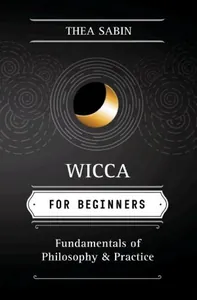

More Free Witchcraft & Paganism Books
View all →



![CIA Reading Room cia-rdp75-00149r000200590003-6: PROTECTING [PRIVACY AND FREEDOM]](/img/thumb/cia-reading-room-cia-rdp75-00149r000200590003-6-protecting-privacy-and-freedom-cia-reading-room.webp)