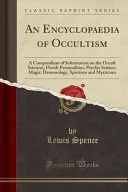
An Encyclopaedia of Occultism
 81
81

An Encyclopaedia of Occultism
Lewis Spence's An Encyclopaedia of Occultism is a formidable, if somewhat dry, survey of the esoteric landscape. Its strength lies in its sheer breadth, offering definitions and historical context for an astonishing number of terms and figures. The entry on Abaddon, for instance, concisely traces its biblical and demonological associations. However, the work’s encyclopedic nature means it often prioritizes brevity over depth, leaving the reader wanting more detail on complex subjects. The prose, while informative, lacks the evocative quality that might draw a casual reader into the mysteries it describes. It is an indispensable reference for the dedicated scholar but may prove less engaging for those seeking a narrative or experiential approach to the occult. It stands as a significant archival resource.
📝 Description
81
Lewis Spence's An Encyclopaedia of Occultism, first published in 1920, systematically catalogues occult subjects.
Lewis Spence's An Encyclopaedia of Occultism is a substantial reference work first published in 1920. It systematically catalogues a vast array of subjects related to occult sciences. The book covers terms, figures, and concepts from magic, demonology, spiritism, mysticism, and psychic phenomena. Spence aimed to present objective information on topics often considered mysterious, using a scholarly approach. The entries span from ancient beliefs to occult movements active at the turn of the 20th century.
This encyclopaedia is intended for serious students and researchers of esoteric traditions, comparative religion, and historical occultism. It offers a structured overview of occult subjects rather than a narrative account. Readers interested in the historical development of occult thought, the etymology of esoteric terms, and biographies of key figures in spiritualist and magical history will find it particularly useful. It serves as a resource for academic study or personal reference.
Published in 1920, Spence's encyclopaedia emerged during a period of heightened interest in spiritualism and psychical research. It reflects a scholarly attempt to codify and explain arcane phenomena prevalent in the late Victorian and Edwardian eras. The work provides a detailed snapshot of occult knowledge and discourse from that time, situating it alongside contemporary movements like Theosophy and the work of figures such as Aleister Crowley.
💡 Why Read This Book?
• Gain a foundational understanding of occult terminology by referencing specific entries like 'Abaddon', which clarifies its biblical and demonological significance. • Understand the historical context of occult studies by noting its publication era and the contemporary movements like Theosophy that influenced its scope. • Explore the systematic classification of esoteric subjects, learning how figures like Aleister Crowley were situated within broader magical traditions of the early 20th century.
⭐ Reader Reviews
Honest opinions from readers who have explored this book.
❓ Frequently Asked Questions
What is the primary purpose of Lewis Spence's An Encyclopaedia of Occultism?
The book serves as a comprehensive reference guide, systematically cataloguing information on occult sciences, personalities, psychic phenomena, magic, demonology, spiritism, and mysticism.
Who is Abaddon according to An Encyclopaedia of Occultism?
Abaddon is presented as the chief of demons in the seventh hierarchy, identified by St. John in the Apocalypse as the king of the locusts, and sometimes regarded as the destroying angel.
What kind of historical occult movements are covered?
The encyclopaedia covers a wide spectrum, including spiritualism, psychic research, various forms of magic, demonology, and mystical traditions, reflecting the intellectual climate of its initial publication period.
Is this book suitable for beginners in occult studies?
It is best suited for serious students and researchers due to its encyclopedic and reference-oriented nature, providing factual overviews rather than introductory narratives.
Where can I find more information about the publisher, Forgotten Books?
Forgotten Books specializes in reprinting rare and classic works, and more information about their extensive catalogue can be found on their website, www.forgottenbooks.com.
When was An Encyclopaedia of Occultism first published?
The book was first published on May 17, 2017, with the original work being a classic compendium of occult knowledge.
🔮 Key Themes & Symbolism
Demonology and Angelology
The work systematically details various hierarchies and figures within demonology and angelology, offering etymological and theological context. The entry for Abaddon exemplifies this, tracing its biblical origins as a destructive force and its later identification as a specific demonic entity. Spence presents these classifications not as mere folklore but as integral components of religious and occult systems, analyzing their roles and perceived powers within these frameworks.
Spiritism and Psychic Science
Spence addresses the burgeoning field of spiritism and psychic phenomena prevalent during his research period. The encyclopaedia defines terms related to mediumship, telepathy, and apparitions, often linking them to historical accounts and theoretical frameworks. It provides a structured overview of beliefs surrounding communication with the deceased and other psychic abilities, reflecting a scholarly attempt to categorize and understand these experiences.
Magic and Mysticism
This theme encompasses a broad range of practices and philosophies, from ceremonial magic to esoteric mysticism. The encyclopaedia defines key terms and concepts, exploring their historical development and practitioners. It provides concise entries on sigils, rituals, and the philosophical underpinnings of mystical states, offering readers a structured way to grasp the diverse manifestations of magical and mystical thought across different cultures and eras.
Occult Personalities and Movements
The work profiles significant individuals and groups that shaped the occult landscape. It situates figures within their historical and intellectual contexts, explaining their contributions to various esoteric traditions. By cataloguing these personalities and movements, Spence provides a historical map of occultism, allowing readers to understand the lineage and evolution of ideas and practices within this complex field.
💬 Memorable Quotes
Direct passages from the work, attributed to the author.
“Abaddon is the name given by St. John in the Apocalypse to the king of the grasshoppers.”
— This excerpt highlights the encyclopaedia's method of grounding esoteric figures in specific scriptural references, tracing the origin and symbolism of a demon within a major religious text.
“A Compendium of Information on the Occult Sciences, Occult Personalities, Psychic Science, Magic, Demonology, Spiritism and Mysticism”
— This descriptive phrase from the original blurb clearly outlines the encyclopaedia's vast scope, indicating its intention to cover a comprehensive range of subjects within the esoteric field.
“He is sometimes regarded as the destroying angel.”
— This interpretation of Abaddon's role demonstrates the fluid nature of occult symbolism, where a single entity can be understood through multiple lenses, connecting demonic attributes with apocalyptic imagery.
“Forgotten Books publishes hundreds of thousands of rare and classic books.”
— This statement emphasizes the publisher's commitment to preserving and making accessible historical texts, positioning this encyclopaedia as part of a larger effort to revive lost or obscure knowledge.
“The chief of the demons of the seventh hierarchy.”
— This precise categorization of Abaddon within a specific demonic structure reflects the ordered, hierarchical systems often found in demonology and grimoires, which the encyclopaedia aims to document.
🌙 Esoteric Significance
Tradition
Spence's work draws heavily from the Western Esoteric Tradition, encompassing elements of Hermeticism, Kabbalah, ceremonial magic, and demonology. It functions as a lexicon for these traditions, attempting to synthesize and clarify their often disparate terminologies and concepts. While not strictly adhering to a single lineage, it provides a valuable overview for those exploring the interconnectedness of these streams of thought, acting as a bridge between historical occult texts and modern esoteric scholarship.
Symbolism
The encyclopaedia frequently references symbolic figures and concepts. For instance, 'Abaddon' signifies not just a demon but also destruction and the abyss within apocalyptic literature. Other symbols implicitly covered include angelic hierarchies, astrological correspondences, and alchemical processes, all of which are treated as integral components of occult systems. Spence’s approach often involves tracing the etymology and historical usage of these symbols within various religious and magical contexts.
Modern Relevance
Contemporary practitioners and scholars of Western Esotericism continue to reference Spence's encyclopaedia as a foundational resource. Its systematic cataloguing of terms and figures remains valuable for understanding the historical development of occultism. Thinkers and groups involved in comparative occult studies, modern magical orders, and even academic departments focusing on religion and folklore find its comprehensive scope useful for contextualizing their work and research.
👥 Who Should Read This Book
• Aspiring occult scholars and researchers seeking a structured introduction to esoteric terminology and historical figures. • Students of comparative religion interested in the historical development and categorization of beliefs surrounding magic, demonology, and spiritism. • Enthusiasts of early 20th-century occultism looking for a comprehensive reference to understand the intellectual landscape and key concepts of that era.
📜 Historical Context
Lewis Spence's An Encyclopaedia of Occultism emerged during a period of intense interest in spiritualism and psychical research, roughly spanning the late 19th and early 20th centuries. This era saw figures like Helena Blavatsky and her Theosophical Society popularizing Eastern mysticism and occult philosophy, while Aleister Crowley was developing his own influential magical system. Spence’s work engaged with this milieu by attempting a scholarly codification of the diverse phenomena and beliefs that characterized occultism. It represented a significant effort to categorize and define a field that was rapidly expanding, often drawing from a blend of folklore, religious studies, and contemporary parapsychological investigations. The encyclopaedia’s approach reflects a late Victorian/Edwardian scholarly tradition that sought to classify even the most esoteric subjects, providing a reference point amidst a field of often unsystematic occult literature and practice.
📔 Journal Prompts
The concept of Abaddon as a destroying angel within the Apocalypse.
Categorization of occult sciences as presented in the encyclopaedia.
The historical context of spiritism and psychic science during Spence's research period.
Symbolism associated with demonic hierarchies.
The role of occult personalities in shaping esoteric movements.
🗂️ Glossary
Occultism
A broad term encompassing secret knowledge or practices related to the supernatural, mystical, or magical, often involving a study of hidden forces and correspondences in the universe.
Demonology
The systematic study of demons or beliefs about demons. It involves classifying demonic entities, understanding their origins, hierarchies, and powers within religious and occult frameworks.
Spiritism
A philosophical doctrine, originating in the 19th century with Allan Kardec, concerning the existence, nature, and destiny of spirits, and their relationship with the corporeal world, often involving mediumship.
Mysticism
The pursuit of gaining spiritual insight and direct, personal experience of ultimate reality or divinity, often through contemplation, meditation, and ascetic practices.
Psychic Science
A term used to describe the study of alleged psychic phenomena, such as telepathy, clairvoyance, precognition, and psychokinesis, often investigated within the field of parapsychology.
Hierarchy (Demonic)
A system of ranking demons according to their perceived power, authority, or origin, often mirroring angelic or earthly structures, as seen in classifications like the seventh hierarchy mentioned for Abaddon.
Apocalypse
A prophetic disclosure or revelation, particularly concerning the ultimate destiny of the world. The Book of Revelation in the New Testament is a primary example, containing references to figures like Abaddon.