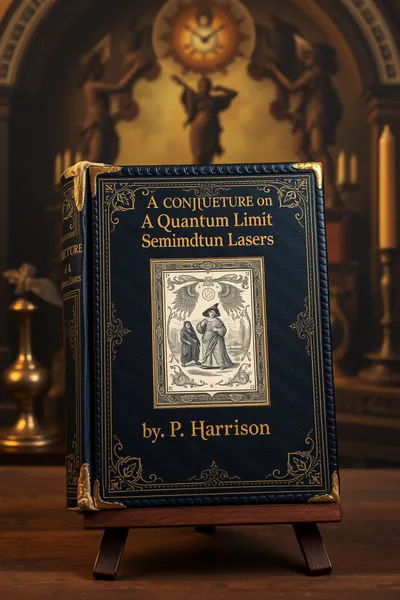
Out-Of-Body and near-Death Experiences

 72
72

Out-Of-Body and near-Death Experiences
Michael N. Marsh's *Out-Of-Body and Near-Death Experiences* offers a sober, empirical approach to phenomena that often elude conventional explanation. The book’s strength lies in its systematic cataloging of reported experiences, providing a valuable resource for anyone seeking to understand the contours of these profound subjective states. Marsh avoids sensationalism, presenting a wide array of accounts with a measured, analytical tone. However, the work's primary limitation is its occasional dryness; the sheer volume of case studies, while informative, can sometimes overshadow the deeper existential questions these experiences raise. A particularly striking section details the commonality of the "tunnel of light" experience, linking it across disparate cultural and temporal contexts, underscoring the universality of certain archetypal journeys. While not offering definitive answers, Marsh provides a meticulously researched map of the territory, essential for further exploration. It is a foundational text for understanding the spectrum of consciousness beyond the body.
📝 Description
72
Michael N. Marsh's 2005 book examines Out-of-Body and Near-Death Experiences.
This book analyzes the phenomena of Out-of-Body Experiences (OBEs) and Near-Death Experiences (NDEs). It synthesizes personal accounts with scientific investigation, detailing the common elements and differences between these altered states of consciousness. Marsh draws on both individual testimonies and research to illuminate the nature of non-ordinary perception.
The work is suitable for anyone interested in consciousness separate from the physical body, individuals seeking to understand their own unusual experiences, and students of parapsychology, consciousness studies, or comparative religion. It offers an approachable introduction for those new to the subject and serves as a useful reference for those already familiar with it.
Marsh's research follows early 20th-century parapsychological studies and a growing interest in altered states. He references the work of figures like J.B. Rhine in ESP research and Raymond Moody Jr.'s popularization of NDEs in the mid-1970s. This book continues that line of inquiry.
Marsh's work is situated within the broader spiritualist tradition that has long investigated consciousness beyond the physical form. This field, active since the 19th century, includes mediums, psychical researchers, and various religious movements exploring concepts like astral projection and divine encounters. Early 20th-century parapsychology, with its focus on extrasensory perception and disembodied consciousness, forms a direct precursor. The book also engages with modern medical and psychological studies of NDEs, linking them to these older traditions of altered states and spiritual inquiry.
💡 Why Read This Book?
• Gain a structured understanding of common OBE and NDE elements, such as the life review, which helps demystify personal experiences by placing them within a broader context of reported phenomena. • Explore the historical development of consciousness studies, referencing figures like J.B. Rhine, to situate OBE/NDE research within the scientific and philosophical debates of the 20th century. • Analyze the concept of ego dissolution during these experiences, offering practical frameworks for contemplating the nature of self and consciousness outside of conventional physical limitations.
⭐ Reader Reviews
Honest opinions from readers who have explored this book.
❓ Frequently Asked Questions
What is the primary distinction between Out-of-Body Experiences (OBEs) and Near-Death Experiences (NDEs) as presented by Marsh?
Marsh differentiates OBEs as perceived separations from the physical body while consciousness remains active, often without a life-threatening event. NDEs, conversely, are typically associated with critical medical situations where life is perceived to be at risk, often involving a broader spectrum of spiritual and existential encounters.
Does Michael N. Marsh offer scientific explanations for OBEs and NDEs?
Marsh presents both subjective accounts and scientific perspectives, exploring theories that range from neurological activity during physiological stress to more subtle models of consciousness. He acknowledges ongoing debate and does not present definitive scientific proof, instead focusing on the consistent patterns observed in reports.
What are some common elements reported in Near-Death Experiences according to the book?
The book details frequent reports of a 'tunnel of light,' a sense of peace and well-being, encountering deceased relatives or spiritual beings, a life review, and an overwhelming feeling of unconditional love. These elements form a recognizable pattern across many NDE accounts.
How does the book address the role of belief systems in shaping NDE accounts?
Marsh acknowledges that personal belief systems can influence the interpretation and reporting of NDEs. However, he also highlights numerous instances where individuals with no prior religious or spiritual beliefs report experiences that align with common NDE themes, suggesting a trans-cultural core.
What is the significance of the 'life review' phenomenon discussed in the book?
The life review is described as a rapid, comprehensive re-experiencing of one's life, often from an objective, empathetic perspective. Marsh suggests this process may serve a purpose in integrating life experiences and understanding the impact of one's actions on others.
When was Michael N. Marsh's 'Out-Of-Body and Near-Death Experiences' first published?
The original publication date for Michael N. Marsh's *Out-Of-Body and Near-Death Experiences* was 2010. This places its research and synthesis within the context of early 21st-century discourse on consciousness.
🔮 Key Themes & Symbolism
The Anatomy of Transcendence
Marsh meticulously dissects the common elements reported during OBEs and NDEs, moving beyond anecdotal evidence to identify recurring patterns. Concepts like the ego-dissolution, the perceived separation from the physical form, and the experience of a profound, unconditional love are explored. The work examines how these subjective states, often triggered by critical events or profound meditation, suggest a consciousness capable of existing independently of normal physiological constraints, challenging materialistic paradigms.
Life Review as Existential Mirror
A central theme is the phenomenon of the life review, where individuals report experiencing their entire life in rapid succession, often from multiple perspectives. Marsh analyzes this not merely as a hallucination but as a potential mechanism for profound personal integration and understanding. The review's capacity to foster empathy and insight into one's actions and their consequences is a critical focus, suggesting a purpose beyond mere recall.
The Tunnel of Light Archetype
The book dedicates significant attention to the widely reported experience of moving through a tunnel towards a brilliant light. Marsh contextualizes this motif within broader spiritual and mythological traditions, exploring its psychological and symbolic significance. The light is often associated with a transition point, a source of profound peace, and a reunion with a divine presence or aspect of the self.
Consciousness Beyond the Body
Fundamentally, Marsh's work probes the nature of consciousness itself. By examining accounts of OBEs and NDEs, the book questions the assumption that consciousness is solely an emergent property of the brain. It presents evidence that suggests consciousness might be more fundamental and capable of independent operation, prompting readers to reconsider the relationship between mind, body, and reality.
💬 Memorable Quotes
Direct passages from the work, attributed to the author.
“The experience of ego dissolution is often reported as a release from the confines of personal identity.”
— This highlights the common subjective report of transcending one's usual sense of self during altered states, suggesting a temporary or profound shift in self-perception.
“Recurring motifs, such as the tunnel of light and the life review, appear across diverse cultures and belief systems.”
— This observation suggests a universal quality to these profound experiences, pointing towards archetypal patterns in the human psyche or the nature of consciousness itself.
“The overwhelming sense of unconditional love experienced during an NDE is frequently described as transformative.”
— This emphasizes the emotional core of many NDEs, where a powerful, non-judgmental love acts as a catalyst for significant shifts in an individual's perspective and values.
“Scientific inquiry into these phenomena seeks to correlate subjective reports with measurable physiological or neurological events.”
— This points to the ongoing effort to bridge the gap between subjective, first-person accounts of consciousness and objective, third-person scientific observation and explanation.
“The possibility of consciousness persisting independently of the physical brain remains a central question.”
— This expresses the profound philosophical and scientific challenge posed by OBEs and NDEs, questioning the materialist assumption that the mind is solely a product of brain activity.
🌙 Esoteric Significance
Tradition
This work engages with the broader esoteric tradition of exploring consciousness beyond the physical form, echoing themes found in Hermeticism, Neoplatonism, and various mystical paths. While not explicitly aligned with a single lineage, Marsh's examination of OBEs and NDEs appeals to ancient concepts of the astral body or the soul's journey, as found in texts like the *Egyptian Book of the Dead* or the philosophical inquiries of Plotinus.
Symbolism
Key symbols include the 'tunnel of light,' often interpreted esoterically as a passage between realms or a symbolic representation of spiritual enlightenment and transition. The 'life review' functions as a potent symbol of karmic accounting and the soul's self-judgment, emphasizing interconnectedness and the consequences of actions. The recurring motif of encountering deceased loved ones or spiritual guides symbolizes continuity of consciousness and the presence of benevolent forces.
Modern Relevance
Marsh's work remains relevant to contemporary discussions in consciousness studies, transpersonal psychology, and Integral Theory, influencing thinkers who explore altered states and non-ordinary realities. Modern practitioners of lucid dreaming, remote viewing, and energy healing often draw upon the phenomena Marsh describes to validate their own experiences and methodologies, seeking a deeper understanding of mind-body interconnectedness.
👥 Who Should Read This Book
• Individuals who have personally experienced OBEs or NDEs and seek a structured framework for understanding their experiences, offering validation and context. • Students and researchers in fields like consciousness studies, psychology, and comparative religion looking for a comprehensive overview of the phenomena and existing research. • Skeptics and open-minded inquirers interested in the philosophical and scientific implications of subjective experiences that challenge conventional models of mind and reality.
📜 Historical Context
Published in 2010, Michael N. Marsh's *Out-Of-Body and Near-Death Experiences* emerged during a period of renewed scientific and public interest in consciousness studies, building upon decades of research. This era followed significant popularization efforts by figures like Dr. Raymond Moody Jr. in the late 1970s, who brought NDEs to mainstream attention with his book *Life After Life*. Marsh’s work also stands in dialogue with earlier parapsychological investigations, such as those conducted by J.B. Rhine at Duke University from the 1930s onward, which sought empirical evidence for psychic phenomena. While the medical community initially approached NDEs with skepticism, often attributing them to neurological events or psychological stress, Marsh engages with the growing body of research that explores these experiences from multiple angles, including neuroscience, psychology, and comparative religion. The work implicitly addresses the ongoing tension between reductionist materialist explanations and models that allow for non-local consciousness.
📔 Journal Prompts
Reflect on the concept of ego dissolution and its potential implications for personal identity.
Consider the life review phenomenon: how might re-experiencing one's life offer profound self-understanding?
Analyze the symbolism of the tunnel of light in relation to personal journeys of transformation or transition.
Explore the reported experience of unconditional love and its potential impact on one's worldview.
Examine the evidence for consciousness operating independently of the physical brain as presented in the book.
🗂️ Glossary
Out-of-Body Experience (OBE)
A subjective sensation of perceiving one's body and the surrounding environment from a location outside of the physical body, often while conscious and aware.
Near-Death Experience (NDE)
A profound personal experience associated with an event that is perceived as life-threatening, often involving a complex array of perceptions including spiritual, mystical, and transcendental elements.
Ego Dissolution
A state of consciousness characterized by a temporary loss or significant reduction of the sense of self or personal identity, often leading to feelings of oneness or cosmic consciousness.
Life Review
A common feature of NDEs where individuals report rapidly re-experiencing significant events from their past, often with an emotional and empathetic understanding of their impact.
Tunnel of Light
A frequently reported visual element of NDEs, describing the sensation of moving through a dark passage towards a brilliant, often benevolent, light source.
Parapsychology
A field of study that investigates alleged psychic phenomena and other paranormal claims, such as telepathy, precognition, and psychokinesis, often employing scientific methodologies.
Transcendental States
Altered states of consciousness characterized by a sense of moving beyond ordinary perception, reality, or the limitations of the physical self, often associated with spiritual or mystical experiences.
🔮 Readers Also Liked
Browse all →








More Free Occult Philosophy Books
View all →