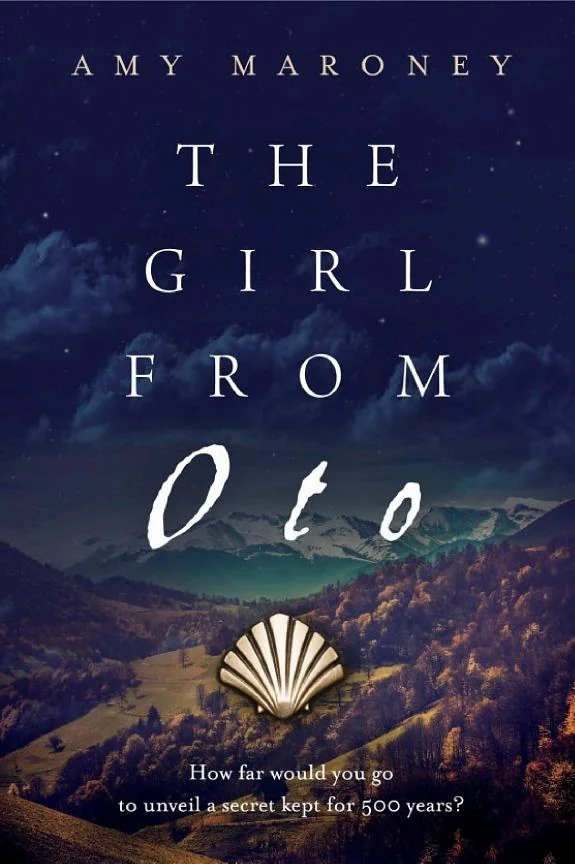
The Girl from Oto
 79
79

The Girl from Oto
Amy Maroney's "The Girl from Oto" presents a compelling dual narrative, anchoring its speculative premise in the tangible world of Renaissance art and contemporary scholarship. The strength lies in its meticulous historical detail, particularly in depicting Mira’s artistic world and the challenges faced by women artists of the era. The juxtaposition of Mira’s 16th-century struggles with Zari’s 21st-century investigation creates an intriguing resonance, hinting at deeper connections than mere coincidence. However, the pacing occasionally falters, with Zari's modern-day plot sometimes feeling less immediate than Mira's intensely personal drama. A particularly striking element is the depiction of how artistic creation can serve as a form of coded communication across time. Ultimately, "The Girl from Oto" offers a unique exploration of legacy and hidden truths, rewarding patient readers with its intricate plotting and thematic depth.
📝 Description
79
The Girl from Oto, published September 20, 2016, connects Renaissance Italy with 2015 America.
Amy Maroney's novel interlaces the lives of two women separated by five centuries. In 1500s Renaissance Italy, Mira, an artist raised in a Pyrenean convent, uncovers a hidden lineage amidst war and plague. Her story unfolds against a backdrop of artistic innovation and societal upheaval. This contrasts with the modern timeline in 2015, where American art scholar Zari investigates historical anomalies. Zari finds echoes of Mira's past in her present research. The narrative examines art, identity, and the persistence of secrets across time. The author places Mira in the Pyrenees, a region known for unique traditions, and Zari's work within contemporary academic methods. The book explores how personal identity is shaped by unknown ancestral connections and the role of art as a vessel for memory.
This novel touches upon the esoteric idea of spiritual or karmic links repeating through history. It suggests that certain souls or patterns may echo across lifetimes, influencing present circumstances. The narrative uses art as a medium through which these connections are perceived, weaving a sense of hidden continuity. The story explores how personal identity can be shaped by unknown ancestral ties, hinting at a mystical undercurrent beneath historical events.
💡 Why Read This Book?
• Learn how Renaissance art, exemplified by Mira's potential creations, can act as a conduit for ancestral memory, offering insights into historical patterns beyond documented facts. • Discover the historical milieu of the late 15th and early 16th centuries, a period of artistic innovation and societal change, and how it shaped the lives of women like Mira. • Experience a narrative that explores the esoteric concept of soul-ties and recurring patterns across centuries, connecting Zari's modern quest to a 500-year-old mystery.
⭐ Reader Reviews
Honest opinions from readers who have explored this book.
❓ Frequently Asked Questions
What historical period does "The Girl from Oto" primarily focus on?
The novel prominently features the late 15th and early 16th centuries, specifically the Italian Renaissance, depicting the life of an artist named Mira. It contrasts this with a contemporary storyline set in 2015.
Who are the main characters in "The Girl from Oto"?
The two central characters are Mira, a Renaissance-era artist discovering her origins, and Zari, a 21st-century art scholar who uncovers a historical mystery connected to Mira.
What is the central mystery explored in the book?
The core mystery revolves around Mira's true parentage and the secrets surrounding her past, which are echoed and investigated by Zari centuries later, suggesting a profound connection across time.
Does "The Girl from Oto" involve supernatural or mystical elements?
While primarily a historical novel, "The Girl from Oto" incorporates esoteric themes, exploring concepts of ancestral memory, soul connections, and hidden legacies that transcend ordinary historical explanation.
What kind of reader would enjoy "The Girl from Oto"?
Readers who enjoy historical fiction with a speculative twist, art history enthusiasts, and those interested in narratives about hidden histories, identity, and the enduring impact of the past will find this novel appealing.
When was "The Girl from Oto" first published?
"The Girl from Oto" by Amy Maroney was first published on September 20, 2016.
🔮 Key Themes & Symbolism
Ancestral Memory and Legacy
The novel posits that significant life events and artistic talents can echo through generations, creating a form of ancestral memory. Mira's journey is driven by the uncovering of her true origins, suggesting that understanding one's lineage is crucial for self-realization. Zari's research, five centuries later, acts as a modern-day echo, revealing how the past continues to influence the present, often through subtle patterns and artistic connections. This theme explores the esoteric idea that certain familial or spiritual threads persist across time, impacting individual destinies.
Art as a Vessel for Truth
In "The Girl from Oto," art is not merely decorative but a powerful medium for encoding and transmitting hidden truths. Mira, as an artist, potentially creates works that hold secrets about her identity and lineage, even if unconsciously. Zari, the art scholar, uses her expertise to decipher these historical traces. This concept aligns with esoteric traditions that view art and symbolism as keys to unlocking deeper realities, suggesting that creative expression can transcend historical limitations and communicate profound personal or universal messages.
Identity and Hidden Origins
The narrative hinges on the discovery of concealed parentage and the subsequent redefinition of self. Mira's belief in being an orphan clashes with the devastating truth of her origins, forcing a confrontation with her identity. This exploration speaks to Gnostic and Hermetic ideas about uncovering one's true nature, often obscured by worldly circumstances or deception. The novel suggests that the quest for authentic selfhood requires confronting difficult truths about one's past and ancestry.
Resilience in Adversity
Both Mira and Zari face significant challenges. Mira navigates a world fraught with war and plague in the 1500s, while confronting personal danger related to her origins. Zari grapples with academic skepticism and the elusive nature of historical evidence. The novel highlights the strength required to pursue truth and forge one's path against formidable odds. This theme speaks to the human spirit's capacity for endurance and the courage needed to confront powerful forces, whether historical, societal, or personal.
💬 Memorable Quotes
Direct passages from the work, attributed to the author.
“Born during a time wracked by war and plague, Renaissance-era artist Mira grows up in a Pyrenees convent believing she is an orphan.”
— This sets the stage for Mira's hidden origins, placing her within a turbulent historical period that often concealed or destroyed personal histories, and within a convent, a place of both sanctuary and potential secrets.
“Centuries later, art scholar Zari unearths traces of...”
— This introduces the parallel narrative, establishing Zari's role as a modern investigator uncovering fragments of the past, hinting at a mystery that spans five hundred years and connects her to Mira's story.
“Linked by a 500-year-old mystery...”
— This concisely frames the central conceit of the novel: two lives, separated by a vast temporal gulf, are bound together by an enduring enigma that drives both their stories forward.
“But does she have the strength to face those who would destroy her?”
— This question foreshadows the conflict Mira will face upon discovering the truth of her origins, highlighting the danger and personal courage required to confront powerful adversaries.
“An exquisite novel.”
— This brief, positive endorsement suggests a high quality of writing and narrative construction, highlighting the aesthetic and literary merit of the work.
🌙 Esoteric Significance
Tradition
The work can be loosely aligned with Western Esotericism's interest in hidden histories and the concept of soul-cycles or recurring patterns across lifetimes. It echoes themes found in Theosophy and New Age thought regarding spiritual lineage and the persistence of certain energies or connections through generations. While not explicitly Gnostic or Kabbalistic, it shares a concern with uncovering hidden knowledge and true identity, often obscured by conventional societal narratives or personal ignorance.
Symbolism
The convent serves as a symbol of both sanctuary and confinement, a place where Mira's true nature is hidden, yet where she might also find initial solace. The Pyrenees mountains themselves can symbolize isolation, mystery, and a connection to ancient, perhaps pre-Christian, earth energies. Art, as a motif, functions as a cipher for truth, a means by which hidden narratives and identities can be encoded and, eventually, decoded across time.
Modern Relevance
Contemporary interest in ancestral healing, past-life exploration, and the idea of 'soul families' finds resonance in "The Girl from Oto." Thinkers and practitioners exploring the impact of lineage on present-day well-being, or those interested in how creative expression can tap into subconscious or ancestral knowledge, might find the novel's themes particularly relevant to their work or personal investigations.
👥 Who Should Read This Book
['• Readers interested in Renaissance art and history who seek narratives that explore the lives of artists beyond the well-known masters, particularly women.', '• Individuals drawn to speculative fiction that blends historical settings with underlying mysteries and esoteric concepts, such as ancestral memory or hidden connections.', "• Those who appreciate character-driven stories focused on themes of identity, self-discovery, and the enduring impact of uncovering one's true origins."]
📜 Historical Context
Amy Maroney's "The Girl from Oto" is situated within the rich milieu of the Italian Renaissance, a period from roughly the 14th to the 17th century, characterized by a flourishing of arts, sciences, and philosophy. The novel specifically places its 1500s protagonist, Mira, in the Pyrenees, a region often overlooked in favor of artistic centers like Florence or Venice. This setting allows for an exploration of more localized histories and traditions. The era was also marked by significant religious and political upheaval, including the Reformation and ongoing conflicts, creating a backdrop of instability that the book reflects. The narrative implicitly engages with the challenges faced by women artists during this period, a topic explored by scholars like Germaine Greer in her work on female creativity. While not directly engaging with a competing school of thought in a philosophical sense, the novel contrasts the perceived order and divine inspiration of convent life with the harsh realities of the outside world and the potential for hidden, even dangerous, truths.
📔 Journal Prompts
Mira's discovery of her origins and its impact on her sense of self.
The role of art in conveying hidden truths across centuries, as seen in Mira's potential work.
Zari's modern-day investigation into a 500-year-old mystery.
Reflections on the concept of ancestral echoes and their influence.
The contrast between Mira's perceived identity and her true lineage.
🗂️ Glossary
Renaissance
A period in European history, roughly from the 14th to the 17th century, marked by a revival of classical art, architecture, literature, and learning, alongside significant scientific advancements and exploration.
Pyrenees
A mountain range that forms a natural border between France and Spain, known for its distinct culture, history, and relative isolation compared to major European centers.
Convent
A religious community, typically of nuns, living together in a building under vows of poverty, chastity, and obedience, often serving as places of education, sanctuary, or spiritual devotion.
Art Scholar
An academic or researcher specializing in the study and interpretation of art history, theory, and criticism, often involving detailed analysis of artworks and their historical context.
Ancestral Memory
An esoteric concept suggesting that memories, experiences, or predispositions can be passed down through generations, influencing individuals beyond their direct lived experience.
Lineage
A sequence of descent from an ancestor; ancestry or pedigree. In an esoteric context, it can also refer to a spiritual or energetic line of transmission.
Esoteric
Intended for or likely to be understood by only a small number of people with a specialized knowledge or interest; relating to or concerned with the occult or mystical.
This book appears in 1 collection
🔮 Readers Also Liked
Browse all →








From the “OTO” Collection
View all →








More Free Occult Philosophy Books
View all →