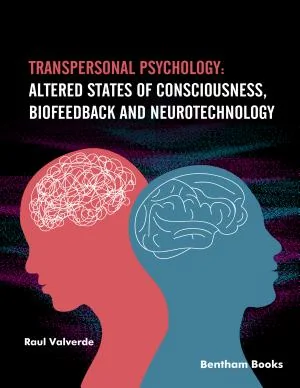
Transpersonal Psychology: Altered States of Consciousness, Biofeedback and Neurotechnology
 79
79

Transpersonal Psychology: Altered States of Consciousness, Biofeedback and Neurotechnology
Raul Valverde's "Transpersonal Psychology: Altered States of Consciousness, Biofeedback and Neurotechnology" attempts to bridge the empirical with the ineffable, a challenging but necessary endeavor. The strength of the book lies in its clear exposition of how biofeedback and neurotechnology can serve as practical tools for accessing and understanding states of consciousness previously relegated to mystical or anecdotal accounts. The integration of these technologies into a therapeutic context is particularly well-articulated. However, the work occasionally struggles to maintain a consistent critical distance, sometimes leaning towards a more advocacy-based tone rather than purely analytical. A passage discussing the potential of neurofeedback to induce states akin to deep meditation, for instance, highlights this blend of technical explanation and experiential possibility. Valverde’s effort to ground esoteric concepts in technological application is commendable, though the deeper philosophical implications of such interventions warrant further critical examination. It offers a pragmatic lens on the exploration of consciousness.
📝 Description
79
Raul Valverde's 2010 book examines how neurotechnology can facilitate altered states of consciousness.
Transpersonal Psychology: Altered States of Consciousness, Biofeedback and Neurotechnology, by Raul Valverde, investigates a psychology that moves beyond the individual ego to encompass the full range of human potential. This discipline studies experiences and states of awareness that go beyond normal perception, such as mystical insights, peak moments, and ego dissolution. The aim is to connect these subjective phenomena to a complete understanding of the human mind, linking scientific research with spiritual inquiry.
Valverde's work is primarily aimed at therapists, counselors, and researchers looking to expand their professional methods. It is also useful for individuals wanting to grasp the scientific and technological bases of altered consciousness states and their potential for personal development and healing. Anyone interested in the connection between mind, technology, and spirituality will find it valuable. The book presents biofeedback, neurofeedback, and related neurotechnologies as tools for both creating and studying transpersonal experiences.
Emerging in the mid-20th century as a "fourth force" in psychology, transpersonal psychology sought to address aspects of human experience that psychoanalysis, behaviorism, and humanistic psychology had largely overlooked. Figures like Abraham Maslow and Stanislav Grof championed the study of spiritual and transcendent dimensions. Valverde's book continues this tradition by integrating contemporary technological tools, like biofeedback and neurofeedback, into the exploration of states of consciousness that transcend the ordinary ego, thereby extending the field's reach into mind-body interaction and technologically assisted self-awareness.
💡 Why Read This Book?
• Learn how specific neurotechnologies, like biofeedback, can be employed in therapeutic settings to access states of consciousness beyond the ordinary, as detailed in the book's focus on this intersection. • Gain an understanding of transpersonal psychology's lineage, recognizing its emergence as a "fourth force" in psychology, providing historical context for Valverde's exploration. • Discover practical applications for exploring latent human capacities through technological means, moving beyond theoretical discussions to actionable insights presented within the text.
⭐ Reader Reviews
Honest opinions from readers who have explored this book.
❓ Frequently Asked Questions
What is the primary focus of Transpersonal Psychology: Altered States of Consciousness, Biofeedback and Neurotechnology?
The book focuses on transpersonal psychology, specifically examining how biofeedback and neurotechnology can be utilized to access and study altered states of consciousness and their therapeutic applications.
When was Transpersonal Psychology: Altered States of Consciousness, Biofeedback and Neurotechnology first published?
The book by Raul Valverde was first published on March 4, 2022.
Who are some key figures associated with the historical development of transpersonal psychology?
Key figures in the development of transpersonal psychology include Abraham Maslow and Stanislav Grof, who were instrumental in establishing it as a distinct field.
What is biofeedback and how is it discussed in the book?
Biofeedback is a technique that allows individuals to monitor and control physiological responses, such as heart rate or brainwave activity. Valverde's work explores its use in facilitating altered states.
How does transpersonal psychology differ from other schools of psychology?
Transpersonal psychology expands beyond traditional models like psychoanalysis and behaviorism to include spiritual experiences and potentials that exceed the ego's normal development.
What role does neurotechnology play in Valverde's transpersonal psychology?
Neurotechnology, including neurofeedback, is presented as a tool to help individuals achieve specific brainwave states conducive to transpersonal experiences and deeper self-awareness.
🔮 Key Themes & Symbolism
Technological Access to Consciousness
The book emphasizes the innovative application of biofeedback and neurotechnology as tools for accessing and understanding altered states of consciousness. This theme moves beyond traditional contemplative practices, suggesting that technological interfaces can guide individuals toward specific neural patterns associated with profound subjective experiences. Valverde explores how these methods can clarify phenomena like deep meditation or peak experiences, making them more accessible for therapeutic and personal development purposes within the framework of transpersonal psychology.
Beyond the Egoic Self
A central tenet explored is the transpersonal dimension, which posits human potential extending beyond the confines of the ordinary ego. The work examines how altered states, facilitated by the discussed technologies, can lead to experiences of ego dissolution, cosmic consciousness, and profound interconnectedness. This theme directly addresses the core aim of transpersonal psychology: integrating these transcendent experiences into a holistic understanding of the human psyche, challenging conventional psychological models.
Integrating Spirituality and Science
Valverde's book seeks to bridge the perceived divide between scientific methodology and spiritual or esoteric exploration. By detailing the use of biofeedback and neurotechnology, the work offers a scientific grounding for subjective experiences often labeled as spiritual. This integration is crucial for validating and understanding these states within a broader psychological and therapeutic context, demonstrating that empirical investigation can illuminate the nature of consciousness and its higher potentials.
Therapeutic Applications of Expanded States
The practical implications for therapy form a significant theme. The book outlines how transpersonal therapists can utilize altered states, accessed through neurotechnology, to address psychological issues and foster personal growth. This includes exploring repressed material, enhancing self-awareness, and facilitating healing by working with consciousness states that offer new perspectives and resolutions, thereby expanding the scope of conventional therapeutic interventions.
💬 Memorable Quotes
Direct passages from the work, attributed to the author.
“Human beings possess potentials that exceed the limits of ego developed normally.”
— This statement captures the foundational belief of transpersonal psychology, suggesting that our conscious awareness and capabilities are not fixed by our everyday ego-identity but can expand into much vaster territories.
“The main goal of transpersonal psychology is to integrate the spiritual experience within a broader understanding of the human psyche.”
— This highlights the unique mission of transpersonal psychology: to bridge the gap between the scientific study of the mind and the exploration of spiritual or transcendent dimensions of human experience.
“Introduces the use of biofeedback and neurotechnology for the transpersonal therapist.”
— This points to the practical, applied aspect of the book, showcasing how modern technological tools can be incorporated into therapeutic practices for exploring consciousness.
“Altered States of Consciousness, Biofeedback and Neurotechnology”
— This phrase from the title itself acts as a conceptual anchor, signaling the book's specific focus on the intersection of consciousness states and technological interventions in psychology.
“Understanding human nature and development beyond the ego.”
— This interpretation of the book's subject matter emphasizes its departure from ego-centric psychological models, opening up a wider vista of human potential and experience.
🌙 Esoteric Significance
Tradition
Transpersonal psychology, as explored in Valverde's work, draws implicitly from various esoteric traditions that have long acknowledged states of consciousness beyond the ordinary, including Gnosticism's emphasis on transcendent knowledge and Hermeticism's focus on the principle of "As Above, So Below" applied to internal states. It attempts to map these experiences onto a scientific framework, acting as a modern bridge between ancient wisdom concerning the soul and mind and contemporary psychological science.
Symbolism
While not explicitly detailing esoteric symbols, the book's focus on "altered states of consciousness" can be seen as a modern engagement with the symbolic journey of the soul common in many esoteric paths. The "ego" represents the dense, material self, while "transpersonal potentials" symbolize the higher, spiritual or cosmic aspects of being. Biofeedback and neurotechnology function as modern "keys" or "gates" to unlock these latent potentials, mirroring alchemical or initiatory symbolism.
Modern Relevance
Contemporary thinkers and practitioners in fields like consciousness studies, integral theory (popularized by Ken Wilber), and even certain branches of neuroscience exploring meditative states, owe a debt to the transpersonal movement. Valverde's work is relevant today for its direct engagement with neurotechnology, aligning with current research into brain-computer interfaces and the neurobiological correlates of meditation and mystical experiences.
👥 Who Should Read This Book
• Therapists and counselors seeking to expand their understanding and practice beyond conventional psychological models to include the spiritual and transcendent dimensions of human experience. • Researchers in consciousness studies interested in the empirical investigation of altered states and the potential of biofeedback and neurotechnology. • Individuals on a path of personal or spiritual development who wish to explore the scientific and technological approaches to accessing deeper levels of awareness and human potential.
📜 Historical Context
Emerging in the mid-20th century, transpersonal psychology positioned itself as a "fourth force" in psychology, reacting against the perceived limitations of psychoanalysis, behaviorism, and even humanistic psychology. Figures like Abraham Maslow, who championed the study of peak experiences, and Stanislav Grof, with his work on psychedelic-assisted therapy and holotropic breathwork, were foundational. Valverde's 2022 publication situates this field within contemporary advancements, particularly in neurotechnology. While humanistic psychology explored self-actualization, transpersonal psychology explicitly incorporated mystical, spiritual, and transcendent dimensions of experience. The intellectual climate was shifting, with growing interest in consciousness studies and Eastern philosophies, yet mainstream psychology often viewed these areas with skepticism. The integration of technologies like biofeedback represents a modern attempt to empirically investigate phenomena previously confined to subjective reports or spiritual traditions.
📔 Journal Prompts
Reflection on ego limits and transpersonal potentials.
Mapping biofeedback states to subjective experiences.
Exploring neurotechnology's role in spiritual integration.
The concept of "fourth force" psychology.
Integrating spiritual experiences into a broader psyche.
🗂️ Glossary
Transpersonal Psychology
A branch of psychology that studies experiences beyond the ego, focusing on spiritual, mystical, and transcendent aspects of human consciousness and development.
Altered States of Consciousness (ASCs)
Any mental state significantly different from a person's usual waking consciousness, often involving changes in perception, cognition, emotion, and sense of self.
Biofeedback
A technique that trains people to improve their health by learning to control bodily functions, such as heart rate or muscle tension, typically using electronic monitoring equipment.
Neurotechnology
Technologies designed to interact with the nervous system, including tools for monitoring brain activity (like EEG) and influencing it (like neurofeedback).
Ego
In psychology, the part of the mind that mediates between the conscious and the unconscious and is responsible for reality testing and a sense of personal identity.
Fourth Force Psychology
A term used to describe transpersonal psychology, positioning it as a successor or complement to psychoanalysis, behaviorism, and humanistic psychology.
Neurofeedback
A type of biofeedback that uses real-time displays of brain activity—most commonly electroencephalography (EEG)—to teach self-regulation of brain function.
This book appears in 1 collection
🔮 Readers Also Liked
Browse all →









From the “Altered States of Consciousness” Collection
View all →









More Free Occult Philosophy Books
View all →